
Carlo Francesco Nuvolone
Carlo Francesco Nuvolone (1608 or 1609 – 1661 or 1662) was an Italian painter of religious subjects and portraits who was active mainly in Lombardy. He became the leading painter in Lombardy in the mid-17th century, producing works on canvas as well as frescoes. Because his style was perceived as close to that of Guido Reni he was nicknamed il Guido della Lombardia (the Guido of Lombardy).
Also recorded as Carlo Francesco Panfillo · Il Panfilo Nuvolone · Carlo Francesco Panfilo · Carlo Francesco Nuovoloni
Carlo Francesco Nuvolone
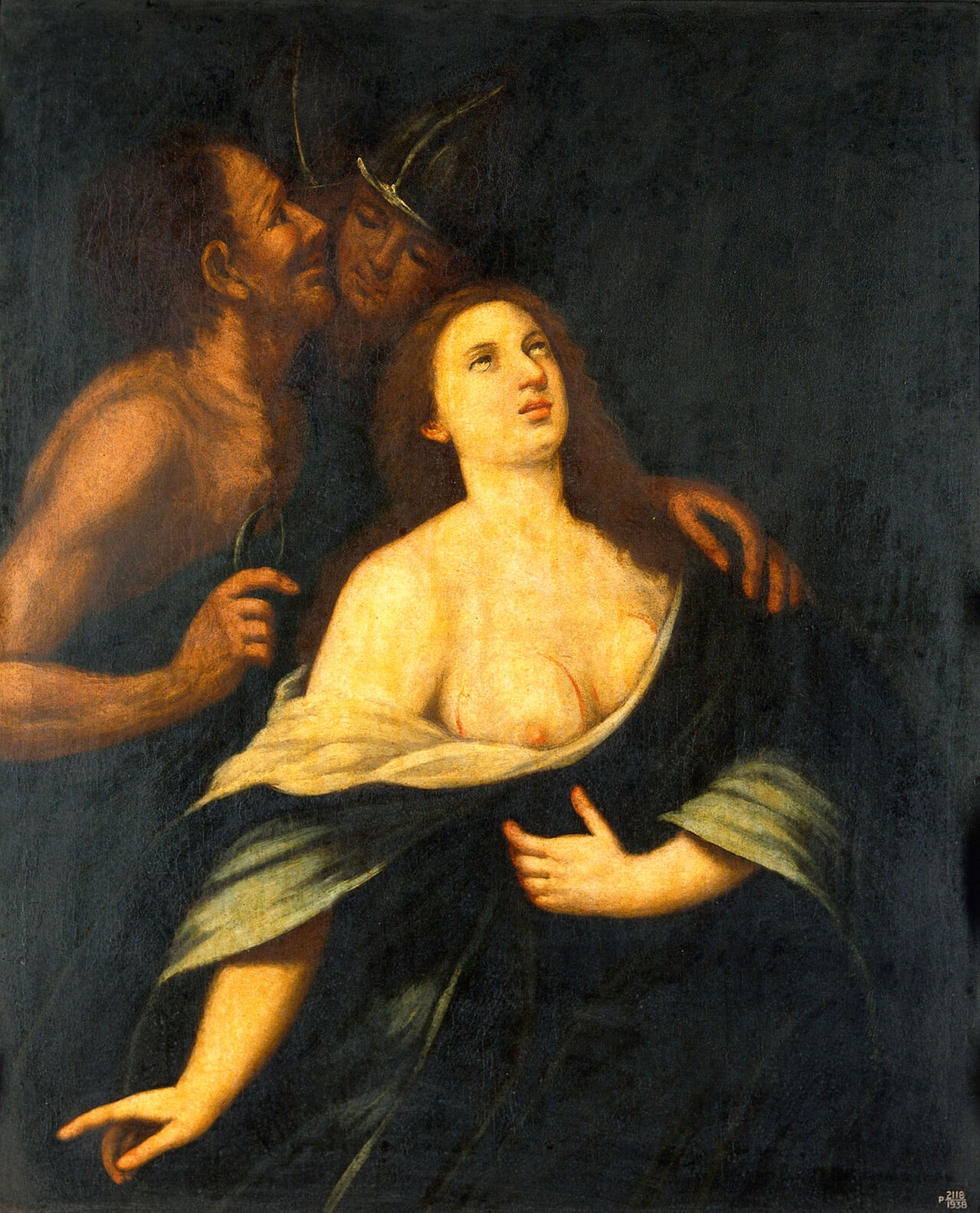
Carlo Francesco Nuvolone · Wellcome Collection, London · Wellcome Collection · Public Domain Mark
- Born
- 1609 · Milan.
- Died
- 1661 · Milan.
- Occupation
- painter
- Fields
- portrait
- Known for
- The Martyrdom of St. Irene
- Languages
- Italian
VALÉORINE Encyclopedia
VALÉORINE documentary reading
Documentary summary
Carlo Francesco Nuvolone (1608 or 1609 – 1661 or 1662) was an Italian painter of religious subjects and portraits who was active mainly in Lombardy. He became the leading painter in Lombardy in the mid-17th century, producing works on canvas as well as frescoes. Because his style was perceived as close to that of Guido Reni he was nicknamed il Guido della Lombardia (the Guido of Lombardy).
Admitted source layer · organised and presented by VALÉORINE
Reference Check
Propose documentary evidence for Carlo Francesco Nuvolone. A contribution is never written directly as fact: identity, source, rights and evidence gates still decide.
Sign in to contribute
Documentary evidence
Documentary basis
Authority files
wikidata · Q951849 · wikipedia · Carlo Francesco Nuvolone
In this article
Life
Life
The recorded working language is Italian. Subjects and genres recorded for the work are portrait. Works named in the authority record are The Martyrdom of St. Work by Carlo Francesco Nuvolone is recorded in the collections of J. Paul Getty Museum, Städel Museum, Metropolitan Museum of Art, Walters Art Museum and Dulwich Picture Gallery.
Carlo Francesco Nuvolone was born in Milan. His father Panfilo Nuvolone was a painter of frescoes and altarpieces, in a style still linked to late Mannerism, and of still lifes. Carlo Francesco had a brother called Giuseppe who also became a painter. After working with his father, Carlo Francesco studied at the Accademia Ambrosiana in Milan under Giovanni Battista Crespi (il Cerano). In that studio he would have encountered Daniele Crespi and Giulio Cesare Procaccini. He later worked in Milan and its environs. During the 1650s, Nuvolone painted frescoes in the Capella di San Michele, Certosa di Pavia, and works for the Sacro Monte di Varese, an important local pilgrimage site, where he frescoed Chapel III with the Nativity and Chapel V with Christ among the Doctors (both 1650). His interest in the dark and passionate art of Francesco Cairo is evident in his St. Peter and St. Clare (1651–52; Milan, Basilica of San Simpliciano) and St. Peter Healing the Lame Man (Milan, San Vittorio), which also dates from the 1650s. He later executed frescoes for the Sacro Monte di Orta, completing Chapel X with the Confirmation of St. Francis (1654) and later decorating Chapel XVII with the Death of St. Francis. He was assisted by his brother Giuseppe Nuvolone who also collaborated in the frescoes (1660) for San Francesco, Trecate. Nuvolone died in Milan 1661 or 1662. Among his pupils were Giuseppe Zanata, Federigo Panza, Filippo Abbiati, and Pietro Maggi.
Work
Work
Carlo Francesco Nuvolone worked as an easel painter as well as a fresco artist. His subjects were mainly religious and he realised many altarpieces and devotional works. He also left a number of portraits. • Illustration — Portrait of a Gentleman in Armour, priv. col. His early works showed the influence of the latest developments in Lombard painting. He had in particular adopted from Giulio Cesare Procaccini the close attention to the handling of light and shadow as well as the careful study of facial expressions. Other early influences include Daniele Crespi and Francesco Cairo. His first signed and dated work, the Miracle of St. Martha (1636, Venegono Inferiore, Seminario Arcivescovile) also shows the influence of Morazzone. The Death of Lucrezia, executed in several versions, reveals the soft, atmospheric quality of his art, often explained by Murillo's work, although it is not clear where he would have seen Murillo's works. His altarpieces from the 1640s, such as the Assumption of the Virgin (Pinacoteca di Brera, Milan), demonstrate his interest in Anthony van Dyck. An outstanding example from this period is The purification of the Virgin (1645, Museo Civico, Piacenza). Nuvolone was also active as a portrait painter working in the Lombard style with its penchant for a strikingly detailed portrayal of the sitter's features and garments and a lively depiction of the play of light and shadow. These portraits also show influences from portrait painting in Genoa, which in turn was influenced by the Flemish portrait painters such as van Dyck who had resided there. He painted, together with his brother, a portrait of the Nuvolone family showing him at his easel surrounded by his family, including his father and brother and a few young people playing musical instruments. • Illustration — Portrait of the Nuvolone family, Pinacoteca di Brera, Milan • Illustration — The purification of the Virgin, Piacenza Civic Museum • Illustration — St. Aloysius Gonzaga, priv. col. • Illustration — Christ at the column, priv. col. • Illustration — Scene from the life of Esther, Musée des Augustins, Toulouse • Illustration — The Creation of Eve, Dulwich Picture Gallery, London • Illustration — Portrait of a Lady, Bologna City Art Collections • Illustration — St. James, priv. col.
Identity and origins
Identity and origins
The authorities additionally record the headings Carlo Francesco Panfillo, Il Panfilo Nuvolone, Carlo Francesco Panfilo, Carlo Francesco Nuovoloni and Guido Lombardo. His recorded language was Italian.
Life and career
Dated record
Life and career
The full dated record · 2 entries
1609
Carlo Francesco Nuvolone born at Milan.
1661
Carlo Francesco Nuvolone died at Milan.
Primary material
Documents and archives
authority record
- Wikidata, structured authority record Q951849: Carlo Francesco Nuvolone
General reference · Wikidata
reference work
- “Carlo Francesco Nuvolone”, English Wikipedia, consulted as further reading
Reputable secondary · Wikipedia
Citations
References
Each reference names the institution holding it, so a reader may go to the document itself.
authority record
Secondary witnessreference work
Secondary witness
The Encyclopedia exists whether or not anything is for sale. Corrections are recorded rather than overwritten, and every version of this record is kept. Published 17 August 2026.
Elsewhere in Paintings
18,717 published records in this field, each with its sources named.
- Carlo DonelliArtist
- Carlo FerrariArtist
- Carlo FolliniArtist
- Carlo FornaraArtist
- Carlo FrigerioArtist
- Carlo Giuseppe RattiArtist
- Carlo JottiArtist
- Carlo LeviArtist
Best supported in this field
For owners
Own a work by Carlo Francesco Nuvolone?
A specialist will read what you send and tell you what the house can establish, what it cannot, and whether the object is suited to sale. There is no charge and no obligation. The object stays with you throughout; nothing is shipped to us unless it is arranged in writing beforehand.