
Carl Frederik von Breda
Carl Frederik von Breda (16 August 1759 – 1 December 1818) was a Swedish painter who studied in and spent much of his career in Britain before becoming painter to the Swedish court. He was born in Stockholm in 1759, and moved to Britain where he was a student of Joshua Reynolds. Breda specialized in painting portraits and was called "the van Dyck of Sweden".
Also recorded as Carl Fredric von Breda · Carl Fredrik von Breda · Carl Fredrik van Breda
Carl Frederik von Breda
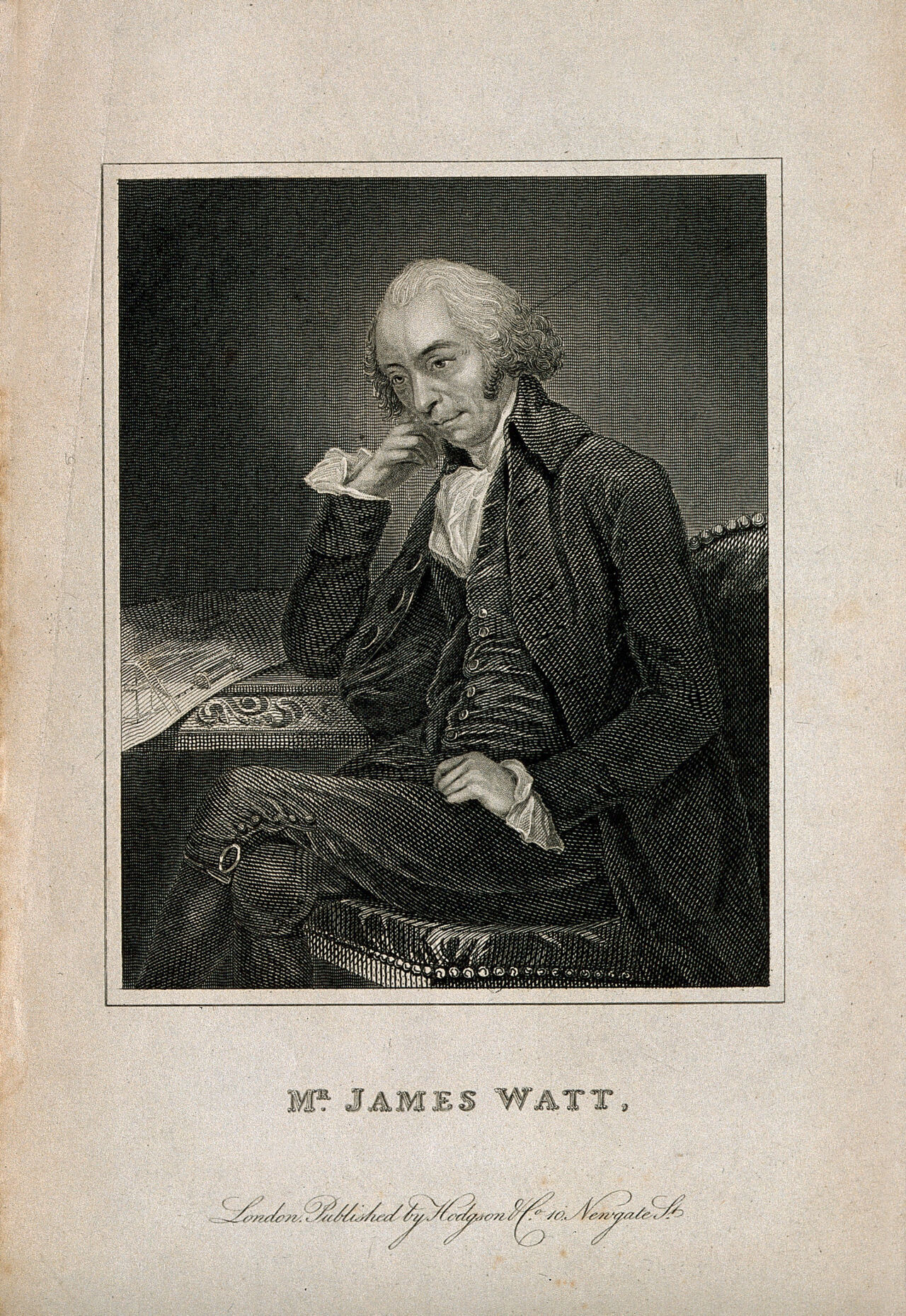
Carl Frederik von Breda · Wellcome Collection, London · Wellcome Collection · Public Domain Mark
- Name
- Carl Frederik von Breda
- Born
- 16 August 1759
- Birthplace
- Stockholm, Sweden
- Died
- 1 December 1818
- Field
- Painting
- Training
- Royal Swedish Academy of Arts
- Nationality
- Sweden
- Occupation
- painter
- Education
- Royal Swedish Academy of Fine Arts
- Teachers
- Joshua Reynolds
- Known for
- Mrs Helena Klingström · Teresa Vandoni, Italian Singer at the Royal Opera and Stockholm · Jacob Fredrik de Ron
- Honours
- Knight of the Order of Vasa
VALÉORINE Encyclopedia
VALÉORINE documentary reading
Documentary summary
Carl Frederik von Breda (16 August 1759 – 1 December 1818) was a Swedish painter who studied in and spent much of his career in Britain before becoming painter to the Swedish court. He was born in Stockholm in 1759, and moved to Britain where he was a student of Joshua Reynolds. Breda specialized in painting portraits and was called "the van Dyck of Sweden".
Admitted source layer · organised and presented by VALÉORINE
Note VALÉORINE
Carl Frederik von Breda (1759–1818) was a Swedish painter. The painter was born and died in Stockholm.
Carl Frederik von Breda studied at Royal Swedish Academy of Fine Arts. The painter worked for Royal Swedish Academy of Fine Arts and held the positions of court painter and professor. Carl Frederik von Breda worked in London, Paris and Stockholm. The painter was active in painting.
Works include Jacob Fredrik de Ron and Mrs Helena Klingström. Genres include portrait. Works by Carl Frederik von Breda are held at Finnish National Gallery, National Museum in Warsaw and National Portrait Gallery, among others. The painter received Knight of the Order of Vasa.
Composed from admitted, traceable facts · 27 September 2026
VALÉORINE
Reference Check
Propose documentary evidence for Carl Frederik von Breda. A contribution is never written directly as fact: identity, source, rights and evidence gates still decide.
Sign in to contribute
World of VALÉORINE
Documentary connections
Only confirmed graph relationships appear here. Images are shown only when their identity and reuse rights both pass the documentary gate.
Documentary evidence
Documentary basis
Authority files
wikidata · Q2938914 · wikipedia · Carl Frederik von Breda
In this article
Biography
Biography
He returned to Sweden 1796 where he became professor at the Academy of Arts, a popular portraitist, and a court painter. Breda married at age 22 and his son, Johan Fredrik, was also a painter, who studied under his father. Breda died in Stockholm in 1818.
Carl Frederik von Breda studied at Royal Swedish Academy of Fine Arts. Training under Joshua Reynolds is recorded. Gustaf Wilhelm Finnberg is recorded as having studied under Carl Frederik von Breda. The field of work recorded is painting. Subjects and genres recorded for the work are portrait. Places of work recorded in the authority are Stockholm, London and Paris. Employment is recorded with Royal Swedish Academy of Fine Arts. Positions recorded include court painter and professor. Works named in the authority record are Mrs Helena Klingström, Teresa Vandoni, Italian Singer at the Royal Opera, Stockholm and Jacob Fredrik de Ron. Work by Carl Frederik von Breda is recorded in the collections of Nationalmuseum, Finnish National Gallery, Oslo Museum, National Portrait Gallery of Sweden and Statens Museum for Kunst. Distinctions recorded are Knight of the Order of Vasa.
Key facts
Key facts
• Name — Carl Frederik von Breda • Born — 16 August 1759 • Birthplace — Stockholm, Sweden • Died — 1 December 1818 • Place of death — Stockholm, Sweden • Field — Painting • Training — Royal Swedish Academy of Arts
Early life
Early life
Breda's great-grandfather Pieter emigrated to Stockholm around the year 1670 from the Netherlands. The "von Breda" family name seems to indicate a connection with the city of Breda. Von is not a Dutch preposition, but in the Nordic countries, this originally German preposition has occasionally been used as a part of names of ennobled families of native or foreign, but non-German, origin. Pieter's son Lucas (Carl's grandfather, 1676–1752) was a successful painter. His son Lucas (Carl's father, 1726–1799) was an "arbitrator in cases of shipwreck", who also collected art. Lucas the younger married Johanna Cornelia Piper and they had five children, with Carl born on 16 August 1759. Carl had "an excellent education" and enrolled in the Royal Swedish Academy of Arts at age 19. At the Academy, Breda studied historical and portrait painting. Lorens Pasch the Younger was Breda's master there, and Breda's early works show this influence very clearly, especially in his color palette. In 1780 Breda received the first of many prizes for his art, and in 1784 he exhibited 19 paintings in the first exhibition which the Academy arranged. The same year he saw his first royal portrait, one of Duchess Hedvig Elisabeth Charlotte, sister-in-law to King Gustavus III. He also painted the Crown Prince, Gustavus Adolphus, and Gustavus III himself. • Illustration — 1788 Portrait of abolitionist Thomas Clarkson In 1786 he entered a competition in historical painting at the Academy, producing a painting on the theme of Meleager, the Greek Prince. He lost to Jonas Åkerström. According to Asplund, "the selection was influenced by the better financial position of Breda, since he was able to provide the money for the journey abroad which the prize money was to make possible." Breda had married at age 22 and he and his wife had at least one son, so instead of the usual young artist's trip to Paris and Rome, he chose to go to London, where his family could accompany him. In London, Breda's son Johan Fredrik von Breda, was born in 1788.
Great Britain
Great Britain
In Britain, Breda was exposed to the work of many great painters and was able to study with Joshua Reynolds. Reynolds was said by his pupil James Northcote to "not trouble himself much with his students", but his influence on Breda led to a "revolutionary change" in Breda's style, and through him had an effect on many subsequent Swedish portrait painters. Breda painted a portrait of Reynolds, which was his diploma picture for his admission to the Stockholm Academy of Arts in 1791. Breda established a London studio in St James's Street and quickly became a popular portraitist with "learned men and literati" and "many lovely ladies". Among those he painted portraits of while in London were the abolitionists Thomas Clarkson, James Ramsay and Charles Bernhard Waldström, as well as engineers James Watt and Matthew Boulton. These last two were members of the Lunar Society and were painted by Breda on a visit to Birmingham in 1792. The portrait of Watt is in the National Portrait Gallery, London and that of Boulton in Birmingham Museum and Art Gallery. Others associated with the Lunar Society whose portraits Breda painted included the botanist and scientist William Withering and Mary Priestley, wife of chemist and theologian Joseph Priestley.
Return to Sweden
Return to Sweden
Breda returned to Stockholm in 1796, where he became a professor at the Academy and received many orders for portraits. According to Asplund, his "bold, spirited brushwork, which he had learnt in England, aroused admiration in Sweden" and his finest portraits were painted in 1797 and 1798 and sees the dawn of Romanticism in his later works. These include paintings of his father Lucas, two of his nephews, the scholar and humanist Nils von Rosenstein, and the singer Teresa Vandoni. This last is considered his most celebrated work. • Illustration — Portrait of Charles XIII of Sweden According to Asplund, the longer he stayed in Sweden, the more monotonous Breda's portraits became. He inherited his father's house and art collection, and they became a center of culture in Stockholm. Breda taught students, including his son Johan, and was known as a kind and sympathetic teacher. Breda received official commissions: after the monarchy fell in 1809, he painted a series of portraits of the "four Estates of the Realm" from 1811 on, and in 1812 he was ennobled. However, the political uncertainty and upheaval in Sweden at the time often interfered with his work. He failed to complete at least two planned paintings - in 1800 he was commissioned to paint the coronation of Gustav IV Adolf, whom he had painted as a child, but there were many delays and the king was deposed in 1809 before the painting could be completed. A similar commission to paint the coronation of Gustav IV Adolf's Uncle, Charles XIII also was delayed repeatedly. Breda had difficulties finding a suitable studio to work in, and when he finally did, had to vacate it after two years for the sculptor Johan Niclas Byström. The work in progress was rolled up, but when he tried to complete it two years later, the painting had been ruined. The Swedish Parliament refused a grant to complete the painting in 1818 and Breda died soon after of a cerebral hemorrhage, on 1 December. His son Johan also had a career as a portrait painter and died in Stockholm in 1835. Today Breda's works hang in many museums, including the Pera Museum in Istanbul, National Trust, Birmingham Museum and Art Gallery, National Portrait Gallery in London, the National Gallery of Art in Washington D.C., the Finnish National Gallery in Helsinki, and, in Stockholm, the Nationalmuseum and Academy of Arts.
Gallery
Gallery
• Illustration — Sophie Piper, sister-in-law to Axel von Fersen • Illustration — Girl with Goldfish • Illustration — Axel von Fersen • Illustration — Mary Priestley, wife of Joseph Priestley (1793) • Illustration — James Ramsay • Illustration — Magnus Fredrik Brahe • Illustration — Emanuel Swedenborg • Illustration — Charlotte of Mecklenburg • Illustration — The Artist's Father • Illustration — Yusuf Agah Efendi • Illustration — Double Portrait
Identity and origins
Identity and origins
The authorities additionally record the headings Carl Fredric von Breda, Carl Fredrik von Breda and Carl Fredrik van Breda.
Career and activity
Career and activity
Carl Frederik von Breda worked in painting. He was employed by Royal Swedish Academy of Fine Arts. Recorded positions include court painter and professor. He belonged to Royal Swedish Academy of Fine Arts. He worked at Stockholm, London and Paris.
Work and production
Work and production
Works recorded as notable number 3: Mrs Helena Klingström, Teresa Vandoni, Italian Singer at the Royal Opera, Stockholm and Jacob Fredrik de Ron. His recorded genre is portrait.
Identity
Identity
Carl Frederik von Breda is recorded as having received Knight of the Order of Vasa.
Life and career
Dated record
Life and career
The full dated record · 2 entries
1759
Carl Frederik von Breda born at Stockholm.
1818
Carl Frederik von Breda died at Stockholm.
Literature
• Minchinton W. Scandinavian Art in England 1768-1838. Three cases. - The Northern Seas: politics, economics and culture: eight essays. Ed. by W.Minchington. 1989. • Baird, Olga. The Lunar Society in Portraits by Carl-Fredrick von Breda: Likenesses of Life and Soul. Birmingham Historian, Issue 30, Summer 2007. pp. 27–32.
Notes from the source article
Cited by Wikipedia
Notes from the source article
These works are cited by the source article, in its own numbering. They are recorded as its citations, not as sources VALÉORINE has verified.
- 1.Bryan, Michael. Dictionary of Painters and Engravers: Biographical and Critical. George Bell and Sons. I.: A-K. 1886.
- 2.Asplund, Karl. Carl Fredrik von Breda. The Burlington Magazine for Connoisseurs. 83. 489. 296–301. December 1943. 868812.
- 3.National Portrait Gallery. Carl Frederik von Breda (1759-1818).
- 4.Pera Museum | Error.
- 5.Art UK bio
- 6.National Gallery of Art. Mrs. William Hartigan, 1787/1796.
- 7.Finnish National Gallery. Breda, Carl Fredrik von.
References
Citations
References
Each reference names the institution holding it, so a reader may go to the document itself.
reference work
Secondary witnessreference work
Secondary witness
Further particulars
Held on the record
Further particulars
Open the remaining particulars
Carl Frederik von Breda studied at Royal Swedish Academy of Fine Arts. He trained under Joshua Reynolds. Each of those relationships is stated by the authority record rather than inferred from style.
The Encyclopedia exists whether or not anything is for sale. Corrections are recorded rather than overwritten, and every version of this record is kept. Published 17 August 2026.
Elsewhere in Paintings
18,717 published records in this field, each with its sources named.
- Carl Eugen KeelArtist
- Carl Ferdinand AppunArtist
- Carl Frederik AagaardArtist
- Carl Frederik SørensenArtist
- Carl Fredrik HillArtist
- Carl Fredrik KiörboeArtist
- Carl Friedrich IrmingerArtist
- Carl Frithjof SmithArtist
Best supported in this field
For owners
Own a work by Carl Frederik von Breda?
A specialist will read what you send and tell you what the house can establish, what it cannot, and whether the object is suited to sale. There is no charge and no obligation. The object stays with you throughout; nothing is shipped to us unless it is arranged in writing beforehand.