
Brygos
Brygos was a potter who is conventionally placed among the major Attic potters active around 490–470 BC, based on the dating of workshop vases and the stylistic chronology of red-figure pottery. The majority of surviving vessels associated with Brygos are kylikes, many of which depict scenes related to wine drinking or symposia. This suggests that Brygos’ workshop may have specialized especially in the production of symposium cups.
Brygos
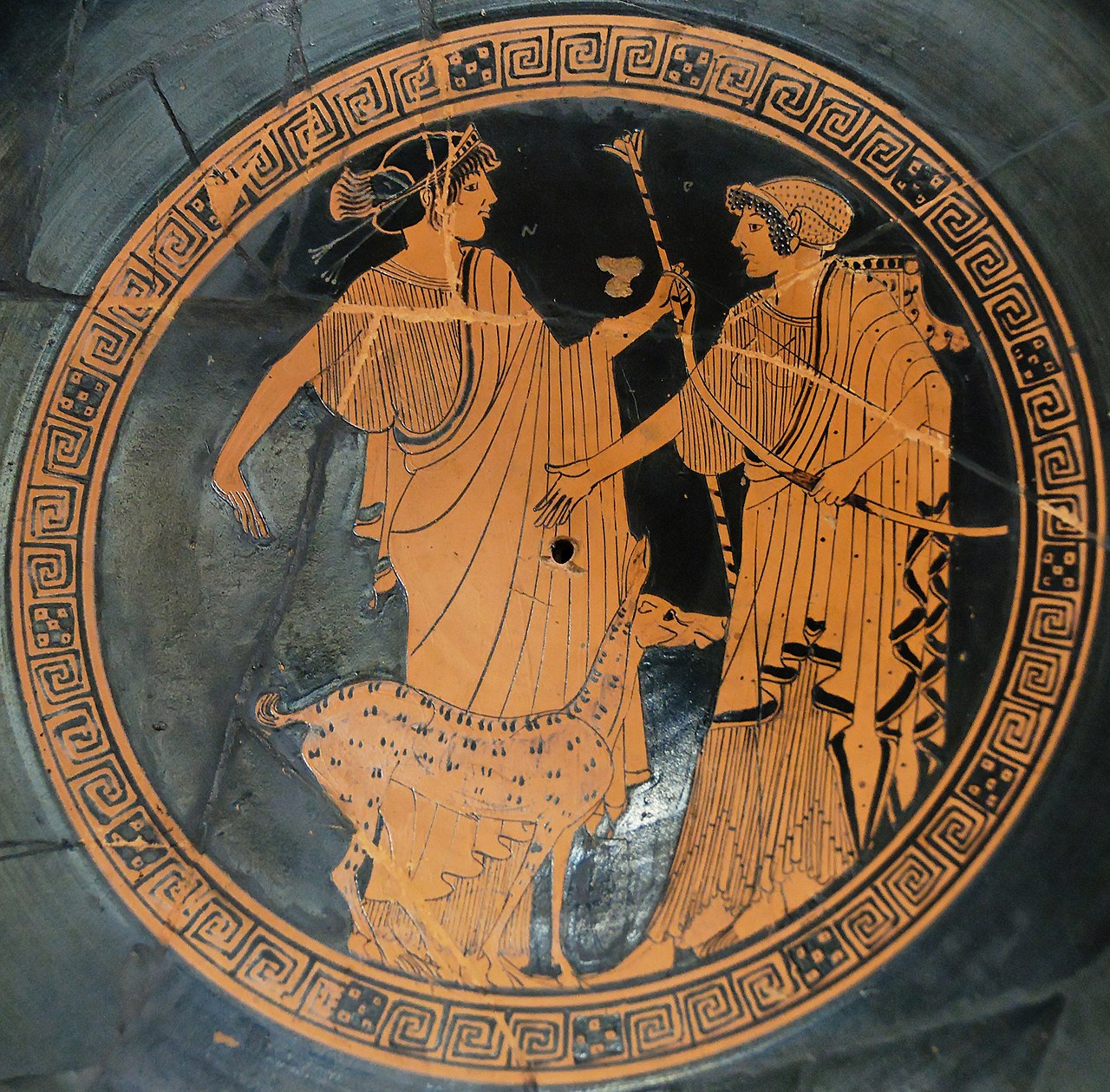
Marie-Lan Nguyen · Public domain
- Born
- 600.
- Died
- 500.
- Occupation
- ceramicist and potter.
VALÉORINE Encyclopedia
VALÉORINE documentary reading
Documentary summary
Brygos was a potter who is conventionally placed among the major Attic potters active around 490–470 BC, based on the dating of workshop vases and the stylistic chronology of red-figure pottery. The majority of surviving vessels associated with Brygos are kylikes, many of which depict scenes related to wine drinking or symposia. This suggests that Brygos’ workshop may have specialized especially in the production of symposium cups.
Admitted source layer · organised and presented by VALÉORINE
Reference Check
Propose documentary evidence for Brygos. A contribution is never written directly as fact: identity, source, rights and evidence gates still decide.
Sign in to contribute
Documentary evidence
Documentary basis
Authority files
getty · 500011785 · wikidata · Q14523700 · wikipedia · Brygos
In this article
Workshop
Workshop
Fourteen surviving drinking cups carry the inscription "Brygos made me" (ΒΡΥΓΟΣ ἘΠΟΙΕΣΕΝ), which indicates that his workshop mainly produced cups rather than other vessel types. Several vase painters worked for him, including the well known Brygos Painter, and the workshop played an important part in early Classical Athenian pottery. • Illustration — Dionysos and satyrs on a vase made by Brygos and painted by the Brygos Painter, ca. 480 BC (Cabinet des Médailles, Paris)
Researchers identify Brygos as the head of an active workshop with more than one painter in early 5th century BC Athens. Cups linked to his workshop are thin, smooth, and well formed, which suggests high skill in clay preparation and throwing. The most famous artist who painted on Brygos cups is the Brygos Painter. His work features detailed figures and confident linework. Other painters who appear to have worked in the same workshop include the Briseis Painter and the Dokimasia Painter. The presence of works by several painters, including the Brygos Painter, the Briseis Painter, and the Dokimasia Painter, suggests that Brygos managed a workshop rather than painting the vessels himself.
Brygos and the Brygos Painter
Brygos and the Brygos Painter
The name Brygos refers to the potter who produced red figure drinking cups in Athens in the early 5th century BC. The Brygos Painter is the name given by modern scholars to the painter who decorated many of these cups. Although they are closely connected, they are not the same individual. Early scholarship sometimes treated the two names as belonging to one person because pieces made by Brygos often featured paintings of very high quality. Around 200 vases are attributed to the Brygos Painter, but only fourteen surviving vessels are actually signed by Brygos as the potter. This difference helps explain the early assumption that Brygos both made and painted the cups, even though signatures and stylistic analysis do not support this. However, stylistic analysis does show that more than one painter worked on vessels produced in the Brygos workshop. Further support for separating the identities comes from the Brygos Tomb assemblage from Capua. Williams' reconstruction of the tomb group shows that more than one painter appears in association with pottery signed by Brygos, which makes it unlikely that the potter and the Brygos Painter were a single person. For these reasons, most scholars understand Brygos as the potter and the Brygos Painter as the most skilled artist who worked in his workshop.
Signatures
Signatures
At least twelve surviving cups carry the inscription "ΒΡΥΓΟΣ ἘΠΟΙΕΣΕΝ" meaning "Brygos made me". Tonks notes that the inscription is most often written on the underside of the foot of the cup, which was a common place for Athenian potters to sign their work at this time. The fact that nearly all signed vessels are cups suggests that this was the main product of his workshop.
The Brygos Tomb
The Brygos Tomb
One important archaeological context connected with Brygos is the Brygos Tomb, which is a 5th-century BC burial found near Capua in southern Italy. A kylix cup with the Brygos signature was reportedly discovered there during 19th century excavations. Because of that cup and several other high quality pieces linked to artists in the Brygos workshop, Beazley called the grave "Tomb II" or the Brygos Tomb. In 1992, Williams' studied museum inventories and archival records to reconstruct the group of objects said to come from the tomb. He concluded that several cups made in the Brygos workshop were part of the original assemblage. These finds support the idea that Attic pottery was traded to southern Italy. Williams explains that the vessels linked to the Brygos Tomb were not documented at the time of discovery and were dispersed through the antiquities market in the 19th century. Because the objects were removed and sold without records of where they were placed or how they were associated with each other, the tomb assemblage has to be reconstructed using museum inventories and dealer archives rather than direct excavation notes. For this reason, the original contents of the burial cannot be verified with certainty. • Illustration — Rhyton in the shape of a mule's head made by Brygos

Dionysos and sileni. Attic red-figured cup interior, ca. 480 BC.
Brygos Painter · User:Bibi Saint-Pol, own work, 2007-05-25
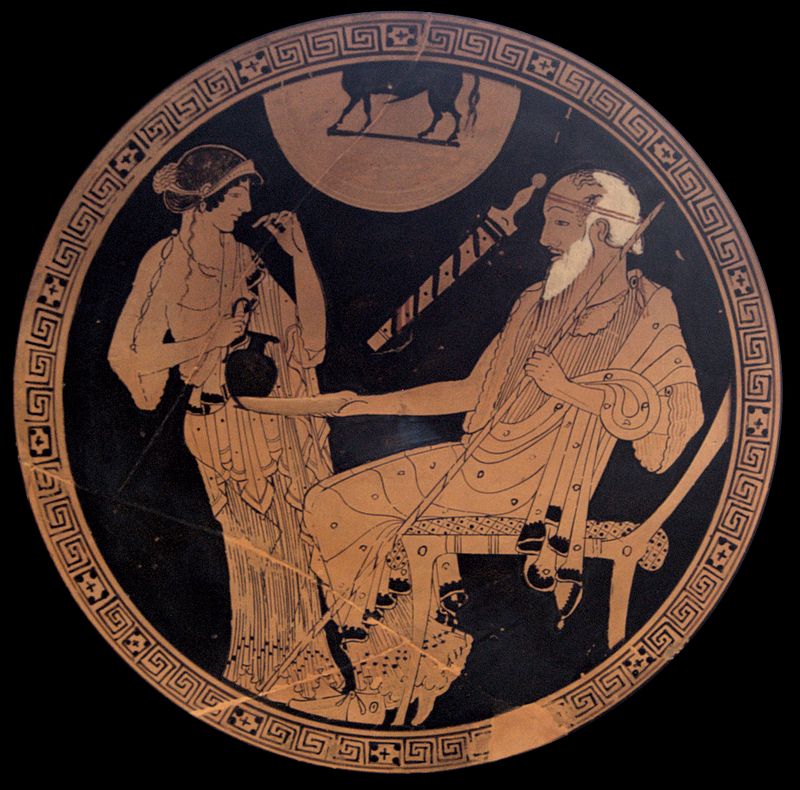
Brygos, Briseis Phoinix Louvre G152
User:Bibi Saint-Pol, own work, 2007-06-06
Life and career
Dated record
Life and career
The full dated record · 2 entries
500
Brygos died.
600
Brygos born.
Primary material
Documents and archives
authority file
- Getty Union List of Artist Names 500011785, Brygos.
General reference · The Getty Research Institute
reference work
- “Brygos”, English Wikipedia, consulted as further reading
Reputable secondary · Wikipedia
authority record
- Wikidata, structured authority record Q14523700: Brygos
General reference · Wikidata
Notes from the source article
Cited by Wikipedia
Notes from the source article
These works are cited by the source article, in its own numbering. They are recorded as its citations, not as sources VALÉORINE has verified.
- 1.Tonks, Oliver Samuel. Brygos.--His characteristics. J. Wilson and son. 92. 1904.
- 2.Cohen, Beth. The colors of clay: special techniques in Athenian vases. J. Paul Getty Museum. 108. 2006. 978-0-89236-571-5.
- 3.Williams, Dyfri. The Brygos Tomb Reassembled and 19th-Century Commerce in Capuan Antiquities. American Journal of Archaeology. 624. 4. 617–636. 1992-10-01. 0002-9114.
- 4.Beazley, J. D. Paralipomena: additions to Attic black-figure vase-painters and to Attic red-figure vase-painters. Clarendon Press. 368. 1971. 978-0-19-813152-6.
- 5.Tonks, Oliver Samuel. Brygos.--His characteristics. J. Wilson and son. 96–97. 1904.
- 6.Cohen, Beth. The colors of clay: special techniques in Athenian vases. J. Paul Getty Museum. 2006. 978-0-89236-942-3.
- 7.Cohen, Beth. The colors of clay: special techniques in Athenian vases. J. Paul Getty Museum. 110. 2006. 978-0-89236-942-3.
- 8.Beazley, J. D. Paralipomena: additions to Attic black-figure vase-painters and to Attic red-figure vase-painters. Clarendon Press. 412. 1971. 978-0-19-813152-6.
- 9.Beazley, J. D. Paralipomena: additions to Attic black-figure vase-painters and to Attic red-figure vase-painters. Clarendon Press. 398. 1971. 978-0-19-813152-6.
- 10.Tonks, Oliver Samuel. Brygos.--His characteristics. J. Wilson and son. 96. 1904.
- 11.Williams, Dyfri. The Brygos Tomb Reassembled and 19th-Century Commerce in Capuan Antiquities. American Journal of Archaeology. 96. 4. 617–636. October 1992. 0002-9114.
- 12.Williams, Dyfri. The Brygos Tomb Reassembled and 19th-Century Commerce in Capuan Antiquities. American Journal of Archaeology. 96. 4. 624. October 1992. 0002-9114.
- 13.Tonks, Oliver Samuel. Brygos.--His characteristics. J. Wilson and son. 97. 1904.
- 14.Tonks, Oliver Samuel. Brygos.--His characteristics. J. Wilson and son. 98. 1904.
- 15.Beazley, J. D. The Brygos Tomb at Capua. American Journal of Archaeology. 49. 2. 156. 1945-04-01. 0002-9114.
- 16.Kurtz, Donna C. Greek burial customs. Cornell University Press. 322. 1971. 978-0-8014-0643-0.
- 17.Williams, Dyfri. The Brygos Tomb Reassembled and 19th-Century Commerce in Capuan Antiquities. American Journal of Archaeology. 96. 4. 633. 1992-10-01. 0002-9114.
- 18.Williams, Dyfri. The Brygos Tomb Reassembled and 19th-Century Commerce in Capuan Antiquities. American Journal of Archaeology. 96. 4. 618. 1992-10-01. 0002-9114.
Bibliography printed in the source article · 6
- Beazley, J.D. Attic Red-Figure Vase-Painters. Clarendon Press. 1963. 294781.
- Beazley, J. D. The Brygos Tomb at Capua. American Journal of Archaeology. 49. 2. 153–158. 1945-04-01. 0002-9114.
- J. Paul Getty Museum. The Colors of Clay: Special Techniques in Athenian Pottery. 2006. 978-0-89236-571-5.
- Kurtz, Donna C. Greek Burial Customs. Thames Hudson. 1971. 9780801406430.
- Tonks, Oliver Samuel. Brygos. His Characteristics. Memoirs of the American Academy of Arts and Sciences. American Academy of Arts & Sciences. 13. 2. 65–117. 1904. 0096-6134.
- Williams, Dyfri. The Brygos Tomb Reassembled and 19th-Century Commerce in Capuan Antiquities. American Journal of Archaeology. 96. 4. 617–636. 1992-10-01. 0002-9114.
References
Citations
References
Each reference names the institution holding it, so a reader may go to the document itself.
authority file
Getty Union List of Artist Names 500011785, Brygos.The Getty Research Institute
Secondary witnessreference work
Secondary witnessauthority record
General reference
Further particulars
Held on the record
Further particulars
Open the remaining particulars
Brygos is recorded as ceramicist and potter.
The Encyclopedia exists whether or not anything is for sale. Corrections are recorded rather than overwritten, and every version of this record is kept. Published 14 August 2026.
Elsewhere in Ceramics
1,104 published records in this field, each with its sources named.
- Brit DyrnesArtist
- Bruce ChiversArtist
- Bruce WinnArtist
- Bruno RadicioniArtist
- ButadesArtist
- Byron TempleArtist
- Camille Le TallecArtist
- Camille SolonArtist
Best supported in this field
For owners
Own a work by Brygos?
A specialist will read what you send and tell you what the house can establish, what it cannot, and whether the object is suited to sale. There is no charge and no obligation. The object stays with you throughout; nothing is shipped to us unless it is arranged in writing beforehand.