
Brian Greene
Brian Randolph Greene[1] (born February 9, 1963) is an American physicist known for his research on string theory.[67][68][71] He is a professor of physics and mathematics at Columbia University, director of its center for theoretical physics, and the chairman of the World Science Festival,[37][38] which he co-founded in 2008. Greene co-discovered mirror symmetry, relating two different Calabi–Yau manifolds.[2][15] He also described the flop transition, a mild form of topology change, and the conifold transition, a more severe transformation of space, showing that topology can smoothly change in string theory.[19] His books The Elegant Universe (1999), The Fabric of the Cosmos (2004), The Hidden Reality (2011), and Until the End of Time (2020) were all top 10 New York Times bestsellers. Greene hosted two Emmy and Peabody Award Winning NOVA miniseries based on his books.[3] He also appeared on The Big Bang Theory episode "The Herb Garden Germination", as well as in the films Frequency and The Last Mimzy.
Brian Greene

Kurt Raschke · CC BY 2.0
- Birth Name
- Brian Randolph Greene
- Born
- 9 February 1963
- Birthplace
- New York City, U.S.
- Education
- Harvard University (BS) Magdalen College, Oxford (DPhil)
- Known for
- String theory Mirror symmetry Topology change The Elegant Universe The Fabric of the Cosmos The Hidden Reality Until the End of Time
- Spouse
- Tracy Day
- Field
- Physics
- Awards
- AAAS Award (2025) Pupin Medal (2022) Andrew Gemant Award (2003) Peabody Award (2003) Pulitzer Prize Finalist (2000) Sloan Fellow (1993) NSF Young Investigator (1992)
- Full name
- Brian Randolph Greene.
- Nationality
- United States
- Occupation
- physicist · writer · professor · actor · mathematician
- Fields
- superstring theory · quantum gravity · theoretical physics · mathematics
VALÉORINE Encyclopedia
VALÉORINE documentary reading
Documentary summary
Brian Randolph Greene[1] (born February 9, 1963) is an American physicist known for his research on string theory.[67][68][71] He is a professor of physics and mathematics at Columbia University, director of its center for theoretical physics, and the chairman of the World Science Festival,[37][38] which he co-founded in 2008. Greene co-discovered mirror symmetry, relating two different Calabi–Yau manifolds.[2][15] He also described the flop transition, a mild form of topology change, and the conifold transition, a more severe transformation of space, showing that topology can smoothly change in string theory.[19] His books The Elegant Universe (1999), The Fabric of the Cosmos (2004), The Hidden Reality (2011), and Until the End of Time (2020) were all top 10 New York Times bestsellers. Greene hosted two Emmy and Peabody Award Winning NOVA miniseries based on his books.[3] He also appeared on The Big Bang Theory episode "The Herb Garden Germination", as well as in the films Frequency and The Last Mimzy.
Admitted source layer · organised and presented by VALÉORINE
Note VALÉORINE
No house-authored Note is published until its assertions and sources pass the VALÉORINE evidence contract. The documentary article remains available in full while that enrichment is being consolidated.
Documentary enrichment in progress · no unsupported statement published
Reference Check
Propose documentary evidence for Brian Greene. A contribution is never written directly as fact: identity, source, rights and evidence gates still decide.
Sign in to contribute
Documentary evidence
Evidence Panel
not yet certified
- Identity
- resolved
- Independent source families
- 0
- Admitted assertions
- 0
- Open conflicts
- 0
Authority files
wikidata · Q60815 · wikipedia · Brian Greene
In this article
Biography
Biography
From 2015 to 2020, he served on the board of overseers of Harvard University,[4] and is currently a member of the board of sponsors of the Bulletin of the Atomic Scientists.[5]
Brian Greene studied at Magdalen College, Harvard University and Stuyvesant High School. The recorded working language is English. The field of work recorded is superstring theory, quantum gravity and theoretical physics. Residence is recorded at New York City. Employment is recorded with Cornell University and Columbia University. Distinctions recorded are Andrew Gemant Award, Richtmyer Memorial Lecture Award and Rhodes Scholarship.

Brian Greene, February 28, 2012 Plucking the Strings of the Multiverse
Steve Jurvetson
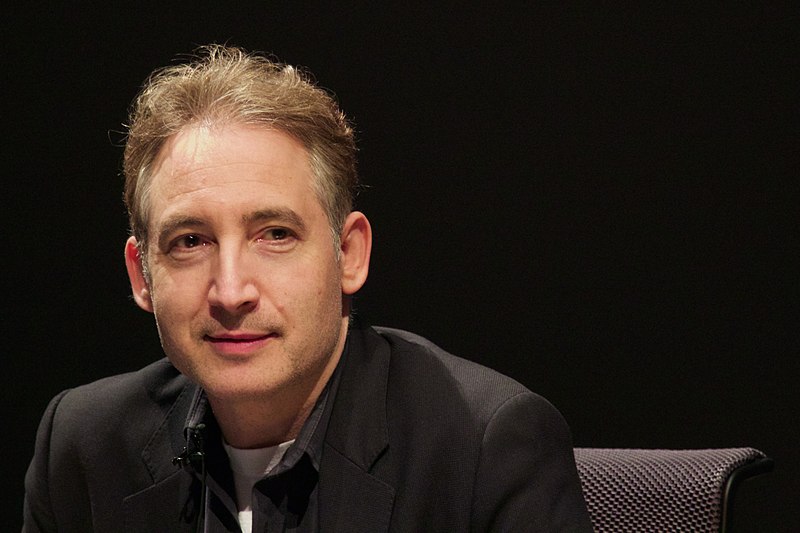
Brian Greene at the National Air and Space Museum
Kurt Raschke
Key facts
Key facts
• Birth Name — Brian Randolph Greene • Born — 9 February 1963 • Birthplace — New York City, U.S. • Education — Harvard University (BS) Magdalen College, Oxford (DPhil) • Thesis Title — Superstrings: topology, geometry and phenomenology and astrophysical implications of supersymmetric models[8][9] • Thesis Url — https: ora.ox.ac.uk/objects/uuid:624d0f65-dab9-4b1e-a2d2-dcba69a41e6e/download_file?file_format=pdf&hyrax_fileset_id=m9837a48fd2d781bf15c67ae1565d41d9&safe_filename=754596661.pdf • Thesis Year — 1986 • Doctoral Advisor — Graham G. Ross James Binney • Known for — String theory Mirror symmetry Topology change The Elegant Universe The Fabric of the Cosmos The Hidden Reality Until the End of Time • Spouse — Tracy Day • Children — 2 • Field — Physics • Workplaces — Harvard University Cornell University Columbia University World Science Festival • Awards — AAAS Award (2025) Pupin Medal (2022) Andrew Gemant Award (2003) Peabody Award (2003) Pulitzer Prize Finalist (2000) Sloan Fellow (1993) NSF Young Investigator (1992)
Early life and education
Early life and education
Greene was born in New York City of Jewish background.[6] His father, Alan Greene, was a one-time vaudeville performer and high school dropout who later worked as a voice coach and composer. After graduating from Stuyvesant High School in 1980, where he was classmates with fellow physicist and science popularizer Lisa Randall,[7] Greene studied physics at Harvard University, graduating in 1984 with a Bachelor of Science, summa cum laude. He then did doctoral study in theoretical physics at Magdalen College, Oxford, under Graham Ross and James Binney. He received a Doctor of Philosophy in 1987 with a thesis entitled "Superstrings: topology, geometry and phenomenology and astrophysical implications of supersymmetric models". While at Oxford, Greene also studied piano with the concert pianist Jack Gibbons.[10]
Academic career
Academic career
Greene joined the physics faculty of Cornell University in 1990, received tenure in 1993, and was appointed to a full professorship in 1995.[11] The following year, he joined the faculty of Columbia University as a full professor.[12] At Columbia, Greene is director of the university's center for theoretical physics and is leading a research program at the intersection of string theory, mathematical physics, and cosmology.[13]
Research
Research
Greene's area of research is string theory, a candidate for a theory of quantum gravity. He is known for his contribution to the understanding of the different shapes the curled-up dimensions of string theory can take. The most important of these shapes are so-called Calabi–Yau manifolds; when the extra dimensions take on those particular forms, physics in three dimensions exhibits an abstract symmetry known as supersymmetry.[14] Greene co-discovered a particular class of symmetry relating two different Calabi–Yau manifolds, known as mirror symmetry and is known for his research on the flop-transition,[16] a mild form of topology change, and also the conifold transition,[18] a more severe transformation of space, showing that topology in string theory can change smoothly. Greene has also studied string cosmology, especially the imprints of trans-Planckian physics on the cosmic microwave background,[20] and brane-gas cosmologies that could explain why the space around us has three large dimensions.[21] His work has expanded on the suggestion of a black hole electron, namely that a black hole can continuously transform into a particle such as an electron. Currently, Greene is studying non-simply connected and non-orientable compactifications and has showed that in some of these contexts, signals can have an effective speed greater than that of light, and even travel back in time.[22]
Documentary television
Documentary television
Greene's first book, The Elegant Universe, was adapted into a three-part PBS television special of the same name, hosted and narrated by Greene, which won a 2003 Peabody Award. Greene's second book, The Fabric of the Cosmos, was adapted into a four-part PBS television special of the same name, hosted and narrated by Greene, which premiered in 2011[30] and was nominated for multiple Emmy Awards.[31] Greene was also featured in ABC's Nightline in Primetime: Brave New World series.[32]
Stage works
Stage works
Greene worked with by composer Philip Glass, playwright David Henry Hwang, filmmakers AL and AL, and executive producer Tracy Day to adapt Greene's novella Icarus at the Edge of Time, which is a futuristic re-telling of the Icarus myth, into a stage work for full orchestra, film, and narrator. The work premiered on June 6, 2010 at Alice Tully Hall at Lincoln Center for the Performing Arts, with narrator John Lithgow, as part of World Science Festival.[33] Icarus at the Edge of Time has since been performed 55 times in 31 cities and 13 countries, with narrators including Liev Schreiber, Kate Mulgrew, Levar Burton, and David Morrissey. Greene wrote the stage work Light Falls: Space, Time, and an Obsession of Einstein, which traces Albert Einstein's discovery of the General Theory of Relativity, and his subsequent failed attempts to find what he called "the unified theory." The original score was written by Jeff Beal and visuals and stage production were created by 59 Productions, with executive producer Tracy Day. The work premiered on February 19, 2019 at the Gerald Lynch Theater in New York City,[34] with Greene in the role of narrator, and was filmed by Great Performances for national broadcast on PBS on the centenary of the confirmation of General Relativity, May 29, 2019.[35] Greene wrote the stage work Time, Creativity and the Cosmos, exploring the origin of the universe, life, and creative expression, which premiered on May 30, 2017 at Lincoln Center's Rose Theater, with Greene in the role of narrator and performers Pilobolus, Joshua Bell, Renee Fleming, Brian Stokes Mitchell, and David Draiman.[36]
World Science Festival
World Science Festival
In 2008, together with former ABC News producer Tracy Day, Greene co-founded the World Science Festival as a forum for cultivating "a general public informed by science, inspired by its wonder, convinced of its value, and prepared to engage with its implications for the future." Since its founding, the World Science Festival has produced more than a thousand live and digital programs on subjects including cosmology, astronomy, quantum mechanics, particle physics, black holes, neuroscience, artificial intelligence, consciousness, quantum biology, genius, creativity, astrobiology, extrasolar planets and psychedelics.[41] These programs have involved hundreds of scientists, technologists, and artists.[42]
Media
Media
• Illustration — Brian Greene on Bookbits radio The popularity of his books and his natural on-camera demeanor have resulted in many media appearances, including The Late Show with Stephen Colbert,[43][44] Good Morning America, CNN,[48] ABC News, CBS News,[50] The History Channel, Conan, The Science Channel, The Discovery Channel, The Colbert Report,[51] Charlie Rose,[52] The Art Bell Show,[53] Coast to Coast AM,[54] BBC World News America, Late Show with David Letterman,[55] Radiolab,[56] and The Joe Rogan Experience.[49][57] He was interviewed at length by Jim Al-Khalili on the BBC radio program The Life Scientific on 28 April 2020.[58] In April 2011, Greene appeared as himself on The Big Bang Theory in the episode "The Herb Garden Germination", speaking to a small crowd about the contents of his most recent book. Greene was a technical consultant for the film Frequency, in which he also had a cameo role. He was a consultant on the 2006 time-travel movie Déjà Vu. He also had a cameo appearance as an Intel scientist in 2007's The Last Mimzy. Greene was also mentioned in the 2002 Angel episode "Supersymmetry" and in the 2008 Stargate Atlantis episode "Trio". Greene has lectured outside of the collegiate setting, at both a general and a technical level, in more than twenty-five countries and all seven continents. In 2012, he received the Richtmyer Memorial Award, which is given annually by the American Association of Physics Teachers.[59] In May 2013, the Science Laureates of the United States Act of 2013 (H.R. 1891; 113th Congress) was introduced into Congress. Brian Greene was listed by one commentator as a possible nominee for the position of Science Laureate, if the act were to pass.[60] In March 2015, an Australian spider that uses waves to hunt prey, Dolomedes briangreenei, was to be named in honor of Brian Greene.[61]
Recognition
Recognition
• 1984 Rhodes Scholarship • 1987 National Science Foundation Postdoctoral Fellowship in Mathematical Sciences[63] • 1992 National Science Foundation National Young Investigator Award[64] • 1993 Alfred P. Sloan Foundation Fellowship[65] • 2000 Aventis Prize, The Elegant Universe[66] • 2000 Pulitzer Prize Finalist for General Nonfiction, The Elegant Universe • 2003 Gemant Award, American Institute of Physics • 2003 George Foster Peabody Award, The Elegant Universe with Brian Greene • 2004 Phi Beta Kappa Book Award[69] • 2010 Cooper Union Urban Visionary Award[70] • 2012 AAPT Richtmeyer Memorial Award for Research and Teaching • 2013 Best Documentary, Jackson Hole Film Festival, Fabric of the Cosmos, • 2013 Merck-Serono Book Prize for Literature and Science, for The Hidden Reality • 2022 Michael Pupin Medal for Service to the Nation in Science • 2025 AAAS Mani L. Bhaumik Award for Public Engagement with Science[72]
Personal life
Personal life
Greene is married to former ABC producer Tracy Day. They have one son, Alec, and one daughter, Sophia. Greene has been vegetarian since he was nine years old and a vegan since 1997.[73] Greene has stated that he regards science as being incompatible with literalist interpretations of religion and that there is much in the New Atheism movement which resonates with him because he personally does not feel the need for religious explanation. However, he is uncertain of its efficacy as a strategy for spreading a scientific worldview.[76] In an interview with The Guardian he stated: "When I'm looking to understand myself as a human, and how I fit in to the long chain of human culture that reaches back thousands of years, religion is a deeply valuable part of that story."[77]
Popular science
Popular science
• Until the End of Time: Mind, Matter, and Our Search for Meaning in an Evolving Universe (2020) • Light Falls: Space, Time, and an Obsession of Einstein (2016) • The Hidden Reality: Parallel Universes and the Deep Laws of the Cosmos (2011) • Icarus at the Edge of Time (2008) • The Fabric of the Cosmos: Space, Time, and the Texture of Reality (2004) • The Elegant Universe: Superstrings, Hidden Dimensions, and the Quest for the Ultimate Theory (1999)
Technical articles
Technical articles
For a full list of technical articles, consult the publication list in the INSPIRE-HEP database. * * • R. Easther, B. Greene, W. Kinney, G. Shiu, "Inflation as a Probe of Short Distance Physics". Physical Review. D64 (2001) 103502. • Brian R. Greene, "D-Brane Topology Changing Transitions". Nuclear Physics. B525 (1998) 284–296. • Michael R. Douglas, Brian R. Greene, David R. Morrison, "Orbifold Resolution by D-Branes". Nuclear Physics. B506 (1997) 84–106. • Brian R. Greene, David R. Morrison, Andrew Strominger, "Black Hole Condensation and the Unification of String Vacua". Nuclear Physics. B451 (1995) 109–120. • P.S. Aspinwall, B.R. Greene, D.R. Morrison, "Calabi–Yau Moduli Space, Mirror Manifolds and Spacetime Topology Change in String Theory". Nuclear Physics. B416 (1994) 414–480. • B.R. Greene and M.R. Plesser, "Duality in Calabi-Yau Moduli Space". Nuclear Physics. B338 (1990) 15.
Identity
Identity
Brian Greene is recorded at birth as Brian Randolph Greene. Recorded as having studied at Magdalen College, Harvard University and Stuyvesant High School. Career and activity. Greene worked in superstring theory, quantum gravity, theoretical physics, mathematics and universe. He was employed by Cornell University and Columbia University. He worked at New York City.
Life and career
Dated record
Life and career
Explore 1963–2020
The full dated record · 4 entries
1963
Brian Greene born at New York City.
2005
Brian Greene: Making sense of string theory (TED).
2012
Brian Greene: Is our universe the only universe? (TED).
2020
Brian Greene and Leonard Susskind: Quantum Mechanics, Black Holes and String Theory (2020) is digitised and catalogued by Internet Archive.
Places
Named by the record
Places
Only places the record itself states, plotted where the house gazetteer settles their coordinates. Nothing is inferred from a name or a nationality.
- New York City
Books
Greene is well known to a wider audience for his work on popularizing theoretical physics, in particular string theory and the search for a unified theory of physics. His first book, The Elegant Universe: Superstrings, Hidden Dimensions, and the Quest for the Ultimate Theory, published in 1999 and a New York Times Best Seller, is a popularization of superstring theory and M-theory.[24] It was a finalist for the Pulitzer Prize in nonfiction, and winner of The Aventis Prizes for Science Books in 2000.[25] Greene's second book, The Fabric of the Cosmos: Space, Time, and the Texture of Reality (2004), a New York Times Best Seller, is about space, time, and the nature of the universe.[26] Aspects covered in this book include non-local particle entanglement as it relates to special relativity and basic explanations of string theory. It is an examination of the very nature of matter and reality, covering such topics as spacetime and cosmology, origins and unification, and including an exploration into reality and the imagination. Greene's third book, The Hidden Reality: Parallel Universes and the Deep Laws of the Cosmos, published in January 2011, was a New York Times Best Seller and deals in greater depth with multiple universes, or, as they are sometimes referred to collectively, the multiverse.[27][28] Greene's most recent book, Until the End of Time: Mind Matter and Our Search for Meaning in an Evolving Universe (2020), was a New York Times Best Seller and explores the universe's evolution and likely end, as well as the emergence of life and consciousness, bridging cosmological and existentialist thought.[29]
Notes from the source article
Cited by Wikipedia
Notes from the source article
These works are cited by the source article, in its own numbering. They are recorded as its citations, not as sources VALÉORINE has verified.
- 1.The Mathematics Genealogy Project – Brian Greene.
- 2.International Press. Essays on mirror manifolds. 1992. 978-962-7670-01-8.
- 3.NOVA: The Elegant Universe with Brian Greene. The Peabody Awards.
- 4.harvardgazette. Five Harvard Overseers elected. Harvard Gazette. May 28, 2015.
- 5.Board of Sponsors. Bulletin of the Atomic Scientists.
- 6.Literature = art + science, February 12, 2009, Rebecca Abrams, JC
- 7.JR Minkel. The String is The Thing – Brian Greene Unravels the Fabric of the Universe. Columbia Magazine. Columbia University. Spring 2006.
- 8.Greene, B. Thesis Superstrings. University of Oxford. 1986.
- 9.Brian Greene - Department of Physics. physics.columbia.edu.
- 10.The Hidden Reality by Brian Greene book review.
- 11.Brian Greene. To The Best Of Our Knowledge. April 8, 2020.
- 12.Brian Greene Biography, Books, & Facts Britannica. www.britannica.com. January 4, 2025.
- 13.admin. Physics Research. Brian Greene.
- 14.Candelas, P. Vacuum configurations for superstrings. Nuclear Physics B. 258. 46–74. January 1, 1985. 0550-3213.
- 15.Greene, B. R. Duality in Calabi-Yau moduli space. Nuclear Physics B. 338. 1. 15–37. July 2, 1990. 0550-3213.
- 16.Aspinwall, Paul S. Multiple mirror manifolds and topology change in string theory. Physics Letters B. 303. 3. 249–259. April 15, 1993. 0370-2693.
- 17.Aspinwall, Paul S. Calabi-Yau moduli space, mirror manifolds and spacetime topology change in string theory. Nuclear Physics B. 416. 2. 414–480. March 28, 1994. 0550-3213.
- 18.Greene, Brian R. Black hole condensation and the unification of string vacua. Nuclear Physics B. 451. 1. 109–120. September 25, 1995. 0550-3213.
- 19.Elsevier Science. Symétries quantiques =: Quantum symmetries: Les Houches, session LXIV, 1 Août - 8 Septembre 1995. 387–471. 1998. 978-0-444-82867-5.
- 20.Easther, Richard. Generic estimate of trans-Planckian modifications to the primordial power spectrum in inflation. Physical Review D. 66. 2. July 22, 2002. 10.1103/PhysRevD.66.023518.
- 21.Greene, Brian. Dynamical decompactification and three large dimensions. Physical Review D. 82. 4. August 25, 2010. 10.1103/PhysRevD.82.043528.
- 22.Greene, Brian. Back to the future: Causality on a moving braneworld. Physical Review D. 107. 2. January 27, 2023. 10.1103/PhysRevD.107.025016.
- 23.Greene, Brian. Superluminal propagation on a moving braneworld. Physical Review D. 106. 8. October 10, 2022. 10.1103/PhysRevD.106.085001.
- 24.Greene, Brian. The elegant universe: superstrings, hidden dimensions, and the quest for the ultimate theory. Norton. 2003. 978-0-393-33810-2.
- 25.Royce Carlton Incorporated. Profile of Brian Greene.
- 26.Greene, Brian. The fabric of the cosmos: space, time, and the texture of reality. Vintage Books. 2005. 978-0-375-72720-7.
- 27.Ferris, Timothy. Expanding Horizons. The New York Times. February 4, 2011.
- 28.Greene, Brian. The hidden reality: parallel universes and the deep laws of the cosmos. Vintage Books. 2011. 978-0-307-27812-8.
- 29.Greene, Brian. Until the end of time: mind, matter, and our search for meaning in an evolving universe. Alfred A. Knopf Books. 2020. 978-1-5247-3167-0.
- 30.The Fabric of the Cosmos. www.pbs.org. November 2, 2011.
- 31.PBS Programs Nominated for 37 News & Documentary Emmys. About PBS - Main.
- 32.Brian Green Featured on ABC Nightline in Prime Time. www.phys-l.org.
- 33.Icarus at the Edge of Time. World Science Festival.
- 34.Light Falls: Space, Time & An Obsession of Einstein – Gerald W. Lynch Theater.
- 35.Light Falls.
- 36.Opening Night: Time, Creativity, and the Cosmos. World Science Festival.
- 37.Who We Are. World Science Festival.
- 38.About the World Science Festival. World Science Festival.
- 39.Eskenazi, Gerald. Add This To Your Calendar In New York: The Fascinating Science Festival. Forbes. May 28, 2019.
- 40.Overbye, Dennis. An Overflowing Five-Day Banquet of Science and Its Meanings. The New York Times. June 3, 2008.
- 41.Video Library. World Science Festival.
- 42.Participants. World Science Festival.
- 43.The Late Show with Stephen Colbert. Brian Greene Explains That Whole General Relativity Thing. November 12, 2015.
- 44.The Late Show with Stephen Colbert. Gravitational Waves Hit The Late Show. February 25, 2016.
- 45.The Late Show with Stephen Colbert. Brian Greene Explains The Most Powerful Explosions In The Universe. May 26, 2016.
- 46.The Late Show with Stephen Colbert. Brian Greene Makes Stuff Levitate. Seriously. June 29, 2017.
- 47.America, Good Morning. Author Brian Greene reflects on the beginning and possible end of time. Good Morning America.
- 48.Fusion breakthrough: 'Scientifically huge. Technologically, big leaps yet to come', says Brian Greene CNN. December 14, 2022.
- 49.Where we came from, and where we're going. ABC listen. April 13, 2024.
- 50."Enormously distressing": Leading scientist reacts to poll on scientific beliefs - CBS News. www.cbsnews.com.
- 51."The Colbert Report" with guest Brian Greene (TV Episode November 2005). The Colbert Report. November 28, 2005.
- 52.Brian Greene - Charlie Rose.
- 53.Art Bell: Somewhere in Time. Coast to Coast AM.
- 54.Brian Greene. Coast to Coast AM.
- 55.annas890. Brian Greene on David Letterman. January 3, 2010.
- 56.The (Multi) Universe(s). Radiolab Podcasts WNYC Studios.
- 57.Brian Greene Episodes - Joe Rogan Podcast. JRE Podcast. April 8, 2021.
- 58.BBC The Life Scientific.
- 59.American Association of Physics Teachers. Brian Greene Recognized as 2012 Recipient of the Richtmyer Memorial Lecture Award.
- 60.Marlow, Jeffrey. The Science Laureate of the United States. Wired. May 9, 2013.
- 61.Mitchell-Whittington, Amy. Brisbane welcomes world renowned physicist by naming spider after him. Brisbane Times. March 9, 2016.
- 62.Lewis, Danny. Recently Discovered Spider Is Named After Physicist Brian Greene. Smithsonian.
- 63.NSF Award Search: Award # 0074126 - Focused Research Group: Calabi-Yau Manifolds and their Applications. www.nsf.gov.
- 64.NSF Award Search: Award # 9258582 - NSF Young Investigator. www.nsf.gov.
- 65.Grants Alfred P. Sloan Foundation. sloan.org.
- 66.Aventis Prizes for Science Books 2000. Nature. 405. 6786. 513. June 2000. 1476-4687.
- 67.Finalist: The Elegant Universe: Superstrings, Hidden Dimensions and the Quest for the Ultimate Theory, by Brian Greene (W.W. Norton). www.pulitzer.org.
- 68.Brian Greene wins 2003 Gemant Award from AIP - AIP.ORG. AIP. January 3, 2003.
- 69.PBK - Phi Beta Kappa's Award in Science past winners. www.pbk.org.
- 70.Urban Visionaries. The Cooper Union.
- 71.Pupin Medal Columbia Engineering. www.engineering.columbia.edu. May 31, 2024.
- 72.AAAS Announces 2025 Award Winners American Association for the Advancement of Science (AAAS). www.aaas.org.
- 73.Boss, Shira. Brian Greene Has the World on a String. Columbia College Today.
- 74.Flickr. Consciousness Emerges in the Ash of Stellar Alchemy. August 12, 2007.
- 75.Scientists and inventors on vegetarianism.
- 76.An Interview with Brian Greene. oxonianreview.org. April 3, 2011.
- 77.Physicist Brian Greene: 'Factual information is not the right yardstick for religion'. TheGuardian.com. February 8, 2020.
- 78.Online version is titled "String theorist Brian Greene wants to help you understand the cold, cruel universe".
Bibliography printed in the source article · 1
References
Citations
References
Each reference names the institution holding it, so a reader may go to the document itself.
reference work
Wikidata, structured authority record Q60815: Brian GreeneWikimedia Foundation
Partially resolvedreference work
Partially resolved
The Encyclopedia exists whether or not anything is for sale. Corrections are recorded rather than overwritten, and every version of this record is kept. Published 14 August 2026.
Elsewhere in Books
38,960 published records in this field, each with its sources named.
- Brian CoffeyAuthor
- Brian D. JohnsonAuthor
- Brian Doyle-MurrayAuthor
- Brian FawcettAuthor
- Brian GriffinAuthor
- Brian HaigAuthor
- Brian HenryAuthor
- Brian HerbertAuthor
Best supported in this field
For owners
Own a work by Brian Greene?
A specialist will read what you send and tell you what the house can establish, what it cannot, and whether the object is suited to sale. There is no charge and no obligation. The object stays with you throughout; nothing is shipped to us unless it is arranged in writing beforehand.