
Bodheswaran
Keshava Pillai (born 28 December 1901 – 3 July 1990), better known as Bodheswaran was an Indian independence activist, social reformer and a poet of Malayalam literature. He was known for his nationalistic poems such as Keralaganam and for his involvement in social movements like Vaikom Satyagraha and other related events which led to the Temple Entry Proclamation of 1936.
Bodheswaran
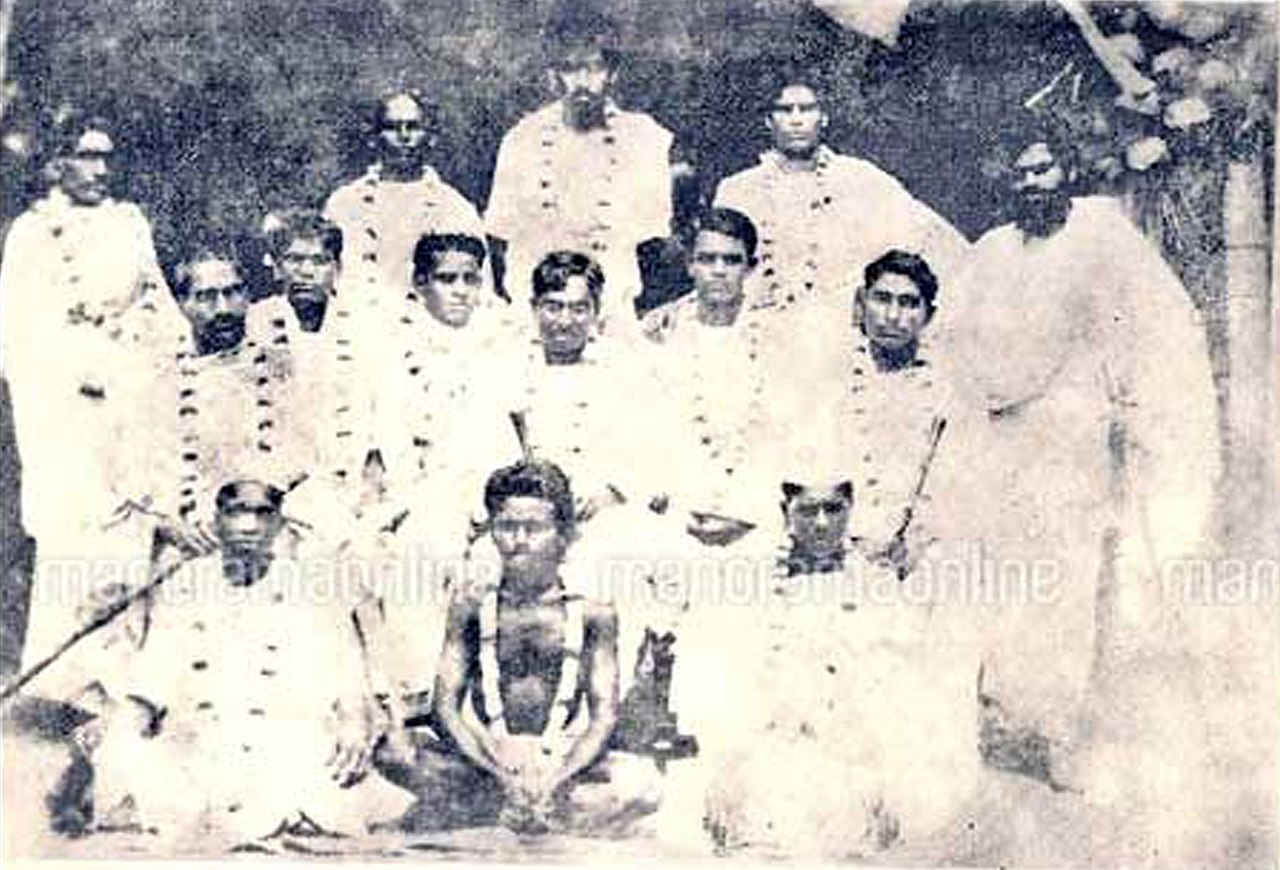
Public domain
- Name
- Bodheshwaran
- Birth Name
- Keshava Pillai
- Born
- 28 December 1901
- Birthplace
- Neyyattinkara, Kingdom of Travancore, British India
- Died
- 3 July 1990
- Occupation
- * Indian independence activist
- Spouse
- V.
- Nationality
- India · British Raj · Dominion of India
VALÉORINE Encyclopedia
VALÉORINE documentary reading
Documentary summary
Keshava Pillai (born 28 December 1901 – 3 July 1990), better known as Bodheswaran was an Indian independence activist, social reformer and a poet of Malayalam literature. He was known for his nationalistic poems such as Keralaganam and for his involvement in social movements like Vaikom Satyagraha and other related events which led to the Temple Entry Proclamation of 1936.
Admitted source layer · organised and presented by VALÉORINE
Reference Check
Propose documentary evidence for Bodheswaran. A contribution is never written directly as fact: identity, source, rights and evidence gates still decide.
Sign in to contribute
World of VALÉORINE
Documentary connections
Only confirmed graph relationships appear here. Images are shown only when their identity and reuse rights both pass the documentary gate.
Documentary evidence
Documentary basis
Authority files
wikidata · Q4936535 · wikipedia · Bodheswaran
In this article
Key facts
Key facts
• Name — Bodheshwaran • Birth Name — Keshava Pillai • Born — 28 December 1901 • Birthplace — Neyyattinkara, Kingdom of Travancore, British India • Died — 3 July 1990 • Occupation — * Indian independence activist • Social reformer • Poet • Spouse — V. K. Karthiyayini Amma • Illustration — Leaders of Vaikom Satyagraha
Biography
Biography
Bodheswaran, né Keshava Pillai, was born on 28 December 1901 in Neyyattinkara, in Travancore (in the present day Thiruvananthapuram, Kerala, India) to Champayil Veettil Kunjan Pillai and Thazhamangalam Janaki Pillai Amma.Siblings: Kunju Lekshmi Amma, Parameshwara Pillai, Devaki Amma, Krishnan Nair, Saraswathy Amma: Influenced by the thoughts of Swami Vivekananda from an early age, he left his studies to visit the social and religious reformer Narayana Guru with whom he stayed for about two years. Subsequently, he travelled throughout India and during a visit to the Kashi Vishwanath Temple, he assumed the name of Bodheswarananda. It was during these travels, he met several Sannyasins and Indian independence activists; he also had the opportunity to attend the public meetings of Mahatma Gandhi and Motilal Nehru. Bodheswaran was first married to Smt. Chellamma Amma, in that relation he has a daughter, Smt. Swathanthra Kumari(Settled in UK). Latter he married V. K. Karthiyayini Amma, a professor of Sanskrit in the Government Sanskrit College, Thiruvananthapuram. The couple had three daughters, Hridayakumari, Sugathakumari and Sujatha, all the three being writers. He died on 3 July 1990, at the age of 88.
With Chattampi Swamikal and Narayana Guru
With Chattampi Swamikal and Narayana Guru
On his return to Kerala, Bodheswaran was advised by Narayana Guru to meet Chattampi Swamikal, who was known to have been a major influence in his life. Thereafter, he kept his association with Swamikal, while getting involved the Indian freedom struggle and made several public speeches which were said to have attracted large crowds. After a short spell during which he favoured the Arya Samaj movement, he got involved in the Vaikom Satyagraha and other related events until the Temple Entry Proclamation of 1936. He also became a member of the Indian National Congress and changed his name once more, to Bodheswaran. After Indian independence Bodheswaran gradually withdrew from active politics, although he remained a Congressman until his death. He lectured and wrote on the subject of Swamikal, his belief as quoted by Nair and Devi is that Swamikal was "an embodiment of perfect knowledge".
Life and career
Dated record
Life and career
The full dated record · 2 entries
1901
Bodheswaran born at Neyyattinkara.
1990
Bodheswaran died.
Legacy and honours
Bodheswaran was known for his poems reflecting nationalistic fervour during his involvement in the Indian independence movement which included Keralaganam, a popular patriotic song of the times. He published six books which, besides poetry anthologies, include a compilation of his speeches. He attempted to write a comprehensive world history covering the period up to World War I but could not complete it. Suprabhatham, a magazine he founded, also had only a short life. • Illustration — K. R. Narayanan The Government of India honoured him with the Thamra Patra (Copper Plaque) for his contributions to the Indian independence movement. His birth centenary was celebrated in 2002 when K. R. Narayanan, the then president of India, inaugurated Bodheshwaran Foundation, an eponymous organization, for propagating his ideals. Keralaganam, his patriotic song, was declared as the cultural song of Kerala in 2014.
Notes from the source article
Cited by Wikipedia
Notes from the source article
These works are cited by the source article, in its own numbering. They are recorded as its citations, not as sources VALÉORINE has verified.
- 1.Biography on Kerala Sahitya Akademi portal. Kerala Sahitya Akademi portal. 8 April 2019.
- 2.Bodheswaran - Veethi profile. veethi.com. 8 April 2019.
- 3.R. Raman, Nair. Chattampi Swami: An Intellectual Biography. Centre for South Indian Studies. 168–169. 2010. 978-81-905928-2-6.
- 4.Tharu. Women Writing in India: The twentieth century. Feminist Press. 2. 399. 1993. 978-1-55861-029-3.
- 5.Bodheswaran - Kerala Literature. keralaliterature.com. 8 April 2019.
- 6.About Author Sujatha Devi. keralabookstore.com.
- 7.Prerna Singh. How Solidarity Works for Welfare: Subnationalism and Social Development in India. Cambridge University Press. 85–. 2015. 978-1-107-07005-9.
- 8.List of works. Kerala Sahitya Akademi. 8 April 2019.
- 9.Bodheswaran foundation inaugurated - Times of India. The Times of India. 11 December 2002.
Bibliography printed in the source article · 7
- Bodheswaran. Thiranhedutha kavithakal (Bodheswaran). 1982.
- Bodheswaran. Raktha Rekhakal (Pusthakam - 1). 1948.
- Bodheswaran. Swathanthra Keralam.
- Bodheswaran. Hrudhayanguram.
- Bodheswaran. Bodheswarante thiranjedutha kavithakal. Priyadarsini. 2015.
- Datta, Amaresh. The Encyclopaedia Of Indian Literature. Sahitya Akademi. 1 (A To Devo). 2006. 978-81-260-1803-1.
- Bodheswaran. Thiranjedutha Kavithakal. DC Books. 1982.
References
Citations
References
Each reference names the institution holding it, so a reader may go to the document itself.
reference work
Secondary witnessreference work
Secondary witness
People, houses and institutions
Knowledge graph
People, houses and institutions
Teachers, collaborators, publishers and institutions recorded against this person, each on a stated basis.
Citizenship
1- IndiaPlace
Established from a fact already recorded on a verified source.
Further particulars
Held on the record
Further particulars
Open the remaining particulars
His recorded confession was Hinduism. 3 children are recorded: Sugathakumari, Hridayakumari and B Sujatha Devi. Other recorded relations include K. The identifiers under which Bodheswaran may be traced in institutional catalogues.
Identity and origins
The Encyclopedia exists whether or not anything is for sale. Corrections are recorded rather than overwritten, and every version of this record is kept. Published 21 August 2026.
Elsewhere in Books
39,529 published records in this field, each with its sources named.
- Bobby JindalAuthor
- Bobby McLeodAuthor
- Bobojon GhafurovAuthor
- Bochō YamamuraAuthor
- Bodil BechAuthor
- Bodil MalmstenAuthor
- Bodo KirchhoffAuthor
- Bodufenvalhuge SidiAuthor
Best supported in this field
For owners
Own a work by Bodheswaran?
A specialist will read what you send and tell you what the house can establish, what it cannot, and whether the object is suited to sale. There is no charge and no obligation. The object stays with you throughout; nothing is shipped to us unless it is arranged in writing beforehand.