
Baldassarre Lanci
Illustration — A plan of Lanci's new city at Terra del Sole. Its geometric layout was to prove an early example of modern town planning, later popularised during the Baroque period Baldassarre Lanci (1510–1571) was an Italian architect, inventor, theatrical set designer, and master of perspective of the Renaissance period. Baldassarre Lanci was born in Urbino, he spent most of his working life in Tuscany.
Also recorded as Baldassare da Urbino Lancia · Baldassare da Urbino Lanci · Baldassare da Urbino · Baldassare Lanci
Baldassarre Lanci
Sailko · CC BY 3.0
- Born
- 1510 · Urbino.
- Died
- 1571 · Florence.
- Nationality
- Italy
- Occupation
- architect · inventor · engineer
VALÉORINE Encyclopedia
VALÉORINE documentary reading
Documentary summary
Illustration — A plan of Lanci's new city at Terra del Sole. Its geometric layout was to prove an early example of modern town planning, later popularised during the Baroque period Baldassarre Lanci (1510–1571) was an Italian architect, inventor, theatrical set designer, and master of perspective of the Renaissance period. Baldassarre Lanci was born in Urbino, he spent most of his working life in Tuscany.
Admitted source layer · organised and presented by VALÉORINE
Note VALÉORINE
Baldassarre Lanci (1510–1571) was an Italian architect, engineer and inventor. Born in Urbino, the architect died in Florence.
Composed from admitted, traceable facts · 26 September 2026
VALÉORINE
Reference Check
Propose documentary evidence for Baldassarre Lanci. A contribution is never written directly as fact: identity, source, rights and evidence gates still decide.
Sign in to contribute
World of VALÉORINE
Documentary connections
Only confirmed graph relationships appear here. Images are shown only when their identity and reuse rights both pass the documentary gate.
Documentary evidence
Documentary basis
Authority files
wikidata · Q804746 · wikipedia · Baldassarre Lanci
In this article
Early career
Early career
Baldassarre Lanci began his career as military engineer, for ten years following 1547 he was in the continual employment of the Republic of Lucca. His notability as a construction engineer earned him the commission to carry out a detailed survey of Rome's city walls and those of the bastions at Ancona, Civitavecchia and Ostia, and for Pope Pius IV
Medici architect
Medici architect
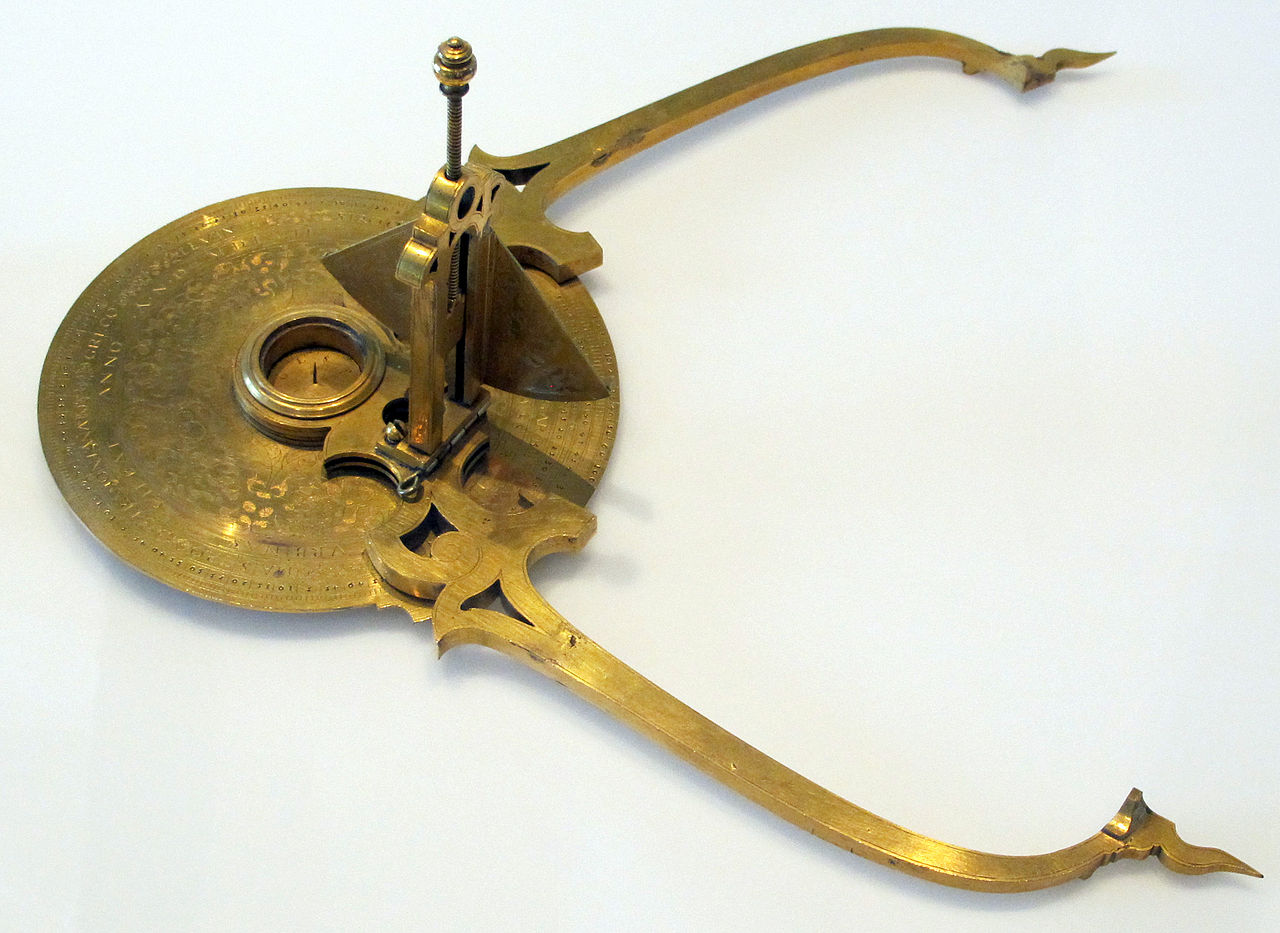
From 1557 he worked almost exclusively for Cosimo I de' Medici, Lanci's chief employer and patron for whom he supervised such projects as the fortification of Siena and many other Tuscan towns. His urban works included the design of Terra del Sole a fortified new city for Cosimo I de' Medici, in what is now the Province of Forlì-Cesena. Lanci also designed the church of Santa Maria della Rosa in the spa town of Chianciano Terme, in today's Province of Siena; Santa Maria della Rosa was built on a central plan; even though it was not finished, the church is notable for the sobriety, and clean lines of its design which culminates in an elegant dome. The church, however, was never fully completed. In 1585 building work stopped, fourteen years after Lanci's death. He also designed the walls of Grosseto in 1564, directing the construction site until his death in 1571, when he was succeeded by his son Marino. Lanci's most notable achievement was his invention in 1567 of a piece of surveying equipment to obtain perspectives with a visual field of 180°. The instrument, which he named distanziometro ("distance meter"), was made of a circular bronze plate placed upon a horizontal tripod the height of which could be adjusted. Semi-cylindrical paper was wound around its edge. A cylindrical eyepiece was placed in the centre with a retracting metal needle or pen underneath. The eyepiece was high enough to overlook the semicircle of paper and sight points of interest while the retracting needle scored on the paper to accurately plot the subject. It could also be used as a quadrant for measuring height in much the same way as the orizzonte designed by Leon Battista Alberti. His diverse works also included many aquatic projects such as the improvement of Livorno harbour (1566-1567), and the Sovana aqueduct, earning him fame as an early hydraulic engineer.
Engineer
Engineer
As an architect his engineering skills were firmly to the forefront, rather than an interpretation on the finer and more sophisticated points of rinascimento architecture. Impregnable fortresses such as the Fortezza Medicea at Siena, and bastide towns, and bridges are his trade mark rather than elegant palazzi. This is not to say Lanci was a man lacking in sophistication, one of his more surprising talents was designing some of the sets for the lavish theatrical and dramatical performances for which the Medici court was famed. As with his architecture, though, it was his engineering skills even here which dominated. • Illustration — Drawing by Lanzi of a perspective view of Florence (Palazzo Vecchio and Brunelleschi's dome of Santa Maria del Fiore) The precise perspective was obtained using the surveying equipment he invented himself. The image itself suggests Lanci's secondary career as a set designer. Long before the Restoration spectaculars of the 17th century Lanci was designing elaborate and complicated theatre sets, using pivoted scenery, with up to three different scenes painted on boards, thus allowing the mood of the production to be altered in an instant. One of the earliest examples of this form of scenic change was recorded in 1568 for a performance of the Fabii produced to celebrate the baptism of a daughter of Francesco de' Medici. One of Lanci's most extravagant productions was for a performance of Giovan Battista Cini's La Vedova (The Widow), staged in Florence in 1569, with amazingly extravagant costumes by Bernardo Buontalenti, the event was recorded by the mathematician Ignazio Danti who was so impressed by Lanci's theatrical engineering he included a drawing of his periaktoi stage. The periaktoi stage setting was basically a series of three sided revolving triangular boards each side with a different scene. Each triangular board was connected, hence there would be one or two flanking the stage, in the wings, and a further section suspended between them on which would be painted skies, cloudy, sunny, dawn or dusk. The entire series of revolving boards were linked to each other by a series of pulleys and machinery, thus allowing scene changes to be almost instantaneous. While Lanci did not invent this mechanism himself (indeed Vitruvius had described these three-sided units revolving in the Roman era) he was instrumental in its further development. Often producing and relocating the settings of the plays, himself, in order that a greater variety of scenery could be included. What in fact Lanci realised and promoted was that a false perspective coupled with a deliberately created illusionary architectural area, was the perfect dramatical setting.

Triangulation instrument.
Sailko

Surveying compass.
Sailko
Places
Named by the record
Places
Only places the record itself states, plotted where the house gazetteer settles their coordinates. Nothing is inferred from a name or a nationality.
Urbino.
Birth place
Florence.
Death place
Primary material
Documents and archives
Institutional database
- Wikidata, structured authority record Q804746: Baldassarre Lanci
Scholarly · Wikimedia Foundation
reference work
- “Baldassarre Lanci”, English Wikipedia, consulted as further reading
Reputable secondary · Wikipedia
Citations
References
Each reference names the institution holding it, so a reader may go to the document itself.
Institutional database
Wikidata, structured authority record Q804746: Baldassarre LanciWikimedia Foundation
Institutional witnessreference work
Secondary witness
The Encyclopedia exists whether or not anything is for sale. Corrections are recorded rather than overwritten, and every version of this record is kept. Published 17 August 2026.
Elsewhere in Design
11,558 published records in this field, each with its sources named.
- Bagher Ayatollahzadeh ShiraziDesigner
- Bahram ShirdelDesigner
- Baires RaffaelliDesigner
- BakenkhonsuDesigner
- Balkrishna DoshiDesigner
- Baltazar Nicolai GarbenDesigner
- Balthazar GerbierDesigner
- Balthazar LangeDesigner
Best supported in this field
For owners
Own a work by Baldassarre Lanci?
A specialist will read what you send and tell you what the house can establish, what it cannot, and whether the object is suited to sale. There is no charge and no obligation. The object stays with you throughout; nothing is shipped to us unless it is arranged in writing beforehand.