
Auguste Boulard
Auguste Marie Boulard (May 12, 1825October 11, 1897), also known as Auguste Boulard the Elder, was a French painter.
Also recorded as Auguste Boulard the elder · Auguste Boulard I · Auguste Boulard père · Auguste, the elder Boulard
Auguste Boulard
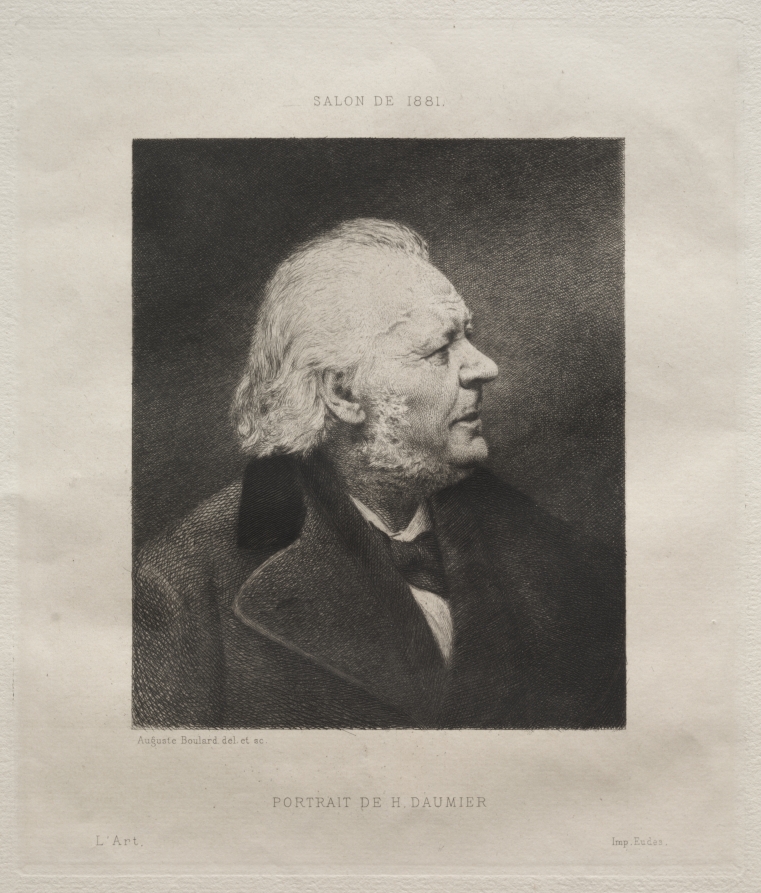
Auguste Boulard · The Cleveland Museum of Art · Gift of Frank S. Lahm · CC0
- Name
- Auguste Boulard
- Birth Name
- Auguste Marie Boulard
- Born
- May 12, 1825
- Birthplace
- Paris, France
- Died
- October 11, 1897
- Place of death
- L'Isle-Adam, France
- Known for
- Painting
- Nationality
- France
- Occupation
- painter
- Fields
- Romanticism
- Teachers
- Léon Cogniet · Jules Dupré · Thomas Couture
- Languages
- French
Reference Check
Propose documentary evidence for Auguste Boulard. A contribution is never written directly as fact: identity, source, rights and evidence gates still decide.
Sign in to contribute
World of VALÉORINE
Documentary connections
Only confirmed graph relationships appear here. Images are shown only when their identity and reuse rights both pass the documentary gate.
Documentary evidence
Documentary basis
Authority files
wikidata · Q19758490
In this article
Biography
Biography
Training under Léon Cogniet, Jules Dupré and Thomas Couture is recorded. Louis Lemaire is recorded as having studied under Auguste Boulard. The recorded working language is French. Subjects and genres recorded for the work are Romanticism. Work by Auguste Boulard is recorded in the collections of Musée d'Orsay, Rijksmuseum, Van Gogh Museum, The Mesdag Collection and Musée Magnin.
Key facts
Key facts
• Name — Auguste Boulard • Birth Name — Auguste Marie Boulard • Born — May 12, 1825 • Birthplace — Paris, France • Died — October 11, 1897 • Place of death — L'Isle-Adam, France • Known for — Painting • Style — Romanticism
Early life
Early life
Auguste Marie Boulard was born on May 12, 1825, in Paris, France, on Rue Saint-Antoine.
Career
Career
Boulard started painting at the age of 15 years old. He received artistic training from the realist academic painter Léon Cogniet. In the early 1840s, he frequented Cogniet's studio in Paris. He took up residence in Antwerp around 1843, and exposure to its coastal life reshaped his subject matter to include seascapes and fishermen. After 1850, he gravitated toward the Oise Valley, first frequenting Champagne-sur-Oise and later establishing himself in L'Isle-Adam. During this period, he entered the orbit of the Barbizon master Jules Dupré, becoming his pupil and learning to paint landscapes directly from nature. Boulard shared the principles and aims of the Barbizon School. His artistic curiosity drove him to study broad horizons, shifting skies, and coastal landscapes. He was residing in Paris when he had his firstborn son in 1852. The Parisian landscape painter associated with the artistic circle of the Île Saint-Louis, where he lived and maintained a studio at 13 quai d’Anjou. Boulard, a neighbor of Honoré Daumier on the Île Saint-Louis, belonged to a group with Daumier, Charles-François Daubigny, Jean-Baptiste-Camille Corot, Jean-François Millet, Théodore Rousseau, Adolphe Victor Geoffroy-Dechaume, and Antoine-Louis Barye. His studio where he gave private painting lessons was near the Hôtel de Lauzun (historically Hôtel Pimodan). By 1855, his paintings increasingly portrayed rustic scenes drawn from peasant life in Val-d'Oise. He visited Antwerp in 1858, which allowed him to meet Eugène Delacroix and reestablish contact with Honoré Daumier. Boulard later settled in the village of Cayeux with Jules Dupré around 1865. While in Cayeux, he focused on painting local fishermen and the interiors of their rustic homes. He was patronized by American art dealer George A. Lucas in 1868 and 1869. A still life of apples that he painted entered Lucas's collection in 1869 for 100 francs. Boulard's son, who shared his first name, Auguste, was trained by the elder Boulard. He also counted Louis Marie Lemaire among his pupils. By 1880, Emilio Sánchez Perrier and Antonio de La Gandara were regular visitors at his studio on the Île Saint-Louis. He achieved wider recognition with the inaugural Salon du Champ-de-Mars in 1890 and continued to exhibit there each year. Despite limited public recognition, his work was featured in articles by Jules Comte, Arsène Alexandre, Gonzague Privat, and Eugène Bertol-Graivil. The State supported Boulard by placing two of his works in the national collection at the Luxembourg Museum (Musée du Luxembourg). Boulard's The Fisherman's Child, an oil painting, was purchased by the State in 1887 for the Luxembourg Museum. The Luxembourg Museum received an oil on wood by Boulard, titled The Cherry Child, in March 1895. Galerie Georges Petit in Paris presented a selection of his works during an 1896 exhibition. The exhibition played a key role in confirming his status as a recognized artist of his time.
Personal life
Personal life
His children were Auguste Laurent Boulard and Émile Boulard. Auguste Boulard Sr. died on October 11, 1897, in L'Isle-Adam, Val-d'Oise, Île-de-France, France.
Works
Works
• L'Enfant du pêcheur (The Fisherman's Child) • L'Enfant aux cerises (The Cherry Child) • Marine, berger et mouton sur un rivage (Marine, shepherd and sheep on a shore) • Portrait du père de l'artiste (Portrait of the artist's father)
Gallery
Gallery
• Illustration — De maaltijd • Illustration — Portrait of Charles de Pidoll • Illustration — L'Enfant aux cerises • Illustration — Zeegezicht • Illustration — Retour de pêche
Places
Named by the record
Places
Only places the record itself states, plotted where the house gazetteer settles their coordinates. Nothing is inferred from a name or a nationality.
former 8th arrondissement of Paris.
Birth place
L'Isle-Adam.
Death place
Legacy
Following his death, his collection was sold through auctioneer Paul Chevallier at the Hôtel Drouot in Paris in April 1900. The catalogue was compiled by gallery owner Georges Petit. The sale comprised paintings and watercolors by Boulard, alongside old and modern paintings, watercolors, pastels, drawings, and engravings by various artists. The sale also included bronzes by Antoine-Louis Barye, ceramics, clocks, works of art, studio furnishings, antique furniture, and 18th-century tapestries. Boulard's work was showcased at the Exposition Universelle in 1900. In 1994, the Louis Senlecq Museum of Art and History in L'Isle-Adam held an exhibition titled "Auguste Boulard, the last of the Romantics". Paintings from his Cayeux period were gathered to form the exhibition. 60 paintings from Boulard's atelier were sold at auction in L'Isle-Adam in February 2024, highlighting continued interest in his work.
Text attribution
Licensing
Text attribution
Part of the biographical narrative on this page reuses licensed material. Its origin, revision and licence are recorded here.
The biographical narrative on this page is based on the Wikipedia article Auguste Boulard (painter, born 1825), revision 1369064116 (EN edition), by its contributors. VALÉORINE has edited that text and built its own documentary record around it. The reused material is available under CC BY-SA 4.0, and this page's reuse of it is offered under the same licence. Everything else on this page — the chronology, the holdings, the evidence, the plates and the connections — is VALÉORINE's own record. Sources and licences.
References
Citations
References
Each reference names the institution holding it, so a reader may go to the document itself.
reference work
Secondary witness
The Encyclopedia exists whether or not anything is for sale. Corrections are recorded rather than overwritten, and every version of this record is kept. Published 21 August 2026.
Elsewhere in Paintings
19,456 published records in this field, each with its sources named.
- Auguste AnastasiArtist
- Auguste BaillayreArtist
- Auguste Baud-BovyArtist
- Auguste BonheurArtist
- Auguste ChauvinArtist
- Auguste de CreuseArtist
- Auguste de ForbinArtist
- Auguste DelacroixArtist
Best supported in this field
For owners
Own a work by Auguste Boulard?
A specialist will read what you send and tell you what the house can establish, what it cannot, and whether the object is suited to sale. There is no charge and no obligation. The object stays with you throughout; nothing is shipped to us unless it is arranged in writing beforehand.