
Anna Boberg
Anna Katarina Boberg, née Scholander, (3 December 1864 – 27 January 1935) was a Swedish artist married to prominent architect Ferdinand Boberg. Anna Scholander was the daughter of architect Fredrik Wilhelm Scholander and the granddaughter of Axel Nyström. Boberg was a person of many artistic pursuits; initially she worked with ceramics and textiles (among other things she created "the Peacock vase" for Rörstrand) and besides painting she also worked with set design and writing, for example.
Also recorded as Anna Katarina Boberg · Anna Scholander · Boberg
Anna Boberg

Anna Boberg · Nordiska museet · Public domain
- Name
- Anna Boberg
- Birth Name
- Anna Katarina Scholander
- Born
- 13 December 1864
- Birthplace
- Stockholm, Sweden
- Died
- 27 January 1935
- Field
- Painting
- Nationality
- Sweden.
- Occupation
- painter, scenographer, theatre designer and sculptor.
- Fields
- landscape painting.
- Known for
- The Mystery Creek, Arctic Spring and Night over Store Molla. Study from Lofoten.
VALÉORINE Encyclopedia
VALÉORINE documentary reading
Documentary summary
Anna Katarina Boberg, née Scholander, (3 December 1864 – 27 January 1935) was a Swedish artist married to prominent architect Ferdinand Boberg. Anna Scholander was the daughter of architect Fredrik Wilhelm Scholander and the granddaughter of Axel Nyström. Boberg was a person of many artistic pursuits; initially she worked with ceramics and textiles (among other things she created "the Peacock vase" for Rörstrand) and besides painting she also worked with set design and writing, for example.
Admitted source layer · organised and presented by VALÉORINE
Note VALÉORINE
Anna Boberg (1864–1935) was a Swedish painter, scenographer and sculptor, among other activities.
Works include Arctic Spring and The Mystery Creek. Genres include landscape painting.
Composed from admitted, traceable facts · 27 September 2026
VALÉORINE
Reference Check
Propose documentary evidence for Anna Boberg. A contribution is never written directly as fact: identity, source, rights and evidence gates still decide.
Sign in to contribute
Documentary evidence
Evidence Panel
not yet certified
- Identity
- resolved
- Independent source families
- 0
- Admitted assertions
- 0
- Open conflicts
- 0
Authority files
wikidata · Q4939691 · wikipedia · Anna Boberg
In this article
Biography
Biography
She came from an artistic family, but never received any formal training in the arts, and is considered an autodidact. Many of her paintings are of northern Norway, which became Boberg's main focus for many years after a trip there in 1901. These works were not received very well in Sweden, but did much better in Paris. Boberg spent a great deal of time in the area near Lofoten in Norway, where she eventually had a cabin, and made many of those trips on her own.
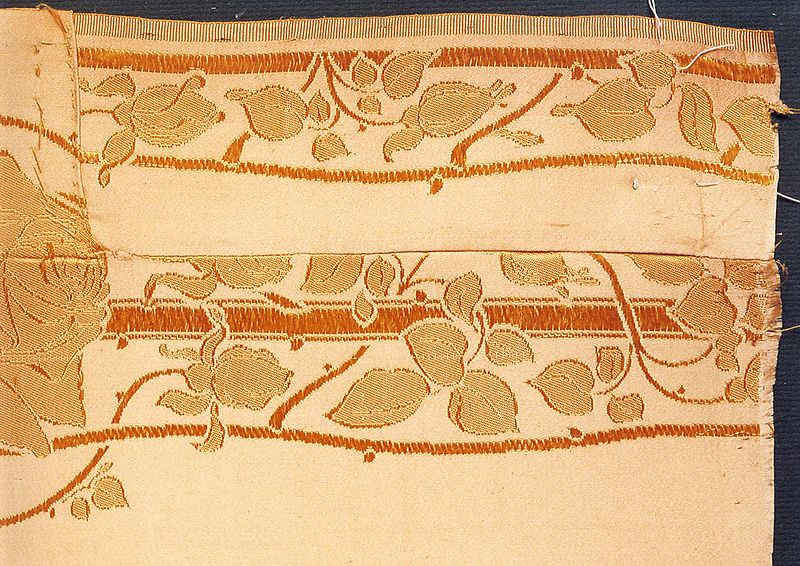
Textil av Anna Boberg till världsutställningen i Paris 1900
Anna Boberg · Nordiska museet

Anna Boberg med sin mobila målarutrustning
Stockholms Stadsmuseum
Key facts
Key facts
• Name — Anna Boberg • Birth Name — Anna Katarina Scholander • Born — 13 December 1864 • Birthplace — Stockholm, Sweden • Died — 27 January 1935 • Place of death — Stockholm, Sweden • Field — Painting • Illustration — Anna Boberg, Silent Evening: Scene from Lofoten, oil on canvas, 1910–14 • Illustration — Anna Boberg, Northern Lights, oil on canvas, n.d.
Life and work
Life and work
Boberg was the sixth of seven children in the Scholander family. She studied French, and was briefly enrolled at the Académie Julian in Paris to study painting. Paris is also where she met future architect and her spouse-to-be Ferdinand Boberg, who was there on a study trip. They were engaged in 1884. Ferdinand Boberg was at the time far from having his finances in order, but Boberg persuaded her mother Carin, née Nyström, to allow them to marry anyway; her father had died in 1881. Boberg lacked formal training but began painting already in 1882 during a trip to Spain with her mother and some of her siblings. Her father had found a profitable sideline in painting and drawing. The Bobergs married in 1888, initially staying with the Scholanders, until their improved economy allowed them to move into their own flat at Tegnérgatan 13 in Stockholm. In 1896 the couple had their summer house Villa Ugglebo built in Norra Djurgården in Stockholm. In the 1890s, Boberg joined Nya Idun, a women's association. In 1887, Boberg began painting in earnest, mainly using watercolour, and she had her first exhibition in 1888. During the 1890s she also painted 'tapestries,' oil paintings on rough canvas reminiscent of woven tapestries. These 'tapestries' were displayed as wall decorations in, among other places, Hôtel Rydberg (which was later demolished, and the tapestries were transferred to Årsta Castle). She also created wall decorations for the Wallenberg Grand Hotel Saltsjöbaden. Boberg exhibited her work at the Palace of Fine Arts at the 1893 World's Columbian Exposition in Chicago, Illinois. Around the turn of the century 1800–1900 Boberg also worked with applied arts. She designed the Peacock Vase (Påfågelvasen) for Rörstrand in 1897 and glass for Reijmyre glassworks, as well as textile works. At the World Fair in Paris in 1900, where Ferdinand Boberg was the architect for the Swedish pavilion, Boberg created numerous textiles, which were woven by the Friends of Handicraft association (Handarbetets vänner) and the K.A. Almgren silk factory. She was also the writer and set designer for Wilhelm Stenhammar's opera Tirfing, performed in 1898. During a trip to northern Sweden and Norway with her husband in 1901, Boberg was mesmerized by the grandiose scenery and nature of northern Norway, Lofoten in particular. During the following 33 years she painted mainly the landscapes and people of Lofoten, often in wintertime. In 1904, her husband designed a small house for her, which was built on the Fyrön island by Svolvær, where Boberg could stay during her many trips to Lofoten. She most often took these trips alone. In 1903, Boberg showed her Lofoten paintings in Stockholm for the first time and the reactions were mixed. An exhibition in Paris in 1905 brought greater success and overwhelmingly positive feedback, laying the foundation for a prolific career in France. The last exhibition took place in 1927.
After 1915
After 1915
When Ferdinand Boberg withdrew from his career as an architect in 1915, Boberg joined him on the many extensive journeys he made through Sweden for the "Swedish images" project. The trips were initially made in a Scania Vabis bus with a driver. Ferdinand Boberg sketched buildings of significance to the cultural heritage, to document areas he thought would disappear within a not too distant future. Boberg made diary notes along the way, the result of which was later published. In 1925, the Bobergs were forced to sell Villa Vintra on Södra Djurgården, designed by Ferdinand, where they had lived since 1903. After this, they moved to Paris. In March 1929, the couple returned to Stockholm, residing in Villa Blecktornet on Södermalm until Boberg's death from gall bladder surgery complications in 1935. Swedish royalty Crown Prince Gustav Adolf, Princess Ingrid and Prince Bertil attended her funeral.
Identity and origins
Identity and origins
Anna Boberg was recorded at birth as Anna Katarina Scholander. The authorities additionally record the headings Anna Katarina Boberg, Anna Scholander and Boberg. She was the child of Fredrik Wilhelm Scholander and Carin Scholander. She married Ferdinand Boberg.
Identity
Identity
Anna Boberg is recorded with the occupation painter. Fishing Harbour with Sunlit Mountains. Mountains and Buildings beside a Lake. Fir Trees in front of the Mountains. A Spring Night during the Fishing Season. Mountain Tops in the Evening Light. A Rocky Shore with a Fishing Hut. Snow Covered Mountains and Lake. Among the Fishing Boats in Svolvaer. The Graveyard in the Mountains. Vaagekollen against the Light. Water, Ice and Mountains. Running before the Storm. Landscape with a Village. At the Foot of the Mountain. The White Mountain Top. The Red Roofs. An Arctic Spring Day. Svolvaer and its Church. After the Massacre. Night over Store Molla.
Life and career
Dated record
Life and career
The full dated record · 2 entries
1864
Anna Boberg born at Klara Church Parish.
1935
Anna Boberg died at Sofia church parish.
Notes from the source article
Cited by Wikipedia
Notes from the source article
These works are cited by the source article, in its own numbering. They are recorded as its citations, not as sources VALÉORINE has verified.
- 1.Anna Boberg. nyaidun.se. 2016-02-16.
- 2.Nichols, K. L. Women's Art at the World's Columbian Fair & Exposition, Chicago 1893.
- 3.Mebius, E. "Sweden's Greatest Artist": The Reception of the Landscapes of Anna Boberg.
- 4.^ Karl-Axel Björnberg: Kungliga och Norra begravningsplatserna (Bäckströms förlag 1998) p.136
References
Citations
References
Each reference names the institution holding it, so a reader may go to the document itself.
reference work
Wikidata, structured authority record Q4939691: Anna BobergWikimedia Foundation
Partially resolvedreference work
Partially resolved
Further particulars
Held on the record
Further particulars
Open the remaining particulars
Work and production. Works recorded as notable number 3: The Mystery Creek, Arctic Spring and Night over Store Molla. Her recorded genre is landscape.
Study from Lofoten
Recognition and collections
Work by Anna Boberg is
Nationalmuseum, Malmö Art Museum, National Museum of Art, Architecture and Design and Musée d'Orsay
The Encyclopedia exists whether or not anything is for sale. Corrections are recorded rather than overwritten, and every version of this record is kept. Published 14 August 2026.
Elsewhere in Sculpture
6,174 published records in this field, each with its sources named.
- Anja MaraisArtist
- Ann VerdcourtArtist
- Ann-Sofi SidénArtist
- Anna Bella GeigerArtist
- Anna Coleman LaddArtist
- Anna GolubkinaArtist
- Anna Hyatt HuntingtonArtist
- Anna MahlerArtist
Best supported in this field
For owners
Own a work by Anna Boberg?
A specialist will read what you send and tell you what the house can establish, what it cannot, and whether the object is suited to sale. There is no charge and no obligation. The object stays with you throughout; nothing is shipped to us unless it is arranged in writing beforehand.