
Ambrosius Benson
Ambrosius Benson (c. While many surviving paintings have been attributed, there is very little known of him from records, and he tended not to sign his work. He is believed to have produced mainly religious art, but also painted portraits on commission.
Also recorded as Benzone, Ambrogio Benson · Benzone, Ambrogio Bentsoen · Master of Uclés · Ambrosius Bentsoen
Ambrosius Benson
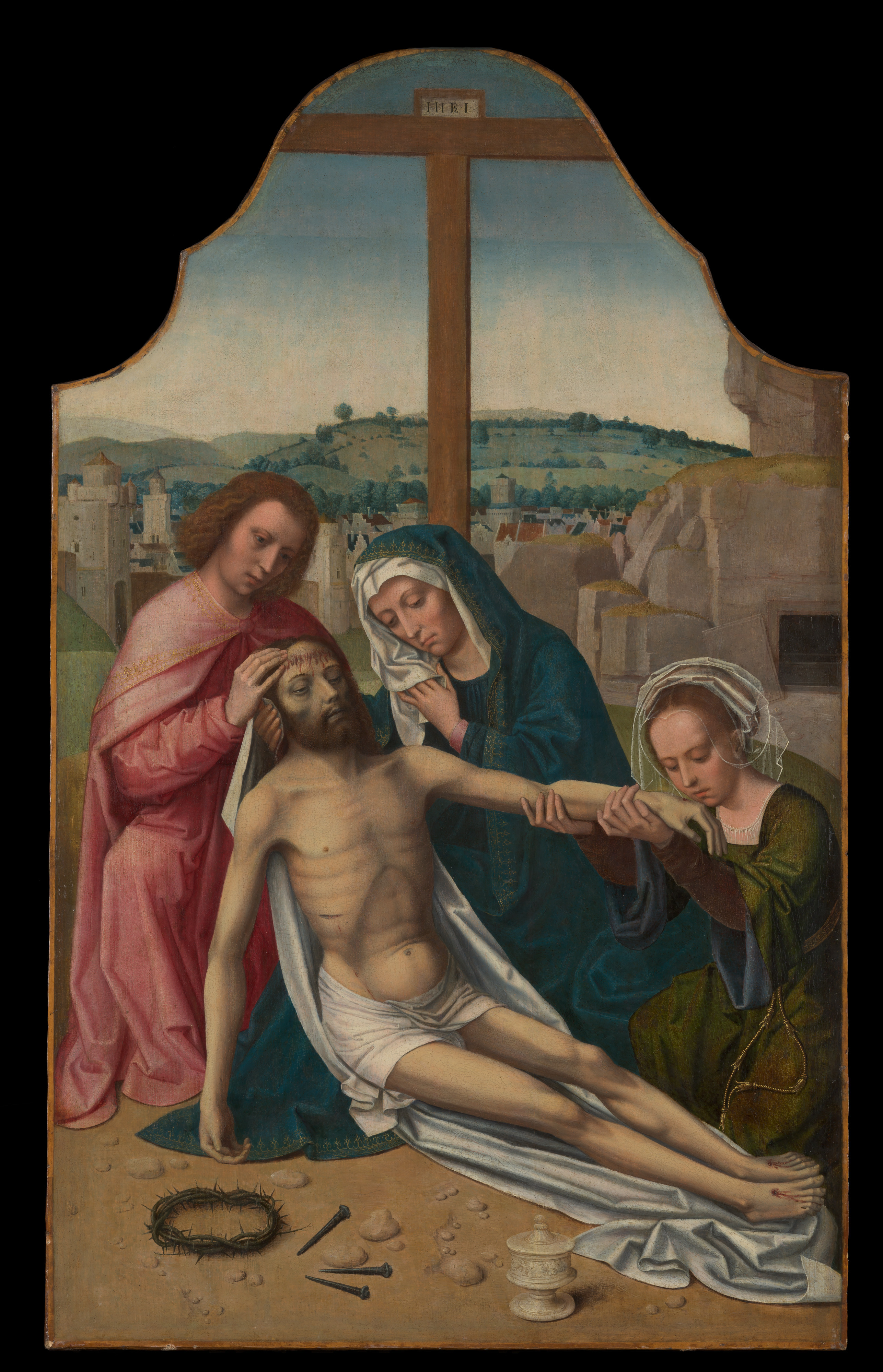
Ambrosius Benson · The Metropolitan Museum of Art, New York · The Jack and Belle Linsky Collection, 1982 · Public domain (CC0, Met Open Access)
- Born
- 1495 · Northern Italy.
- Died
- 1550 · Bruges.
- Occupation
- painter
- Fields
- Northern Renaissance
- Known for
- The Wedding in Cana · The Magdalen Reading
- Languages
- Italian
Reference Check
Propose documentary evidence for Ambrosius Benson. A contribution is never written directly as fact: identity, source, rights and evidence gates still decide.
Sign in to contribute
Documentary evidence
Evidence Panel
identity unresolved · checked 25 September 2026
- Identity
- unresolved
- Independent source families
- 0
- Admitted assertions
- 0
- Open conflicts
- 0
Authority files
wikidata · Q459626 · wikipedia · Ambrosius Benson
In this article
Life
He sometimes painted from classical sources, often setting the figures in a modern dress or a contemporary domestic setting. In his lifetime, he was successful; he had a large workshop, his work was sold internationally, and he was especially popular in Spain. Benson became popular as a source for pastiche with 19th-century painters, who are sometimes known as the "followers of Benson". In particular, his many variations of the Magdalen and Sibilla Persica were further copied and became popular with contemporary buyers.
The recorded working language is Italian. Subjects and genres recorded for the work are Northern Renaissance. Works named in the authority record are The Wedding in Cana and The Magdalen Reading. Work by Ambrosius Benson is recorded in the collections of Museo del Prado, Thyssen-Bornemisza Museum, Nationalmuseum, National Gallery of Canada and Metropolitan Museum of Art.
• Illustration — Death of Lucretia, date unknown. The rape that led to Lucretia's suicide can be seen in the background. Although Ambrosius Benson (or Ambrose Benzone, as he is named by an early scholar in deference to his Lombardian origin) was Italian by birth, scholars consider him a painter of the Flemish school. He was born in Ferrara or Milan. Typical of the itinerant manner of many painters of the time, he moved to Bruges c. 1515 and served his apprenticeship with the Early Netherlandish painter Gerard David. He later became a naturalized citizen of Bruges. Benson worked as a journeyman before he was made master in 1519 and became a member of the guild of painters and saddle makers. He eventually became a dean and then a governor of the guild. He married Anna Ghyselin, and had two sons with her, Jan and Willem, both of whom became painters. He later remarried and had a daughter Anna. He is believed to have had at least two other daughters from extramarital affairs. Benson came into dispute with Gerard around 1519 over a number of paintings and drawings Benson had created—including a book of studies for heads and nudes as well as various patterns—in the older master's workshop without his assistance. David refused to return the material, and after Benson pursued him legally, served time in prison for his appropriation. • Illustration — Late 19th-century version of one of his Sibilla Persica paintings, showing a half-length female reading a book held in her hands. He served as head of the Guild of Saint Luke from 1537 to 1539 and 1543 to 1544. Much of his work was at one time attributed to a Spanish artist known only as the Master of Segovia; it is now believed they were the same person. This is surely the reason why many of his best works can be found in Spanish museums, churches and cathedrals (Prado Museum, Bilbao Fine Arts Museum, Segovia and Burgos Cathedrals, among others). Perhaps under the influence of Rogier van der Weyden's 15th-century The Magdalen Reading, Benson was one of the first artists to popularise images of women reading. It became a motif for him, and he painted the scene many times in his images of Mary Magdalen and the Sybil Persica, whom he treated as almost interchangeable. A The Magdalen Reading by Benson is held in the National Gallery, London. Benson died in 1550, in Flanders.
Gallery
• Illustration — Portrait of Jean Wyts, 1520–1530, The Phoebus Foundation • Illustration — The Descent from the Cross, 1528 • Illustration — The Magdalen Reading, 1535 • Illustration — Portrait of Anne Stafford, 1535 • Illustration — Virgin with Pear, date unknown • Illustration — Virgin and Child with Saints, date unknown • Illustration — Deipara Virgo, date unknown • Illustration — Elegant couples dancing in a landscape, ca. 1540, Utah Museum of Fine Arts (UMFA).
Named by the record
Places
Only places the record itself states, plotted where the house gazetteer settles their coordinates. Nothing is inferred from a name or a nationality.
Northern Italy.
Birth place
Bruges.
Death place
Citations
References
Each reference names the institution holding it, so a reader may go to the document itself.
reference work
Partially resolvedreference work
Partially resolved
The Encyclopedia exists whether or not anything is for sale. Corrections are recorded rather than overwritten, and every version of this record is kept. Published 28 August 2026.
Elsewhere in Paintings
18,452 published records in this field, each with its sources named.
- Ambrogio LorenzettiArtist
- Ambroise DuboisArtist
- Ambrose McCarthy PattersonArtist
- Ambrose McEvoyArtist
- Ambrosius Bosschaert IIArtist
- Ambrosius BrueghelArtist
- Ambrosius Francken IIArtist
- Ambroży MieroszewskiArtist
Best supported in this field
For owners
Own a work by Ambrosius Benson?
A specialist will read what you send and tell you what the house can establish, what it cannot, and whether the object is suited to sale. There is no charge and no obligation. The object stays with you throughout; nothing is shipped to us unless it is arranged in writing beforehand.