
Alonso Cano
Illustration — Alonso Cano, (Portraits of Illustrious Spanish), 1791 Alonso Cano Almansa (19 March 1601 3 September 1667) was a Spanish painter, architect, and sculptor born in Granada.
Also recorded as Alonzo Cano · Alonsso Cano · the Spanish Michelangelo · el Racionero Cano
Alonso Cano
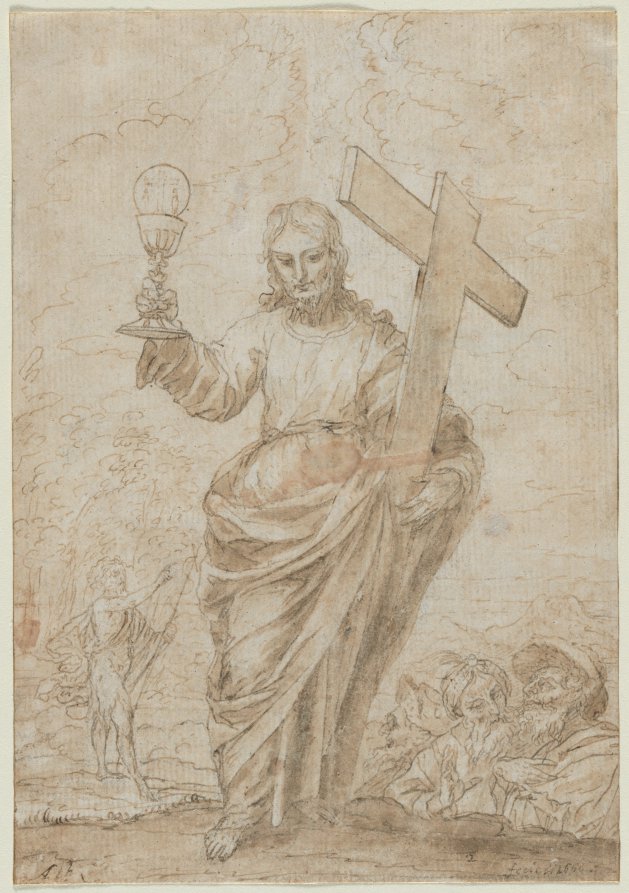
Alonso Cano · The Cleveland Museum of Art · Dudley P. Allen Fund · CC0
- Born
- 1601
- Died
- 1667
- Nationality
- Spain
- Occupation
- painter · sculptor · architect · architectural drafter · visual artist
- Movements
- Baroque
VALÉORINE Encyclopedia
VALÉORINE documentary reading
Documentary summary
Illustration — Alonso Cano, (Portraits of Illustrious Spanish), 1791 Alonso Cano Almansa (19 March 1601 3 September 1667) was a Spanish painter, architect, and sculptor born in Granada.
Admitted source layer · organised and presented by VALÉORINE
Note VALÉORINE
No house-authored Note is published until its assertions and sources pass the VALÉORINE evidence contract. The documentary article remains available in full while that enrichment is being consolidated.
Documentary enrichment in progress · no unsupported statement published
Reference Check
Propose documentary evidence for Alonso Cano. A contribution is never written directly as fact: identity, source, rights and evidence gates still decide.
Sign in to contribute
Documentary evidence
Evidence Panel
not yet certified
- Identity
- resolved
- Independent source families
- 0
- Admitted assertions
- 0
- Open conflicts
- 0
Authority files
wikidata · Q378783 · wikipedia · Alonso Cano
In this article
Biography
Biography
• Illustration — Saint John the Evangelist's Vision of Jerusalem He learned architecture from his father, Miguel Cano; painting in the academy of Juan del Castillo, and from Francisco Pacheco the teacher of Velázquez; and sculpture from Juan Martínez Montañés. As a sculptor, his most famous works are the Madonna and Child in the church of Lebrija (also called Nebrija), and the colossal figures of San Pedro and San Pablo. He was made first royal architect, painter to Philip IV, and instructor to the prince, Balthasar Charles, Prince of Asturias. The King gave him the church preferment of a canon of the Granada Cathedral (1652), in order to take up a position as chief architect of the cathedral. Towards the end of his life, he designed the cathedral façade, which was erected to his design after his death. He was notorious for his ungovernable temper; and it is said that once he risked his life by committing the then capital offence of dashing to pieces the statue of a saint, when in a rage with the purchaser who begrudged the price he demanded. According to another story, he found his house robbed after coming home one evening, his wife murdered, and his Italian servant fled. Notwithstanding the presumption against the fugitive, the magistrates condemned Cano, because he was of a jealous temper. Upon this he fled to Valencia, but afterwards returned to Madrid, where he was put to the torture, which he endured without incriminating himself, and the king received him into favour. After the death of his wife he took Holy Orders as a protection from further prosecution, but still continued his professional pursuits. He died in 1667. In his last moments, when the priest held to him a crucifix, he told him to take it away because it was badly carved. According to the Catholic Encyclopedia, the dying Cano refused the Sacrament from a priest who gave it to conversos. Works • San Vicente Ferrer (praying) • Virgin of the Olive Tree (1629) • Inmaculada del Facistol (1655–1656) in the sacristy of the Cathedral of Granada. • Virgen of Bethlehem • Bust of Saint Paul • Head of San Juan de Dios • Annunciation • Christ Bound to the Column in the church of the Convento del Stmo. Cristo de la Victoria de Serradilla (Cáceres). • Entrance of the Cathedral of Granada • Saint John the Baptist as a Youth 1634, in the National Sculpture Museum (Valladolid). • St. Anthony Preaching to the Fishes (ca. 1630) [The Detroit Institute of Arts] • Christ and the Samaritan Woman(ca. 1650-1652) Real Academia de Bellas Artes de San Fernando Madrid. • The Death of Saint Francis. Real Academia de Bellas Artes de San Fernando, Madrid. • The Christ Crucified (c.1646) Real Academia de Bellas Artes de San Fernando. Works by Cano in the Prado Museum in Madrid include: • The Crucifixion • Saint Anthony of Padua • The Crucified Christ appears to Saint Teresa • A king of Spain • Two kings of Spain • The Miracle of the Well • Saint Bernard and the Virgin • The Virgin and Child • The Dead Christ supported by an Angel
Gallery
Gallery
• Illustration — Immaculate Conception, c. 1618–20, attributed to Velázquez or Cano • Illustration — Saint John and the Poisoned Chalice, c. 1635–37 • Illustration — Cristo y la Samaritana, Christ and the Samaritan woman, 1640 • Illustration — Christ Gathering his Robes, 1646 • Illustration — Cristo crucificado, Christ on the cross, 1646 • Illustration — Christ and Two Followers on the Road to Emmaus, between 1635 and 1650 • Illustration — Ideal portrait of a Spanish King, 1643 • Illustration — St. Vincent Ferrer Preaching, c. 1644–45 • Illustration — The Annunciation, c.1655 Goya Museum. • Illustration — The Marriage of the Virgin, c.1655 Goya Museum. • Illustration — Saint Bernard, c. 1656–60 • Illustration — Antony of Padua, 1660–62 • Illustration — Immaculate Conception • Illustration — Saint John the Baptist
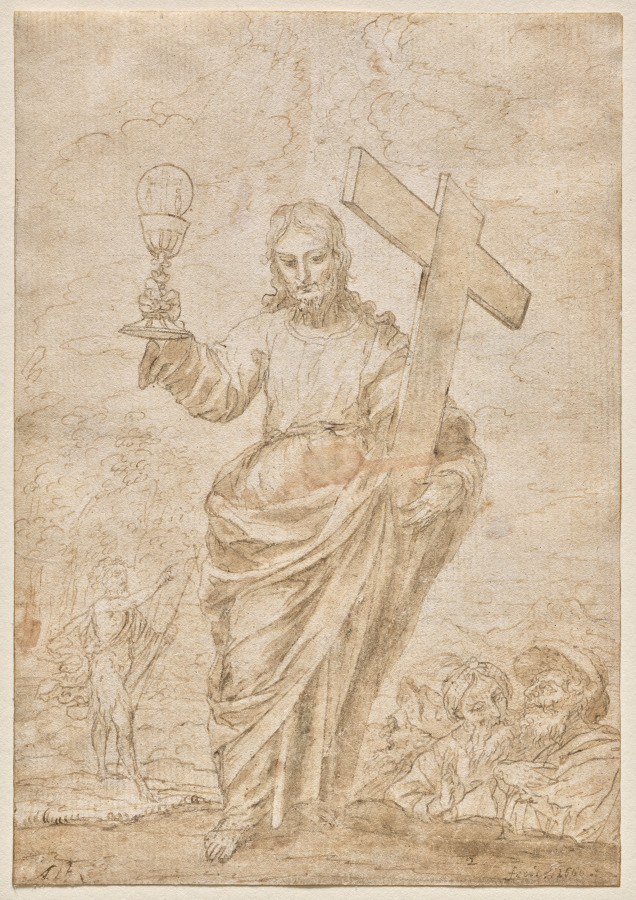
Christ Holding a Chalice and Cross (recto), 1666, by Alonso Cano
Alonso Cano · The Cleveland Museum of Art · Dudley P. Allen Fund
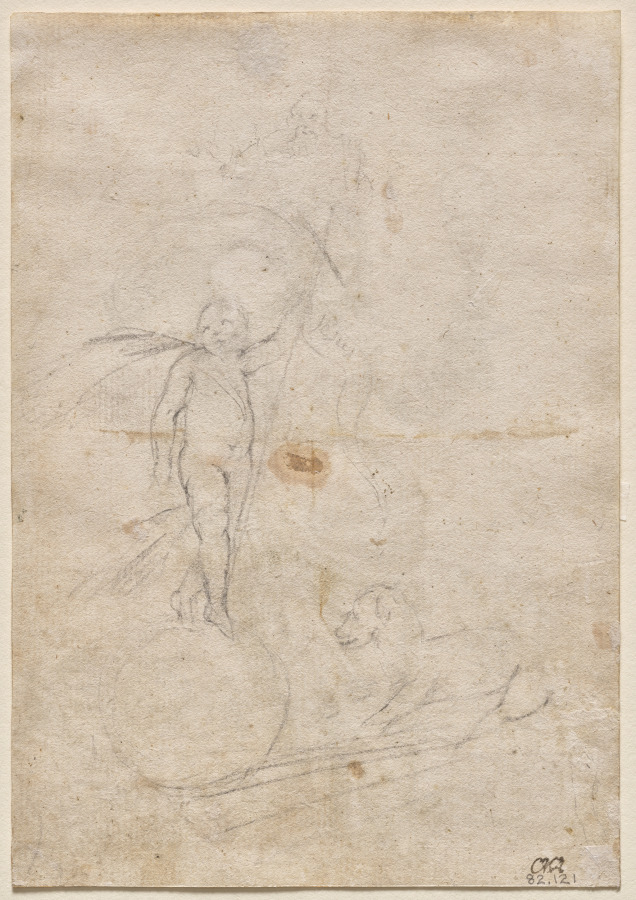
Resurrected Christ and Lamb of God (verso), 1666, by Alonso Cano
Alonso Cano · The Cleveland Museum of Art · Dudley P. Allen Fund
Life and career
Dated record
Life and career
The full dated record · 2 entries
1601
Alonso Cano was born in 1601.
1667
Alonso Cano died at Granada.
Primary material
Documents and archives
scholarly publication
- Alonso Cano en Madrid: nuevas aportaciones, nuevos problemas, Anuario del Departamento de Historia y Teoría del Arte, 2009
Scholarly · Crossref registry · 2009
- Cano, Alonso (1601–1667), Historical Dictionary of Baroque Art and Architecture, 2018
Scholarly · Crossref registry · 2018
reference work
- Wikidata, structured authority record Q378783: Alonso Cano
Reputable secondary · Wikimedia Foundation
- “Alonso Cano”, English Wikipedia, consulted as further reading
Reputable secondary · Wikipedia
Citations
References
Each reference names the institution holding it, so a reader may go to the document itself.
scholarly publication
Alonso Cano en Madrid: nuevas aportaciones, nuevos problemas, Anuario del Departamento de Historia y Teoría del Arte, 2009Crossref registry
Verifiedscholarly publication
Cano, Alonso (1601–1667), Historical Dictionary of Baroque Art and Architecture, 2018Crossref registry
Verifiedreference work
Wikidata, structured authority record Q378783: Alonso CanoWikimedia Foundation
Partially resolvedreference work
Partially resolved
The Encyclopedia exists whether or not anything is for sale. Corrections are recorded rather than overwritten, and every version of this record is kept. Published 14 August 2026.
Elsewhere in Design
11,558 published records in this field, each with its sources named.
- Alois NegrelliDesigner
- Alois PichlDesigner
- Aloisio da MilanoDesigner
- Aloisio the NewDesigner
- Alonzo J. HarrimanDesigner
- Alpheus C. MorseDesigner
- Alpheus Marston GriffinDesigner
- Alphons BoostenDesigner
Best supported in this field
For owners
Own a work by Alonso Cano?
A specialist will read what you send and tell you what the house can establish, what it cannot, and whether the object is suited to sale. There is no charge and no obligation. The object stays with you throughout; nothing is shipped to us unless it is arranged in writing beforehand.