
Alfredo Müller
Illustration — Müller in his studio in Paris (73, Rue Coulaincourt) in 1908 Alfredo Müller (June 30, 1869 – February 7, 1939) was a Franco-Italian painter and printmaker of Swiss nationality.
Also recorded as Alfredo Muller · Alfred Müller
Alfredo Müller
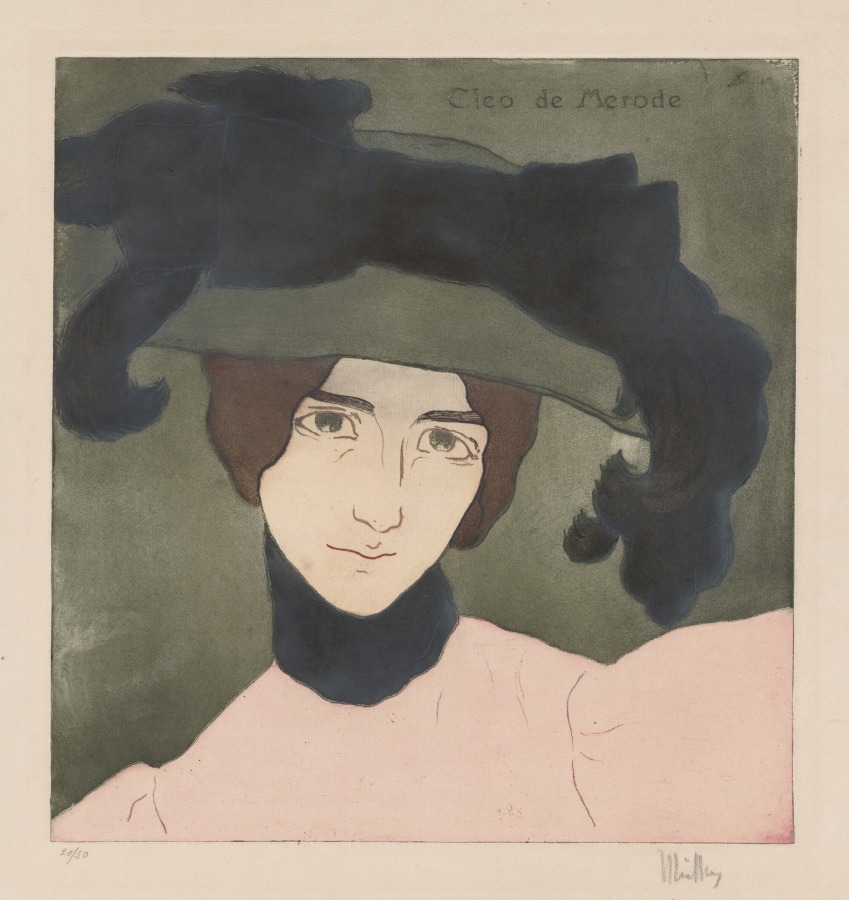
Alfredo Müller · The Cleveland Museum of Art · Gift of Louise S. Richards · CC0
- Born
- 1869 · Livorno.
- Died
- 1939 · Paris.
- Nationality
- France · Kingdom of Italy
- Occupation
- painter · etcher
- Movements
- Francesco Filippini
- Languages
- Italian
VALÉORINE Encyclopedia
VALÉORINE documentary reading
Documentary summary
Illustration — Müller in his studio in Paris (73, Rue Coulaincourt) in 1908 Alfredo Müller (June 30, 1869 – February 7, 1939) was a Franco-Italian painter and printmaker of Swiss nationality.
Admitted source layer · organised and presented by VALÉORINE
Note VALÉORINE
Alfredo Müller (1869–1939) was a French and Italian etcher and painter. Born in Livorno, the etcher died in Paris. Alfredo Müller was associated with Francesco Filippini.
Languages used include Italian. Works by the etcher are held at Van Gogh Museum.
Composed from admitted, traceable facts · 26 September 2026
VALÉORINE
Reference Check
Propose documentary evidence for Alfredo Müller. A contribution is never written directly as fact: identity, source, rights and evidence gates still decide.
Sign in to contribute
World of VALÉORINE
Documentary connections
Only confirmed graph relationships appear here. Images are shown only when their identity and reuse rights both pass the documentary gate.

Documentary evidence
Documentary basis
Authority files
wikidata · Q2835622 · wikipedia · Alfredo Müller
In this article
Biography
Biography
• Illustration — Cover page of Alfredo Müller. Sur papier. Su carta. On Paper, Complete Catalogue of the graphic work of Alfredo Müller (1869-1939) in three languages, Hélène Koehl ed., published in 2014 Müller was born in Livorno to a wealthy Swiss family involved in the international cotton and coffee trades. At the age of 15, he began studying art in Florence with the masters Giuseppe Ciaranfi and Michele Gordigiani of the Academy of Fine Arts. There he became friends for life with Edoardo Gordigiani, the son of Michele, and Egisto Fabbri, a Tuscan-American. In 1886, as a young painter, he participated in the First Exhibition of Fine Arts of Livorno, together with established painters such as Giovanni Fattori and Silvestro Lega. In 1889, he exhibited two of his paintings at the Universal Exhibition in Paris, where he discovered Impressionism. This moment represented a turning point in the career of the young painter, as he was always concerned with colors and vibrations of light. After his return to Tuscany, his paintings, which now reflected the influence of Impressionism, sparked debate for their overly French character. At the same moment, the failure of the Bank of Livorno provoked the ruin of his father's house, and a few years later Müller emigrated to Paris, eventually settling in Montmartre. He made friends in the social circle of artists, writers and musicians, becoming acquainted in particular with Renoir, but also with Pissarro and Cézanne, whom he considered his master, and became a well-known etcher in colours. Among his Italian friends in Paris, we find his relative Leonetto Cappiello and Libero Andreotti. In 1914, he was in Rome with Marguerite, whom he married in 1908. In Rome he exhibited 12 paintings at the Second Secession. Because of the war, he moved to Florence initially for a short while but he ended up staying for 18 years. The couple found a little house in the hills overlooking Florence, at Settignano. Müller painted frequently, always working on the movement of light. A great part of his work in this period was dedicated to decorative arts, in which he could express his fascination for theater and its magic. After the political situation worsened, he returned to France in 1932 where he spent his last years. He died in Paris in 1939. He is the elder brother of the cycling champion Rodolfo Müller, who ran the first Tour de France (arrived 4th) and the brother in law of the American cycling-champion and pace-maker Gus Lawson who married his younger sister Marie. He descends from Lewis Evans (surveyor), geographer and close friend of Benjamin Franklin, whose daughter Amelia (Philadelphia 1744- Hythe (Southampton, 1835), married to the Irish sea Captain David Barry, was the great-grandmother of Alfredo's grandfather Charles Eugène Schintz, surgeon in Livorno. Alfredo Müller. Sur papier. Su carta. On Paper, Complete Catalogue of the Graphic Work has been published end of 2014 by Les Amis d'Alfredo Müller. Based on wide researches, this large publication lets for the first time overview the life of the artist and the coherence of his art. It gives complete notes for more than two hundred engravings all created in Paris between 1896 and 1906 and about one hundred drawings. The Complete Catalogue of the Painted Work is in preparation. • Illustration — Cover page of the catalogue of the lihographs by Alfredo Müller (1869-1939), published in 2012 • Illustration — Cover page of Nouvelles de l'estampe n. 233-234 (mars 2011) with Alfredo Müller, "Femme lisant aux fleurs". 1897. Etching in colours 64,3 x 51,7 cm. Exh. Vollard 1898. BnF, département des Estampes. Koehl E44 • Illustration — Cover page of Grafica d'Arte n. 89, January–March 2012, with "La Jeune femme au Tanagra". 1897, etching in colours 64 x 52 cm. Exh. Vollard 1898. BnF, département des Estampes. Koehl, E42 • Illustration — Cover page of Alfredo Müller. Un ineffabile dandy dell'impressionismo, a cura di Francesca Cagianelli, Firenze, Polistampa 2011. Featuring Alfredo Müller, "Ritratto di Cora Antinori". 1916. Oil on canvas 244,5 x 188 cm • Illustration — Cover page of Alfredo Müller. Opera grafica. Livorno 1982, featuring "La Liseuse" 1899, etching 35,5 x 31,5 cm created for "Cocorico" • Illustration — Cover page of Omaggio an Alfredo Müller, Firenze, Il Mirteto 1974 featuring "Verlaine au café Procope" 1896, lithograph 45 x 50 cm
Identity and origins
Identity and origins
The authorities additionally record the headings Alfredo Muller and Alfred Müller. His recorded language was Italian. He married Marguerite Müller.
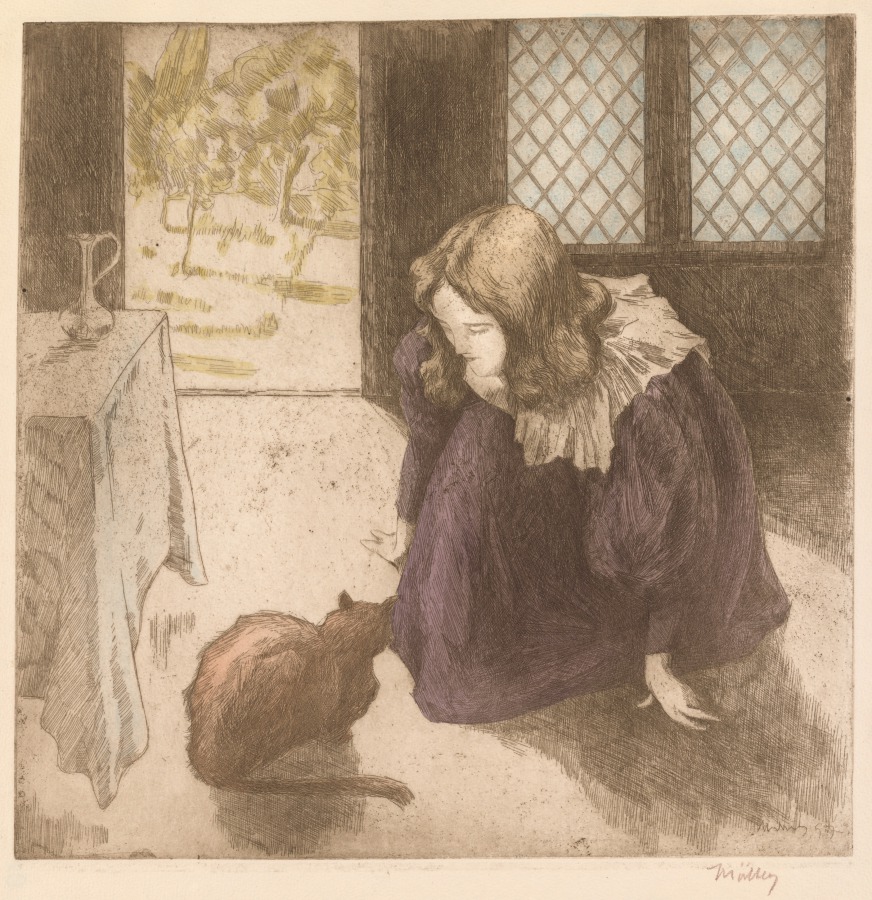
Interior, Little Girl with Cat (La Petite fille au chat), 1897, by Alfredo Müller
Alfredo Müller · The Cleveland Museum of Art · Bequest of Elizabeth Carroll Shearer
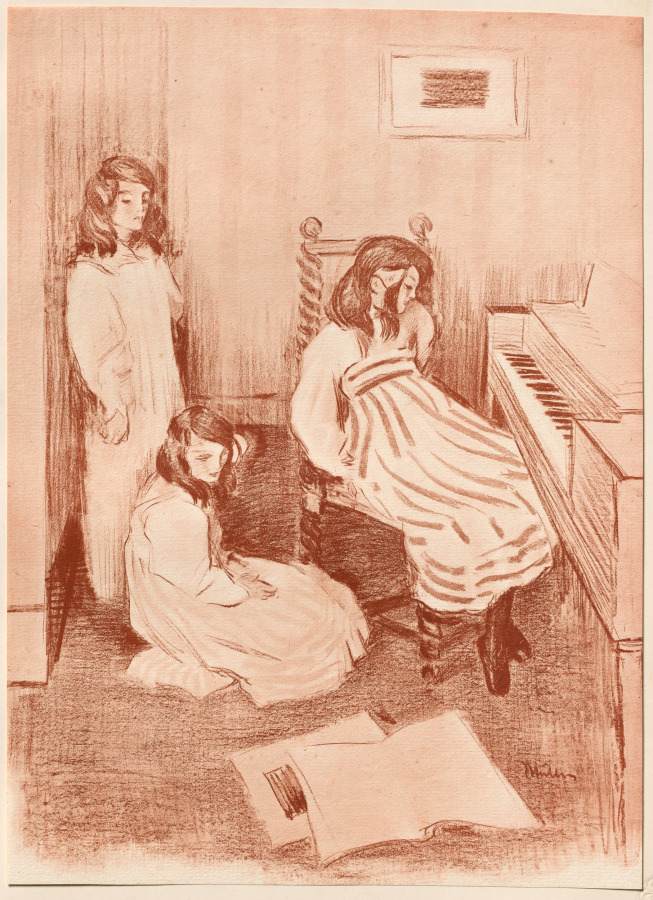
Bouderie, 1898, by Alfredo Müller
Alfredo Müller · The Cleveland Museum of Art · Bequest of John Bonebrake
Life and career
Dated record
Life and career
The full dated record · 2 entries
1869
Alfredo Müller born at Livorno.
1939
Alfredo Müller died at Paris.
Places
Named by the record
Places
Only places the record itself states, plotted where the house gazetteer settles their coordinates. Nothing is inferred from a name or a nationality.
Livorno.
Birth place
Paris.
Death place
Primary material
Documents and archives
reference work
- “Alfredo Müller”, English Wikipedia, consulted as further reading
Reputable secondary · Wikipedia
authority record
- Wikidata, structured authority record Q2835622: Alfredo Müller
General reference · Wikidata
References
Citations
References
Each reference names the institution holding it, so a reader may go to the document itself.
reference work
Secondary witnessauthority record
General reference
People, houses and institutions
Knowledge graph
People, houses and institutions
Teachers, collaborators, publishers and institutions recorded against this person, each on a stated basis.
The Encyclopedia exists whether or not anything is for sale. Corrections are recorded rather than overwritten, and every version of this record is kept. Published 17 August 2026.
Elsewhere in Paintings
19,261 published records in this field, each with its sources named.
- Alfredo GutteroArtist
- Alfredo HelsbyArtist
- Alfredo HlitoArtist
- Alfredo KeilArtist
- Alfredo Ramos MartínezArtist
- Alfredo TartariniArtist
- Alfredo Valenzuela PuelmaArtist
- Alfredo VolpiArtist
Best supported in this field
For owners
Own a work by Alfredo Müller?
A specialist will read what you send and tell you what the house can establish, what it cannot, and whether the object is suited to sale. There is no charge and no obligation. The object stays with you throughout; nothing is shipped to us unless it is arranged in writing beforehand.