
Alexander Roslin
Alexander Roslin (pron; spelled Alexandre in French, pron; 15 July 17185 July 1793) was a Swedish painter who worked in Scania, Bayreuth, Paris, Italy, Warsaw and St. Petersburg, primarily for members of aristocratic families. He combined insightful psychological portrayal with a skillful representation of fabrics and jewels.
Alexander Roslin
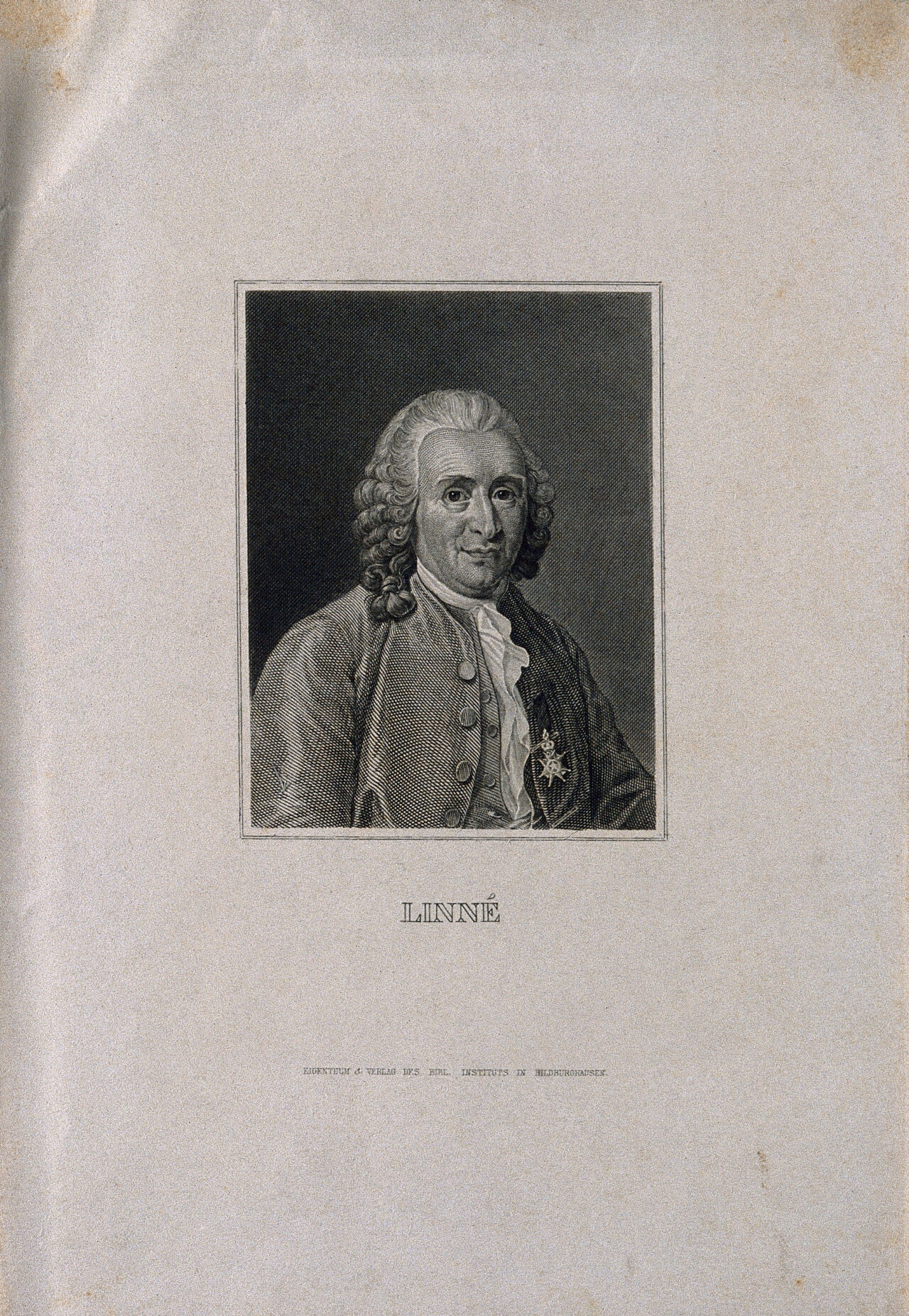
Alexander Roslin · Wellcome Collection, London · Wellcome Collection · Public Domain Mark
- Name
- Alexander Roslin
- Born
- 15 July 1718
- Birthplace
- Malmö, Sweden
- Died
- 5 July 1793
- Place of death
- Paris, France
- Nationality
- Sweden
- Occupation
- painter · portraitist · visual artist
- Fields
- portrait
- Movements
- Rococo
- Known for
- The Lady with a Fan, The Artist's Wife · Marie Suzanne Roslin, born Giroust, Painter's wife and pastellist · Portrait of the Artist's Wife Marie Suzanne and née Giroust
VALÉORINE Encyclopedia
VALÉORINE documentary reading
Documentary summary
Alexander Roslin (pron; spelled Alexandre in French, pron; 15 July 17185 July 1793) was a Swedish painter who worked in Scania, Bayreuth, Paris, Italy, Warsaw and St. Petersburg, primarily for members of aristocratic families. He combined insightful psychological portrayal with a skillful representation of fabrics and jewels.
Admitted source layer · organised and presented by VALÉORINE
Reference Check
Propose documentary evidence for Alexander Roslin. A contribution is never written directly as fact: identity, source, rights and evidence gates still decide.
Sign in to contribute
Documentary evidence
Documentary basis
Authority files
gnd · 10185191-1 · wikidata · Q315102 · wikipedia · Alexander Roslin
In this article
Biography
Biography
His style combined Classicist tendencies with the lustrous, shimmering colours of Rococo, a jocular, elegant and ornate style. He lived in France from 1752 until 1793, a period that spanned most of his career. The painting by Roslin depicting Jeanne Sophie de Vignerot du Plessis, Countess of Egmont Pignatelli, was bought by the Minneapolis Institute of Art in 2006 for US$3 million. Roslin also has pieces displayed at the Metropolitan Museum of Art.
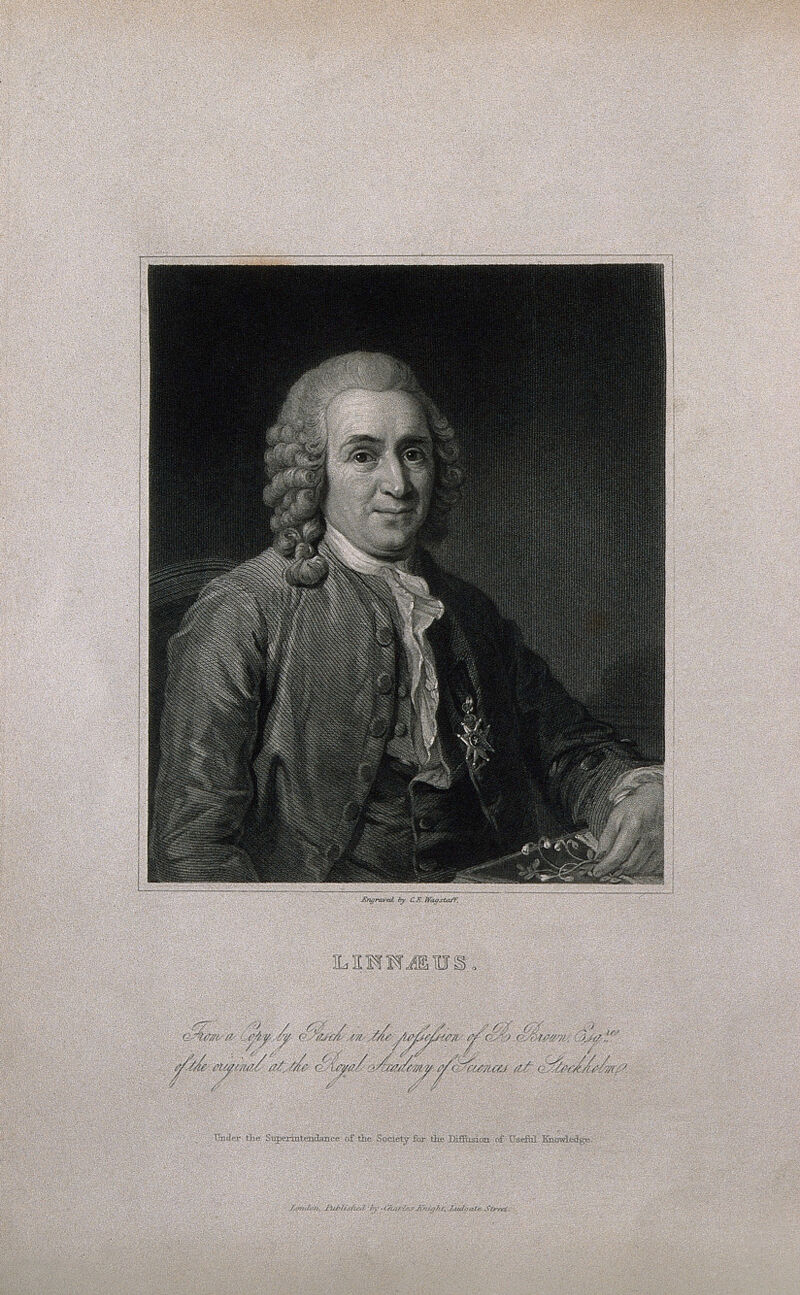
Carolus Linnaeus. Engraving by C. E. Wagstaff after A. Roslin, 1775., by Alexander Roslin
Alexander Roslin · Wellcome Collection, London · Wellcome Collection
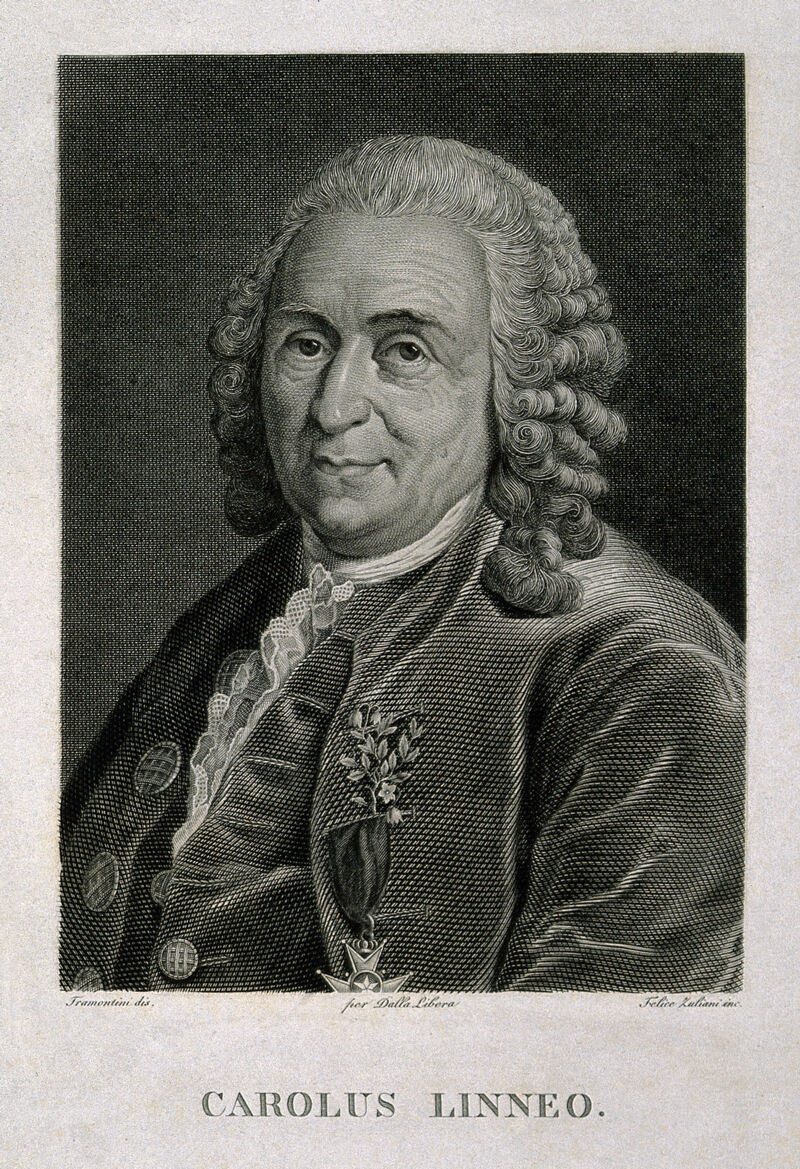
Carolus Linnaeus. Line engraving by F. Zuliani after Tramontini after A. Roslin, 1775., by Alexander Roslin
Alexander Roslin · Wellcome Collection, London · Wellcome Collection
Key facts
Key facts
• Name — Alexander Roslin • Born — 15 July 1718 • Birthplace — Malmö, Sweden • Died — 5 July 1793 • Place of death — Paris, France
Life
Life
• Illustration — Double portrait of Roslin and his wife, 1767 • Illustration — A portrait of Roslin's wife, Marie Suzanne Giroust-Roslin, 1770 Alexander Roslin was born on 15 July 1718, in Malmö, Sweden, the son of naval physician Hans Roslin and Catherine Wertmüller. After showing an unusual talent for drawing and painting, he trained in drawing at Karlskrona under Admiralty Captain Lars Ehrenbill (1697–1747) in order to become a naval draughtsman, and then began to paint miniatures. Stockholm had become an intellectual and artistic center since Queen Christina had established connections with Paris, and Alexander Roslin moved there. At the age of sixteen he became apprenticed to the court painter Georg Engelhard Schröder in Stockholm, studying painting there until 1741 and beginning to paint large portraits in oils. Schröder was influenced by Hyacinthe Rigaud and Nicolas de Largillière. In 1741, Roslin settled in Gothenburg, and the following year moved to Scania, where he remained until 1745 painting portraits and also creating religious paintings for the church at Hasslöv. In 1745, Roslin left Sweden for Bayreuth, where he had been invited to work for Frederick, Margrave of Brandenburg-Kulmbach. In 1747, he moved to Italy to study the works of the great masters. While in Italy he portrayed, among others, the family of Philip, Duke of Parma in 1752. In the same year Roslin moved to Paris, at the age of 34, where he settled for the rest of his life. Here, in 1759, he married the pastel painter Marie-Suzanne Giroust (1734–1772). The couple had three sons and three daughters. In 1768 Roslin painted her dressed in Bolognese fashion, The Lady with the Veil, a portrait that the art critic, writer and philosopher Denis Diderot judged "très piquante". In 1767 he painted a double portrait of them both; she is depicted working in pastels on a portrait of Henrik Wilhelm Peill, while Roslin points at a gold box he received from Peill as a present. The frame of the painting is inscribed Loin et près (Far away and yet close), showing that the portrait was a token of friendship. This painting was purchased by the Swedish National Museum in 2013.
Career
Career
In Paris he was a protégé of François Boucher and his work rapidly became fashionable. He was chosen as a member of the French Art Academy, to which his wife also belonged. His early portraits are painted in bright, cool colours, and show the influence of Jean-Marc Nattier and Hyacinthe Rigaud. Around the 1760s he started using daring colouring in his paintings, such as in the portrait of his wife, The Lady with the Veil (1768), and the Jennings Family (1769). Roslin had great technical skill in painting the surfaces and texture of precious materials such as fabrics and jewels, but was also adept at capturing his sitters at their best. In Paris he soon became one of the foremost portraitists of his time, valued mostly for practiced rendering of luxurious fabrics and gentle complexions: "Satin, skin? Go to Roslin." His portraits of members of the French aristocracy show sensitivity and taste and also psychological insight, although changes in taste might make his faces seem "stiff and lifeless" to some observers today. In 1765 he scored a significant triumph when his portrait of Louis, Duke of La Rochefoucauld and his family, painted in competition with Jean-Baptiste Greuze, was awarded the prize. He also painted several portraits of members of the French royal family and foreign princes, including the Swedish king Gustav III and his brothers. In the second half of the 18th century, having one's portrait painted by Roslin was the highpoint of public esteem. In 1771 Roslin, although a foreigner (often called Roslin le suédois, "Roslin the Swede"), was awarded a pension and a free apartment in the Louvre. The following year he was awarded the Royal Order of Vasa by his native country, after which he was also called Roslin le Chevalier ("Roslin the knight"). He was often surrounded by Swedish visitors to Paris, such as Peill. He was also a good friend of the influential Swedish politician Count Carl Gustaf Tessin. After his wife's death, during the years 1774–75, Roslin visited Sweden, where he had been elected a member of the Royal Swedish Academy of Arts, oddly enough as a foreign honorary member. During the visit, he painted the members of the Swedish royal family, his self-portrait while painting the king, and also portraits of the statesman Carl Fredrik Scheffer and the naturalist Carl Linnaeus. On his way back to Paris he visited St. Petersburg, where he painted several portraits of Empress Catherine II of Russia and some notable portraits of Russian aristocrats between 1775 and 1777. Catherine tried to persuade him to stay in her service, but Roslin declined and returned to France. He died in Paris on 5 July 1793 of natural causes after surviving the French Revolution and outliving many of his patrons; at that time he was the wealthiest artist in Paris. • Illustration — Countess Françoise Marguerite de Grignan the daughter of Madame de Sévigné, 1753 • Illustration — Katarzyna Mniszech, 1752 • Illustration — Flora or Hebe
Works
Works
• Illustration — The Lady with the Veil (The Artist's Wife), 1768, dressed "à la Bolognaise" Stylistically, his paintings are Classicist in some respects, but primarily Rococo. The vast majority show members of the European nobility and of leading political and cultural circles. Roslin was enormously successful among members of French high society, becoming one of the wealthiest artists of the era in France. He painted a number of portraits of Russian Imperial statesmen, including images of Ivan Betskoi and his sister Anastasia Ivanovna, and of Ivan Shuvalov. He also painted some notable portraits of Polish and French aristocratic ladies. He signed his works Roslin Suédois. As a member of the Académie royale de peinture et de sculpture Roslin exhibited his paintings at the Salon de Paris, the official exhibition of members' work. Founded in 1725 the Salon became, between 1748 and 1890, the greatest biannual art event in the Western world. From 1753 Roslin exhibited 18 times at the Salon. Roslin's popularity with both his foreign and his Swedish audiences during his lifetime is undisputed. He was one of the foremost portrait painters of his time, widely known for his masterful ability to reproduce his sitters' fashionable garments with their silks, lace, pearls and gold filaments. Roslin's ability to capture the personality of the people he depicted made him popular with his clients and allows us, even today a few hundred years later, to still feel close to the people he painted. He flattered and beautified his subjects according to the Rococo ideal. Roslin's portrait of Anne Vallayer-Coster is praised particularly and became much debated after the Salon. In Le Véridique au Salon, published in 1783, it was described as one that "belonged to the artist's best". The picture has been compared to the contemporary artist Elisabeth Vigée-Lebrun's celebrated self-portrait. Roslin depicted his model in a cool colour scale; in green, white, and blue, with the artist's attributes of palette and brushes, a common way for artists to depict themselves. Because of this, Roslin's painting was sometimes misinterpreted by art historians as a self-portrait by Vallayer-Coster.
Gallery
Gallery
• Illustration — Baroness de Neubourg-Cromière (1756) • Illustration — King Gustav III of Sweden and his Brothers (1771) • Illustration — Anne Vallayer-Coster, French painter, 1783 • Illustration — Carl Fredrik Adelcrantz, Swedish architect (1754) • Illustration — Jeanne Sophie de Vignerot du Plessis, Countess of Egmont Pignatelli (1763) • Illustration — Swedish botanist and originator of binomial nomenclature, Carl Linnaeus (1775) • Illustration — Baron Thure Leonard Klinckowström (1758) • Illustration — John Jennings, His Brother and Sister-in-Law (1769) • Illustration — Archduchess Maria Amalia of Austria (later Maria Amalia, Duchess of Parma) • Illustration — Empress Catherine the Great of Russia (1780s) • Illustration — Anastasia Ivanovna, Hereditary Princess of Hesse-Homburg, Princess Trubetskaya • Illustration — Jean-François Marmontel, French historian and writer (1767) • Illustration — Louis de France, the Dauphin of France, the heir to the throne of France (1765) • Illustration — Prince Vladimir Borisovich Golitsyn (1762) • Illustration — King Christian VII of Denmark (1772) • Illustration — Portrait of Joseph Marie Terray (1774) • Illustration — Hyacinthe Collin de Vermont, French painter • Illustration — Carl Fredrik Scheffer, Swedish riksråd (privy councilor) • Illustration — Jean-Baptiste Eugénie Du Mangin or Jean-Baptiste Dumangin France (1789)
Life and career
Dated record
Life and career
The full dated record · 2 entries
1718
Alexander Roslin born at Malmö Sankt Petri församling.
1793
Alexander Roslin died at Paris.
Primary material
Documents and archives
reference work
- Wikidata, structured authority record Q315102: Alexander Roslin
Reputable secondary · Wikidata
- “Alexander Roslin”, English Wikipedia, consulted as further reading
Reputable secondary · Wikipedia
authority file
- Gemeinsame Normdatei 10185191-1, Exhibition Alexander Roslin (2007-2008 : Stockholm; Versailles).
General reference · Deutsche Nationalbibliothek
Notes from the source article
Cited by Wikipedia
Notes from the source article
These works are cited by the source article, in its own numbering. They are recorded as its citations, not as sources VALÉORINE has verified.
- 1.Krol, A. E. Skandinavskii sbornik. Tallinn. 15. 219–33. 1970.
- 2.Bjurström, Per. Roslin. Höganäs. 56, 163, 168–169, 208, 233. 1993. 9171195556.
- 3.Jeffares, Neil. Dictionary of pastellists before 1800, online edition.
- 4.Alexander Roslin. Antikvärlden.
- 5.Kinsella, Eileen. Minneapolis Museum acquires a $3m Roslin portrait. Art News. 6 June 2006.
- 6.Alexander Roslin Gustav III. The Metropolitan Museum of Art.
- 7."Adliga ätten Ehrenbill nr 1515", Lars Ehrenbill, Tab. 2
- 8.Stolpe, Sven. Drottning Kristina. 2, Efter tronavsägelsen. Bonnier. 142 & 145. 1974. 91-0-039241-3.
- 9.Roslin, Alexander, Web Gallery of Art, retrieved 17 February 2014.
- 10.Herman Hofberg, "Roslin, Alexander", Svenskt biografiskt handlexikon (In Swedish)
- 11.Bo Gentili, "Alexander Roslin 1718–1793" , Kulturarv Malmö, 18 August 2010, retrieved 17 February 2014
- 12.17 February 2014.
- 13.Didier Rykner, "Two Paintings by Alexandre Roslin for Versailles and Stockholm", The Art Tribune, 6 December 2013.
- 14."Sweden's Nationalmuseum acquires family portrait painted in 1767 by Alexander Roslin", ArtDaily, 2013, retrieved 17 February 2014.
- 15."Alexander Roslin" , Bukowskis, retrieved 17 February 2014
- 16.Maarten Levendig, "Alexander Roslin: The Lady with the Veil (1768); Nationalmuseum, Stockholm", Rijksmuseum Amsterdam, 23 June 2013.
- 17.Holkers, Märta. Den svenska målarkonstens historia. Bonnier. 88. 2007. 978-91-0-011735-1.
- 18.Bjurström, Per. Roslin. Wiken. 30–40. 1993. 978-91-0-011735-1.
- 19."The Lady with the Veil by Alexander Roslin , Nationalmuseum, retrieved 17 February 2014.
- 20.Märta Holkers, Den svenska målarkonstens historia, Stockholm: Bonnier, 2007,
- 21."The Nationalmuseum in Stockholm Presents Alexander Roslin – Sweden's Forgotten Art Icon", ArtDaily, 2007, retrieved 17 February 2014.
- 22.Roslin, Alexander. Dictionary.com, copied from The Great Soviet Encyclopedia.
- 23.royal family.org. Portrait of Grand Duchess Maria Feodorovna.
- 24.rijksmuseumamsterdam. alexander-roslin-lady-with-veil-1768.
- 25.Paris salons. National Gallery of Austria.
- 26.Alexander Roslin. Antik.
- 27.www.nationalmuseum.se. The-Lady-with-the-Veil.
Bibliography printed in the source article · 1
- Magnus Olausson; Eva-Lena Karlsson (eds.) Alexander Roslin. Exhibition catalog. Nationalmusei utställningskatalog 652. Stockholm: Nationalmuseum. 2007. .
References
Citations
References
Each reference names the institution holding it, so a reader may go to the document itself.
authority file
Gemeinsame Normdatei 10185191-1, Exhibition Alexander Roslin (2007-2008 : Stockholm; Versailles).Deutsche Nationalbibliothek
Secondary witnessreference work
Secondary witnessreference work
Secondary witness
Further particulars
Held on the record
Further particulars
Open the remaining particulars
His recorded language was Swedish. He married Marie-Suzanne Giroust. One child is recorded: Joseph Alexandre Roslin. Other recorded relations include Adélaïde Roslin. His work is associated with Rococo. Recorded position is court painter. He belonged to Académie royale de peinture et de sculpture, Royal Swedish Academy of Fine Arts and Accademia delle Arti del Disegno. Work and production. Works recorded as notable number 3: The Lady with a Fan, The Artist's Wife, Marie Suzanne Roslin, born Giroust, Painter's wife and pastellist and Portrait of the Artist's Wife Marie Suzanne, née Giroust. His recorded genre is portrait. Roslin received Commander of the Order of Vasa.
Identity and origins
Career and activity
Recognition and collections
Work by Alexander Roslin is
Museo del Prado, Finnish National Gallery, National Gallery of Victoria and Nationalmuseum
The Encyclopedia exists whether or not anything is for sale. Corrections are recorded rather than overwritten, and every version of this record is kept. Published 14 August 2026.
Elsewhere in Paintings
19,183 published records in this field, each with its sources named.
- Alexander PoschArtist
- Alexander PushninArtist
- Alexander RobertsonArtist
- Alexander RoitburdArtist
- Alexander RuncimanArtist
- Alexander SakharoffArtist
- Alexander Samuel MacLeodArtist
- Alexander SavinovArtist
Best supported in this field
For owners
Own a work by Alexander Roslin?
A specialist will read what you send and tell you what the house can establish, what it cannot, and whether the object is suited to sale. There is no charge and no obligation. The object stays with you throughout; nothing is shipped to us unless it is arranged in writing beforehand.