
Alesso Baldovinetti
Illustration — Alesso Baldovinetti's self-portrait. Fragment of destroyed frescos in Gianfiliazzi chapel (Bergamo, Accademia Carrara) Alesso or Alessio Baldovinetti (14 October 1427 – 29 August 1499) was an Italian early Renaissance painter and draftsman.
Also recorded as Alesso Baldivinetti · Allessio Baldovinetti · Baldovinetti · alesso. baldovinetti
Alesso Baldovinetti
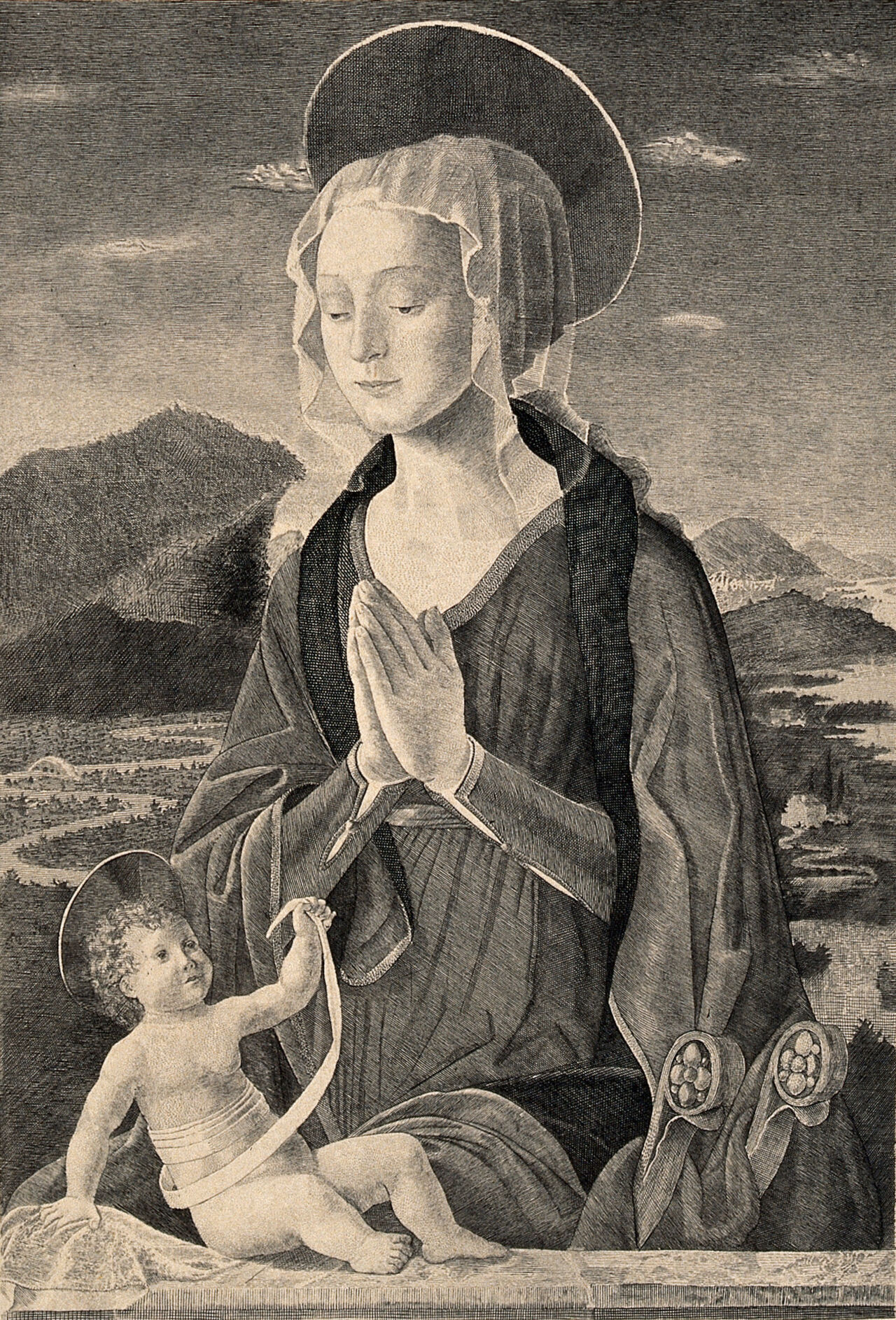
Alesso Baldovinetti · Wellcome Collection, London · Wellcome Collection · Public Domain Mark
- Died
- 1499 · Florence.
- Occupation
- painter
- Known for
- Adoration of the shepherds · Annunciation · Retable of Cafaggiolo
- Languages
- Italian
VALÉORINE Encyclopedia
VALÉORINE documentary reading
Documentary summary
Illustration — Alesso Baldovinetti's self-portrait. Fragment of destroyed frescos in Gianfiliazzi chapel (Bergamo, Accademia Carrara) Alesso or Alessio Baldovinetti (14 October 1427 – 29 August 1499) was an Italian early Renaissance painter and draftsman.
Admitted source layer · organised and presented by VALÉORINE
Note VALÉORINE
No house-authored Note is published until its assertions and sources pass the VALÉORINE evidence contract. The documentary article remains available in full while that enrichment is being consolidated.
Documentary enrichment in progress · no unsupported statement published
Reference Check
Propose documentary evidence for Alesso Baldovinetti. A contribution is never written directly as fact: identity, source, rights and evidence gates still decide.
Sign in to contribute
Documentary evidence
Evidence Panel
not yet certified
- Identity
- resolved
- Independent source families
- 0
- Admitted assertions
- 0
- Open conflicts
- 0
Authority files
wikidata · Q472073 · wikipedia · Alesso Baldovinetti
In this article
Biography
Biography
Domenico Ghirlandaio is recorded as having studied under Alesso Baldovinetti. The recorded working language is Italian. Places of work recorded in the authority are Florence. Works named in the authority record are Adoration of the shepherds, Annunciation and Retable of Cafaggiolo. Work by Alesso Baldovinetti is recorded in the collections of Uffizi Gallery, National Gallery, Museum of Fine Arts, Budapest, Musée Jacquemart-André and Museo diocesano d'arte sacra Sant'Apollonia.
• Illustration — Portrait of a Lady in Yellow, 1400s, c. 1465, The National Gallery, London. Baldovinetti was born in Florence to a rich noble family of merchants. In 1448 he was registered as a member of the Guild of St. Luke: "Alesso di Baldovinetti, dipintore." He was a follower of the group of scientific realists and naturalists in art which included Andrea del Castagno, Paolo Uccello and Domenico Veneziano. Tradition says that he assisted in the decorations of the church of S. Egidio, however no records confirm this. These decoration were carried out during the years 1441–1451 by Domenico Veneziano and in conjunction with Andrea del Castagno. That he was commissioned to complete the series at a later date (1458–62) is certain. In 1460 Alesso was employed to paint the great fresco of the Annunciation in the cloister of the Annunziata basilica. The remains as we see them give evidence of the artist's power both of imitating natural detail with minute fidelity and of spacing his figures in a landscape with a large sense of air and distance; and they amply verify two separate statements of Vasari concerning him: that "he delighted in drawing landscapes from nature exactly as they are, whence we see in his paintings rivers; bridges, rocks, plants, fruits, roads, fields, cities, exercise grounds, and an infinity of other such things," and that he was an inveterate experimentalist in technical matters. • Illustration — Annunciation (1457) Tempera on wood, 167 x 137 cm Galleria degli Uffizi, Florence. His favourite method in wall-painting was to lay in his compositions in fresco and finish them a secco with a mixture of yolk of egg and liquid varnish. This, says Vasari, was with the view of protecting the painting from damp; but in course of time the parts executed with this vehicle scaled away, so that the great secret he hoped to have discovered turned out a failure. In 1463 he furnished a cartoon of the Nativity, which was executed in tarsia by Giuliano de Maiano in the sacristy of the cathedral and still exists. In c. 1465 he painted Portrait of a Lady in Yellow. From 1466 date the groups of four Evangelists and four Fathers of the Church in fresco, together with the Annunciation on an oblong panel, which still decorate the Portuguese chapel in the basilica of San Miniato, and are given in error by Vasari to Piero del Pollaiuolo. Beginning in 1466 Alesso undertook important works for the church of Santa Trinita on the commission of Bongianni Gianfigliazzi: first, to paint an altar-piece of the Holy Trinity with saints, a work that he finished in 1472; next, a series of frescoes from the Old Testament which was to be completed according to contract within five years, but actually remained on hand for fully twenty-six. In 1497 the finished series, which contained many portraits of leading Florentine citizens, was valued at a thousand gold florins by a committee consisting of Cosimo Rosselli, Benozzo Gozzoli, Perugino and Filippino Lippi; only some defaced fragments of it now remain. Meanwhile, Alesso had been much occupied with other technical pursuits and researches apart from wall and panel painting. As a draftsman and painter, he made a significant contribution to the Tuscan production of stained glass windows. Examples after his designs include Saint Andrew and God the Father in the Pazzi Chapel and Saints Luke and John in the apse of Lucca Cathedral. Others have been executed for the Pisan Camposanto Monumentale, for the upper church of the Basilica of Saint Francis of Assisi, Prato Cathedral and the nave of Santa Croce, Florence. He was regarded by his contemporaries as the one craftsman who had rediscovered and fully understood the long disused art of mosaic, and was employed accordingly between 1481 and 1483 to repair the mosaics over the door of the church of S. Miniato, as well as several of those both within and without the baptistery of the cathedral. He died in the hospital San Paolo, August 29, 1499, and was buried in San Lorenzo. One of his pupils was Domenico Ghirlandaio.
Life and career
Dated record
Life and career
The full dated record · 2 entries
1425
Alesso Baldovinetti born at Florence.
1499
Alesso Baldovinetti died at Florence.
Notes from the source article
Cited by Wikipedia
Notes from the source article
These works are cited by the source article, in its own numbering. They are recorded as its citations, not as sources VALÉORINE has verified.
- 1.Bryan, Michael. Dictionary of Painters and Engravers, Biographical and Critical. George Bell and Sons. I: A-K. 71–72. 1886.
- 2.Huebscher, Arne: Alesso Baldovinetti, Münster, 2020, cat. no. V4.
- 3.Huebscher, Arne, pp. 128-177 and cat. no. 3, 16, 17, 18, 20, 21.
- 4.Huebscher, Arne, pp. 97-127.
References
Citations
References
Each reference names the institution holding it, so a reader may go to the document itself.
reference work
Partially resolvedreference work
Wikidata, structured authority record Q472073: Alesso BaldovinettiWikimedia Foundation
Partially resolved
The Encyclopedia exists whether or not anything is for sale. Corrections are recorded rather than overwritten, and every version of this record is kept. Published 14 August 2026.
Elsewhere in Paintings
18,705 published records in this field, each with its sources named.
- Alessandro VitaliArtist
- Alessandro ZaffonatoArtist
- Alessio de MarchisArtist
- Alessio IssupoffArtist
- Aletta RuijschArtist
- Alex AndArtist
- Alex AndreevArtist
- Alex CervenyArtist
Best supported in this field
For owners
Own a work by Alesso Baldovinetti?
A specialist will read what you send and tell you what the house can establish, what it cannot, and whether the object is suited to sale. There is no charge and no obligation. The object stays with you throughout; nothing is shipped to us unless it is arranged in writing beforehand.