
Alessandro Manzoni
Alessandro Francesco Tommaso Antonio Manzoni (7 March 1785 – 22 May 1873) was an Italian philosopher, poet, playwright, and novelist. He is best known for the novel The Betrothed (I promessi sposi), generally ranked among the masterpieces of world literature. The novel, published in 1827, is a symbol of the Italian Risorgimento for its patriotic message, and also because it was a fundamental milestone in the development of the modern and unified Italian language.
Also recorded as Alesandro Mandzoni · Aleksandr Manzoni
Alessandro Manzoni
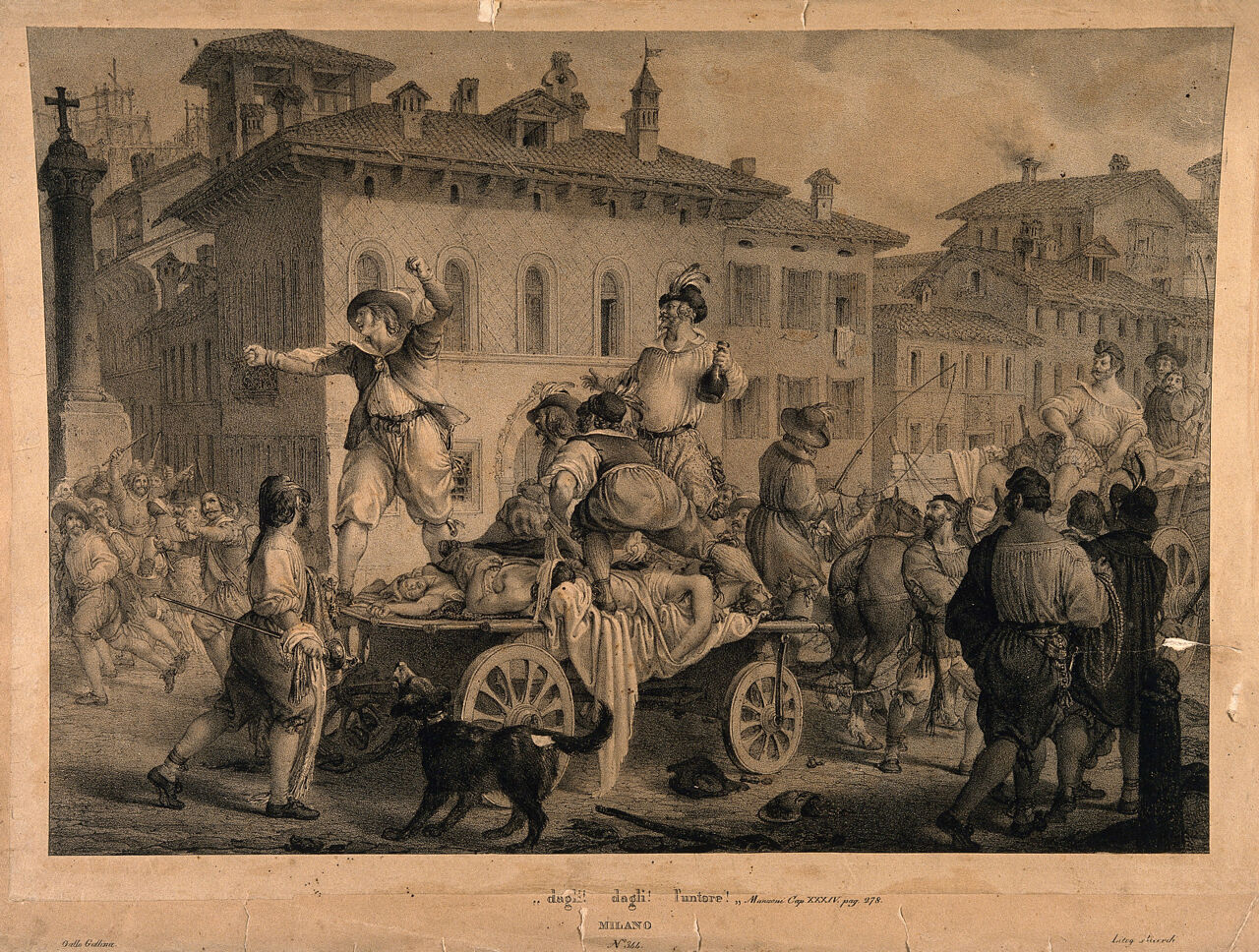
Alessandro Manzoni · Wellcome Collection, London · Wellcome Collection · Public Domain Mark
- Name
- Alessandro Manzoni
- Birth Name
- Alessandro Francesco Tommaso Manzoni
- Born
- 7 March 1785
- Birthplace
- Milan, Duchy of Milan
- Died
- 22 May 1873
- Place of death
- Milan, Kingdom of Italy
- Occupation
- * Writer
- Nationality
- Holy Roman Empire · Austrian Empire · Kingdom of Italy
- Movements
- Romanticism in Italy
- Known for
- The Betrothed · Storia della colonna infame · Il cinque maggio
VALÉORINE Encyclopedia
VALÉORINE documentary reading
Documentary summary
Alessandro Francesco Tommaso Antonio Manzoni (7 March 1785 – 22 May 1873) was an Italian philosopher, poet, playwright, and novelist. He is best known for the novel The Betrothed (I promessi sposi), generally ranked among the masterpieces of world literature. The novel, published in 1827, is a symbol of the Italian Risorgimento for its patriotic message, and also because it was a fundamental milestone in the development of the modern and unified Italian language.
Admitted source layer · organised and presented by VALÉORINE
Note VALÉORINE
No house-authored Note is published until its assertions and sources pass the VALÉORINE evidence contract. The documentary article remains available in full while that enrichment is being consolidated.
Documentary enrichment in progress · no unsupported statement published
Reference Check
Propose documentary evidence for Alessandro Manzoni. A contribution is never written directly as fact: identity, source, rights and evidence gates still decide.
Sign in to contribute
Documentary evidence
Evidence Panel
not yet certified
- Identity
- resolved
- Independent source families
- 0
- Admitted assertions
- 0
- Open conflicts
- 0
Authority files
bnf · getty · gnd · loc · wikidata · Q1064 · wikipedia · Alessandro Manzoni
In this article
Biography
Biography
Manzoni contributed to the stabilization of the modern Italian language and helped to ensure linguistic unity throughout Italy. He was an influential proponent of Liberal Catholicism in Italy. He is also considered one of the three crowns of Romanticism in Italy, along with Ugo Foscolo and Giacomo Leopardi, despite their differences. He is often associated as the moral and cultural leader of the Italian unification with his younger contemporary Leopardi, although his work and thinking often contrast with the latter.
Key facts
Key facts
• Honorific Prefix — Signore di Moncucco di Mirasole • Name — Alessandro Manzoni • Honorific Suffix — OCI, OSG, OSML, PM • Office — Senator of the Kingdom of Italy • Monarch — Victor Emmanuel II • Term Start — 29 February 1860 • Term End — 22 May 1873 • Office2 — Deputy of the Kingdom of Sardinia • Term Start2 — 17 October 1848 • Term End2 — 21 October 1848 • Party — Historical Right • Birth Name — Alessandro Francesco Tommaso Manzoni • Born — 7 March 1785 • Birthplace — Milan, Duchy of Milan • Died — 22 May 1873 • Place of death — Milan, Kingdom of Italy • Resting Place — Monumental Cemetery, Milan • Children — Giulia Claudia (1808–1834) Pietro Luigi (1813–1873) Cristina (1815–1841) Sofia (1817–1845) Enrico (1819–1881) Clara (1821–1823) Vittoria (1822–1892) Filippo (1826–1868) Matilde (1830–1856) • Father — Pietro Manzoni • Mother — Giulia Beccaria • Relatives — Cesare Beccaria (grandfather) Massimo d'Azeglio (son-in-law) • Occupation — * Writer • poet • dramatist
Early life
Early life
Manzoni was born in Milan, Italy, on 7 March 1785. Pietro, his father, aged about fifty, belonged to an old family of Lecco, originally feudal lords of Barzio, in the Valsassina. His biological father was likely Giovanni Verri, brother of the influential Enlightenment thinkers Pietro and Alessandro Verri, and a habitué, along with his brothers and Giulia Beccaria, of the dazzling liberal Società del Caffè. Manzoni's maternal grandfather, Cesare Beccaria, was a well-known author and philosopher, and his mother Giulia had literary talent as well. The young Manzoni spent his first two years in cascina Costa in Galbiate and he was wet-nursed by Caterina Panzeri, as attested by a memorial tablet affixed in the place. In 1792, his parents broke their marriage and his mother began a relationship with the writer Carlo Imbonati, moving to England and later to Paris. As a boy, the young Manzoni rarely saw his mother. He seems to have had a cool and distant relationship with his father. At the age of six, he was sent away from home to begin his schooling in a variety of religious boarding schools operated by the Somaschi and Barnabite fathers. From an early age, Manzoni was drawn to literature, to poetry in particular, and to the ideals of liberty, reason, and atheism. Among his first poems was one from this period entitled The Triumph of Liberty (1801), a poem of considerable merit in praise of the French Revolution. In 1804, Manzoni began to frequent the circle of Neoclassical poets gathered around Vincenzo Monti, whom he had already known and admired for some time before; Monti's influence is especially apparent in the poems of Manzoni's classicist period, most notably Adda (1803), and Urania (1807). His friendship with the scholars Francesco Lomonaco and Vincenzo Cuoco, who had fled Bourbon Naples after the fall of the Parthenopean Republic, further contributed to his revolutionary leanings and introduced him to historical studies and the philosophical ideas of Giambattista Vico. In 1804, Cuoco entrusted the nineteen year old Manzoni with the editing of his novel Platone in Italia. Manzoni sojourned in Venice from the fall of 1803 to the spring of the following year. Here he attended salon hosted by Isabella Teotochi Albrizzi and made the acquaintance of Ippolito Pindemonte and Ugo Foscolo. Upon the death of his father in 1807, he joined the freethinking household of his mother at Auteuil, and came into contact with the group of philosophers known as the Idéologues, among whom he made many friends, notably Claude Charles Fauriel. He established close ties with the intellectual leader of the Idéologues, Antoine Destutt de Tracy, whose daughter he was at a certain point supposed to marry. Through Fauriel and Madame de Condorcet, Manzoni met some of the leading intellectual figures of Paris, among them Augustin Thierry, François Guizot, Pierre Jean Georges Cabanis, and Benjamin Constant. He became a close friend of Victor Cousin, Marcellin de Fresne and Marquis Jean-Baptiste de Montgrand, who later translated into French Manzoni's Inni Sacri and The Betrothed. In 1806–1807, while at Auteuil, Manzoni published his first works, the neoclassical poem Urania, inspired by Monti's Musogonia, and an elegy in blank verse, on the death of Count Carlo Imbonati. In the notes to his Sepolcri, Foscolo highly praised Manzoni's ode In morte di Carlo Imbonati as the "poetry of a young talent born for literature and warm with love of country".
1808–1821
1808–1821
• Illustration — Manzoni's family in a drawing by Ernesta Legnani Bisi In 1808, Manzoni married Henriette Blondel, daughter of a Genevese banker. She came from a Calvinist family, but in 1810 she became a Roman Catholic. Her conversion profoundly influenced her husband. That same year he experienced a religious crisis which led him from agnosticism to an austere form of Catholicism. The Manzoni family returned to Milan in June 1810. On his return to Milan, Manzoni fell in with the circle of progressive young artists and intellectuals gathered around the poet Carlo Porta, the Cameretta Portiana. In honor of Porta, Manzoni wrote his only poem in the Lombard language. In 1814, Manzoni settled with his wife in the house in Via Morone, Milan, where he continued to live until his death. The family divided its time between Milan and the country estate that Carlo Imbonati had left to his mother Giulia at Brusuglio, some six miles west of Milan. Manzoni's marriage proved a happy one, and he led for many years a retired domestic life, divided between literature and the picturesque husbandry of Lombardy. Earlier in 1812, Manzoni began a collection of lyrics known as the Sacred Hymns (in Italian: Inni Sacri), which were published along with other of his religious poems in 1815. This sequence of hymns was supposed to cover the major festivals of the ecclesiastical year, a sort of Catholic Fasti, and were to number at least twelve, but Manzoni ultimately only completed five of them. The collection was received warmly by Goethe, who saw the young Italian poet restoring vitality to jejune religious topics, and by Stendhal, who claimed to see in Manzoni a talent to rival Lord Byron. His intellectual energy in this period of his life was also devoted to the composition of a scholarly treatise on Catholic morality, Osservazioni sulla morale cattolica, written in response to Jean Charles Léonard de Sismondi, who "attributed the moral corruption of the Italians to the papacy". Two patriotic lyrics, celebrating the Milanese insurrection of 1814 and the Rimini Proclamation of 1815, belong to the same epoch. In 1818, he had to sell his paternal inheritance, as his money had been lost to a dishonest agent. His characteristic generosity was shown at this time in his dealings with his peasants, who were heavily indebted to him. He not only cancelled on the spot the record of all sums owed to him, but bade them keep for themselves the whole of the coming maize harvest. While he shared many of the cultural and political aims of the Milanese Romantic circles, Manzoni was always cautious in his overt pronouncements. He declined invitations to contribute to the most prominent of the Italian Romantic literary magazine, the influential though short-lived Il Conciliatore (1 September 181810 October 1819). In his only public statement on the subject, Lettera sul Romanticismo, published in 1823, he expressed agreement with the Romantics' condemnation of the use of classical mythology, slavish imitation of ancient authors, and normative rules such as the classical unities, but he rejected the excesses of northern European Romantics. • Illustration — Illustration for the tragedy Il Conte di Carmagnola by Francesco Hayez In 1819, Manzoni published his first tragedy, Il Conte di Carmagnola, which, boldly violating all classical conventions, excited a lively controversy. The protagonist of the play is the Renaissance condottiero Francesco Bussone, falsely accused of betrayal by the Venetian Senate, condemned to death, and executed. Although it was written in verse, the tragedy follows Romantic canons, disregarding the pseudo-Aristotelian unities of time and place and including choruses with the function of commenting on the action, as had been theorized by the German Romantic poet Schlegel. Manzoni's theatrical reform caused a great stir both in Italy and abroad; it is worth mentioning that his attacks on the dramatic unities in Prefazione al Carmagnola (1820) and Lettre à M. Chauvet (1823), published in the French edition of the tragedy, antedate Hugo's Préface à Cromwell (1827) by at least seven years. The tragedy was severely criticized in a Quarterly Review article to which Goethe replied in its defence, "one genius," as Angelo de Gubernatis remarks, "having divined the other." Manzoni was enthused by the Piedmontese revolution of March 1821. On this occasion he wrote one of his most famous poems, the ode March 1821. First published only in 1848, the ode expresses Manzoni's enthusiasm over the news of the Turin insurrection an enthusiasm that led him to imagine the triumphal entry of the Piedmontese into Lombardy. The death of Napoleon in 1821 inspired Manzoni's powerful stanzas Il Cinque maggio (The Fifth of May), one of the most popular lyrics in the Italian language. The ode is a poetic meditation on destiny, and on the mystery of the great figures that from time to time burst onto the stage of history. The poetry is pervaded with a profound Christian spirit, perhaps even purer and intenser than the spirit of his more definitely religious works. The poem was immensely successful throughout Europe and was translated into German by Goethe.
The Betrothed
The Betrothed
• Illustration — Frontispiece of The Betrothed in the second definitive edition of 1840–1842 Manzoni started work on the novel in 1821. The political events of that year, and the imprisonment of many of his friends, weighed much on Manzoni's mind, and the historical studies in which he sought distraction during his subsequent retirement at Brusuglio suggested his great work. He began the actual composition of Fermo e Lucia on 24 April 1821 after reading the novels of Walter Scott, mainly in French translations. Round the episode of the Innominato, historically identified with Francesco Bernardino Visconti, the first manuscript of the novel The Betrothed (in Italian: I promessi sposi) began to grow into shape, and was completed in September 1823. The work was published, after being deeply reshaped by the author and revised by friends in 1825–1827, at the rate of a volume a year; it at once raised its author to the first rank of literary fame. It is generally agreed to be his greatest work, and the paradigm of modern Italian language. Set in Lombardy under Spanish rule in the 17th century, the novel narrates the story of two fiancés, Renzo Tramaglino and Lucia Mondella, who endure famine, war, and plague as well as corruption in Church and State before they are finally united. The Betrothed is very much a realist novel: the two protagonists are ordinary people, the style and the language are plain and everyday, and the narrative situations are drawn from everyday life. The novel is particularly notable for its strong characterization: Manzoni is able to unfold a character in all particulars, to display it in all its aspects, to follow it through its different phases. The story of Renzo and Lucia is interwoven with the great historic events of the 17th century (the Thirty Years' War, the famine of 1628, and the plague of 1630) in a vast social panorama whose protagonists are at the same time Cardinal Federico Borromeo, the most noble religious figure of the time, the Unnamed (Francesco Bernardino Visconti), the most feared outlaw of his day, and many other individuals both named or left anonymous in the novel. Immediately hailed as a work of genius, the novel went through 68 editions and sold over 60,000 copies in the next fourteen years. It was soon translated into French, German and English. Such international writers as Goethe, Edgar Allan Poe and Stendhal, and the influential Italian critics Niccolò Tommaseo, Silvio Pellico, Pietro Giordani and Francesco de Sanctis praised the work. In an enthusiastic review published in 1838 on The Monthly Chronicle, Mary Shelley called Manzoni "a man of first-rate genius". The Penguin Companion to European Literature notes that 'the book's real greatness lies in its delineation of character...in the heroine, Lucia, in Padre Cristoforo, the Capuchin friar, and the saintly cardinal (Borromeo) of Milan, he has created three living examples of that pure and wholehearted Christianity which is his ideal. But his psychological penetration extends also to those who fall short of this standard, whether through weakness or perversity, and the novel is rich in pictures of ordinary men and women, seen with a delightful irony and disenchantment which always stops short of cynicism, and which provides a perfect balance for the evangelical fervour of his ideal'. According to Peter Brooks, "The Betrothed is the most original and powerful of European historical novels in the tradition of Walter Scott... It ranks with The Charterhouse of Parma and War and Peace as a drama of life lived within the dynamics of history." • Illustration — Frontispiece of the Storia della colonna infame, 1842 Following a stay in Florence in 1827 Manzoni began a thorough linguistic revision of The Betrothed. His aim was to bring the novel's language closer to the kind of Florentine dialect spoken by the educated classes. He enlisted the help of two Florentine friends, Gaetano Cioni and Giovanni Battista Niccolini, to whom he gave copies of his novel, asking them to make corrections in the margin wherever the language was not in conformity with modern, cultured Florentine. The revised edition of his masterpiece was published in serialised from 1840 to 1842. It was integrated by 450 pictures by the famous illustrator Francesco Gonin. As an appendix to the second edition of The Betrothed, Manzoni published in 1842 the Storia della colonna infame (History of the infamous column). The essay recounts the trial of Health Commissioner Guglielmo Piazza and barber Gian Giacomo Mora during the plague of 1630. Both men were sentenced to death as "untori" (people suspected of spreading the plague by smearing a poisonous substance on walls). The essay denounces the torture used, and the absurdity of the time's criminal legislation, as well as superstition and ignorance. Manzoni took its inspiration from Pietro Verri's Notes on torture, and Cesare Beccaria's more extensive and more famous On Crimes and Punishments. The essay's intention was to underscore the individual responsibilities and the perverse passions of those magistrates who knew very well they were sentencing innocent persons to death. The Storia della colonna infame was highly regarded by French writers Alphonse de Lamartine and Augustin Thierry. It provided the source of inspiration for Leonardo Sciascia's novel Morte dell'Inquisitore.
Adelchi and later works
Adelchi and later works
In 1822, Manzoni had published his second tragedy, Adelchi, turning on the overthrow by Charlemagne of the Lombard domination in Italy, and containing many veiled allusions to the existing Austrian rule. Manzoni published together with the Adelchi his Discourse on a few items of Longobard history in Italy, the best of his historical essays. Both the Adelchi and Il Conte di Carmagnola were quickly translated and circulated in France, Germany, and England, and won Manzoni the praise of György Lukács, who considered him "the most important exponent of historical drama at the time in Western Europe". In 1826, Manzoni befriended the Catholic philosopher Antonio Rosmini. The novelist maintained constant contact with the philosopher through correspondence and visits. Rosmini played the same role of confidant and critic in Manzoni's later life, that Fauriel had played during Manzoni's youth. His ties with Rosmini prompted Manzoni to devote himself to philosophical studies. After 1827, Manzoni wrote mainly essays on philosophy, history, politics and economics, literature, and above all language – most notably Sentir messa (1836), and the unfinished treatises Saggio comparativo sulla rivoluzione francese del 1789 e la rivoluzione italiana del 1859, begun in 1862, and Della lingua italiana, which were published posthumously.
Politics and economics
Politics and economics
Manzoni favored the Italian unification and on February 1860 was made a senator by the King of Italy Victor Emmanuel II. Before and after his embracing an austere Catholicism upon marrying Henriette Blondel, Manzoni's politics can be broadly described as progressive liberal. Since his French trip, Manzoni's liberalism included a profound understanding of economics. He was well acquainted with authors such as Jean-Baptiste Say and Adam Smith, and left numerous notes on the economic treatises and essays he was reading. His understanding of economics came to surface in his grand historical novel The Betrothed, particularly in Chapter 12, where he deals with the famine in Lombardy. Economist and future Italian President Luigi Einaudi praised the chapter and the whole of The Betrothed as "one of the best treatises on political economy ever written". Economic historian Deirdre N. McCloskey likewise described it as "a lecture in Economics 101".
Family, death, and legacy
Family, death, and legacy
• Illustration — Portrait of Teresa Borri by Francesco Hayez On 25 December 1833, Manzoni's wife Henriette died, a loss which was followed nine months later by the death of his eldest daughter, Giulietta, wife of Massimo d'Azeglio. In the mid-1830s, he attended the "Salotto Maffei", a salon in Milan hosted by Clara Maffei, and in 1837 married again, this time to Teresa Borri, widow of Count Decio Stampa. The new Mrs. Manzoni's nature was not the docile and conciliating one of Henriette, and she didn't get along very well either with her mother-in-law nor with step-children. In 1845, Teresa bore twins, one of whom was stillborn, and the other of whom lived only a few hours. In 1860, King Victor Emmanuel II named Manzoni a senator. Owing to his prestige in the field of studies on the problem of language, which had engaged his attention while he was writing the novel on up to his Lettera a Giacinto Carena sulla lingua italiana (Letter to Giacinto Carena on the Italian Language, 1846), Manzoni was appointed chairman of a commission dealing with this subject by the minister of public education, Emilio Broglio. In this capacity, he wrote the report Dell'unità della lingua e dei mezzi per diffonderla (On the Unity of the Language and on the Means for Achieving It, 1868), in which he proposed that Florentine should be taught in schools, and a modern Florentine dictionary published. The report was published the same year in the March issue of the Nuova Antologia and in La Perseveranza of 5 March. The Minister of Education decided to adopt Manzoni's recommendations and under his auspices the Nuovo Vocabolario della lingua italiana was begun in accordance with Manzoni's criterion, namely the acceptance of the living usage of Florence. The last years of the writer's life were marred by the death of his mother (1841), his second wife (1861), six of his children, and his closest friends, Charles Fauriel (1844), Tommaso Grossi (1853), and Antonio Rosmini (1855). The death of his eldest son, Pier Luigi, on 28 April 1873, was the final blow which hastened his end. He was already weakened as he had fallen on 6 January while exiting the San Fedele church, hitting his head on the steps, and he died after 5 months of cerebral meningitis, a complication of the trauma. His funeral was celebrated in the Milan Cathedral with almost royal pomp. Manzoni's remains, after they lay in state for some days, were followed to the Monumental Cemetery of Milan by a vast cortege, including the royal princes and all the great officers of state. • Illustration — Monument to Manzoni in Piazza San Fedele, Milan A monument to Manzoni by Francesco Barzaghi, was erected in the Piazza San Fedele in 1883; however, his noblest monument was Giuseppe Verdi's Requiem, written in 1874 to honour his memory. Natalia Ginzburg wrote a biographical study of Manzoni and his family based on Manzoni family letters (in Italian: La famiglia Manzoni, 1983; in English: The Manzoni Family, 1987). Manzoni was at first misunderstood by Catholic integralists due to his liberal leanings. In the wake of his death, such conservative publications as La Civiltà Cattolica, Scuola cattolica, and Osservatore cattolico ignored or criticized what was then regarded as his liberal ideology. Typical was the position of Davide Albertario, who in the Scuola cattolica of 29 May 1873 remarked that Manzoni had two faiths and two loves: "one in God and in the Church, the other in the revolution, enemy of God and the Church". Manzoni has since been revered as one of the most important modern Catholic authors. His treatise Osservazioni sulla morale cattolica was quoted by Pope Pius XI in his encyclical on Christian Education Divini Illius Magistri: "20. It is worthy of note how a layman, an excellent writer and at the same time a profound and conscientious thinker, has been able to understand well and express exactly this fundamental Catholic doctrine: 'The Church does not say that morality belongs purely, in the sense of exclusively, to her; but that it belongs wholly to her. She has never maintained that outside her fold and apart from her teaching, man cannot arrive at any moral truth; she has on the contrary more than once condemned this opinion because it has appeared under more forms than one. She does however say, has said, and will ever say, that because of her institution by Jesus Christ, because of the Holy Ghost sent her in His name by the Father, she alone possesses what she has had immediately from God and can never lose, the whole of moral truth, omnem veritatem, in which all individual moral truths are included, as well those which man may learn by the help of reason, as those which form part of revelation or which may be deduced from it. Pope Francis loved Manzoni's masterpiece The Betrothed. First introduced to him by his grandmother, he stated to have read it at least three times during his life and asked engaged couples to read the novel for edification before marriage. Manzoni's works have exerted enormous influence on Italian culture. Giovanni Rosini and Cletto Arrighi borrowed his characters; Cesare Cantù, Cesare Balbo, Niccolò Tommaseo, and Massimo D'Azeglio adopted his Christian and conciliatory ideology, D'Azeglio's Ettore Fieramosca (1833) proving a best-seller. Numerous writers, among them Grossi, Rovani, Nievo, Verga, Fogazzaro, and subsequently Bacchelli, followed in his footsteps. Amilcare Ponchielli's first opera (1856) is based on Manzoni's novel The Betrothed. For literate Italians, Manzoni is a cultural titan akin to Dante Alighieri, Leopardi, Giuseppe Ungaretti and Giuseppe Verdi whose admiration of Manzoni led him to compose The Messa da Requiem in memorial. The language employed in his masterpiece, The Betrothed has shaped the language which, after the unification of Italy (1861), became the chief model of standard educated Italian. The Betrothed forms an indispensable part of the curriculum in Italian high schools, and has shaped Italians' ways of thinking, often in unconscious ways, more than any other novel. Verbal borrowings from it have become embedded in everyday language, as well as constantly resurfacing in films, books, and journalism.
Nobility
Nobility
On 23 February 1691, Pietro Antonio Manzoni, Alessandro's great-grandfather, purchased Moncucco, at that time an autonomous municipality, as a fief (created on that occasion and dependent on Mirasole, a farmstead-castle near Caltignaga), ensuring the noble title to his family of Signore di Moncucco di Mirasole (Lord of Moncucco of Mirasole). In 1753, the fief passed to his son Alessandro Valeriano and in 1773 to the latter's second-born son, Pietro (presumed father of Alessandro).
Origins
Origins
Alessandro Manzoni was born on 7 March 1785 in Milan. Manzoni held the nationality of Holy Roman Empire, Austrian Empire and Kingdom of Italy. Married to: Enrichetta Manzoni Blondel and Teresa Borri. Recorded father: Giovanni Verri and Pietro Manzoni. Recorded mother: Giulia Beccaria. Recorded child: Giulia Manzoni, Luigia Maria Vittoria, Pietro Luigi Manzoni, Enrico Manzoni, Filippo Manzoni and Matilde Manzoni.
Career and working life
Career and working life
Manzoni worked as writer, poet, politician and novelist, and the authority record catalogues a further 1 occupations under the same name, among them playwright. Manzoni worked in Lombard, Italian and French. Manzoni is placed by the collections within Romanticism in Italy.
Collaboration and circle
Collaboration and circle
Influenced by: Ugo Foscolo, Voltaire, Walter Scott, Cornelius Jansen, Giuseppe Parini, Vittorio Alfieri, Idéologues, Augustin Thierry, Sigismondo Boldoni and Claude Charles Fauriel.
Last years and death
Last years and death
Manzoni died on 22 May 1873 in Milan. Manzoni is buried at monumental cemetery of Milan.
Life and career
Dated record
Life and career
Explore 1785–1873
The full dated record · 5 entries
1785
Born at Milan.
1829
Recorded as member of: Academy of Sciences of Turin.
1844
Receives Pour le Mérite for Sciences and Arts order.
1848
Recorded as position held: member of the Chamber of Deputies of the Kingdom of Sardinia.
1873
Dies at Milan.
Works documented in more than one form
Catalogued output
Works documented in more than one form
7 titles are catalogued under more than one form, which is to say the registers hold them both as a work and as a distinct object, score, recording or edition. Where a title is documented in several forms the evidence behind it is correspondingly wider, and the article treats those forms as separate records of the same work rather than as separate works. I Promessi Sposi, dated 1909 — catalogued as volume and version, edition or translation. Don Ferrante — catalogued as literary character and fictional human. Lucia Mondella — catalogued as literary character and fictional human. Father Felice Casati — catalogued as literary character and fictional human. Renzo Tramaglino — catalogued as literary character and fictional human. The Betrothed, dated 1821 — catalogued as literary work and version, edition or translation. Il Natale del 1833 — catalogued as fragment and literary work.
The Harvard Classics, Vol
Works, 1817–1967
Catalogued output
Works, 1817–1967
These are texts written by the subject, distinct both from writings about the subject and from printed editions of other people's work. 12 works carry dates between 1817 and 1967. The 1820s are the densest part of the run, with 5 titles, and that concentration is a fact about what the registers have catalogued rather than a judgement on the work itself. They belong to a run of 22 titles in all, from 1817 to 1967.
The run opens with Apollo's Wrath and closes with I promessi sposi
Apollo's Wrath
1817
Il Conte di Carmagnola
1820
The Betrothed
1821
Il cinque maggio
1821
Adelchi
1822
The Betrothed Lovers (1828)
1828
I promessi sposi (1840)
1840
Storia della colonna infame
1842
A Milanese Story of t
1845
I Promessi Sposi
1909
A Francesco Lomonaco
1922
Works without a settled date
Catalogued output
Works without a settled date
10 further works are catalogued under Manzoni's name without a date the collections agree on, which is why they are set apart from the dated run rather than placed in it.
I Promessi Sposi (The Bethrothed)
Father Felice Casati
Versi da scriversi sotto il ritratto di Vincenzo Monti
Il Natale del 1833
Books and published writings, 1800–1958
Catalogued output
Books and published writings, 1800–1958
These are catalogued publications carrying the name — editions and printings, distinct from the works they contain and from writing about the subject. The 1880s are the densest part of the run, with 11 titles, and that concentration is a fact about what the registers have catalogued rather than a judgement on the work itself. They belong to a run of 149 titles in all, from 1800 to 2023. A selection is set out below and the complete run may be opened beneath it.
80 editions carry dates between 1800 and 1958
The run opens with Pochi versi and closes with Il conte di Carmagnola
The entries follow Open Library
Pochi versi
1800
In morte di Carlo Imbonati
1806
Urania
1809
Inni sacri
1815
Alla illustre memoria di Teodoro Korner, poeta e soldato della indipendenza Germanica
1821
Il giorno quinto di maggio
1822
La pentecoste
1823
Bruud og Bruudgom
1828
Tragedie ed altre poesie con l'aggiunta di alcune prose sue e ei altri
1830
The complete catalogue · 60
80 editions carry dates between 1800 and 1958
The run opens with Pochi versi and closes with Il conte di Carmagnola
The entries follow Open Library
Pochi versi
1800
In morte di Carlo Imbonati
1806
Urania
1809
Inni sacri
1815
Alla illustre memoria di Teodoro Korner, poeta e soldato della indipendenza Germanica
1821
Il giorno quinto di maggio
1822
La pentecoste
1823
Bruud og Bruudgom
1828
Tragedie ed altre poesie con l'aggiunta di alcune prose sue e ei altri
1830
Sulla morale cattolica
1834
The bethrothed; "I promessi sposi"
1836
Hymnes sacrés
1839
Opere poetiche di Aless
Voci e maniere di dire più spesso mutate da Alessandro Manzoni nell' ultima ristampa de' Promessi sposi
1842
Sulla tortura e singolarmente sugli effetti che produsse all'occasione delle unzioni malefiche, alle quali si attribuì la pestilenza che devastò Milano l'anno 1630
1843
Opere varie
1845
Gli Ultimi giorni di re Carlo Alberto il magnanimo in oporto
1859
Della volgare eloquenza di Dante Alighieri
1868
L'inno d'Alessandro Manzoni sulla Pentecoste
1870
Tragedie e poesie
1871
Ode sulla rivoluzione di Francia del 1830 (inedita)
1873
Alessandro Manzoni, studio biografico e critico
1874
Lettera di Alessandro Manzoni
1874
Théatre et poésies
1874
Aghekʻsandri Mantsoneay Khōsetsʻealkʻ
1875
Del Trionfo Della Libertà
1878
Lettere di Alessandro Manzoni, seguite dall' elenco degli autografi di lui trovati nel suo studio
1881
Epistolario di Alessandro Manzoni
1882
Ventisette traduzioni in varie lingue del Cinque maggio di Alessandro Manzoni
1883
Capitan Fracassa
1885
Tragedie e poesie (edizione economica)
1887
Tre lettere d'Alessandro Manzoni
1888
Bontà e bellezza o Brani de'Promessi sposi nel doppio testo del '27 e del '40
1888
La rivoluzione francese del 1789 e la rivoluzione italiana del 1859
1889
I promessi sposi di Alessandro Manzoni: raffrontati sulle due edizioni del 1825 e 1840
1893
Alcune poesie inedite o poco note
1894
Lettere inedite
1896
Poesie
1898
Scritti postumi di Alessandro Manzoni
1900
Promessi sposi
1901
Les fiancés
1901
Gli scritti latini editi e inediti di Alessandro Manzoni commentati
1903
Lettere inedite di Alessandro Manzoni a G.P. Vieusseux
1904
Opere di Alessandro Manzoni
1905
Eine verschollene übertragung von Alessandro Manzoni's "Cinque Maggio."
1907
Le tragedie
1907
Les fiance s
1908
The betrothed lovers
1909
Osservazioni sulla morale cattolica
1910
Caecilia
1913
Gli sposi promessi per la prima volta pubblicati nella loro integrità di sull'autografo da Giuseppe Lesca
1916
Pensieri di letteratura e filosofia tratti dalle sue prose
1919
Scritti filosofici e critici d'arte
1923
Diario manzoniano
1923
Scritti sulla lingua italiana
1923
Antologia religiosa manzoniana
1925
Appendice alla morale cattolica o del sistema che fonda la morale sull'utilità
1925
A further 16 recorded entries stand behind this article and are held on the record.
Books and published writings, 1960–2023
Catalogued output
Books and published writings, 1960–2023
The run opens with I promessi sposi and closes with Betrothed Lovers, Tr. [by C. The 2010s are the densest part of the run, with 12 titles, and that concentration is a fact about what the registers have catalogued rather than a judgement on the work itself.
41 editions carry dates between 1960 and 2023
Dell'invenzione
1960
Le poesie e le tragedie secondo la ridazione definitiva
1961
Liriche
1961
La signora di Monza
1964
Le opere
1965
Tragedie
1965
Liriche, tragedie e prose
1965
Opere minori
1967
Prose
1980
Zarucheni
1985
Storia incompiuta della Rivoluzione francese
1985
The complete catalogue · 35
41 editions carry dates between 1960 and 2023
Dell'invenzione
1960
Le poesie e le tragedie secondo la ridazione definitiva
1961
Liriche
1961
La signora di Monza
1964
Le opere
1965
Tragedie
1965
Liriche, tragedie e prose
1965
Opere minori
1967
Prose
1980
Zarucheni
1985
Storia incompiuta della Rivoluzione francese
1985
Tutte le Poesie
1990
Lettre à M.C***
1995
Carteggio
2000
Postille di lettura
2002
Dell'invenzione e altri scritti filosofici
2004
Postille al vocabolario della Crusca nell'edizione veronese
2005
Questo matrimonio non s'ha da fare--
2005
Discorso sopra alcuni punti della storia longobardica in Italia
2005
Carteggi letterari
2010
Fermo e Lucia
2012
Die Verlobten
2012
Los Novios
2014
Conte Di Carmagnola
2015
The Betrothed Lovers, Tr. [by C. Swan]
2015
Lettre à Victor Cousin
2015
Del Romanzo Storico e, in Genere, de I Componimenti Misti Di Storia e D'invenzio
2016
Alessandro Manzoni "avvocato"
2017
The Bethrothed
2018
Colonne infami
2020
Os Noivos
2021
Fiancés
2021
Betrothed
2022
Betrothed Lovers, Tr. [by C. Swan]
2023
Books and published writings without a settled date
Catalogued output
Books and published writings without a settled date
28 further editions are catalogued under Manzoni's name without a date the collections agree on, which is why they are set apart from the dated run rather than placed in it. Le comte de Carmagnola; et, Adelghis.
I Promessi Sposi, The Betrothed
Opere varie di Alessandro Manzoni
Del Romanzo Storico e, in Genere,de I Componimenti Misti Di Stori e D'invenzione
I Promessi Sposi Nel Taschino
I Promessi Sposi - Edizione Del 1827
I PROMESSI SPOSI - le Tre Edizioni
Lettera Sul Romanticismo a Cesare D'Azeglio
Historia de la columna infame
Sacred Hymns Gl' Inni Sacri and the Napoleonic Ode il Cinque Maggio of Alexander Manzoni
Dell' Invenzione Dialogo
Adelchi (Versione Integrale)
Lorenzo o Los Prometidos Esposos
Further digitised and archival material
Primary material
Further digitised and archival material
A further 48 rows were returned by the same open archives and are not shown here, because the only tie between them and this person was lexical: the name appeared in a title, a description or a series heading without the register stating any relation to Manzoni. They are kept in the evidence layer and return the moment a relation is demonstrated. The register's own description is kept rather than reclassified, so a reader can see what each institution says it holds.
I promessi sposi: storia milanese del secolo XVII
1856
I PROMESSI SPOSI (THE BETROTHED) - The Harvard Classics Series, Volume 21
1909
I promessi sposi di Alessandro Manzoni nelle due edizioni del 1840 e del 1825 raffrontate tra
1882
A New Translation
1844
I promessi sposi storia milanese del secolo 17. Scoperta e rifatta da Alessandro Manzoni
Tomo primo parte prima terzo parte seconda Tomo 1. Parte 1
1829
I promessi sposi storia milanese del secolo 17. Di Alessandro Manzoni
1817
I promessi sposi di Alessandro Manzoni: raffrontati sulle due edizioni del 1825 e 1840: con un commento storico, estetico e filologico
1992
Tomo primo parte prima terzo parte seconda Tomo 2. Parte 1
1829
Gl' inni sacri e il Cinque Maggio dichiarati, dated 1894. I promessi sposi
1937
1.6
1830
The Betrothed From the Italian of Alessandro Manzoni
Tomo primo parte prima tomo terzo parte seconda
1827
I promessi sposi: storia milanese del secolo xvii, scoperta e rifatta da
1828
I promessi sposi: storia milanese del secolo XVII, scoperta e rifatta da Alessandro Manzoni
1830
Documents and archives
Primary material
Documents and archives
institutional register
- Bibliothèque nationale de France authority file 11914342s
Unverified · Bibliothèque nationale de France
- Discogs authority file 1379260
Unverified · Discogs
- FAST authority file 33605
Unverified · FAST
- GND (German National Library) authority file 118577409
Unverified · GND (German National Library)
- IdRef (French universities) authority file 027006956
Unverified · IdRef (French universities)
- IMSLP authority file Category:Manzoni,_Alessandro
Unverified · IMSLP
reference work
- “Alessandro Manzoni”, English Wikipedia, consulted as further reading
Reputable secondary · Wikipedia
Institutional memberships
Where the work is held
Institutional memberships
Manzoni is recorded as a member of Academy of Sciences of Turin (from 1829), Accademia della Crusca and Accademia Tiberina. Membership is stated by the bodies' own records and is not read here as evidence of office or of any particular role within them.
Honours and awards
Where the work is held
Honours and awards
5 honours stand against the name. Knight of the Order of Saints Maurice and Lazarus
Knight Commander of the Order of Saint Joseph
Knight grand cross of the order of the crown of Italy
Pour le Mérite
Pour le Mérite for Sciences and Arts order
1844
Authority records
Notes from the source article
Cited by Wikipedia
Notes from the source article
These works are cited by the source article, in its own numbering. They are recorded as its citations, not as sources VALÉORINE has verified.
- 1.Alessandro Manzoni | Italian author. Encyclopedia Britannica Online. 25 March 2024.
- 2.I Promessi sposi or The Betrothed. Manzoni.classicauthors.net.
- 3.Pollard, John. Catholicism in Modern Italy: Religion, Society and Politics Since 1861. Routledge. 18. 2008. 9780415238359.
- 4.DiScala, Spencer M. Italy: From Revolution to Republic, 1700 to the Present, Fourth Edition. Routledge. 2018.
- 5.Treccani gentile-manzoni-e-leopardi_(Croce-e-Gentile)/ Manzoni e Leopardi
- 6.Indiana University Press. Leopardi: Poems and Prose. 9. 1966. 0253200946.
- 7.Mingardi, Alberto. A Lesson in Humility, a Lesson for Our Times. Alessandro Manzoni's The Betrothed. The Independent Review. 369–384. 2020. 1086-1653.
- 8."Alessandro Manzoni," The American Catholic Quarterly Review, Vol. XIII, 1888.
- 9.Professor J. D. M. Ford. "Manzoni"
- 10.Attilio Polvara. Tutte le poesie di Alessandro Manzoni. Rizzoli. 255–257. 1951.
- 11.Stendhal. Rome, Naples et Florence. Le Divan. 1. 172. 1927.
- 12.Wood, Ian. The Modern Origins of the Early Middle Ages. Oxford University Press. 119. 2013.
- 13.Jones 2002.
- 14.Jones, Verina. Conte di Carmagnola, Il. The Oxford Companion to Italian Literature. Oxford University Press. 2002.
- 15.De Gubernatis, Angelo. Ricordi biografici: pagine estratte dalla storia contemporanea letteraria italiana in servigio della gioventù. Tipografia Editrice dell'Associazione. 19. 1872.
- 16.Zamoyski, Adam. Napoleon: The Man Behind The Myth. HarperCollins. 2018. 978-0-00-811607-1.
- 17.This appears from his letter to Fauriel of 3 November 1821, in which he discussed Walter Scott and his approach to the historical novel .
- 18.Tonelli, Luigi. Manzoni. Dall'Oglio. 242. 1984.
- 19.Italian Literature. Adolfo. Bartoli. Hermann. Oelsner. 14. 909.
- 20.Routledge. Mary Shelley's Literary Lives and Other Writings. 231. 2022.
- 21.Brooks, Peter. Resurrecting a Polyphonic Past. The New York Review of Books. 20 October 2020.
- 22.Stefano. Giovanardi. CIONI, Gaetano. 25.
- 23.Lucchesi, Silvia. Gonin, Francesco. Grove Art Online. Oxford University Press. 2003. 978-1-884446-05-4.
- 24.Oxford University Press. The Column of Infamy. 1964.
- 25.Cannon, JoAnn. The Novel as Investigation: Leonardo Sciascia, Dacia Maraini, and Antonio Tabucchi. University of Toronto Press. 17. 2006.
- 26.Lukács, György. The Historical Novel. University of Nebraska Press. 111. 1983. 9780803279100.
- 27.Alessandro Manzoni. Senato della Repubblica.
- 28.McCloskey, Deirdre N. Bourgeois Equality: How Ideas, Not Capital or Institutions, Enriched the World. University of Chicago Press. 2016. 9780226527932.
- 29.Scheda senatore MANZONI Alessandro. notes9.senato.it.
- 30.Maiden, Martin. History of the Italian Language. The Oxford Companion to Italian Literature. Oxford University Press. 2002.
- 31.Divini Illius Magistri (December 31, 1929) – PIUS XI. Vatican.va.
- 32.CNS Story: Pope urges engaged couples to take time, be open to God's surprises.
- 33.D'Intino, Franco. Historical Novel. The Oxford Companion to Italian Literature. Oxford University Press. 2002.
- 34.Budden, Julian. Ponchielli, Amilcare. Grove Music Online. Oxford University Press. 2001. 978-1-56159-263-0.
- 35.Francesca Ortolano. Comune di Garbagna Novarese. Sistema Informativo Unificato per le Soprintendenze Archivistiche. 3 January 2007.
- 36.Goffredo Casalis. Dizionario geografico, storico, statistico, commerciale degli stati di S. M. il re di Sardegna. G. Maspero. 9. 600. 1841.
- 37.Giancarlo Andenna. Da Novara tutto intorno. Milvia. 500. 1982.
- 38.Società storica lombarda. Archivio storico lombardo - Giornale della Società storica lombarda. G. Brigola. 462. 1874.
- 39.Antonio Manno. Dizionario feudale degli antichi stati continentali della monarchia di Savoia. Giuseppe Civelli. 167. 1895.
Bibliography printed in the source article · 42
- Manzoni, Alessandro Francesco Tommaso Antonio. 17. 626–627.
- Alessandro Manzoni.
- cite journal
- cite journal
- cite book
- cite journal
- cite book
- cite book
- cite journal
- cite journal
- cite journal
- cite journal
- cite book
- cite book
- cite journal
- cite journal
- Alessandro Manzoni. On the historical novel. University of Nebraska Press. 1984. 0-8032-3084-2.
- cite journal
- cite book
- cite journal
- cite journal
- cite book
- cite journal
- cite journal
- cite book
- cite book
- cite book
- cite encyclopedia
- cite journal
- cite encyclopedia
- cite journal
- MANZONI, Alessandro. Piero. Floriani. 69. 2007.
- cite journal
- cite encyclopedia
- cite encyclopedia
- cite journal
- cite journal
- Miller, Cecilia. Enlightenment and Political Fiction: The Everyday Intellectual. Routledge. 206–259. 2016. 978-1-315-66707-2.
- cite book
- Pearce, Joseph. The Betrothed in a Nutshell. Crisis Magazine. 24 March 2022.
- Acocella, Joan. Italy's Great Historical Novel. The New Yorker. 10 October 2022.
- Camilletti, Fabio. The Formation of a National Audience in Italy, 1750–1890. Fairleigh Dickinson University Press. 2017. 9781611478013.
References
Citations
References
Each reference names the institution holding it, so a reader may go to the document itself.
institutional register
Bibliothèque nationale de France authority file 11914342sBibliothèque nationale de France
Partially resolvedinstitutional register
Partially resolvedinstitutional register
Partially resolvedinstitutional register
GND (German National Library) authority file 118577409GND (German National Library)
Partially resolvedinstitutional register
IdRef (French universities) authority file 027006956IdRef (French universities)
Partially resolvedinstitutional register
Partially resolvedinstitutional register
Partially resolvedinstitutional register
Library of Congress authority file n79039800Library of Congress
Partially resolved
Every cited source · 15
- 01
Bibliothèque nationale de France authority file 11914342s
institutional register · Unverified · Bibliothèque nationale de France
Consult the source - 02
- 03
- 04
GND (German National Library) authority file 118577409
institutional register · Unverified · GND (German National Library)
Consult the source - 05
IdRef (French universities) authority file 027006956
institutional register · Unverified · IdRef (French universities)
Consult the source - 06
IMSLP authority file Category:Manzoni,_Alessandro
institutional register · Unverified · IMSLP
Consult the source - 07
- 08
Library of Congress authority file n79039800
institutional register · Unverified · Library of Congress
Consult the source - 09
- 10
National Library of Australia authority file 35326919
institutional register · Unverified · National Library of Australia
Consult the source - 11
Union List of Artist Names authority file 500087096
institutional register · Unverified · Union List of Artist Names
Consult the source - 12
- 13
- 14
Wikidata, structured authority record Q1064: Alessandro Manzoni
institutional register · Unverified · Wikimedia Foundation
Consult the source - 15
“Alessandro Manzoni”, English Wikipedia, consulted as further reading
reference work · Reputable secondary · Wikipedia
Consult the source
The Encyclopedia exists whether or not anything is for sale. Corrections are recorded rather than overwritten, and every version of this record is kept. Published 14 August 2026.
Elsewhere in Books
38,960 published records in this field, each with its sources named.
- Alessandro CarreraAuthor
- Alessandro d'AnconaAuthor
- Alessandro D'AveniaAuthor
- Alessandro FersenAuthor
- Alessandro MarcelloAuthor
- Alessandro MarchettiAuthor
- Alessandro PavoliniAuthor
- Alessandro PiccolominiAuthor
Best supported in this field
For owners
Own a work by Alessandro Manzoni?
A specialist will read what you send and tell you what the house can establish, what it cannot, and whether the object is suited to sale. There is no charge and no obligation. The object stays with you throughout; nothing is shipped to us unless it is arranged in writing beforehand.