
Albert Christoph Dies
Albert Christoph Dies (175528 December 1822) was a German painter, engraver, and biographer most noted for his biography of Joseph Haydn, although it is now considered sentimental and not entirely accurate.
Also recorded as Dies · albert chr. dies · albert christoph dies
Albert Christoph Dies
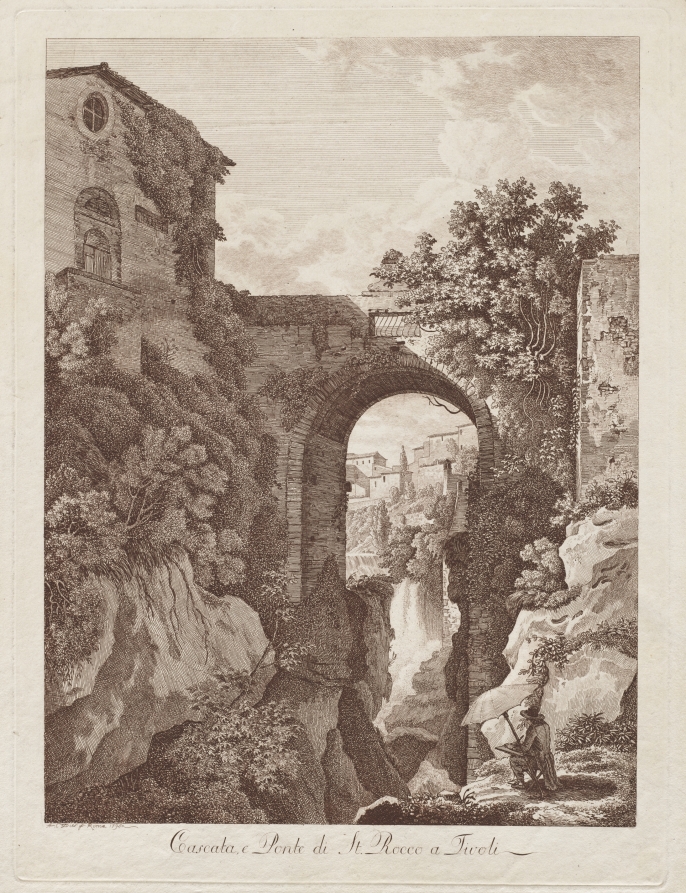
Albert Christoph Dies · The Cleveland Museum of Art · Gift of Susan Schulman in memory of Fred Schmidt · CC0
- Name
- Albert Christoph Dies
- Birthplace
- Hanover, Electorate of Hanover, Kingdom of Great Britain
- Died
- 28 December 1822
- Place of death
- Vienna, Austrian Empire
- Born
- 1755 · Hanover.
- Nationality
- Germany
- Occupation
- painter · composer · biographer
- Languages
- German
Reference Check
Propose documentary evidence for Albert Christoph Dies. A contribution is never written directly as fact: identity, source, rights and evidence gates still decide.
Sign in to contribute
World of VALÉORINE
Documentary connections
Only confirmed graph relationships appear here. Images are shown only when their identity and reuse rights both pass the documentary gate.
Documentary evidence
Documentary basis
Authority files
wikidata · Q87596 · wikipedia · Albert Christoph Dies
In this article
Biography
Biography
The recorded working language is German. Places of work recorded in the authority are Rome and Vienna. Work by Albert Christoph Dies is recorded in the collections of Belvedere, Art Institute of Chicago, Berlinische Galerie, Hermitage Museum and Landesmuseum Hannover.
Key facts
Key facts
• Name — Albert Christoph Dies • Birthplace — Hanover, Electorate of Hanover, Kingdom of Great Britain • Baptised — 11 February 1755 • Died — 28 December 1822 • Place of death — Vienna, Austrian Empire • Notable Works — Biographische Nachrichten von Joseph Haydn • Children — Johannes • Illustration — Illustration from Collection de vues pittoresques de l'Italie
As painter
As painter
Dies was born in Hanover (baptized 11 February 1755), and began his studies there. For one year he studied in the academy of Düsseldorf, and then he started at the age of twenty with thirty ducats in his pocket for Rome, studying briefly on the way in Mannheim and Basel. In Rome he lived a frugal life till 1796; his son Johannes (Giovanni) was born there in 1776. Copying pictures, chiefly by Salvator Rosa, for a livelihood, his taste led him to draw and paint from nature in Tivoli, Albano and other picturesque places in the vicinity of Rome. Naples, the birthplace of his favorite master, he visited more than once for the same reasons. Goethe visited him in 1787. The poet, interested in the theory of color, reported in his Zweiter römischer Aufenthalt (Second stay in Rome), "At the moment I am engaged in something from which I learn a great deal; I have found and sketched a landscape that a clever artist, Dies, colored in my presence; thus eyes and mind grow ever more accustomed to color and harmony." During the Rome visit, Dies also composed music, though later on he apparently destroyed all that he had written, and none of it survives today. At one point, Jacques-Louis David, then composing his Oath of the Horatii (1784) at Rome, wished to take him to Paris. But Dies had reasons for not accepting the offer. He was courting a young Roman whom he subsequently married. Meanwhile, he had made the acquaintance of the engraver Giovanni Volpato, for whom he executed numerous drawings, and this no doubt suggested the plan, which he afterwards carried out, of publishing, in partnership with Jacob Wilhelm Mechau, Johann Christian Reinhart and Johann Friedrich Frauenholz, the series of plates known as the Collection de vues pittoresques de l'Italie, published in seventy-two sheets at Nuremberg in 1799. According to Gotwals, "In May, 1796, Dies apparently eloped with a young girl to Salzburg." The following year he moved to Vienna, and lived there on the produce of his brush as a landscape painter, and on that of his pencil or graver as a draughtsman and etcher. He also taught landscape painting at the Imperial and Royal Academy, and later, in his final post, was gallery director to Prince Nikolaus Esterházy II. During this time his physical condition grew worse, and he even lost the use of one of his hands.
As biographer
As biographer
Dies was a great admirer of the music of Joseph Haydn and during his Vienna years he undertook to meet the composer and write his biography. He obtained an introduction from his fellow artist Anton Grassi, who had made a number of busts of Haydn. Over the course of three years during Haydn's old age (starting 15 April 1805, ending 8 August 1808), Dies made a series of 30 visits to the frail and ailing composer, even though Haydn was convinced no one would be interested in his life story. On a number of occasions Haydn was unable to see him, but frequently Dies was admitted and was able to interview him. In 1810, one year after Haydn's death, Dies published a biography based on what he learned in his visits (see References below). This work is organized around the sequence of visits, reporting each in turn. It continues to serve as a substantial source of information on the composer's life. Compared with another biography written at the same time by Georg August Griesinger, Dies's work is almost certainly less accurate and is more likely to have been sentimentalized and embellished. For instances of probable embellishment, see Mathias Haydn and Haydn and Mozart; for an apparent outright blunder, see Rebecca Schroeter. Dies's translator Vernon Gotwals, comparing Dies to Griesinger, concludes: It is now clear that for facts about Haydn one will turn first to the Biographische Notizen of Griesinger, but that reliance upon that source alone would deprive Haydn's portrait of many authentic details, mixed inescapably with some imaginary ones. Dies's Biographische Nachrichten is the work of a sentimental artist who fancied himself a "universal man" but whose approach to the problem of biography was that of his time and place.
Death
Death
In 1787, he accidentally swallowed 3/4 oz of lead acetate. He never recovered from the ensuing lead poisoning, which caused the loss of use of one of his hands, and eventually died in Vienna on 28 December 1822.
Assessment
Assessment
Dies is perhaps better known today from his acquaintanceship (e.g. Goethe, Haydn) than from his own merits as an artist or writer. The Encyclopædia Britannica Eleventh Edition gives harsh opinions of Dies's work as an artist: • "[In Rome] he became a bold executant in water-colours and in oil, though he failed to acquire any originality of his own." • "Lord Bristol, who encouraged him as a copyist, predicted that he would be a second Salvator Rosa. However, Dies did not have the creativity necessary to become a great artist." • "With so many irons in the fire Dies naturally lost the power of concentration." • "From two pictures now in the Belvedere gallery, and from numerous engraved drawings from the neighborhood of Tivoli, we gather that Dies was never destined to rise above a respectable mediocrity. He followed Salvator Rosa's example in imitating the manner of Claude Lorrain. But Salvator adapted the style of Claude, whilst Dies did no more than copy it." Gotwals writes, "Friedrich Noack in his article in the Thieme and Becker Allgemeines Lexicon der bildenden Künstler General lexicon of graphic artists, describes Dies's work as clumsy, mediocre, and prosaic. Gotwals adds, concerning Dies's writing, that "his literary style is hardly better."
Gallery
Gallery
• Illustration — The Roman Forum (1787) • Illustration — View of the Leopoldinentempel (1807) • Illustration — Garden Façade, Esterházy Palace (1812) • Illustration — Landscape with the raising of Jupiter
Places
Named by the record
Places
Only places the record itself states, plotted where the house gazetteer settles their coordinates. Nothing is inferred from a name or a nationality.
Hanover.
Birth place
Vienna.
Death place
Text attribution
Licensing
Text attribution
Part of the biographical narrative on this page reuses licensed material. Its origin, revision and licence are recorded here.
The biographical narrative on this page is based on the Wikipedia article Albert Christoph Dies, revision 1365225053 (EN edition), by its contributors. VALÉORINE has edited that text and built its own documentary record around it. The reused material is available under CC BY-SA 4.0, and this page's reuse of it is offered under the same licence. Everything else on this page — the chronology, the holdings, the evidence, the plates and the connections — is VALÉORINE's own record. Sources and licences.
Notes from the source article
Cited by Wikipedia
Notes from the source article
These works are cited by the source article, in its own numbering. They are recorded as its citations, not as sources VALÉORINE has verified.
- 1.New Grove, "Dies"
- 2.8. 211.
- 3.Prange (2007)
- 4.See quotation from Gotwals below.
Bibliography printed in the source article · 6
- Dies, Albert Christoph. Biographical accounts of Joseph Haydn, written and edited from his own spoken narratives. University of Wisconsin Press. 1968.
- Gotwals, Vernon. The earliest biographies of Haydn. Musical Quarterly. 45. 4. 439–459. 1959. 10.1093/mq/XLV.4.439.
- Gotwals, Vernon. Haydn: Two Contemporary Portraits. University of Wisconsin Press. 1968.
- Jones, DavidWyn. Haydn. Routledge. 45. 5 July 2017. 9781351564069.
- New Grove Dictionary of Music and Musicians, online edition. Copyright 2008 by Oxford University Press.
- Prange, Peter (2007) "Book Review: Paper Museums. The Reproductive Print in Europe, 1500–1800", Journal of the History of Collections 19: 145–147.
References
Citations
References
Each reference names the institution holding it, so a reader may go to the document itself.
reference work
Secondary witnessreference work
Secondary witness
People, houses and institutions
Knowledge graph
People, houses and institutions
Teachers, collaborators, publishers and institutions recorded against this person, each on a stated basis.
Born at
1- HanoverPlace
Established from a fact already recorded on a verified source.
The Encyclopedia exists whether or not anything is for sale. Corrections are recorded rather than overwritten, and every version of this record is kept. Published 20 August 2026.
Elsewhere in Music memorabilia
43,928 published records in this field, each with its sources named.
- Albert C. SweetPerson
- Albert CahenPerson
- Albert CastigliaPerson
- Albert ChamberlandPerson
- Albert CoatesPerson
- Albert CollinsPerson
- Albert DaileyPerson
- Albert de RippePerson
Best supported in this field
For owners
Own a work by Albert Christoph Dies?
A specialist will read what you send and tell you what the house can establish, what it cannot, and whether the object is suited to sale. There is no charge and no obligation. The object stays with you throughout; nothing is shipped to us unless it is arranged in writing beforehand.