
Albert Anker
Albert Anker (1 April 1831 – 16 July 1910) was a Swiss painter and illustrator who has been called the "national painter" of Switzerland because of his enduringly popular depictions of 19th-century Swiss rural life.
Also recorded as Albrecht Anker · Samuel Albert Anker · Van den Anker · albert anker
Albert Anker
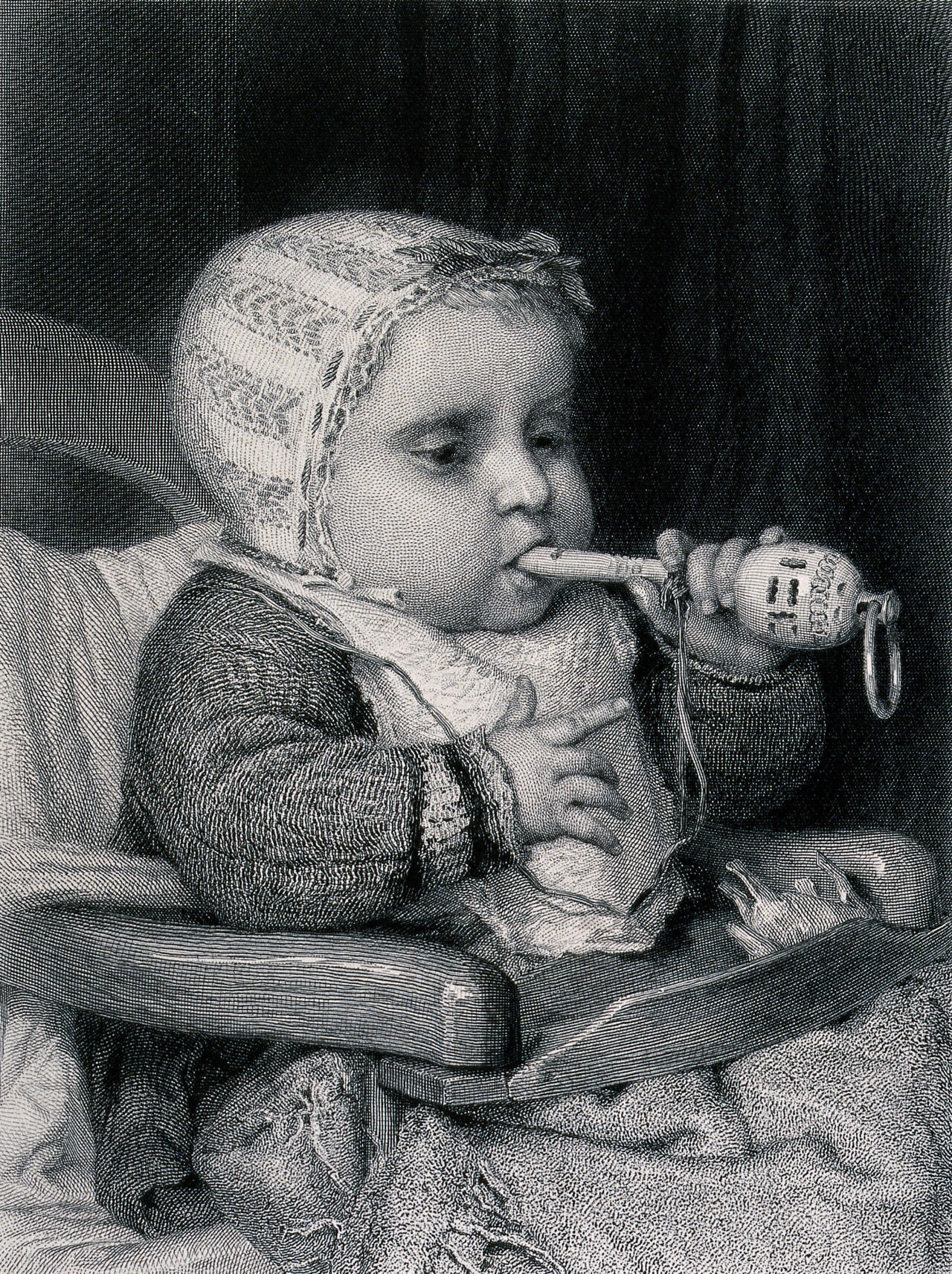
Albert Anker · Wellcome Collection, London · Wellcome Collection · Public Domain Mark
- Born
- 1831.
- Died
- 1910.
- Nationality
- Switzerland.
- Occupation
- illustrator, painter, pottery painter, exlibrist, watercolorist and draftsperson.
- Fields
- portrait painting.
- Movements
- realism and Impressionism.
VALÉORINE Encyclopedia
VALÉORINE documentary reading
Documentary summary
Albert Anker (1 April 1831 – 16 July 1910) was a Swiss painter and illustrator who has been called the "national painter" of Switzerland because of his enduringly popular depictions of 19th-century Swiss rural life.
Admitted source layer · organised and presented by VALÉORINE
Note VALÉORINE
Albert Anker (1831–1910) was a draftsperson, exlibrist and illustrator, among other activities, of Swiss nationality. The draftsperson was associated with Impressionism and realism. The work spans portrait painting.
Composed from admitted, traceable facts · 27 September 2026
VALÉORINE
Reference Check
Propose documentary evidence for Albert Anker. A contribution is never written directly as fact: identity, source, rights and evidence gates still decide.
Sign in to contribute
Documentary evidence
Evidence Panel
not yet certified
- Identity
- resolved
- Independent source families
- 0
- Admitted assertions
- 0
- Open conflicts
- 0
Authority files
gnd · 1212961269 · wikidata · Q72510 · wikipedia · Albert Anker
In this article
Life
Life
Born in Ins as the son of veterinarian Samuel Anker (then a member of the constituent assembly of the Canton of Bern) and Marianne Elisabeth (born Gatschet). In 1836, his father became veterinarian in Neuchâtel, and the Anker family moved there. Anker attended school in Neuchâtel, where his teacher in sketching was Frédéric-Wilhelm Moritz. He and Auguste Bachelin, later a fellow artist, took private drawing lessons with Louis Wallinger from 1845 to 1848. In 1849, he enrolled into a Gymnasium in Bern, graduating with the Matura in 1851. Afterwards, he studied theology, beginning in 1851 at the University of Bern and continuing at the University of Halle, Germany. But in Germany he was inspired by the great art collections, and in 1854, he convinced his father to agree to an artistic career. In Neuchâtel he began using the name Albert, because it was easier to pronounce for his French-speaking classmates. Anker moved to Paris, where he studied with Charles Gleyre and attended the École nationale supérieure des Beaux-Arts in 1855–60. He installed a studio in the attic of his parents' house and participated regularly in exhibitions in Switzerland and in Paris. Anker married Anna Rüfli in 1864, and they had six children together; the four children who did not die at an early age – Louise, Marie, Maurice and Cécile – appear in some of Anker's paintings. In 1866, he was awarded a gold medal at the Paris Salon for Schlafendes Mädchen im Walde (1865) und Schreibunterricht (1865); in 1878 he was made a knight of the Légion d'honneur. In 1870–74 he was a member of the Grand Council of Bern, where he advocated the construction of the Kunstmuseum Bern. Apart from his regular wintertime stays in Paris, Anker frequently travelled to Italy and other European countries. In 1889–93 and 1895–98 he was a member of the Swiss Federal Art Commission and in 1900 he received an honorary doctorate from the University of Bern. A stroke in 1901 reduced his ability to work. Only after his death in 1910 was there a first exposition dedicated to him, held at the Musée d'art et d'histoire in Neuchâtel.
Works
Works
During his studies, Anker produced a series of works with historical and biblical themes, including paintings of Luther and Calvin. Soon after returning to Ins, though, he turned to what would become his signature theme: the everyday life of people in rural communities. His paintings depict his fellow citizens in an unpretentious and plain manner, without idealising country life, but also without the critical examination of social conditions that can be found in the works of contemporaries such as Daumier, Courbet or Millet. Although Anker did paint occasional scenes with a social significance, such as visits by usurers or charlatans to the village, his affirmative and idealistic Christian world-view did not include an inclination to issue any sort of overt challenge. Also prominent in Anker's work are the more than 30 still lifes he created. They depict both rural and urban table settings in the tradition of Chardin, their realist solidity reflecting Anker's vision of a harmonic and stable world order. In addition, Anker created hundreds of commissioned watercolours and drawings, mostly portraits and illustrations, including for an edition of Jeremias Gotthelf's collected works. Between 1866, the year Anker settled to Paris and 1892, Anker also decorated more than 500 faience plates for the Alsatian pottery industrial Théodore Deck. Anker developed a consistent artistic style that he maintained throughout his career. His works reflect themes of everyday Swiss life and have been associated with a sense of calm and an affinity for Swiss democracy, with attention to colouring and lighting noted as characteristic features of his technique. While his subjects are largely parochial, his correspondence suggests an engagement with contemporary European art and events beyond his immediate surroundings.
Life and career
Dated record
Life and career
The full dated record · 2 entries
1831
Albert Anker born.
1910
Albert Anker died.
Reception
Albert Anker's work made him Switzerland's most popular genre painter of the 19th century, and his paintings have continued to enjoy a great popularity due to their general accessibility. Indeed, as a student, Anker summed up his approach to art as follows: "One has to shape an idea in one's imagination, and then one has to make that idea accessible to the people." Many Swiss postage stamps and other media have incorporated Anker's work. His studio in Ins has been preserved as a museum by the Albert Anker Foundation. One of Anker's greatest admirers and collectors is former Swiss Federal Councillor Christoph Blocher, since the 1980s Switzerland's most influential conservative politician, who also published an apologetic essay on Anker.
![A young child sitting at a table using dominoes as building blocks. Engraving by A.& E. Varin after A. Anker., [1874], by Albert Anker](https://iiif.wellcomecollection.org/image/V0038802/full/800,/0/default.jpg)
A young child sitting at a table using dominoes as building blocks. Engraving by A.& E. Varin after A. Anker., [1874], by Albert Anker
Albert Anker · Wellcome Collection, London · Wellcome Collection
Primary material
Documents and archives
reference work
- “Albert Anker”, English Wikipedia, consulted as further reading
Reputable secondary · Wikipedia
- Wikidata, structured authority record Q72510: Albert Anker
Reputable secondary · Wikimedia Foundation
authority file
- Gemeinsame Normdatei 1212961269, Albert Anker-Haus.
Unverified · Deutsche Nationalbibliothek
Notes from the source article
Cited by Wikipedia
Notes from the source article
These works are cited by the source article, in its own numbering. They are recorded as its citations, not as sources VALÉORINE has verified.
- 1.Meister, Robert. Albert Anker und seine Welt. Zytglogge. 12. 1981. 978-3-7296-0134-5.
- 2.Bhattacharya-Stettler, Therese. Albert Anker. sikart.ch. Swiss Institute for Art Research. 1998.
- 3.http://www.sikart.ch/page.php?pid=30&name=impressum&lang=en
- 4.Albert Anker – Schöne Welt. Zum 100. Todestag. Kunstmuseum Bern.
- 5.Kuthy, Sandor. Albert Anker, Fayencen in Zusammenarbeit mit Theodore Deck. Orell Füssli. 54.
- 6.Kunstmuseum Bern. Albert Anker – Schöne Welt. Zum 100. Todestag. Eine Auseinandersetzung mit Albert Anker 7. Mai – 5. September 2010]Biographie. 2010.
- 7.Lanz, Hanspeter. "Le Réformateur" : ein Fayenceteller von Albert Anker. ETH Zürich. 2004–2005.
- 8.Christoph Blocher. Schweizer Malerei: Tröstlich anzusehen. Die Weltwoche 17/06. 2006.
Bibliography printed in the source article · 2
- H.A. Lüthy, S. Kuthy, Albert Anker (1980)
- S. Kuthy, T. Bhattacharya-Stettler, Albert Anker, Ölgemälde und Ölstudien (1995)
References
Citations
References
Each reference names the institution holding it, so a reader may go to the document itself.
reference work
Partially resolvedauthority file
Gemeinsame Normdatei 1212961269, Albert Anker-Haus.Deutsche Nationalbibliothek
Partially resolvedreference work
Wikidata, structured authority record Q72510: Albert AnkerWikimedia Foundation
Partially resolved
The Encyclopedia exists whether or not anything is for sale. Corrections are recorded rather than overwritten, and every version of this record is kept. Published 14 August 2026.
Elsewhere in Illustration
5,224 published records in this field, each with its sources named.
- Alan TiegreenIllustrator
- Alasdair GrayIllustrator
- AlastairIllustrator
- Albéric BourgeoisIllustrator
- Albert BertelsenIllustrator
- Albert DecarisIllustrator
- Albert EbertIllustrator
- Albert EdelfeltIllustrator
Best supported in this field
For owners
Own a work by Albert Anker?
A specialist will read what you send and tell you what the house can establish, what it cannot, and whether the object is suited to sale. There is no charge and no obligation. The object stays with you throughout; nothing is shipped to us unless it is arranged in writing beforehand.