
Yūrinkan Museum
The Yūrinkan Museum or Fujii Saiseikai Yūrinkan is a private museum of East Asian art in Kyōto, Japan. Established in 1926 by entrepreneur and politician Fujii Zensuke (1860–1934), it is the second oldest private museum in Japan, after the Ōkura Shūkokan. The collection, particularly strong in Chinese art from the Shang to the Qing, includes one National Treasure and nine Important Cultural Properties.
Yūrinkan Museum
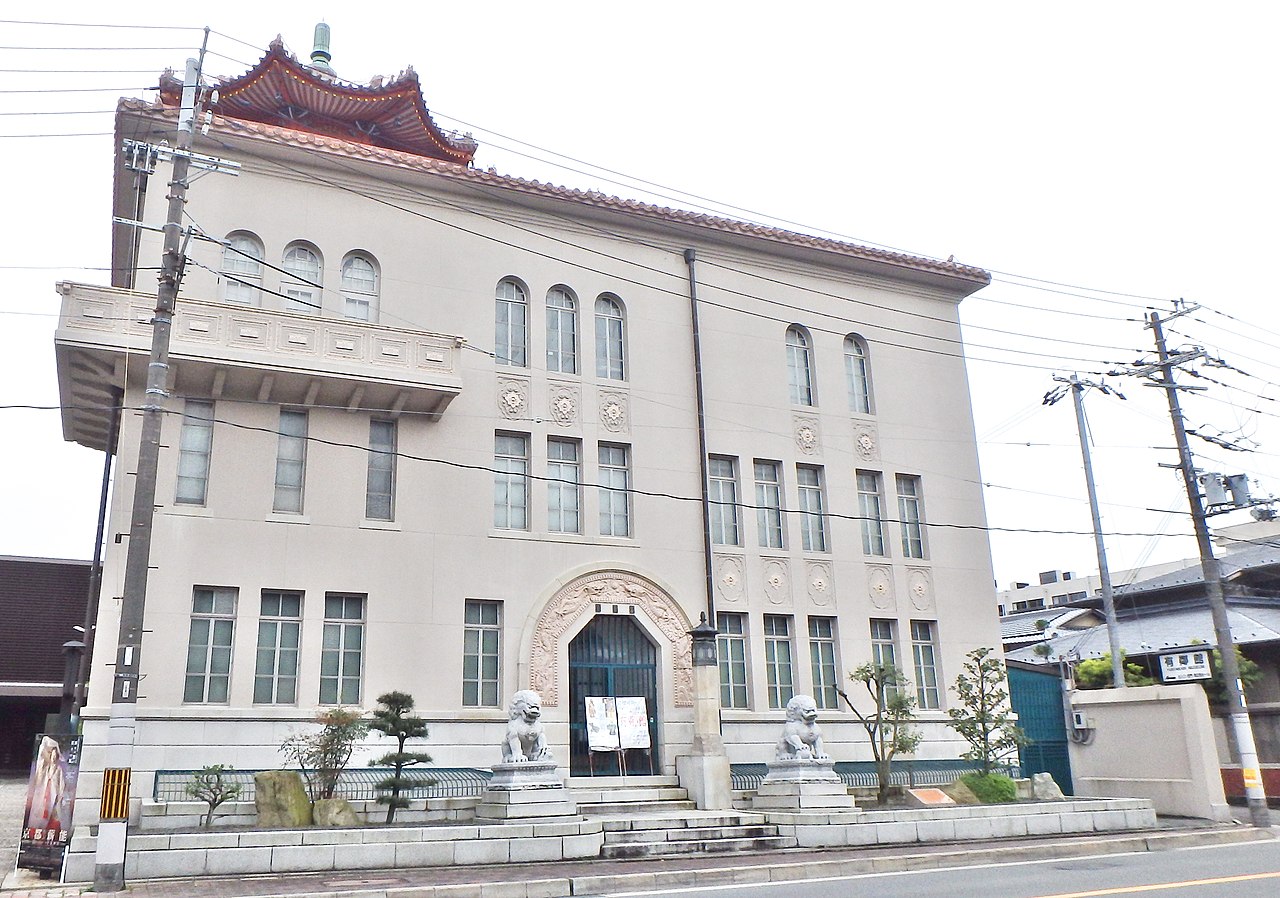
アラツク · CC BY-SA 4.0
- Name
- Yūrinkan Museum
- Founded
- 1926
- Founder
- Zensuke Fujii
- Headquarters
- Japan
VALÉORINE Encyclopedia
VALÉORINE documentary reading
Documentary summary
The Yūrinkan Museum or Fujii Saiseikai Yūrinkan is a private museum of East Asian art in Kyōto, Japan. Established in 1926 by entrepreneur and politician Fujii Zensuke (1860–1934), it is the second oldest private museum in Japan, after the Ōkura Shūkokan. The collection, particularly strong in Chinese art from the Shang to the Qing, includes one National Treasure and nine Important Cultural Properties.
Admitted source layer · organised and presented by VALÉORINE
Reference Check
Propose documentary evidence for Yūrinkan Museum. A contribution is never written directly as fact: identity, source, rights and evidence gates still decide.
Sign in to contribute
Documentary evidence
Documentary basis
Authority files
wikidata · Q11622794 · wikipedia · Yūrinkan Museum
In this article
Key facts
Key facts
• Name — Yūrinkan Museum • Native Name — 藤井斉成会有鄰館 • Address — 44 Okazaki Enshōji-chō, Sakyō-ku • Location Town — Kyoto, Kyoto Prefecture • Location Country — Japan • Opened Date — 1926 • Architect — Takeda Goichi
Name
Name
The museum's name is taken from the Analects of Confucius and "expresses this feeling of good neighbourly relations".
Buildings
Buildings
The main building or "Fujii Saiseikai Yūrinkan Building No.1" of 1926 was built to a design by Takeda Goichi to house Fujii Kensuke's collection of Chinese art. In a Chinese style both inside and out, it is topped by an octagonal pavilion with thirty-six thousand yellow glazed roof tiles dating to the time of the Qianlong Emperor. The building is a registered (as opposed to designated) Municipal Tangible Cultural Property. The annex or "Fujii Saiseikai Yūrinkan Building No.2" dates to the beginning of the Taishō era (1912–1926). Formerly the western-style building of the Yokoyama Mining Office, it was relocated from Kanazawa to Kyōto at the time of the enthronement of the Shōwa Emperor in 1928, to accommodate the Minister of Finance. It is registered as a National Tangible Cultural Property, alongside the 1928 storage facility.
Access
Access
The museum is open to the public on the first and third Sunday of each month, excepting January and August.
Institutional history
Dated record
Institutional history
The full dated record · 2 entries
1926
Yūrinkan Museum established.
1926
Yūrinkan Museum is recorded from 1926.
Places
Named by the record
Places
Only places the record itself states, plotted where the house gazetteer settles their coordinates. Nothing is inferred from a name or a nationality.
- Japan
Named but not plotted · 1
Yūrinkan Museum is associated with Japan.
Country
Collection
Collection
The Yūrinkan's collection of Chinese art includes bronzes, ceramics, Buddhist statues, seals, calligraphic works, textiles, and paintings, as well as nearly a hundred manuscripts from Dunhuang, including twenty-three in Uighur and others in Tibetan, Mongolian, and Sanskrit. The museum's National Treasure consists of a fragmentary Tang manuscript of a commentary on the Spring and Autumn Annals.
Documents and archives
Primary material
Documents and archives
authority record
- Wikidata, structured authority record Q11622794: Yūrinkan Museum
General reference · Wikidata
reference work
- “Yūrinkan Museum”, English Wikipedia, consulted as further reading
Reputable secondary · Wikipedia
Notes from the source article
Cited by Wikipedia
Notes from the source article
These works are cited by the source article, in its own numbering. They are recorded as its citations, not as sources VALÉORINE has verified.
References
Citations
References
Each reference names the institution holding it, so a reader may go to the document itself.
authority record
Secondary witnessreference work
Secondary witness
The Encyclopedia exists whether or not anything is for sale. Corrections are recorded rather than overwritten, and every version of this record is kept. Published 16 August 2026.
Elsewhere in Institutions
3,152 published records in this field, each with its sources named.
- Yūbari City Museum of ArtOrganisation
- Yuki Museum of ArtOrganisation
- Yukon Arts CentreOrganisation
- Yumin Art Nouveau CollectionOrganisation
- ZachętaOrganisation
- Zagros Paleolithic MuseumOrganisation
- Zainul Abedin MuseumOrganisation
- Zambaccian MuseumOrganisation
Best supported in this field
For owners
Own an object connected with Yūrinkan Museum?
A specialist will read what you send and tell you what the house can establish, what it cannot, and whether the object is suited to sale. There is no charge and no obligation. The object stays with you throughout; nothing is shipped to us unless it is arranged in writing beforehand.