
xiphos
The xiphos (Ancient Greek: ξίφος [ksípʰos]; plural xiphe, Ancient Greek: ξίφη [ksípʰɛː]) is a double-edged, one-handed Iron Age straight shortsword used by the ancient Greeks. It was a secondary battlefield weapon for the Greek armies after the dory or javelin. The classic blade was generally about 45–60 cm (18–24 in) long, although the Spartans supposedly preferred to use blades as short as 30 cm (12 in) around the era of the Greco-Persian Wars.
xiphos
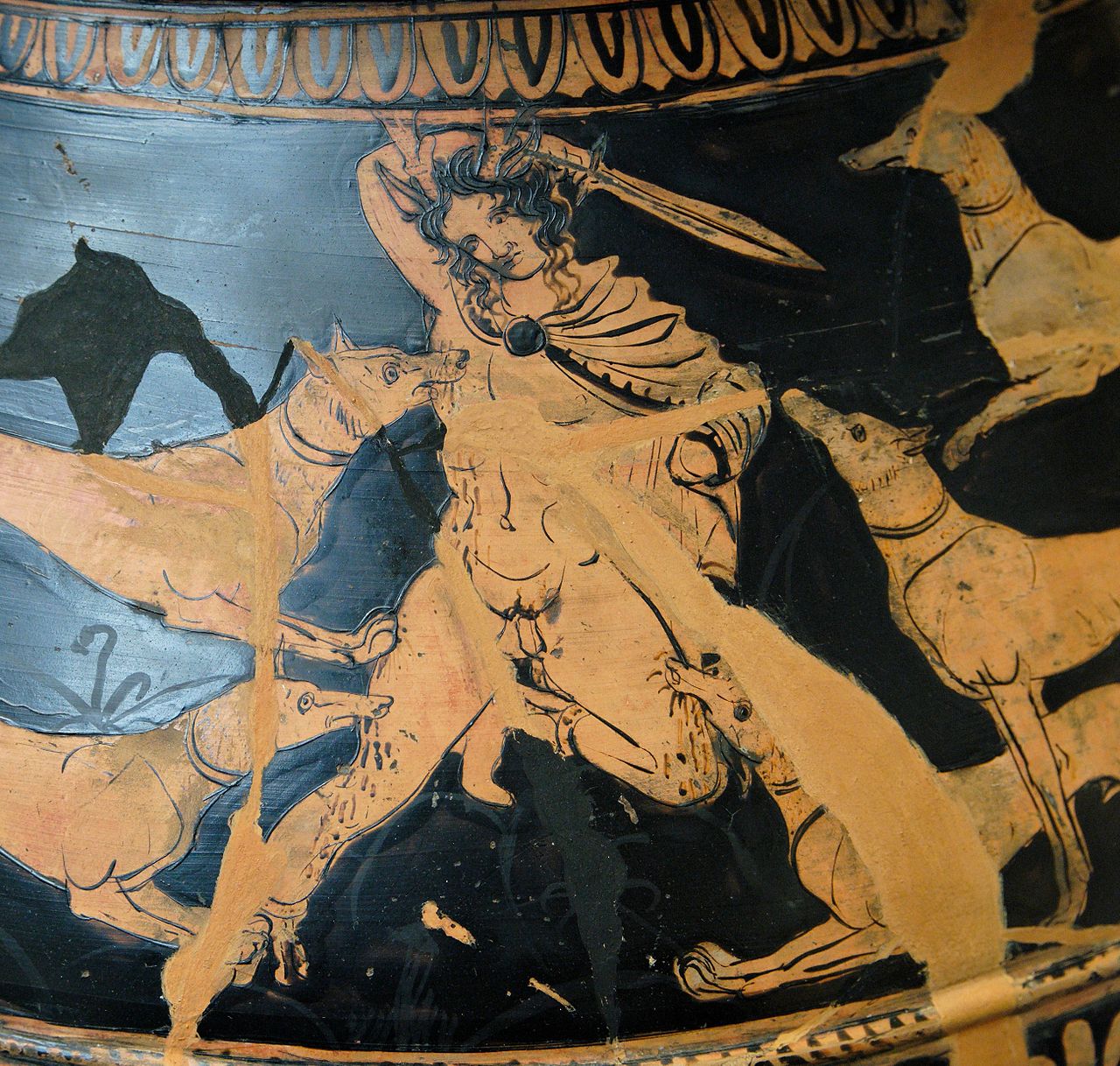
Dolon Painter · Jastrow (2007) · CC BY 2.5
- Field
- short sword.
VALÉORINE Encyclopedia
VALÉORINE documentary reading
Documentary summary
The xiphos (Ancient Greek: ξίφος [ksípʰos]; plural xiphe, Ancient Greek: ξίφη [ksípʰɛː]) is a double-edged, one-handed Iron Age straight shortsword used by the ancient Greeks. It was a secondary battlefield weapon for the Greek armies after the dory or javelin. The classic blade was generally about 45–60 cm (18–24 in) long, although the Spartans supposedly preferred to use blades as short as 30 cm (12 in) around the era of the Greco-Persian Wars.
Admitted source layer · organised and presented by VALÉORINE
Note VALÉORINE
No house-authored Note is published until its assertions and sources pass the VALÉORINE evidence contract. The documentary article remains available in full while that enrichment is being consolidated.
Documentary enrichment in progress · no unsupported statement published
Reference Check
Propose documentary evidence for xiphos. A contribution is never written directly as fact: identity, source, rights and evidence gates still decide.
Sign in to contribute
Documentary evidence
Evidence Panel
original value insufficient · checked 25 September 2026
- Identity
- resolved
- Independent source families
- 0
- Admitted assertions
- 0
- Open conflicts
- 0
Authority files
wikidata · Q1500165 · wikipedia · Xiphos
In this article
Etymology
Etymology
Stone's Glossary has xiphos being a name used by Homer for a sword. The entry in the book says that the sword had a double-edged blade widest at about two-thirds of its length from the point, and ending in a very long point. The word is attested in Mycenaean Greek Linear B form as 𐀥𐀯𐀟𐀁, qi-si-pe-e. A relation to Arabic saifun ('a sword') and Egyptian sēfet has been suggested, although this does not explain the presence of a labiovelar in Mycenaean. One suggestion connects Ossetic äxsirf "sickle", which would point to a virtual Indo-European *kʷsibʰro-.
Construction
Construction
Most xiphe handles followed a two-piece construction (similar to a knife) using either native woods or, for more exotic imports, ebony and animal bone. The two slabs were attached to the tang of the sword, secured via two or three pins and then made smooth via filing giving the characteristic oval shape of a xiphos grip. Hand guards usually followed a "bridge" shape and were either also of organic material or iron or a combination of both, also secured via pins on each point. Some swords found in Italy or Macedonia tended to have an iron extension/reinforcement running along the handle. There have been finds of xiphe with hilts decorated with gold foil. These swords were most likely ceremonial since they are always found in burial sites. Surviving xiphe are relatively rare, but appear alongside iron weapons in burial sites, indicating both a household status and continued use into the Iron Age.
History
History
The period between the Classical and Iron Ages is often referred to as a "dark age", but it featured important developments and innovations in metal casting, alloy construction, and procurement as widespread use of metallurgy slowly spread out of Iberia. The xiphos sometimes has a midrib, and is diamond or lenticular in cross-section. It was a rather light weapon, with a weight around 450–900 g (0.99–1.98 lb). It was generally hung from a baldric under the left arm. The xiphos was generally used only when the spear was broken, taken by the enemy, or discarded for close combat. Very few xiphe are known to have survived. The xiphos's leaf-shaped design lent itself to both cutting and thrusting. The origin of the design goes back to the Bronze Age; the blade of the xiphos looks almost identical to the blade of the Mycenaean Naue II sword, which itself transitioned from having a blade of bronze into a blade of iron during the Archaic period. It is likely that the xiphos is the natural evolution of the iron version of the Naue II but with a more sophisticated handle design. The leaf-shaped short swords were not limited to Greece, as mentioned, but can be found throughout Europe in the late Bronze Age under various names. The early Celtic La Tène short sword, contemporary with the xiphos, had a virtually identical blade design as the xiphos.

Illustration of Theseus slaying the Minotaur on a neck-amphora. Circa 460 BC.
Attributed to The Oionokles Painter, likely to have died before 400 BC. · Fæ (Own work)

object type / vase shape: attic red figure cup type C (kylix) - description: interior: kneeling hoplite; inscription: PAMMACHOS KALOS - exterior not decorated (black) - production place: Athens - painter: Apollodoros - period / date: late archaic, ca. 490 BC - material: pottery (clay) - museum / inventory number: Basel, Antikenmuseum und Sammlung Ludwig BS 472 - bibliography: CVA Basle (2), plate
ArchaiOptix
Primary material
Documents and archives
reference work
- “Xiphos”, English Wikipedia, consulted as further reading
Reputable secondary · Wikipedia
authority record
- Wikidata, structured authority record Q1500165: xiphos
Unverified · Wikidata
Notes from the source article
Cited by Wikipedia
Notes from the source article
These works are cited by the source article, in its own numbering. They are recorded as its citations, not as sources VALÉORINE has verified.
- 1.LSJ ci/fos ξίφος ref
- 2.George Cameron Stone, A Glossary of the Construction, Decoration, and Use of Arms and Armor
- 3.Palaeolexicon. Word study tool of Ancient languages. The Linear B word qi-si-pe-e.
- 4.Raymoure, K. A. qi-si-pe-e. Minoan Linear A & Mycenaean Linear B. Deaditerranean.
- 5.University of Oslo. PY 716 Ta (2). DĀMOS: Database of Mycenaean at Oslo.
- 6.Heubeck, Alfred. MYKENISCH *qi-si-po = ξίφος. Minos. 6. 114–116. 1958.
- 7.LSJ fa/sganon φάσγανον shortref .
- 8.Palaeolexicon. Word study tool of Ancient languages. The Linear B word pa-ka-na.
- 9.Raymoure, K.A. pa-ka-na. Minoan Linear A & Mycenaean Linear B. Deaditerranean.
- 10.Frisk, Griechisches Etymologisches Woerterbuch
- 11.Čop KZ 74, p. 231 f
- 12.Bachrach, Bernard S. Warfare in medieval Europe, c.400-c.1453. 2017. 978-1-138-88765-7.
- 13.Bachrach, Bernard S. Warfare in medieval Europe, c.400-c.1453. 2017. 978-1-138-88765-7.
- 14.Leaf-Blades? -- myArmoury.com.
- 15.Brunning, Sue. The sword in early Medieval Northern Europe : experience, identity, representation. 978-1-78744-456-0.
- 16.Sword: La Tène II. www.britishmuseum.org.
References
Citations
References
Each reference names the institution holding it, so a reader may go to the document itself.
reference work
Partially resolvedauthority record
Unverified
The Encyclopedia exists whether or not anything is for sale. Corrections are recorded rather than overwritten, and every version of this record is kept. Published 14 August 2026.
Elsewhere in Militaria
6,095 published records in this field, each with its sources named.
- Wz. 29 Schneider 105 mm gunTerminology
- Wz. 35 anti-tank rifleTerminology
- XASM-3Terminology
- XD(M)Terminology
- XLIM-49 Nike-ZeusTerminology
- XM-736 8-inch projectileTerminology
- XM70E2Terminology
- XM8 rifleTerminology
Best supported in this field
For owners
Own an object connected with xiphos?
A specialist will read what you send and tell you what the house can establish, what it cannot, and whether the object is suited to sale. There is no charge and no obligation. The object stays with you throughout; nothing is shipped to us unless it is arranged in writing beforehand.