
William Unger
Illustration — William Unger; photograph by Ferdinand Schmutzer (after 1900) William Unger, or Wilhelm Unger (11 September 1837, Hanover – 5 March 1932, Innsbruck) was a German etcher and engraver.
Also recorded as William G. Unger · unger william · william unger · wilhelm unger
William Unger
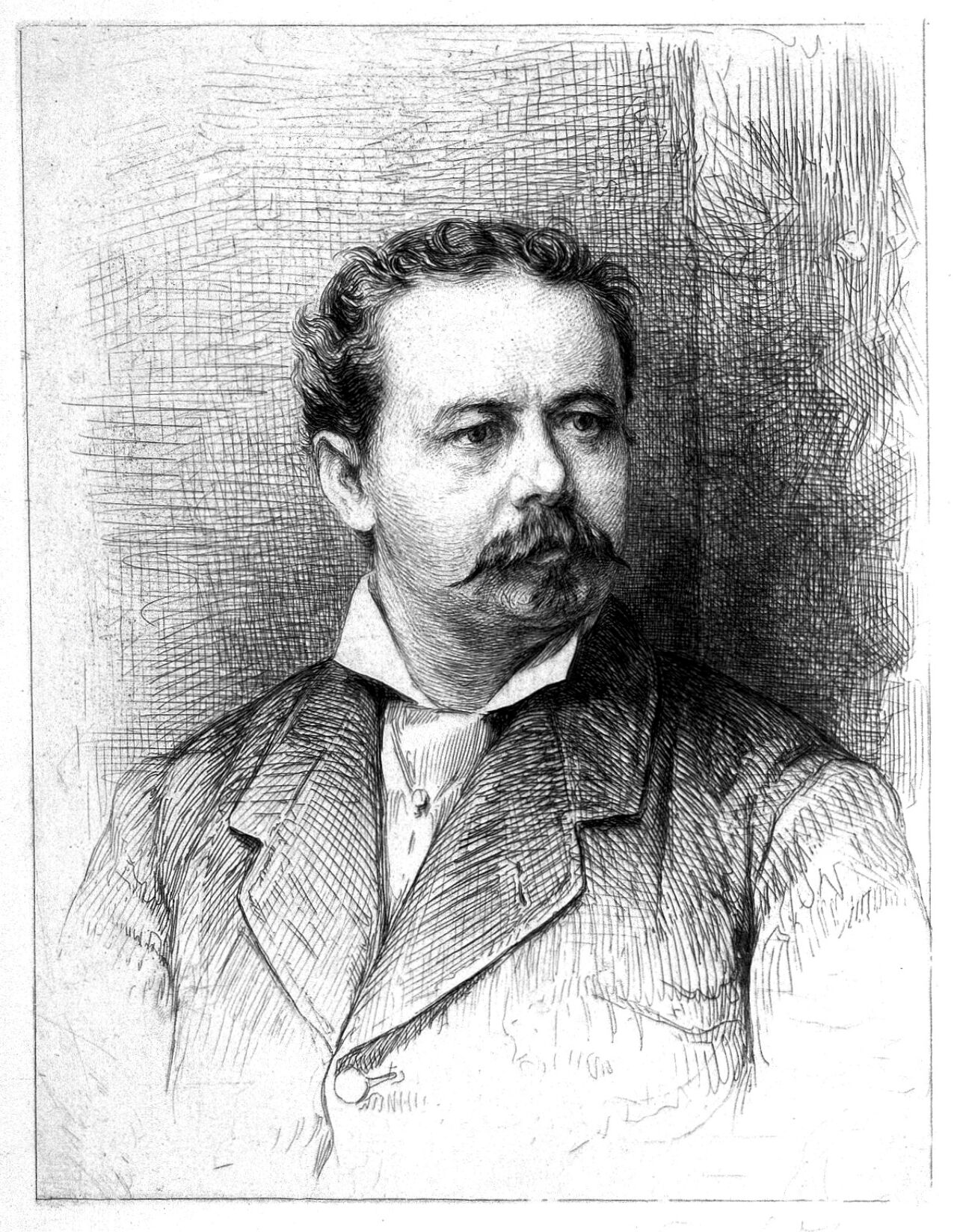
William Unger · Wellcome Collection, London · Wellcome Collection · Public Domain Mark
- Born
- 1837. · Hanover.
- Nationality
- Germany and Kingdom of Hanover.
- Occupation
- painter, printmaker, teacher, graphic artist, engraver and etcher.
- Education
- Kunstakademie Düsseldorf, Academy of Fine Arts and Munich.
- Teachers
- Joseph Keller and Julius Thäter.
- Languages
- German.
VALÉORINE Encyclopedia
VALÉORINE documentary reading
Documentary summary
Illustration — William Unger; photograph by Ferdinand Schmutzer (after 1900) William Unger, or Wilhelm Unger (11 September 1837, Hanover – 5 March 1932, Innsbruck) was a German etcher and engraver.
Admitted source layer · organised and presented by VALÉORINE
Reference Check
Propose documentary evidence for William Unger. A contribution is never written directly as fact: identity, source, rights and evidence gates still decide.
Sign in to contribute
World of VALÉORINE
Documentary connections
Only confirmed graph relationships appear here. Images are shown only when their identity and reuse rights both pass the documentary gate.
Documentary evidence
Documentary basis
Authority files
wikidata · Q18508744 · wikipedia · William Unger
In this article
Biography
Biography
William Unger studied at Kunstakademie Düsseldorf and Academy of Fine Arts, Munich. Training under Joseph Keller and Julius Thäter is recorded. Hermína Laukotová and Menci Clement Crnčić are recorded as having studied under William Unger. The recorded working language is German. Places of work recorded in the authority are Munich, Leipzig and Brunswick. Employment is recorded with Weimar Saxon-Grand Ducal Art School. Work by William Unger is recorded in the collections of Museum Boijmans Van Beuningen, Belvedere, Finnish National Gallery, Philadelphia Museum of Art and CODA Museum.
His father was the jurist and art historian, Friedrich Wilhelm Unger. While he was still a toddler, his family moved to Göttingen. Both he and his older sister, Johanna Unger displayed artistic talent at an early age. Her interests turned to painting, while he became more involved with etching. Beginning in 1854, he studied at the Kunstakademie Düsseldorf with the engraver, Joseph von Keller then, in 1858, transferred to the Academy of Fine Arts Munich, where he studied with Julius Thaeter, who specialized in copper engraving. He returned to Göttingen in 1859. The following year, his father agreed to finance more studies in Düsseldorf. The next three years proved to be disappointing and difficult. An apprentice with the engraver, Franz Paul Massau did not turn out as planned. It became harder to work, and he felt that he was a burden on his father. Eventually, he became ill. After a few weeks of recuperation, he returned home to help take care of Johanna, who was also ill. When his depression lifted, he began travelling; to Kassel, Dresden, Vienna and Venice. He finally went to Leipzig, seeking work with one of the publishers there. He found employment with E. A. Seemann in 1866, providing illustrations for their Zeitschrift für bildende Kunst (Journal of Fine Art). He was engaged in this work for several years. He also published books with reproductions of famous paintings. He married in 1870 and was appointed a Professor at the Grand-Ducal Saxon Art School, Weimar, in 1871. He spent most of his summers from 1871 to 1877 visiting art galleries in the Netherlands. Later, he settled in Vienna, where he took over management of the University of Applied Arts in 1881. He was elected a member of the Royal Swedish Academy of Fine Arts in 1884, and was named a Professor at the Academy of Fine Arts, Vienna, in 1894. His students included Alfred Cossmann, Rudolf Jettmar, Oswald Roux and Ferdinand Schmutzer. Following his retirement in 1908, he spent most of his time creating drawings and watercolors. His wife died in 1919, and he went to live with his daughter, Else, in Innsbruck. In 1928 his autobiography, Aus meinem Leben (From my Life), was published by the Gesellschaft für vervielfältigende Kunst.
Selected works
Selected works
• Illustration — Eve Showing Adam the Apple • Illustration — An Itinerant Medicine Vendor in Rome • Illustration — The Three Philosophers, after Giorgione • Illustration — Emperor Franz Joseph
Identity and overview
Identity and overview
The following is established of the heading itself.
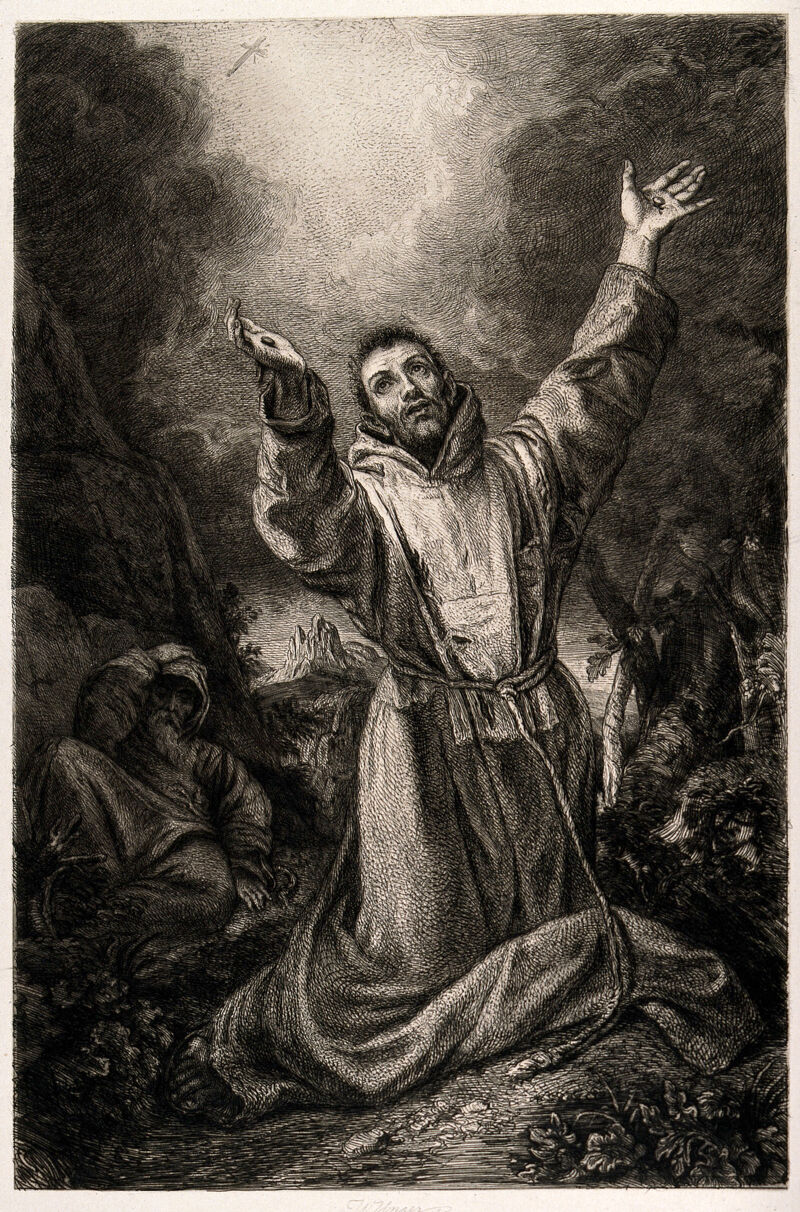
Saint Francis of Assisi receiving the stigmata of Christ. Etching by W. Unger after Carracci (?)., by William Unger
William Unger · Wellcome Collection, London · Wellcome Collection
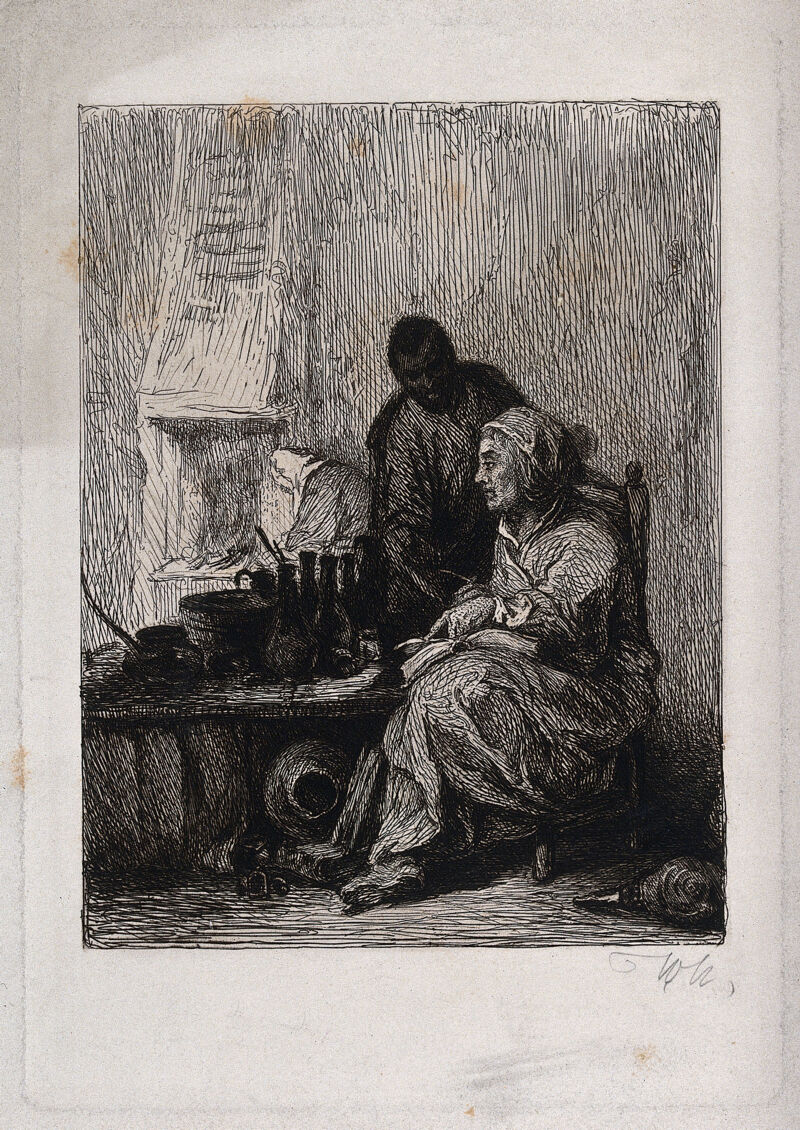
A witch at her table being helped by her attendant: they are surrounded by various bottles, mortars and jars. Etching by W. Unger., by William Unger
William Unger · Wellcome Collection, London · Wellcome Collection
Places
Named by the record
Places
Only places the record itself states, plotted where the house gazetteer settles their coordinates. Nothing is inferred from a name or a nationality.
Hanover.
Birth place
Innsbruck.
Death place
Primary material
Documents and archives
Institutional database
- Wikidata, structured authority record Q18508744: William Unger
Scholarly · Wikimedia Foundation
reference work
- “William Unger”, English Wikipedia, consulted as further reading
Reputable secondary · Wikipedia
Notes from the source article
Cited by Wikipedia
Notes from the source article
These works are cited by the source article, in its own numbering. They are recorded as its citations, not as sources VALÉORINE has verified.
- 1.Aide-mémoire de l'amateur et du professionnel. A. Morancé. 6. 1920-1931.
- 2.Bénézit B00187051
Bibliography printed in the source article · 10
- Friedrich von Boetticher. Unger, William. Malerwerke des neunzehnten Jahrhunderts. Beitrag zur Kunstgeschichte. Dresde. 1898. 909.
- Unger, William. New International Encyclopedia. Dodd, Mead and Company. 1905. 19. 630.
- Emmanuel Bénézit. Unger (William). Dictionnaire critique et documentaire des peintres, sculpteurs, dessinateurs et graveurs de tous les temps et de tous les pays. Gründ. Paris. 1924. 1160. 938.
- Österreichisches Biographisches Lexikon 1815–1950. 15.
- Jef Schaeps (dir.), Rembrandt in prent gebracht. Uit de collectie van het Prentenkabinet, université de Leyde, Leyde, 2006.
- Carl von Lützow: Geschichte der kais. kön. Akademie der bildenden Künste. Festschrift zur Eröffnung des neuen Akademie-Gebäudes Carl Gerold’s Sohn, Wien 1877.
- Unger, William. Thieme-Becker. 33. 575-576.
- Walter Wagner: Die Geschichte der Akademie der Bildenden Künste in Wien. Brüder Rosenbaum, Wien 1967.
- Marlite Halbertsma: Charles Rochussen 1814–1894. Een veelzijdig kunstenaar. Waanders, Zwolle 1997.
- Catherine Méneux. Unger, William. La magie de l'encre. Félicien Rops et la Société internationale des aquafortistes (1869-1877). 2000. Pandora. 176. 166.
References
Citations
References
Each reference names the institution holding it, so a reader may go to the document itself.
Institutional database
Wikidata, structured authority record Q18508744: William UngerWikimedia Foundation
Institutional witnessreference work
Secondary witness
The Encyclopedia exists whether or not anything is for sale. Corrections are recorded rather than overwritten, and every version of this record is kept. Published 16 August 2026.
Elsewhere in Prints
4,138 published records in this field, each with its sources named.
- William TillyerEngraver
- William TomblesonEngraver
- William TurnbullEngraver
- William Turner DaveyEngraver
- William VillalongoEngraver
- William Walker AlexanderEngraver
- William WattsEngraver
- William WoollettEngraver
Best supported in this field
For owners
Own a work by William Unger?
A specialist will read what you send and tell you what the house can establish, what it cannot, and whether the object is suited to sale. There is no charge and no obligation. The object stays with you throughout; nothing is shipped to us unless it is arranged in writing beforehand.