
William Reade
William Reade or William Rede (c.1315–1385) was a medieval bishop, theologian and astronomer.
Also recorded as William Rede
William Reade
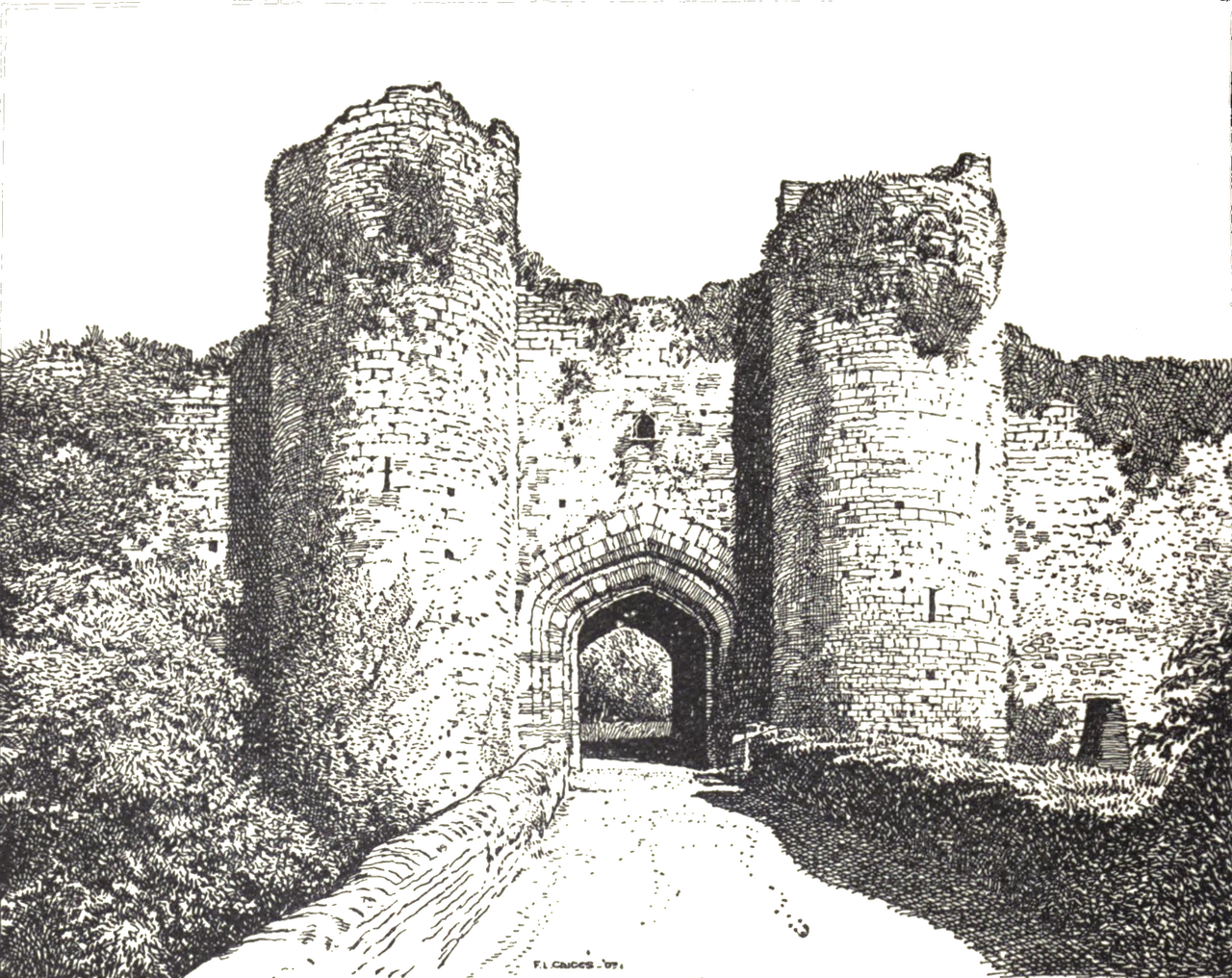
Highways_and_Byways_in_Sussex.djvu: Edward Verrall Lucas (1868–1938) derivative work: Billinghurst (talk) · File:Highways and Byways in Sussex.djvu/112 · Public domain
- Name
- William Reade
- Born
- About 1315
- Birthplace
- Wyngerworthy, Derby, England
- Died
- 18 August 1385
- Nationality
- Kingdom of England
- Occupation
- catholic priest · architect · mathematician · astronomer · bishop
- Education
- Exeter College
- Languages
- English
VALÉORINE Encyclopedia
VALÉORINE documentary reading
Documentary summary
William Reade or William Rede (c.1315–1385) was a medieval bishop, theologian and astronomer.
Admitted source layer · organised and presented by VALÉORINE
Reference Check
Propose documentary evidence for William Reade. A contribution is never written directly as fact: identity, source, rights and evidence gates still decide.
Sign in to contribute
Documentary evidence
Documentary basis
Authority files
wikidata · Q14945632
In this article
Key facts
Key facts
• Name — William Reade • Title — Bishop of Chichester • Denomination — Catholic • Appointed — 23 September 1368 • Term End — 18 August 1385 • Predecessor — William Lenn • Successor — Thomas Rushock • Born — About 1315 • Birthplace — Wyngerworthy, Derby, England • Died — 18 August 1385
Education
Education
Reade was initially brought up, from boyhood to maturity, by his friend and protégé Nicholas of Sandwich. He was then educated at Exeter College, Oxford where astronomy, mathematics, and natural philosophy flourished. Reade's career at Oxford is unclear, but he was probably studying there from 1337. He was a fellow at Merton College from around 1347 until 1357 at least, a second bursar in 1352-3 and sub-warden in 1353–54. There is some suggestion that he was also a fellow of Exeter College but there is no evidence to support this. He became a Doctor of Theology sometime before 1362.
Career
Career
In 1354 Reade was given letters dimissory, by the bishop of Exeter and moved to the diocese of Rochester, Kent. From the same year until 1356 he was successively subdeacon, deacon and priest in the Rochester diocese. He became archdeacon of Rochester in 1359 and provost of the college of Wingham, Kent in 1363. Then on 23 September 1368, he was nominated for Bishop of Chichester by provision of Pope Urban V, he was confirmed as bishop of Chichester on 2 September 1369 and vacated his post as provost of Wingham at the same time. He remained as bishop of Chichester until his death.
Life
Life
• Illustration — The Mob Quad group of buildings at Merton College, Oxford, Reade was active in public life, but is better known for his collection of some 370 books. His private library was probably the biggest of its kind, in 14th century England and was larger than any of the Oxford colleges at that time. Reade donated and bequeathed some 250 volumes shared between the libraries at Merton, Exeter, Balliol, Oriel, Queen's, and New Colleges, Oxford. Reade also provided a large sum of money to build the Merton College Library. The building, although added to over the centuries, still exists and is known today as the Mob Quad. Reade's books covered a wide range of subjects including theology, natural philosophy, astrology and astronomy. He is known in astronomical circles for his work on Alfonsine tables. He compiled a table of solar positions between the years 1341-1344 for the Oxford meridian.
Bishop of Chichester
Bishop of Chichester
Reade's contribution to Chichester Cathedral was the systematic compilation of cartularies, gathering together all the charters and writings concerning the church. His cartularies have preserved virtually the only early documentary evidence about the cathedral. Reade converted the old Manor House at Amberley, into a castle.The 19th century theologian and historian William Stephens says he did this "to provide a strong fortress for himself and his successors against troublous times." At the time the south coast of England was being made secure to prepare itself for an invasion by the French. Reade held a deer park, in Selsey, that was plagued with poachers so much so, that the incensed bishop issued a decree excommunicating the offenders by "Bell, book, and candle", and he ordered that the ritual should be performed at all churches within the deanery. Reade died 18 August 1385, and asked in his will to be buried at Selsey parish church "once the cathedral church of my diocese...", then located at Church Norton, "...before the high altar". His wish was not acted upon as he was buried in Chichester Cathedral without monument. It seems that this was not the only problem with the execution of his will as the dean and chapter, of Chichester Cathedral, petitioned the executors, thirteen years later, to account for the thirteen gilt cups, bequeathed by Reade, for the use of the cathedral. • Illustration — The Chichester Cross stands in the centre of Chichester, at the intersection of the four principal streets. It was built by Bishop Edward Story(1477 to 1503) and replaced an earlier wooden cross that had been erected by William Reade.
Citations
References
Each reference names the institution holding it, so a reader may go to the document itself.
authority record
General reference
The Encyclopedia exists whether or not anything is for sale. Corrections are recorded rather than overwritten, and every version of this record is kept. Published 18 August 2026.
Elsewhere in Design
11,558 published records in this field, each with its sources named.
- William PittDesigner
- William R. MillerDesigner
- William RailtonDesigner
- William Ralph EmersonDesigner
- William Resor StokesDesigner
- William Rey AshfieldDesigner
- William RileyDesigner
- William Robert WareDesigner
Best supported in this field
For owners
Own a work by William Reade?
A specialist will read what you send and tell you what the house can establish, what it cannot, and whether the object is suited to sale. There is no charge and no obligation. The object stays with you throughout; nothing is shipped to us unless it is arranged in writing beforehand.