
William Fowler
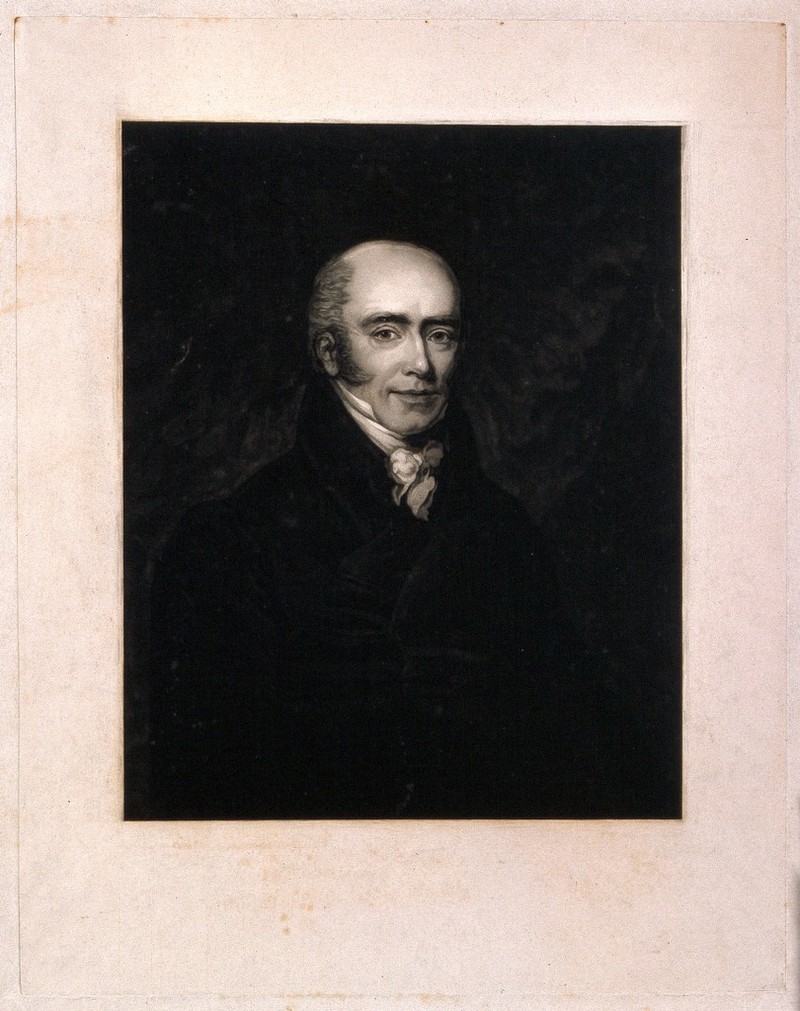
Illustration — William Fowler by William Bond, after George Francis Joseph. William Fowler (12 March 1761 – 22 September 1832) was an English artist. Fowler was born in Winterton, Lincolnshire.
Also recorded as William, I Fowler · William I Fowler
William Fowler

William Bond / After George Francis Joseph · http: role=art wPage=1 rNo=20 · Public domain
- Born
- William Fowler was born on 12 March 1761. · Winterton.
- Died
- William Fowler died on 22 September 1832.
- Nationality
- Kingdom of Great Britain · United Kingdom of Great Britain and Ireland
- Occupation
- architect · copper engraver · draftsperson · graphic artist
- Languages
- English
VALÉORINE Encyclopedia
VALÉORINE documentary reading
Documentary summary
Illustration — William Fowler by William Bond, after George Francis Joseph. William Fowler (12 March 1761 – 22 September 1832) was an English artist. Fowler was born in Winterton, Lincolnshire.
Admitted source layer · organised and presented by VALÉORINE
Reference Check
Propose documentary evidence for William Fowler. A contribution is never written directly as fact: identity, source, rights and evidence gates still decide.
Sign in to contribute
World of VALÉORINE
Documentary connections
Only confirmed graph relationships appear here. Images are shown only when their identity and reuse rights both pass the documentary gate.
Documentary evidence
Documentary basis
Authority files
gnd · 1364833972 · wikidata · Q8009273
In this article
Buildings and Architectural Work by William Fowler
Buildings and Architectural Work by William Fowler
His father was Joseph Fowler, a builder at "The Chains" in West Street. Fowler became an architect and builder at Winterton, and about 1796, made drawings of Roman pavements discovered there. He took them to London to be engraved by his brother-in-law, Mr Hill. There he studied the process of copper-plate engraving, and in April 1799 brought out his own coloured engraving of a Roman pavement at Roxby. Between 1799 and 1829, he published three volumes of coloured engravings of twenty-five pavements, thirty-nine subjects from painted glass, five brasses and incised slabs, four fonts and eight miscellaneous subjects. He also created at least twenty-nine unpublished engravings, mostly of objects of antiquity. Many of the published plates were accompanied by printed broadsides. He became acquainted with Sir Walter Scott and other celebrities, and was presented on at least one occasion to the royal family at Windsor. Some of his work can be seen in North Lincolnshire Museum in Scunthorpe and Baysgarth House Museum in Barton-upon-Humber. Sir Joseph Banks said of him: "Others have shown us what they thought these remains ought to have been, but Fowler has shown us what they are, and that is what we want." According to the Dictionary of National Biography his works are distinguished by a strict fidelity especially remarkable at the time. Whenever it was possible he worked from tracings, rubbings, etc. It is claimed that he was the first to introduce the lead-lines in representations of painted glass. There is a characteristic portrait of him by W. Bond, from a painting by George Francis Joseph, A.R.A, dated 4 June 1810. Fowler, though a member of the Church of England, was also a ‘class-leader’ among the Methodists. He died 22 September 1832, and was buried at Winterton under a cruciform slab.
Most of the information about Fowlers buildings and renovation work comes from The Correspondence of William Fowler which was privately published by his grandson in 1907.
Renovation work to churches
Renovation work to churches
• Manton. Lincolnshire. 1809. • Appleby 1820-3 • Winteringham 1827. • Adlingfleet, Yorkshire.
Houses
Houses
• Cleatham Hall Coach House. 1802. • Leadenham Rectory. Lincolnshire 1821–3. • The Rectory, Caythorpe, Lincolnshire. Possibly refronted by Fowler for the Rev. George Woodcock in 1827. Plain with two and half storey central porch. In the garden a gothic crenellated garden house. • Gate Burton Hall 1824–7. • Messingham Vicarage, Lincolnshire. 1813–18. • Roxby Low Rise Farmhouse • Subdeanery, Minster Yard, Lincoln. c. 1813. • Appleby Hall’ Lincolnshire 1821-3. Now demolished. • Winterton *The Chains or “Gothic Cottage”, West Street,. 1827–8. Built by Fowler for himself. The rendered house has a low central bay flanked by three-storey bays, the upper floors of which project over coved jetties. These overhangs have been partly underbuilt since in order to give more support. • Appleby Spring Wood House, 1823. This house has been attributed to Fowler or his son Joseph. A castellated Gothic hunting lodge, with wings flanking a canted centrepiece. Within is an octagonal room known as the lunch room, with plaster vault and original Gothic furniture. It is listed Grade II.
Other Buildings
Other Buildings
• Newark National School, Nottinghamshire. now the Mount School. • Newark Subscription Library and Reading Room, Market Place.
Identity and overview
Identity and overview
The following is established of the heading itself.
Works and production
Works and production
The following works and productions are recorded by name or by count. It is also recorded that william Fowler is recorded with the occupation architect. It is also recorded that william Fowler is recorded with the occupation copper engraver. It is also recorded that william Fowler is recorded with the occupation draftsperson. Recorded with the occupation graphic artist. It is also recorded that william Fowler is recorded as a citizen of Kingdom of Great Britain. Institutional cataloguing adds that william Fowler is recorded with the gender male. Born on 12 March 1761. Fowler died on 22 September 1832.
Robert Smith. Mezzotint by W. J. Ward after W. Fowler., by William Fowler
William Fowler · Wellcome Collection, London · Wellcome Collection
Places
Named by the record
Places
Only places the record itself states, plotted where the house gazetteer settles their coordinates. Nothing is inferred from a name or a nationality.
William Fowler was born at Winterton.
Birthplace
Winterton.
Birth place
Literature
• Antram N (revised), Pevsner, N. & Harris J, (1989), The Buildings of England: Lincolnshire, Yale University Press. • Colvin H. A (1995), Biographical Dictionary of British Architects 1600–1840. Yale University Press, 3rd edition London, pg. 378. • Fowler J F(1907), The Correspondence of William Fowler.
Notes from the source article
Cited by Wikipedia
Notes from the source article
These works are cited by the source article, in its own numbering. They are recorded as its citations, not as sources VALÉORINE has verified.
- 1."Fowler, William (1761-1832)". Dictionary of National Biography. (1885–1900)
- 2.J F Fowler (1907), The Correspondence of William Fowler
- 3.”Antram “ (1989), 550.
- 4.”Antram “ (1989),118.
- 5.”Antram “ (1989),617.
- 6.”Antram “ (1989), 489.
- 7.”Antram “ (1989), 103.
References
Citations
References
Each reference names the institution holding it, so a reader may go to the document itself.
Institutional database
Wikidata, structured authority record Q8009273: William FowlerWikimedia Foundation
Institutional witness
The Encyclopedia exists whether or not anything is for sale. Corrections are recorded rather than overwritten, and every version of this record is kept. Published 17 August 2026.
Elsewhere in Design
11,558 published records in this field, each with its sources named.
- William F. LambDesigner
- William FieldingDesigner
- William FlanneryDesigner
- William FosterDesigner
- William FrameDesigner
- William Francis DeeganDesigner
- William FraserDesigner
- William Frederick McCawDesigner
Best supported in this field
For owners
Own a work by William Fowler?
A specialist will read what you send and tell you what the house can establish, what it cannot, and whether the object is suited to sale. There is no charge and no obligation. The object stays with you throughout; nothing is shipped to us unless it is arranged in writing beforehand.