
Wigton
Wigton is a market town in the Cumberland district of Cumbria, England. It lies just outside the Lake District. At the centre of the Solway Plain, between the Caldbeck Fells and the Solway coast.
VALÉORINE Encyclopedia
VALÉORINE documentary reading
Documentary summary
Wigton is a market town in the Cumberland district of Cumbria, England. It lies just outside the Lake District. At the centre of the Solway Plain, between the Caldbeck Fells and the Solway coast.
Admitted source layer · organised and presented by VALÉORINE
Note VALÉORINE
No house-authored Note is published until its assertions and sources pass the VALÉORINE evidence contract. The documentary article remains available in full while that enrichment is being consolidated.
Documentary enrichment in progress · no unsupported statement published
Reference Check
Propose documentary evidence for Wigton. A contribution is never written directly as fact: identity, source, rights and evidence gates still decide.
Sign in to contribute
World of VALÉORINE
Documentary connections
Only confirmed graph relationships appear here. Images are shown only when their identity and reuse rights both pass the documentary gate.
Born In · incoming
John Woodcock Graves
Author

Born In · incoming
Robert Atkinson
Designer
This file comes from Polona Digital Library and is available under the URL: https://polona.pl/item/representative-british-architects-of-the-present-day,MTQ2OTM4NjM1/32/
Born In · incoming
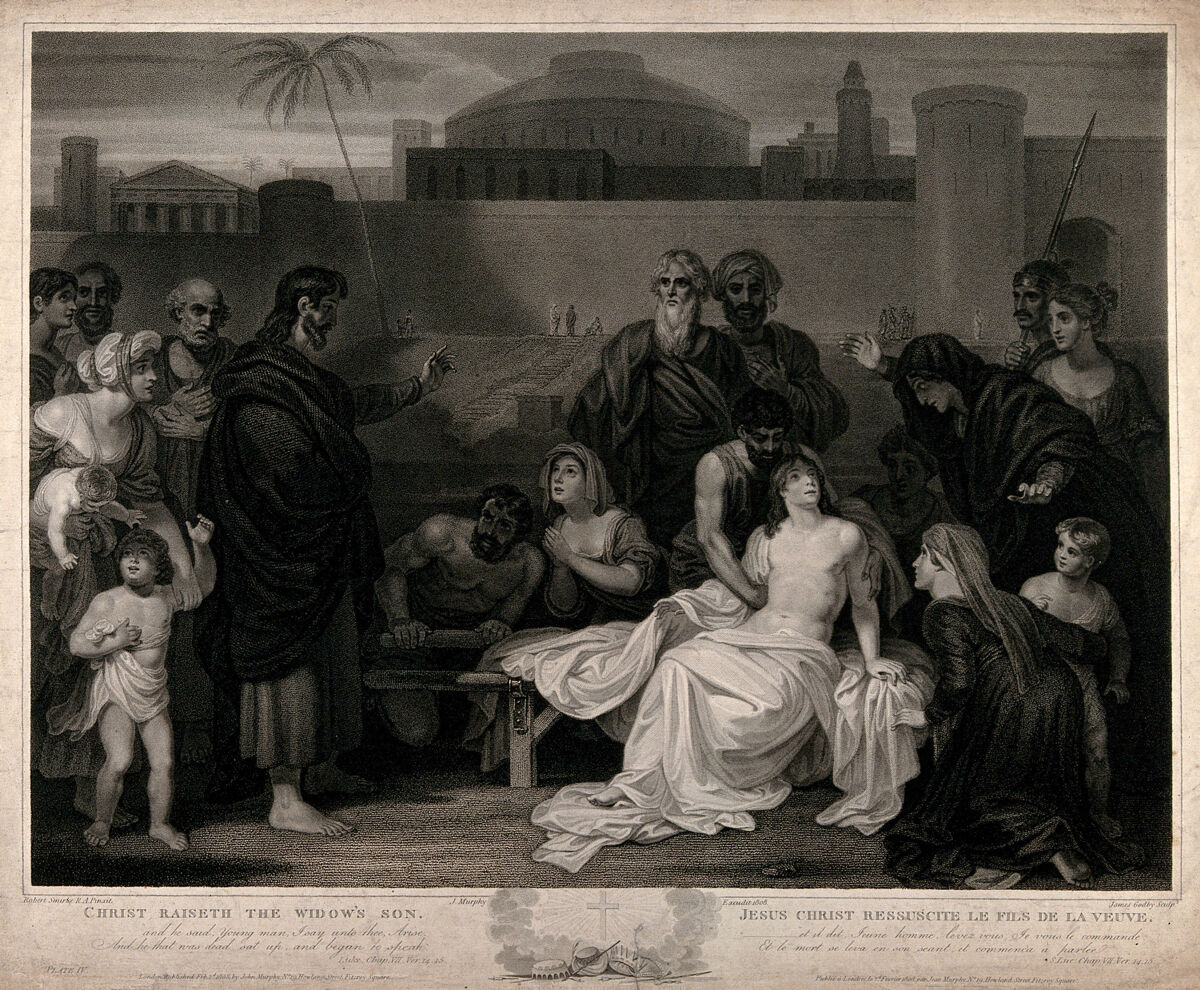
Robert Smirke
Illustrator
Wellcome Collection
Documentary evidence
Evidence Panel
not yet certified
- Identity
- unresolved
- Independent source families
- 0
- Admitted assertions
- 0
- Open conflicts
- 0
In this article
Key facts
Key facts
It is served by Wigton railway station on the Cumbrian Coast Line, and the A596 road to Workington. The town of Silloth-on-Solway lies 12 mi to the west, beyond Abbeytown.
• Country — England • Official Name — Wigton • Population — 6,013 • Population Ref — (Parish, 2021) 5,395 (Built up area, 2021) • Civil Parish — Wigton • Unitary England — Cumberland • Lieutenancy England — Cumbria • Region — North West England • Constituency Westminster — Penrith and Solway • Post Town — WIGTON • Postcode District — CA7 • Postcode Area — CA • Dial Code — 016973 • Os Grid Reference — NY255481 • Static Image Name — Market Place, Wigton - geograph.org.uk - 2472063.jpg • Static Image Caption — Market Place and Moore Memorial Fountain Wigton is a market town in the Cumberland district of Cumbria, England. It lies just outside the Lake District. Wigton is at the centre of the Solway Plain, between the Caldbeck Fells and the Solway coast. It is served by Wigton railway station on the Cumbrian Coast Line, and the A596 road to Workington. The town of Silloth-on-Solway lies 12 mi to the west, beyond Abbeytown.
Toponymy
Toponymy
Wigton is "Wicga's tūn". "Wicga" is an Old English pre-7th-century personal name meaning "a beetle" (as in "earwig"), while "tūn" is Old English for a demarcated plot, a "homestead" or "village", so Wigton is "the hamlet belonging to Wicga".
History
History
Wigton lies on the River Wampool and Wiza Beck (beck being a dialect word meaning "brook" or "stream" – from the Old Norse bekkr). It is an ancient settlement and evolved from a pre-medieval street plan, which can still be traced today. The Romans had a cavalry station, Maglona, known locally as Old Carlisle, just to the south of the town with a large vicus (civilian settlement) associated with it. The fort was approximately half-way between Carlisle and the Roman settlement of Derventio (now known as Papcastle), linked by the Roman road that is now the A595. From this location they could react to incursions from north of Hadrian's Wall, using the Roman road to sally east or west before traversing northward across the countryside. In the period of late antiquity after Roman rule, Wigton was within the native British kingdom of Rheged. Probably of Anglian origin, Wigton was an established settlement in the Kingdom of Northumbria long before the Normans arrived in the area. Wigton and most of then Cumberland were a part of Scotland in 1086 when the Domesday Book was written for William I, so are not included in it. The Norman invaders created the County of Carlisle (later called Cumberland), building Carlisle Castle in Carlisle in 1092 for its administrative centre. Odard de Logis became William II's Sheriff of Carlisle and was made Baron of Wigton about 1100 AD when it became a Norman barony. Wigton gained its market charter in 1262. The de Logis barons changed their surname to de Wigton around 1208 but the male line of the family died out in 1348, so the manor passed to the Barony of Cockermouth. Although the town's layout is generally Anglian or medieval, its architecture is mainly in the 18th-century Georgian style which remains largely intact. • Illustration — St Mary's Church St Mary's Church dates from 1788, but there was a church on this site from the 12th century. The population in 1841 was 4,738. In the middle of Wigton's market place is the George Moore Memorial Fountain built in 1872; of particular interest are the four bronzes around the fountain, the work of the Pre-Raphaelite sculptor Thomas Woolner. These depict the "four acts of mercy". A private secondary school, the Wigton School (also called the Friends' School or Brookfield) was founded to the north of the town in 1815 with an initial enrolment of eight pupils. After reaching a maximum enrolment of 250 or so in the 1970s and 1980s, the school closed, following sustained drop-off in student numbers and, finally, damage by fire. The appearance of the church owes much to the vision of Rev John Ford (father of the broadcaster Anna Ford) in the 1950s, when he had gravestones laid flat and the interior painted in the present colours. Highmoor Bell tower, built during the Industrial Revolution and completed in 1887, played tunes three times daily.
Fiddleback Farm
Fiddleback Farm
Fiddleback Farm, a Grade II* listed building, is situated approximately 100 yards to the west of the A595. Its site was used, amongst other purposes, for supplying provisions and materials from "Old Carlisle" to Hadrian's Wall. It is thought that the farm site was the first "Mile Station" from Old Carlisle. Regarding Fiddleback, the building was originally fortified to repel invading Celts. It later become a place of worship. Constructed in the shape of a fiddle, it was built about 300 years ago, along with two other buildings in the shape of musical instruments by a wealthy and eccentric land-owner. During renovation works, the skeleton of a cat was discovered above one of the old entrance doorways. Another Grade II listed building, constructed in the shape of an accordion, still stands. A third, built in the shape of a banjo, was demolished for unknown reasons in the 1920s.
Geography
Geography
Wigton today is a market town, with livestock auctions being held regularly at Hopes Auction Company. The main employer is Innovia Films. The town has its own secondary school, called The Nelson Thomlinson School, which is a comprehensive with close links to the Innovia factory. In 2004 the town was the first settlement in the United Kingdom to enforce a curfew on teenagers under the age of 16. It was in place for two weeks, and its aim was to reduce the amount of vandalism in the town centre. It followed nightly vandalism campaigns, which included smashed shop fronts, as well as intimidation of elderly members of the community. The curfew attracted national attention, with the local secondary school receiving visits from agencies such as Sky News. It had some effect, with less vandalism taking place ever since.
Governance
Governance
• Illustration — Market Hall There are two tiers of local government covering Wigton, at parish (town) and unitary authority level: Wigton Town Council and Cumberland Council. The town council is based at the Market Hall on Church Street.
Administrative history
Administrative history
• Illustration — Map of Cumberland showing Wigton in Cumberland Ward in Cumberland, 1824 Wigton was an ancient parish within the historic county of Cumberland. The parish was subdivided into four townships, being Oulton, Waverton, Woodside, and a Wigton township covering the central part of the parish around the town itself. From the 17th century onwards, parishes were gradually given various civil functions under the poor laws, in addition to their original ecclesiastical functions. In some cases, including Wigton, the civil functions were exercised by each township separately rather than the parish as a whole. In 1866, the legal definition of 'parish' was changed to be the areas used for administering the poor laws, and so the townships also became civil parishes. A Wigton local government district was created in 1875, covering parts of the Wigton and Woodside civil parishes, administered by an elected local board. The civil parishes of Wigton and Woodside were united into a short-lived parish called Wigton cum Woodside in 1887. Local government districts were reconstituted as urban districts under the Local Government Act 1894. The 1894 Act also directed that civil parishes could no longer straddle district boundaries, and so the Wigton cum Woodside parish was split into a Wigton parish matching the urban district and a Woodside parish which covered the remainder outside the urban district. Wigton Urban District was abolished in 1934, with the parish being reclassified as a rural parish within the Wigton Rural District and given a parish council. Wigton Rural District was abolished in 1974, becoming part of the borough of Allerdale in the new county of Cumbria. Allerdale was in turn abolished in 2023 when the new Cumberland Council was created, also taking over the functions of the abolished Cumbria County Council in the area.
Industry
Industry
Wigton's principal employer is the Innovia Films Ltd (locally known as The Factory) in the centre of the town. In 1936 the British New Wrap Co Ltd was formed in Wigton, Cumberland, and production of cellulose film began at the site which had previously been a jam-making facility, and then set up to produce "artificial silk" or Rayon. In 1936 the company changed its name to British Rayophane Ltd. The company's main products are: • Labels and graphics • Cellophane and Propafilm – bubble-produced BOPP film • Substrates for plastic banknotes – used for multiple currencies worldwide including the new British polymer banknotes • Plastic labels – replacing paper labels due to their resistance to tearing, scuffing and water damage. Clear labels are especially popular as they give the 'upmarket' appearance of graphics printed directly onto a bottle or container • UV-resistant films – for promotional and POS/POP graphics Wigton is the headquarters of the British National Party.
Media
Media
Local news and television programmes are provided by BBC North East and Cumbria and ITV Border. Television signals are received from the nearby Caldbeck TV transmitter located south east of the town. Local radio stations are BBC Radio Cumbria and Greatest Hits Radio Cumbria & South West Scotland. The town is served by the local newspaper, Times & Star (formerly The Cumberland News).
Transport
Transport
As of March 2026, all bus routes in the town are run by Stagecoach Cumbria and North Lancashire. Services run towards Carlisle, Whitehaven and Keswick. The Cumbrian Coast railway line serves the town. As of March 2026, services run to Carlisle, Whitehaven, Barrow-in-Furness or Manchester Airport.
Sport
Sport
The opening stage of the Tour of Britain Women's cycle race passed through Wigton in 2026.
Notable people
Notable people
• Richard Bell, cricketer for London County Cricket Club • Melvyn Bragg, writer and broadcaster was born and lived his early life in the town and, when raised to the peerage, took Lord Bragg of Wigton as his title • Jarrad Branthwaite, footballer, plays for Everton F.C. • Charles Dickens, visited the town with Wilkie Collins in 1857, and it was subsequently mentioned in The Lazy Tour of Two Idle Apprentices • Anna Ford, broadcaster, was brought up in Wigton • Thomas Holliday, one of a handful of Dual-code rugby internationals for England • William Perry Briggs, Medical Officer of Health to Wigton Rural District Council (188?–1928) • Robert Smirke, artist, born in Wigton • Roger Liddle, Baron Liddle, elected to Cumbria County Council for the Wigton Division. • William Henry Bragg, physicist and Nobel Laureate; Braggite is named after him
Gallery
Gallery
• Illustration — Wigton Monument • Illustration — Donaldson House • Illustration — Wigton Cemetery • Illustration — Campylite specimen from Caldbeck Fells
Knowledge graph
Makers, houses and production
The people, houses and objects recorded in connection with this place.
Born at
2- Robert AtkinsonDesigner
Established from a fact already recorded on a verified source.
- Robert SmirkeIllustrator
Established from a fact already recorded on a verified source.
The Encyclopedia exists whether or not anything is for sale. Corrections are recorded rather than overwritten, and every version of this record is kept. Published 26 September 2026.
Elsewhere in General
15,033 published records in this field, each with its sources named.
- WierumPlace
- WiesbadenPlace
- WietzenPlace
- Wigan Grammar SchoolOrganisation
- WilamowicePlace
- WilbrahamPlace
- Wilbraham & Monson AcademyOrganisation
- Wilbur Cross MedalTerminology
Best supported in this field
For owners
Own an object connected with Wigton?
A specialist will read what you send and tell you what the house can establish, what it cannot, and whether the object is suited to sale. There is no charge and no obligation. The object stays with you throughout; nothing is shipped to us unless it is arranged in writing beforehand.