
Vicente López Portaña
Vicente López Portaña (lang; 19 September 177222 July 1850) was a Spanish painter, considered one of the best portrait painters of his time.
Also recorded as Vicente Lopez · Vicente López · Vicente Januario Ignacio de Loyola López Portaña · don Vicente López y Portaña
Vicente López Portaña

Bernardo López Piquer · [2] · Public domain
- Name
- Vicente López Portaña
- Born
- 19 September 1772
- Birthplace
- Valencia, Spain
- Died
- 22 July 1850
- Place of death
- Madrid, Spain
- Field
- Painting Vicente López Portaña (lang; 19 September 177222 July 1850) was a Spanish painter, considered one of the best portrait painters of his time.
- Nationality
- Spain.
- Occupation
- painter and draftsperson.
- Fields
- painting.
- Education
- Royal Academy of Fine Arts of San Fernando.
- Languages
- Spanish.
VALÉORINE Encyclopedia
VALÉORINE documentary reading
Documentary summary
Vicente López Portaña (lang; 19 September 177222 July 1850) was a Spanish painter, considered one of the best portrait painters of his time.
Admitted source layer · organised and presented by VALÉORINE
Note VALÉORINE
Vicente López Portaña (1772–1850) was a draftsperson and painter, of Spanish nationality. The draftsperson was born in Valencia and died in Madrid.
Vicente López Portaña was educated at Royal Academy of Fine Arts of San Fernando. The draftsperson held the position of court painter. Activity centred on painting.
The work spans portrait. Languages used include Spanish. Works are held at Fitzwilliam Museum, Los Angeles County Museum of Art and Museo del Prado, among others.
Composed from admitted, traceable facts · 27 September 2026
VALÉORINE
Reference Check
Propose documentary evidence for Vicente López Portaña. A contribution is never written directly as fact: identity, source, rights and evidence gates still decide.
Sign in to contribute
World of VALÉORINE
Documentary connections
Only confirmed graph relationships appear here. Images are shown only when their identity and reuse rights both pass the documentary gate.
Documentary evidence
Evidence Panel
not yet certified
- Identity
- resolved
- Independent source families
- 0
- Admitted assertions
- 0
- Open conflicts
- 0
Authority files
wikidata · Q117543 · wikipedia · Vicente López Portaña
In this article
Biography
Biography
Vicente López Portaña studied at Royal Academy of Fine Arts of San Fernando. José Ribelles and Fortunato Bonich are recorded as having studied under Vicente López Portaña. the recorded working language is Spanish. The field of work recorded is painting. Subjects and genres recorded for the work are portrait. Positions recorded include court painter. Work by Vicente López Portaña is recorded in the collections of Museo del Prado, J. Paul Getty Museum, Royal Academy of Fine Arts of San Fernando, Museu Nacional d'Art de Catalunya and Los Angeles County Museum of Art.

Aragonese Dwarf by Vicente López Y Portaña. Cambridge, Massachusetts, Fogg Art Museum
Vicente López Portaña
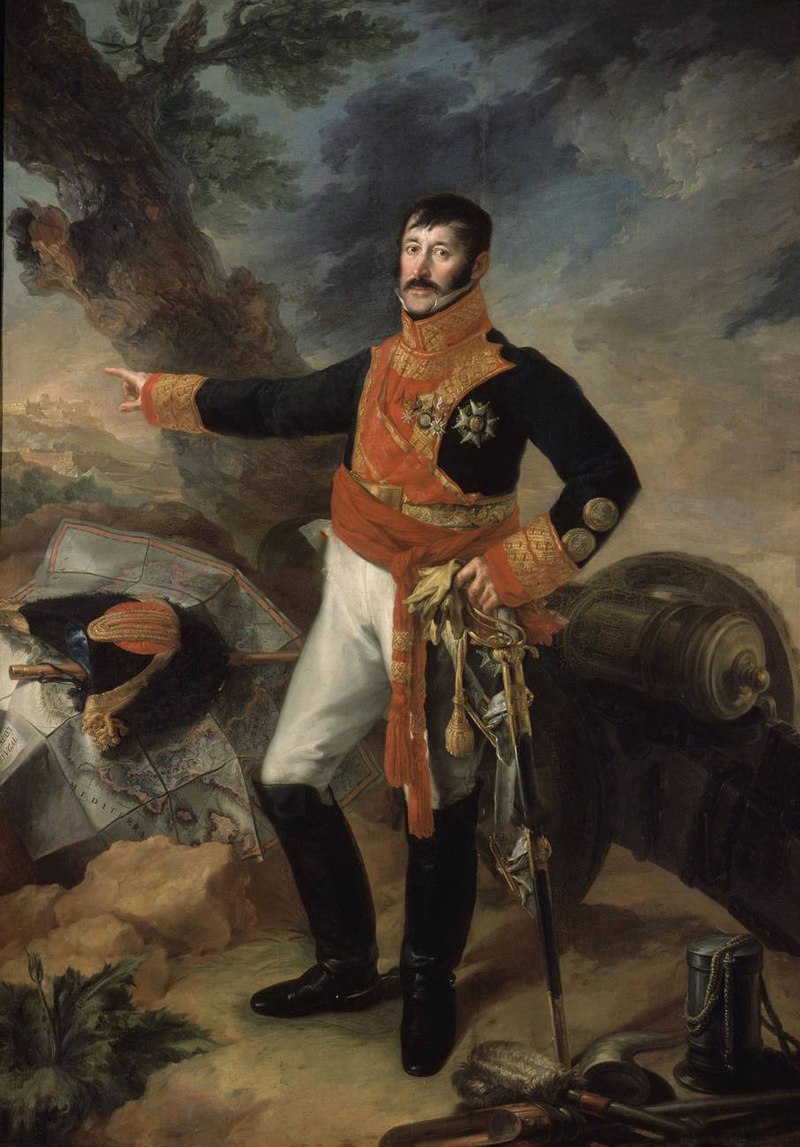
Retrato del militar español de origen cubano José Pascual de Zayas y Chacón (1772-1827), que llegó a ser general del ejército español.
Vicente López Portaña · Alamy
Key facts
Key facts
• Name — Vicente López Portaña • Honorific Suffix — OIC • Born — 19 September 1772 • Birthplace — Valencia, Spain • Died — 22 July 1850 • Place of death — Madrid, Spain • Field — Painting Vicente López Portaña (lang; 19 September 177222 July 1850) was a Spanish painter, considered one of the best portrait painters of his time.
Early life
Early life
Vicente López Portaña was born in Valencia on 19 September 1772. His parents were Cristóbal López Sanchordi and Manuela Portaña Miró. Vicente López began formally studying painting in Valencia at the age of thirteen, he was a disciple of father Antonio de Villanueva, a Franciscan friar, and he studied at the Academy of San Carlos in his native city. He was seventeen when he won first prize in drawing and coloring receiving a scholarship to study in the prestigious Academia Real de Bellas Artes de San Fernando in Madrid. For the following three years in Madrid, he apprenticed with the Valencian painter, Mariano Salvador Maella. Vicente López returned to Valencia in 1794 and subsequently became vice-director of painting at the Academy where he had studied as a boy. In 1795 he married Maria Piquer, they had two sons: Bernardo and Luis, who were also painters, following their father's style but with little accomplishments. In 1801 López was named President of the Academy of San Carlos.
Court painter
Court painter
• Illustration — Bust of López, by J. Duart (R.A.B.A.S.F., Madrid). When king Charles IV visited the city of Turia in 1802, the king appointed him an honorary court painter at the same time he gave him some commissions that he executed successfully. He was already well known and regarded when in 1814 López was called to the court of Ferdinand VII, the Spanish king, who appointed him official court painter and received a royal appointment. Shortly thereafter he succeeded Goya as Royal Court Painter during the reign of Ferdinand VII, who also appointed him as drawing teacher of his second wife, Maria Isabella of Portugal, and later of his third wife, Maria Josepha Amalia of Saxony. In 1817 he was named President of the Real Academia de Bellas Artes de San Fernando. Vicente López was a prolific painter executing many religious, allegorical, historic and mythological scenes, but he specialized in portraits. During his long career he painted nearly every notable person in Spain during the first half of the 1800s. In 1826, López painted a portrait of Francisco Goya when the famous master visited the court from Bordeaux, where the Aragonese painter was then living. Goya was then 80 and would die two years later. It was said that Goya got bored posing for his colleague who was very meticulous and a stickler for detail, and that for this reason the portrait is inferior to others by López. However, for this precise reason, and because of the strong personality of the model this is one of López's most lively and best-known works. • Illustration — Portrait of Francisco Goya, 1826. Vicente López spent the remainder of his life in Madrid painting portraits of statesmen, academics, and other important figures, as well as dramatic and emotional religious subjects. When he died, in Madrid, he was court painter of Queen Isabella II. He was seventy seven years old.
Style
Style
Vicente López was a Neoclassicist painter but he retained certain traces of the Rococo style. He had the Neoclassical emphasis on masterly drawing, though with less rigidity. López is considered the best Spanish painter of his time, second only to Francisco José de Goya y Lucientes. One of his rivals was Agustín Esteve Marqués. López's style is dominated by the influence of Anton Raphael Mengs and the Academicism, and he was unaffected by the romanticism popular at the end of his career.
Gallery
Gallery
• Illustration — Félix Antonio Máximo López, 1820 • Illustration — María Pilar de la Cerda y Marín de Resende, 1795 • Illustration — Maria Christina of the Two Sicilies, 1830 • Illustration — Pedro de Toledo, 13th Duke of the Infantado, 1827 • Illustration — Ferdinand VII of Spain, c. 1814-15 • Illustration — Maria Josepha Amalia of Saxony, 1828 • Illustration — Ignacio Gutiérrez Solana, c. 1823 • Illustration — Fray Tomás Gascó, 1794 • Illustration — Francisco Tadeo Calomarde, 1st Duke of Santa Isabel, c. 1831 • Illustration — Infante Antonio Pascual of Spain, 1815 • Illustration — Doña Francisca de la Gándara, 1846 • Illustration — Luis Veldrof, c. 1823-25 • Illustration — Infante Carlos María Isidro of Spain, 1823 • Illustration — Antonio Ugarte and María Antonia Larrazábal, 1833 • Illustration — Princess Luisa Carlotta of the Two Sicilies, 1819 • Illustration — Juan Gutiérrez de León, 1840 • Illustration — Ramón María Narváez, Duke of Valencia, 1840s • Illustration — Princess Maria Antonia of Naples and Sicily, c. 1805-06 • Illustration — Francis I of the Two Sicilies, 1829 • Illustration — Princess Amalie of Saxony, 1825 • Illustration — Maria Isabel of Braganza, early 19th century • Illustration — Pedro Labrador, Marquess of Labrador, c. 1833-34 • Illustration — Luisa de Prat y Gandiola, 1845 • Illustration — Manuel González Salmón, 1826 • Illustration — José Gutiérrez de los Ríos, 1849 • Illustration — Maria Christina of the Two Sicilies, 1834 • Illustration — Matías Sorzano Najera, 1834 • Illustration — General Claude-Anne de Rouvroy, c. 1815-18
Life and career
Dated record
Life and career
The full dated record · 2 entries
1772
Vicente López Portaña born at Valencia.
1850
Vicente López Portaña died at Madrid.
Places
Named by the record
Places
Only places the record itself states, plotted where the house gazetteer settles their coordinates. Nothing is inferred from a name or a nationality.
Valencia.
Birth place
Madrid.
Death place
Primary material
Documents and archives
scholarly publication
- La etapa valenciana de Vicente López Portaña. La clave de su éxito en la corte, Ars Longa. Cuadernos de arte, 2023
Scholarly · Crossref registry · 2023
- Patología ocular en la obra de Vicente López Portaña (II). Félix Antonio Máximo López, primer organista de la Real Capilla. Museo Nacional del Prado (Madrid), Archivos de la Sociedad Española de Oftalmología, 2016
Scholarly · Crossref registry · 2016
- Spondyloepiphyseal Dysplasia Congenita in a painting of Vicente López y Portaña (1825), Journal of Endocrinological Investigation, 2015
Scholarly · Crossref registry · 2015
reference work
- Wikidata, structured authority record Q117543: Vicente López Portaña
Reputable secondary · Wikimedia Foundation
- “Vicente López Portaña”, English Wikipedia, consulted as further reading
Reputable secondary · Wikipedia
Notes from the source article
Cited by Wikipedia
Notes from the source article
These works are cited by the source article, in its own numbering. They are recorded as its citations, not as sources VALÉORINE has verified.
References
Citations
References
Each reference names the institution holding it, so a reader may go to the document itself.
scholarly publication
La etapa valenciana de Vicente López Portaña. La clave de su éxito en la corte, Ars Longa. Cuadernos de arte, 2023Crossref registry
Verifiedscholarly publication
Verifiedscholarly publication
Spondyloepiphyseal Dysplasia Congenita in a painting of Vicente López y Portaña (1825), Journal of Endocrinological Investigation, 2015Crossref registry
Verifiedreference work
Wikidata, structured authority record Q117543: Vicente López PortañaWikimedia Foundation
Partially resolvedreference work
Partially resolved
The Encyclopedia exists whether or not anything is for sale. Corrections are recorded rather than overwritten, and every version of this record is kept. Published 14 August 2026.
Elsewhere in Paintings
18,623 published records in this field, each with its sources named.
- Vicente AlbánArtist
- Vicente do Rego MonteiroArtist
- Vicente EscobarArtist
- Vicente GinerArtist
- Vicente ManansalaArtist
- Vicente MarchArtist
- Vicente MasipArtist
- Vicente PalmaroliArtist
Best supported in this field
For owners
Own a work by Vicente López Portaña?
A specialist will read what you send and tell you what the house can establish, what it cannot, and whether the object is suited to sale. There is no charge and no obligation. The object stays with you throughout; nothing is shipped to us unless it is arranged in writing beforehand.