
Ture Rangström
Anders Johan Ture Rangström (30 November 1884 – 11 May 1947) belonged to a new generation of Swedish composers who, in the first decade of the 20th century, introduced modernism to their compositions. In addition to composing, Rangström was also a musical critic and conductor.
Ture Rangström
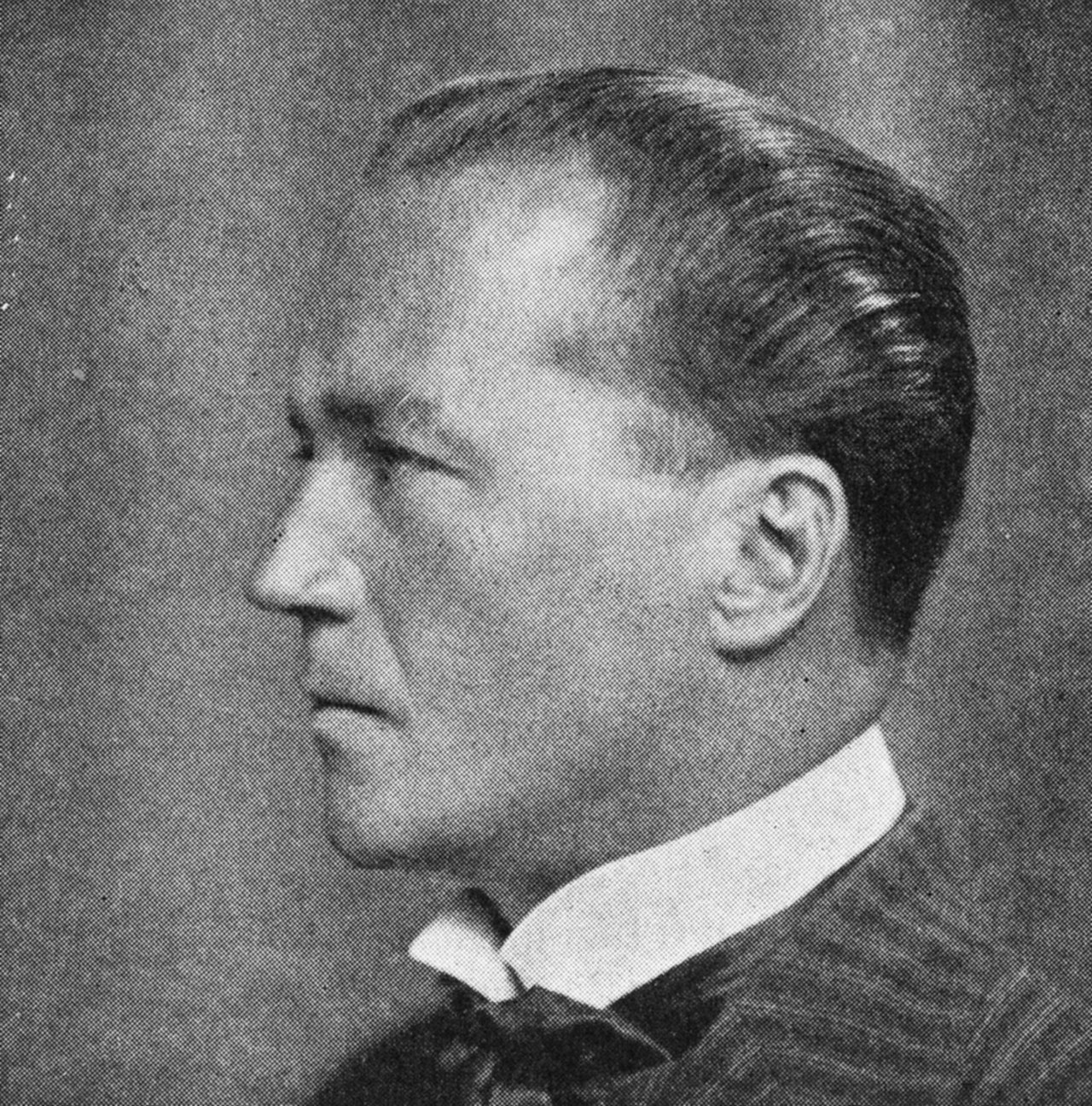
Ewert Wrangel (red.): Svenska folket genom tiderna 12 De senaste årtiondena. Malmö 1940, Allhem. · Public domain
- Born
- 1884 · Stockholm.
- Died
- 1947 · Stockholm.
- Nationality
- Sweden
- Occupation
- conductor · composer · musicologist · music educator · music critic · singer · voice teacher
- Fields
- opera · symphony · chamber music
- Teachers
- Johan Lindegren · Hans Pfitzner · Julius Hey
- Known for
- Symphony No. 4 · Dithyramb
- Languages
- Swedish
VALÉORINE Encyclopedia
VALÉORINE documentary reading
Documentary summary
Anders Johan Ture Rangström (30 November 1884 – 11 May 1947) belonged to a new generation of Swedish composers who, in the first decade of the 20th century, introduced modernism to their compositions. In addition to composing, Rangström was also a musical critic and conductor.
Admitted source layer · organised and presented by VALÉORINE
Note VALÉORINE
Ture Rangström (1884–1947) was a Swedish composer, conductor and music critic, among other activities. The composer was active in chamber music, opera and symphony.
Works include Dithyramb. Languages used include Swedish.
Composed from admitted, traceable facts · 28 September 2026
VALÉORINE
Reference Check
Propose documentary evidence for Ture Rangström. A contribution is never written directly as fact: identity, source, rights and evidence gates still decide.
Sign in to contribute
World of VALÉORINE
Documentary connections
Only confirmed graph relationships appear here. Images are shown only when their identity and reuse rights both pass the documentary gate.
Documentary evidence
Documentary basis
Authority files
museum · 95d04456-e11d-4321-a3b2-ec8fe89bcad2 · wikidata · Q1117342 · wikipedia · Ture Rangström
In this article
Biography
Biography
Rangström was born in Stockholm, where in his late teens he started to write songs. His music teacher suggested that he should "vary the harmonies a bit more, make it a bit wilder!" He followed this advice and soon gained the nickname among his colleagues of "Sturm-und-Drangström". He travelled to Berlin where he studied under Hans Pfitzner for a while in 1905–6, and also studied singing with the Wagnerian Julius Hey, with whom he later went to Munich for further studies. His compositions at this time were chiefly for voice and piano. Between 1907 and 1922 he taught singing and from 1922 to 1925 he was principal conductor of the Gothenburg Symphony Orchestra. He founded the Swedish Society of Composers in 1918, and he was employed to promote the works of the Royal Swedish Opera from 1931 to 1936. After this he worked freelance and spent the summers on the island of Törnsholmen which he had been given by the people of Sweden who raised the money to celebrate his fiftieth birthday. Rangström died at his home in Stockholm after a long illness caused by a throat disease; his funeral was held at Stockholm's Maria Magdalena Church and he is buried in the churchyard at Gryt, Valdemarsvik Municipality, Östergötland County, southeast Sweden. He was grandfather of a playwright, also named Ture Rangström (born in 1944) the artistic director of Strindbergs Intima Teater (since its re-opening in 2003), and uncle of author Lars Gyllensten.
Works
Works
Many of his early works took the form of symphonic poems, including Dityramb (Dithyramb) (1909), an ancient Greek hymn sung and danced in honor of Dionysus, the god of wine and fertility; the term was also used as an epithet of the god, Ett midsommarstycke (A midsummer piece) and En höstsång (An autumn song). Following the success of these poems, Rangström began work on his symphonies, of which there are four. The first, produced in 1914, is dedicated to the memory of Strindberg – August Strindberg in memoriam; the second, from 1919, is entitled Mitt land (My country); the third, a single moment work, from 1929, Sång under stjärnorna (Song under the stars), and the fourth from 1936, Invocatio, for orchestra and organ. He composed three operas, entitled Kronbruden (The Crown Bride), based on a play by Strindberg, which was first performed in 1915, Medeltida (Medieval), published in 1921, and Gilgamesj, based on the Mesopotamian Epic of Gilgamesh, written during the last years of his life. The orchestration of Gilgamesj was completed by the composer John Fernström, and it was premièred in November 1952 at the Royal Swedish Opera with Erik Saedén in the title role and Herbert Sandberg conducting. Rangström also wrote almost 300 songs and orchestrated about 60 of them.
Orchestral
Orchestral
Dithyramb, symphonic poem, 1909 (revised by Kurt Atterberg, 1948) Ett midsommarstycke, symphonic poem, 1910 En höstsång, symphonic poem, 1911 Havet sjunger, symphonic poem, 1913 Symphony no. 1 in C-sharp minor, August Strindberg in memoriam, 1914 Intermezzo drammatico, suite, 1916–18 Divertimento elegiaco, suite for string orchestra, 1918 Två melodier, clarinet and strings, 1919 Symphony no. 2 in D minor, Mitt land, 1919 Två svenska folkmelodier, 1928 Symphony no. 3 in D flat Sång under stjärnorna, 1929 Partita for violin and orchestra in B minor, 1933 Symphony no. 4 in D minor Invocatio, 1935 Ballade for piano and orchestra, 1937 Vauxhall, suite 1937 Staden spelar, divertissement, 1940
Chamber music
Chamber music
String quartet in G minor, Ein Nachtstück in ETA Hoffmanns Manier, 1909 (rev. Edvin Kallstenius and Kurt Atterberg 1948) Suite in modo antico, violin and piano, 1912 Suite in modo barocco, violin and piano, 1920–22
Piano
Piano
Fyra preludier, 1910–13 Mälarlegender, 1919 Sommarskyar, 1916–20 Improvisata, 1927 Sonatin, 1937 Spelmansvår, suite, 1943
Life and career
Dated record
Life and career
The full dated record · 1 entries
1947
Ture Rangström died at Stockholm.
Primary material
Documents and archives
reference work
- Wikidata, structured authority record Q1117342: Ture Rangström
Reputable secondary · Wikimedia Foundation
- “Ture Rangström”, English Wikipedia, consulted as further reading
Reputable secondary · Wikipedia
Institutional database
- MusicBrainz artist record for Ture Rangström
Scholarly · MetaBrainz Foundation
Notes from the source article
Cited by Wikipedia
Notes from the source article
These works are cited by the source article, in its own numbering. They are recorded as its citations, not as sources VALÉORINE has verified.
- 1.Jacobsson, Stig (1996). "Ture Rangström – Symphony No. 2, Intermezzo drammatico". cpo 999 368-2 (CD pooklet): 10–14.
- 2.Wallrup, Erik. Swedish Musical Heritage – Ture Rangström. www.swedishmusicalheritage.com. 2016.
- 3.Kimball, Carol. Song: A Guide to Art Song Style and Literature. Hal Leonard. 2006. 9781423412809.
- 4.https://www.britannica.com/art/dithyramb
- 5.Ture Rangström | Biography & History. AllMusic.
- 6.Rangstrom Symphonies – Classics Today.
References
Citations
References
Each reference names the institution holding it, so a reader may go to the document itself.
Institutional database
MusicBrainz artist record for Ture RangströmMetaBrainz Foundation
Institutional witnessreference work
Wikidata, structured authority record Q1117342: Ture RangströmWikimedia Foundation
Secondary witnessreference work
Secondary witness
People, houses and institutions
Knowledge graph
People, houses and institutions
Teachers, collaborators, publishers and institutions recorded against this person, each on a stated basis.
Citizenship
1- SwedenPlace
Established from a fact already recorded on a verified source.
The Encyclopedia exists whether or not anything is for sale. Corrections are recorded rather than overwritten, and every version of this record is kept. Published 14 August 2026.
Elsewhere in Music memorabilia
42,934 published records in this field, each with its sources named.
- Tuomas KantelinenPerson
- Tuomo LassilaPerson
- Turbo BPerson
- TurbulencePerson
- Turgun AlimatovPerson
- Turibio SantosPerson
- Turk MurphyPerson
- Turk Van LakePerson
Best supported in this field
For owners
Own a work by Ture Rangström?
A specialist will read what you send and tell you what the house can establish, what it cannot, and whether the object is suited to sale. There is no charge and no obligation. The object stays with you throughout; nothing is shipped to us unless it is arranged in writing beforehand.