
transposing instrument
A transposing instrument is a musical instrument for which music notation is not written at concert pitch (concert pitch is the pitch on a non-transposing instrument such as the piano). Playing a written C on clarinet or soprano saxophone produces a concert B♭ (i.e. B♭ at concert pitch), so these are referred to as B♭ instruments.
Also recorded as transposing musical instrument · transposing instruments
transposing instrument
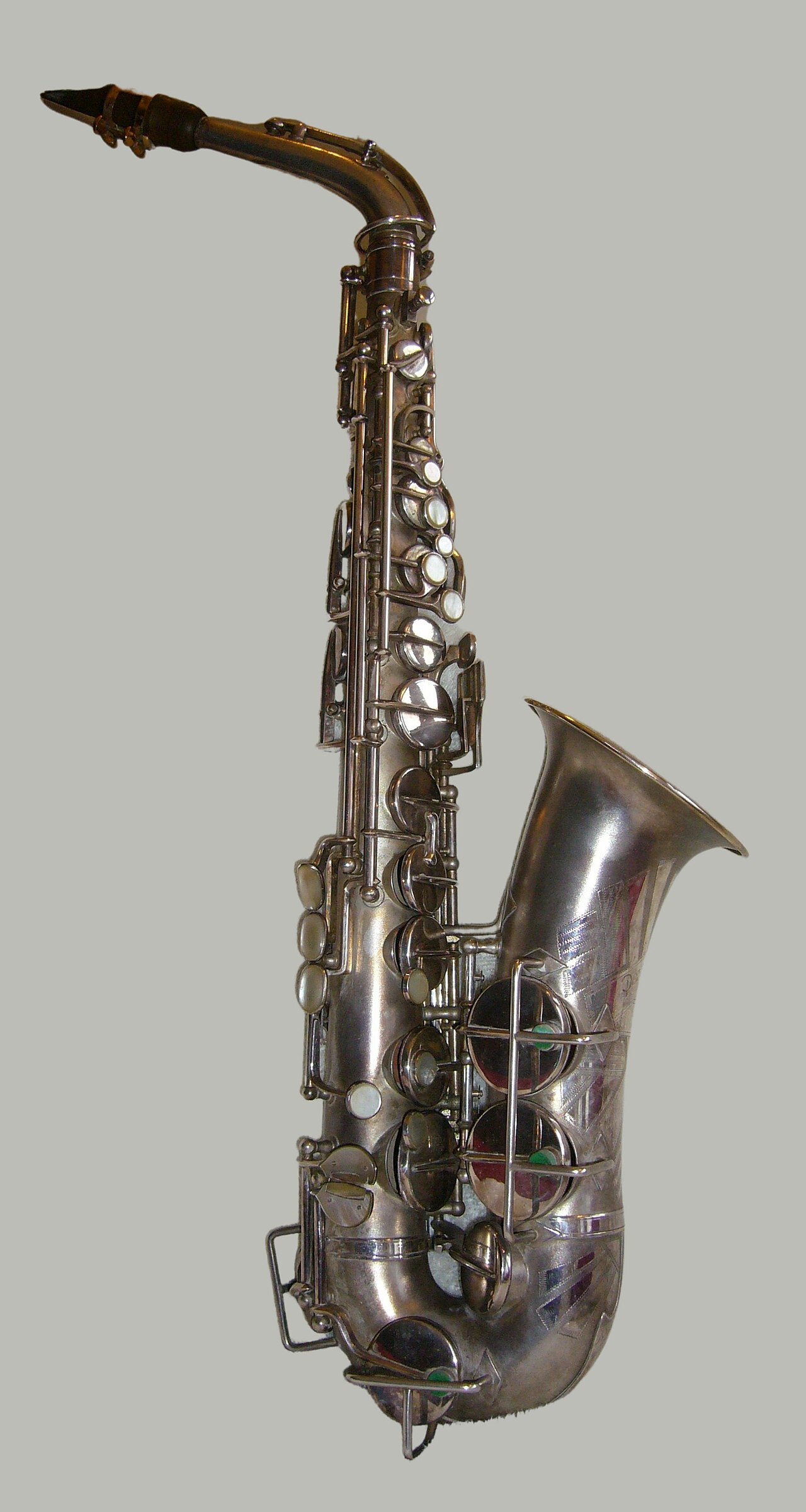
Nabokov (talk). · Nabokov at English Wikipedia · Own work (Original text: I (Nabokov (talk)) created this work entirely by myself.) · CC BY-SA 3.0
- Field
- musical instrument.
VALÉORINE Encyclopedia
VALÉORINE documentary reading
Documentary summary
A transposing instrument is a musical instrument for which music notation is not written at concert pitch (concert pitch is the pitch on a non-transposing instrument such as the piano). Playing a written C on clarinet or soprano saxophone produces a concert B♭ (i.e. B♭ at concert pitch), so these are referred to as B♭ instruments.
Admitted source layer · organised and presented by VALÉORINE
Note VALÉORINE
No house-authored Note is published until its assertions and sources pass the VALÉORINE evidence contract. The documentary article remains available in full while that enrichment is being consolidated.
Documentary enrichment in progress · no unsupported statement published
Reference Check
Propose documentary evidence for transposing instrument. A contribution is never written directly as fact: identity, source, rights and evidence gates still decide.
Sign in to contribute
World of VALÉORINE
Documentary connections
Only confirmed graph relationships appear here. Images are shown only when their identity and reuse rights both pass the documentary gate.

Broader Term · incoming
alto clarinet
Term
Yamaha Music Europe

Broader Term · incoming
bass clarinet
Term
F. Arthur Uebel GmbH

Broader Term · incoming
bass oboe
Term
Gebrüder Mönnig GmbH, Markneukirchen

Broader Term · incoming
basset clarinet
Term
Leitner Kraus

Broader Term · incoming
basset horn
Term
Schwenk Seggelke

Broader Term · incoming
clarinet
Term
This file was derived from: Klarinetten von Herbert Wurlitzer.jpg

Broader Term · incoming
contra-alto clarinet
Term
https://www.buffet-crampon.com/de/instruments/klarinetten/

Broader Term · incoming
contrabass clarinet
Term
Conn-Selmer, Inc., USA

Broader Term · incoming
cor anglais
Term
Own work

Broader Term · incoming
heckelphone
Term
Wilhelm Heckel GmbH

Broader Term · incoming
oboe d'amore
Term
Bearbeitung der Datei OboeDAmore modern.jpg und Collage mit der Datei Baroque oboe damour.jpg

Broader Term · incoming
oboe da caccia
Term
Photo by Takashi Ogawa (Bach-Gesellschaft Wiesbaden)
Broader Term · incoming
octocontra-alto clarinet
Term

Broader Term · incoming
octocontrabass clarinet
Term
Derived from File:Clarinettes octo-contrebasse et contrebasse Leblanc.gif ; scanned from publication, Famille complète des Clarinettes Leblanc , France.
Broader Term · incoming
piccolo heckelphone
Term

Broader Term · incoming
piccolo oboe
Term
Own work , scan perso
Documentary evidence
Evidence Panel
not yet certified
- Identity
- resolved
- Independent source families
- 0
- Admitted assertions
- 0
- Open conflicts
- 0
Authority files
wikidata · Q217306 · wikipedia · Transposing instrument
In this article
Ease of switching instruments
Ease of switching instruments
Providing transposed music for these instruments is a convention of musical notation. The instruments do not transpose the music; rather, their music is written at a transposed pitch. Where chords are indicated for improvisation they are also written in the appropriate transposed form. For some instruments, a written C sounds as a C but is in a different octave; these instruments are said to transpose "at the octave". Pitches on the double bass sound an octave lower than written, while those on the piccolo and celesta sound an octave higher, and those on the glockenspiel sound two octaves higher.
Some instruments are constructed in a variety of sizes, with the larger versions having a lower range than the smaller ones. Common examples are clarinets (the high E♭ clarinet, soprano instruments in C, B♭ and A, the alto in E♭, and the bass in B♭), flutes (the piccolo, transposing at the octave, the standard concert-pitch flute, and the alto flute in G), saxophones (in several octaves in B♭ and E♭), and trumpets (the common instrument in B♭, instruments in C, D and E♭, and the piccolo trumpet transposing at the octave). Music is often written in transposed form for these groups of instruments so that the fingerings correspond to the same written notes for any instrument in the family, even though the sounding pitches will differ. A musician who plays several instruments in a family can thus read music in the same way regardless of which particular instrument is being used. Instruments that transpose this way are often said to be in a certain "key" (e.g., the "B♭ clarinet" or "clarinet in B♭"). This refers to the concert pitch that is heard when a written C is played on the instrument in question. Playing a written C produces a concert B♭ on a B♭ clarinet, a concert A on an A clarinet, and a concert C on a C clarinet (this last example is a non-transposing instrument).
Horn crooks
Horn crooks
Before valves were invented in the 19th century, horns and trumpets could play only the notes of the overtone series from a single fundamental pitch. (Exceptions included slide-bearing versions such as the sackbut and finger-hole horns like the cornett and serpent.) Beginning in the early 18th century, a system of crooks was devised in Germany, enabling this fundamental to be changed by inserting one of a set of crooks between the mouthpiece and the lead pipe of the instrument, increasing the total length of its sounding tube. As a result, all horn music was written as if for a fundamental pitch of C, but the crooks could make a single instrument a transposing instrument into almost any key. Changing these lead-pipe crooks was time-consuming, and even keeping them from falling out while playing was a matter of some concern to the player, so changing crooks could take place only during substantial rests. Medial crooks, inserted in the central portion of the instrument, were an improvement devised in the middle of the 18th century, and they could also be made to function as a slide for tuning, or to change the pitch of the fundamental by a semitone or tone. The introduction of valves made this process unnecessary, though many players and composers found the tone quality of valved instruments inferior (Richard Wagner sometimes wrote horn parts for both natural and valved horns together in the same piece). F transposition became standard in the early 19th century, with the horn sounding a perfect fifth below written pitch in treble clef. In bass clef, composers differed in whether they expected the instruments to transpose down a fifth or up a fourth.
Reconciling pitch standards
Reconciling pitch standards
In Germany during the Baroque period, instruments used for different purposes were often tuned to different pitch standards, called Chorton ("choir pitch") and Kammerton ("chamber [music] pitch"). When playing together in an ensemble, the music of some instruments would therefore be transposed to compensate. In many of Bach's cantatas, the organ part is notated a full step lower than the other instruments. See pitch inflation. Some present day early-music ensembles combine instruments tuned to A415 with instruments tuned to A440. Since these pitches are approximately a semitone apart, the music for one set of instruments may be transposed to match the pitch of the others. Modern builders of continuo instruments sometimes include moveable keyboards which can play with either pitch standard. Some harpsichords are made with a mechanism that shifts the keyboard action right or left, causing each key to play the adjacent string. If A4 is tuned at A415, that key can then play either the A♯ at 440 Hz or the A♭ at 392 Hz. The top or bottom key on the instrument will not produce sound unless the builder has added extra strings to accommodate this transposition.
Transposition at the octave
Transposition at the octave
Some instruments have ranges that do not fit on the staff well when using one of the common clefs. In order to avoid the use of excessive ledger lines, music for these instruments may be written one, or even two, octaves away from concert pitch, using treble or bass clef. These instruments are said to "transpose at the octave"—their music is not written in a different key from concert pitch instruments, but sound one or two octaves higher or lower than written. Double bass, bass guitar, guitar, and contrabassoon sound an octave lower than written. Piccolo, xylophone, celesta, and some recorders (sopranino, soprano, bass and sometimes alto) sound an octave above the written note. Glockenspiel, garklein recorder, and crotales sound two octaves above the written note. Most authorities include this type of notation in the definition of "transposing instruments", although it is a special case in the sense that these instruments remain in the same key as non-transposing instruments.
Mechanical and physical considerations
Mechanical and physical considerations
Many woodwind instruments have one major scale whose execution involves lifting the fingers more or less sequentially from bottom to top. On flute and saxophone, and in the second register of the clarinet, this scale is notated as a C scale. This is not the case for oboe (where this scale is D) or bassoon (where it is F). The note written as C sounds as the note of the instrument's transposition: on an E♭ alto saxophone, that note sounds as a concert E♭, while on an A clarinet, that note sounds as a concert A. Brass instruments, when played with no valves engaged (or, for trombones, with the slide all the way in), play a series of notes that form the overtone series based on some fundamental pitch, e.g., the B♭ trumpet, when played with no valves engaged, can play the overtones based on B♭. Usually, that pitch is the note that indicates the transposition of the instrument. Trombones are an exception: while tenor and bass trombones are pitched in B♭, and the alto trombone is in E♭, they read at concert pitch. This convention is not followed in British Brass Band music, where tenor trombone is treated as a transposing instrument in B♭. French horn is treated as a transposing instrument in F even though many horns have two (or even three) different sets of tubing in different keys (the common double horn has tubing in F and B♭). In general, for these instruments there is some reason to consider a certain pitch the "home" note of an instrument, and that pitch is usually written as C for that instrument. The concert pitch of that note is what determines how we refer to the transposition of that instrument.
Conductor's score
Conductor's score
In full scores, music for transposing instruments is generally written in transposed form, just as in the players' parts. Since the beginning of the 20th century, some composers have written orchestral scores entirely in concert pitch, e.g. the score of Sergei Prokofiev's Piano Concerto No. 1 in D♭.

Written C and concert B flat
Special-T
Notes from the source article
Cited by Wikipedia
Notes from the source article
These works are cited by the source article, in its own numbering. They are recorded as its citations, not as sources VALÉORINE has verified.
- 1.HornPlanet. Crooks and Hand Horns.
- 2.Horn Matters. The Early Valved Horn – Crooks keyed in multiple pitches. 4 March 2012.
- 3.Laurence Dreyfus. Bach's Continuo Group. Harvard University Press. 11. 1987. 0-674-06030-X.
- 4.Carey Beebe Harpsichords Australia. CBH Global Harpsichord Technology.
- 5.Harvard Dictionary of Music. 1972.
Bibliography printed in the source article · 2
- Kennan, Kent Wheeler. The Technique of Orchestration. Prentice-Hall. 1970. 0-13-900316-9.
- Del Mar, Norman. The Anatomy of the Orchestra. University of California Press. 1981. 0-520-04500-9.
References
Citations
References
Each reference names the institution holding it, so a reader may go to the document itself.
reference work
Partially resolvedreference work
Partially resolved
Connections
Knowledge graph
Connections
Each connection was recorded deliberately, with the basis for it kept on the internal record.
Broader subject
5- bass clarinetTerminology
Established from a fact already recorded on a verified source.
- bass oboeTerminology
Established from a fact already recorded on a verified source.
- basset clarinetTerminology
Established from a fact already recorded on a verified source.
- clarinetTerminology
Established from a fact already recorded on a verified source.
- contrabass clarinetTerminology
Established from a fact already recorded on a verified source.
The Encyclopedia exists whether or not anything is for sale. Corrections are recorded rather than overwritten, and every version of this record is kept. Published 14 August 2026.
Elsewhere in Collectables
20,755 published records in this field, each with its sources named.
- Transport Fever 2Work
- Transport GiantWork
- Transport TycoonWork
- Transport Tycoon DeluxeWork
- transverse fluteTerminology
- Transworld SnowboardingWork
- Transworld SurfWork
- TransylvaniaWork
Best supported in this field
For owners
Own an object connected with transposing instrument?
A specialist will read what you send and tell you what the house can establish, what it cannot, and whether the object is suited to sale. There is no charge and no obligation. The object stays with you throughout; nothing is shipped to us unless it is arranged in writing beforehand.