
Tonbridge School
Tonbridge School is a private school with boarding and day school facilities for boys aged 13–18 in Tonbridge, Kent, England. Founded in 1553 by Andrew Judde (sometimes spelt Judd), the school is a member of the Eton Group and has close links with the Worshipful Company of Skinners, one of the oldest livery companies in London. There are currently around 800 boys in the school, aged between 13 and 18.
Tonbridge School
- Name
- Tonbridge School
VALÉORINE Encyclopedia
VALÉORINE documentary reading
Documentary summary
Tonbridge School is a private school with boarding and day school facilities for boys aged 13–18 in Tonbridge, Kent, England. Founded in 1553 by Andrew Judde (sometimes spelt Judd), the school is a member of the Eton Group and has close links with the Worshipful Company of Skinners, one of the oldest livery companies in London. There are currently around 800 boys in the school, aged between 13 and 18.
Admitted source layer · organised and presented by VALÉORINE
Note VALÉORINE
No house-authored Note is published until its assertions and sources pass the VALÉORINE evidence contract. The documentary article remains available in full while that enrichment is being consolidated.
Documentary enrichment in progress · no unsupported statement published
Reference Check
Propose documentary evidence for Tonbridge School. A contribution is never written directly as fact: identity, source, rights and evidence gates still decide.
Sign in to contribute
World of VALÉORINE
Documentary connections
Only confirmed graph relationships appear here. Images are shown only when their identity and reuse rights both pass the documentary gate.

Educated At · incoming
Christopher Reid
Author
Christopher Reid at Humber Mouth 2007 Uploaded by LongLiveRock

Educated At · incoming
Cyril Farey
Illustrator
https://wellcomeimages.org/indexplus/obf_images/d6/48/96842a7cab8cdb9ff3a72d0c81fa.jpg Gallery: https://wellcomeimages.org/indexplus/image/V0014882.html Wellcome Collection gallery (2018-04-02): https
Educated At · incoming
David Tomlinson
Person
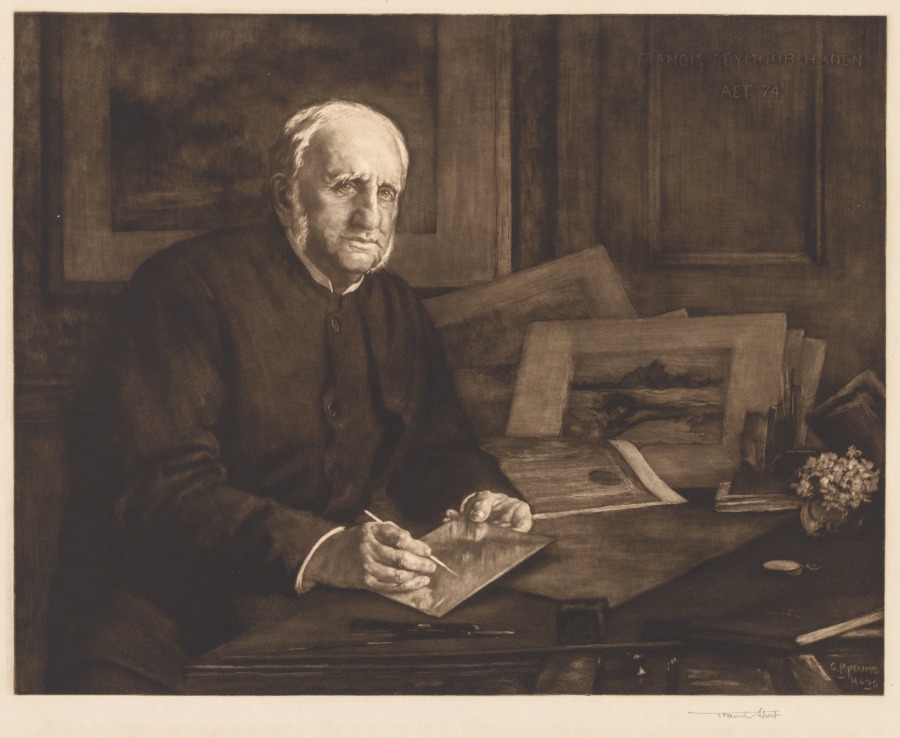
Educated At · incoming
George Percy Jacomb-Hood
Illustrator
Bequest of Elizabeth Carroll Shearer
Educated At · incoming
Hugh Cecil
Photographer

Educated At · incoming
Malcolm McDowell
Person
Malcolm McDowell 03 Uploaded by MaybeMaybeMaybe

Educated At · incoming
Ronald Howard
Person
eBay item photo front photo back
Educated At · incoming
Sidney Keyes
Author

Educated At · incoming
Tom Chaplin
Person
Own work
Documentary evidence
Evidence Panel
not yet certified
- Identity
- unresolved
- Independent source families
- 0
- Admitted assertions
- 0
- Open conflicts
- 0
In this article
Overview
Overview
The school occupies a site of 150 acre on the edge of Tonbridge, and is largely self-contained, though most of the boarding and day houses are in nearby streets. Since its foundation, the school has been rebuilt twice on the original site. For the academic year 2023/24, Tonbridge charges boarders £21,417 per term and £16,069 per term for day pupils,making it the 4th and 6th most expensive Headmasters' and Headmistresses' Conference (HMC) boarding and day school respectively. The headmaster is James Priory who began his tenure at the school in 2018. Listed in the 2024 edition of The Schools Index as one of the world's best 150 private schools and among top 30 UK senior schools.
Key facts
Key facts
• Name — Tonbridge School • Motto — Deus Dat Incrementum (God Giveth the Increase) • Type — Private school Boarding school Day school • Head Label — Headmaster • Head — James Priory • Founder — Andrew Judde • Address — High Street • City — Tonbridge • County — Kent • Postal Code — TN9 1JP • Country — England • Urn — 118959 • Enrolment — c. 800 • Gender — Boys • Lower Age — 13 • Upper Age — 18 • Ratio — 8:1 • Campus Size — 150 acre • Campus Type — Suburban • Houses — 7 boarding, 5 day • Budget — £43,757,939 (2024) • Revenue — £45,727,610 (2024) • Colours — Black, white and maroon Black White DarkRed • Publication — The Tonbridgian • Alumni — Old Tonbridgians
Foundation
Foundation
The school was founded in 1553 by Andrew Judde, being granted its royal charter by Edward VI. The first headmaster was the Revd John Proctor, a fellow of All Souls College, Oxford. From 1553 until his death in 1558, Judde was the sole governor of the school, and he framed the statutes that were to govern it for the next 270 years. On Judde's death, the school was passed to the Skinners' Company, after a dispute with Judde's business partner Henry Fisher. For the next hundred years few details of the school survive apart from rare records in the Skinners' Company books. Headmaster Proctor died in 1558, and was succeeded by a series of headmasters, usually clergy and always classical scholars. They included the Revd William Hatch (1587–1615), the first Old Tonbridgian headmaster. According to the Skinners' records, the Revd Michael Jenkins (1615–24) was appointed because "he was the only one who turned up". During his time as headmaster, the school received a series of generous endowments from Thomas Smythe, the first governor of the East India Company and son of Andrew Judde's daughter Alice.
Second hundred years
Second hundred years
• Illustration — A section of the old school building Very little written material relating to the school over the next century survives. Numbers fluctuated between 40 and 90, and the school obtained a new refectory and a new library. However, from 1680 numbers declined, and for a few years the examiners reported that there were no candidates fit for university study. In 1714, the Reverend Richard Spencer, of King's College, Cambridge, was made headmaster. He was an immediate success and very popular, and by 1721 numbers had risen to over seventy. The governors raised Spencer's salary to 30 guineas, and several of his pupils went on to successful careers. These included a future Lord Mayor of London, a vice-chancellor of Cambridge University, and George Austen, father of Jane Austen. The first Old Tonbridgian dinner was held on 8 June 1744. The year before this, however, Spencer had resigned and the headmastership was bestowed upon the Reverend James Cawthorn. Cawthorn persuaded the governors to build a new library at the south end of the school in 1760, and it survives today as the headmaster's house and the Skinners' Library. In 1765, the townspeople of Tonbridge asked the question of free education, and governors' legal team decided that the parishioners' children, provided they could write competently and read Latin and English perfectly, had the right to learn at the school paying only the sixpence entry fee. In 1772, classical scholar Vicesimus Knox was made headmaster, but he held office for only six years. During his tenure, numbers dropped to only seventeen. His son and namesake, Vicesimus Knox, was to take his father's place in 1779. School numbers under the young Knox rose to 85, and pupils began to arrive from all over England and also from abroad.
19th century
19th century
Knox retired in 1812, and was succeeded by his younger son, Thomas. The period of Knox's headmastership was one of national economic and political change, but at the school the greatest change was the increasing importance of cricket. John Abercrombie was the school's first cricket blue (for Cambridge) in 1839. In 1818, a nationwide commission visited Tonbridge to investigate on behalf of the reforming government. Over the next few years, a new scheme for the school was prepared and approved by the Lord Chancellor. New buildings were agreed upon by the governors, and a new dining room and dormitories were built. The school also bought the Georgian building on the High Street to the north of the new junior school, and it was renamed Judde House. This was the school's second boarding house, with the original buildings serving to house boys of the larger School House. In 1826, the governors bought the field which now contains the Head cricket ground, and the patches to the north and south of it, later to be called the Upper and Lower Hundreds. In 1838, Knox took the decision to level the Head, a considerable project, using labour and earth from the new railway workings in the town. The labourers often engaged in fights with the boys, as they were lodged nearby. The Head became the focal point of the school and was regarded as one of the most beautiful cricket grounds in the south of England. Thomas Knox died shortly after the completion of his cricket pitch, in 1843, whilst preparing to preach in the parish church. His death brought to an end the 71-year reign of the Knox family. • Illustration — Tonbridge School, from the cricket field (before 1903)
World wars
World wars
Tonbridge lost a great many former pupils in both world wars; 415 Old Tonbridgians and three masters died in the Great War, and a further 301 OTs died in the line of duty between 1939 and 1945. • Eric Stuart Dougall was awarded a posthumous Victoria Cross to go with his Military Cross in Belgium during the closing stages of World War I. • James Brindley Nicolson became the only RAF fighter pilot to be awarded the Victoria Cross during the course of the Battle of Britain after climbing back into his burning Hawker Hurricane to engage a Messerschmitt Bf 110 over the skies of Southampton. • Harold Newgass was awarded the school's only George Cross during World War II after defusing an enemy mine over two days.
Post-war years
Post-war years
Lawrence Waddy took over as headmaster in 1949. The Tonbridge he inherited was still a largely Victorian institution; fagging and ritual caning were still in place, and sport was considered more important than academia. Over the next 40 years personal fagging was abolished (ending in 1965), and the intellectual life of the school was revitalised (particularly under the headmastership of Michael McCrum). McCrum, headmaster from 1962 to 1970, abolished the right of senior boys to administer corporal punishment, taking over for himself the duty of administering routine canings. Boaters (known at the school as "barges"), straw hats worn by boys, were no longer compulsory uniform after a major town-gown fight in the 1970s. The headmaster until 2005 was Martin Hammond. In 2005, the school was one of fifty leading independent schools found guilty of running an illegal price-fixing cartel, exposed by The Times, which had allowed them to drive up fees for thousands of parents. Each school was required to pay a nominal penalty of £10,000 and all agreed to make ex-gratia payments totalling three million pounds into a trust designed to benefit pupils who attended the schools during the period in respect of which fee information was shared. Jean Scott, the head of the Independent Schools Council, said that independent schools had always been exempt from anti-cartel rules applied to business, and were following a long-established procedure in sharing the information with each other, and that they were unaware of the change to the law (on which they had not been consulted). She wrote to John Vickers, the OFT director-general, saying, "They are not a group of businessmen meeting behind closed doors to fix the price of their products to the disadvantage of the consumer. They are schools that have quite openly continued to follow a long-established practice because they were unaware that the law had changed."
Houses
Houses
There are twelve houses at Tonbridge School: seven boarding and five day houses. Each house has its own house colours. Each house contains approximately 65 pupils.
Chapel
Chapel
• Illustration — Tonbridge school chapel as seen from the West looking across The Head The Chapel of St Augustine of Canterbury occupies a central position in the school next to the old buildings and Orchard Centre. The chapel is collegiate in layout with twelve blocks of pews and seats corresponding to the respective Houses. The focal point of the chapel is the stone high altar and there are two pulpits, one each on the north and south sides of the chapel. The narthex or outer lobby of the chapel is also the school war memorial. In addition, the names of all Old Tonbridgians who died in the first or second world wars are displayed in stone or ironwork. In September 1988, it was severely damaged by fire with almost all objects in the building being destroyed except a 15th-century stone sculpture. Restoration took seven years to complete and the chapel was reconsecrated by the Bishop of Rochester in October 1995.
Sport
Sport
The school offers a diverse range of sports, from traditional rugby and cricket to niche activities like fives and water polo. The school has produced a number of international rugby players throughout the history of rugby union. In 1871, in the first ever international rugby match, Tonbridge was represented by two players, J.E. Bentley and J.H. Luscombe. These players were also members of a team called the Gipsies Football Club, a London-based rugby football club for Old Tonbrigians founded in 1868. This club produced four other internationals including England captain Francis Luscombe, and was also one of the founding members of the Rugby Football Union. Tonbridge alumni who have gone on to represent the England cricket team include Kenneth Hutchings, Colin Cowdrey, Roger Prideaux, Chris Cowdrey, Richard Ellison, Ed Smith and Zak Crawley. All seven also played for Kent County Cricket Club and there is a long association between the school and Kent with a number of other Old Tonbridgians playing first-class cricket for the county side. Former Kent professionals who have coached the school cricket team include Alan Dixon, whom Richard Ellison credits for developing his swing bowling abilities, and John Knott.
Music
Music
The school has a strong musical tradition: around half the boys take regular music lessons and over 80 achieve grade 7 or above. About 12 music scholarships are awarded every year. Tonbridge is also a "Steinway School", meaning that over 90% of pianos are designed or built by Steinway & Sons. The school chapel holds regular concerts for the various orchestras, including a large symphony orchestra for the most accomplished players, conducted by the director of music. The chapel is also home to an internationally respected 4-manual tracker-action pipe organ with 67 speaking stops and 4,830 pipes, built by Marcussen & Søn in 1995.
List of headmasters
List of headmasters
• Rev. John Proctor, M.A., 1553(?)-1558 • Rev. John Lever, 1559–1574 • Rev. John Stockwood, M.A., 1574–1586 • Rev. William Hatch, M.A., 1586–1615 • Rev. Michael Jenkins, M.A., 1615–1624 • Rev. Joel Callis, M.A., 1624–1637 • Rev. William St. John Newman, M.A., 1637–1640 • Rev. Thomas Horne, D.D., 1640–1649 • Rev. Nicholas Grey, D.D., 1649–1660 • Rev. John Goad, B.D., 1660–1662 • Rev. Christopher Wase, B.D., 1662–1668 • Rev. Thomas Roots, M.A., 1668–1714 • Rev. Richard Spencer, M.A., 1714–1743 • Rev. James Cawthorn, M.A.., 1743–1761 • Rev. Johnson Towers, M.A., 1761–1770 • Rev. Vicesimus Knox, D.D., 1771–1812 • Rev. Thomas Knox, D.D., 1812–1843 • Rev. James Ind Welldon, D.C.L., 1843–1875 • Rev. Theophilus Barton Rowe, M.A., 1875–1890 • Rev. Joseph Wood, D.D., 1890–1898 • Rev. Charles Coverdale Tancock, D.D., 1898–1907 • Charles Lowry, M.A., 1907–1922 • Harold N. P. Sloman, 1922–1939 • Eric E. A. Whitworth, 1939–1949 • Rev Lawrence H. Waddy, 1949–1962 • Michael McCrum, 1962–1970 • Robert M. Ogilvie, 1970–1975 • Christopher. H. D. Everett, 1975–1989 • John 'Martin' Hammond, 1990–2005 • Tim H. P. Haynes, 2005–2018 • James E. Priory, 2018–
Notable staff
Notable staff
• Jonathan Arscott – cricketer • Ewart Astill – Master in charge of Cricket • George Austen – 18th century Second master and father of Jane Austen • Logie Bruce Lockhart, Scottish rugby international and headmaster of Gresham's School • James Cawthorn – headmaster 1743–61 and poet • Derek Chadwick • Hilary Davan Wetton – former Director of Music • John Dewes, former test cricketer • Clive Dytor – former chaplain • Martin Hammond – Headmaster (1990–2005) • James Hodgson, cricketer and headmaster of Bedford School • John Inverarity – former Australia cricketer, briefly taught maths at Tonbridge after retiring from cricket • John Johnston – headmaster of Highgate School from 1908 to 1936 and early promoter of the study of aeronautics • Vicesimus Knox – 18th century Headmaster • William Langford (1875–1957) – first-class cricketer and later coach • The Reverend John Langhorne – (1836–1911), classics master and house master from 1860 to 1877. • Tony Little – a former assistant master at Tonbridge, Headmaster of Eton College • Michael McCrum – academic and historian, Headmaster (1962–70) • Clement Moody, high church Anglican clergyman, theologian, classical scholar, and Royal Arch freemason, taught at Tonbridge School from 1832 to 1840 • Robert Maxwell Ogilvie • Paul Parker – retired cricketer, now Classics and Modern Languages teacher • Sir Anthony Seldon – vice-chancellor and headmaster, formerly head of history and general studies (1989–93) • Jonathan Smith – novelist and writer, former head of English • D. C. Somervell – historian and author • Haldane Campbell Stewart – Director of Music (1898–1918), organist and choirmaster at Magdalen College, Oxford, cricketer for Kent. • David Walsh, retired cricketer, historian and former second master • Andy Whittall – Director of School Development, retired Zimbabwe cricketer, former teacher/coach and Housemaster of Ferox Hall
Notable alumni
Notable alumni
Former pupils are known at the school as Old Tonbridgians (OTs) and can join an organisation called the Old Tonbridgians' Society.
Key facts
Key facts
• Notes — Granted 16 March 1923 • Escutcheon — Quarterly Gules and Azure a cross fillet Or between in the first and fourth quarters a fesse raguly between three boars' heads couped Argent armed and langued Azure and in the second and third quarters three lions rampant Gold. • Crest — On a wreath of the colours a boar's head erased per pale Gules and Sable armed and langued Azure gorged with a coronet composed of fleurs-de-lis Or. • Motto — Deus Dat Incrementum
Knowledge graph
People and holdings
Those recorded as working within this institution, and the records it holds or is connected with.
Studied at
2- Cyril FareyIllustrator
Established from a fact already recorded on a verified source.
- Sidney KeyesAuthor
Established from a fact already recorded on a verified source.
The Encyclopedia exists whether or not anything is for sale. Corrections are recorded rather than overwritten, and every version of this record is kept. Published 27 September 2026.
Elsewhere in General
22,759 published records in this field, each with its sources named.
- TonalismTerminology
- TonawandaPlace
- TonbridgePlace
- Tonbridge Grammar SchoolOrganisation
- TønderPlace
- TondoPlace
- Toneheim Folk High SchoolOrganisation
- TonekabonPlace
Best supported in this field
For owners
Own an object connected with Tonbridge School?
A specialist will read what you send and tell you what the house can establish, what it cannot, and whether the object is suited to sale. There is no charge and no obligation. The object stays with you throughout; nothing is shipped to us unless it is arranged in writing beforehand.