
Thomas Major
Illustration — 1759 self-portrait of Major Thomas Major (1720 – 30 December 1799) was an English engraver. His early career was in Paris. In England, he became engraver to Frederick, Prince of Wales.
Also recorded as Jorma · Le Blanc, Jor · Jor · Jor. Le Blanc
Thomas Major
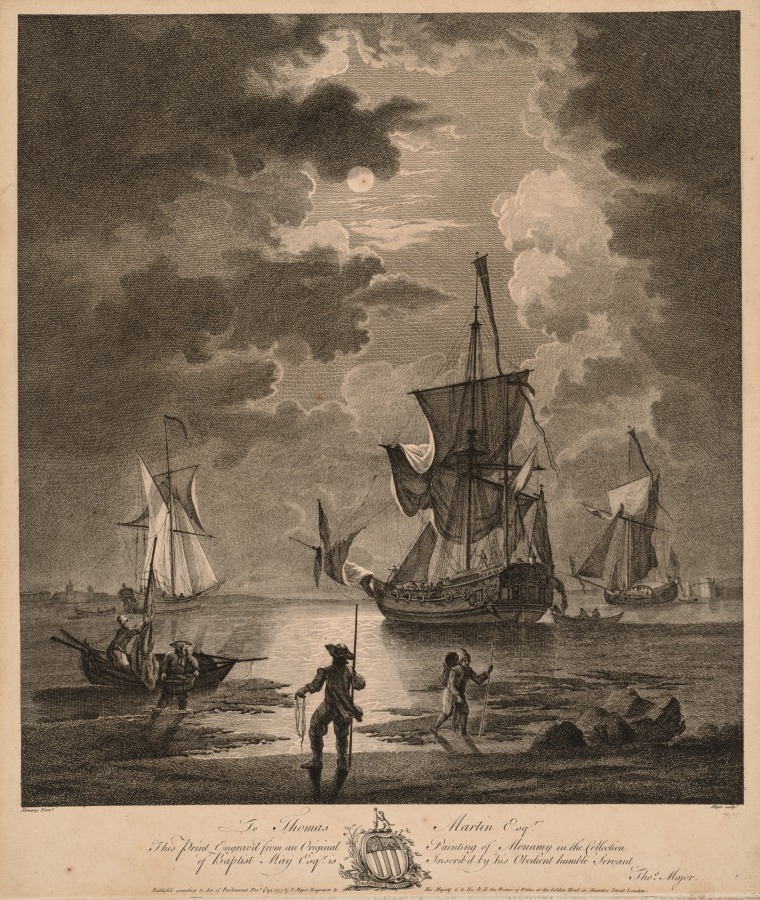
Thomas Major · The Cleveland Museum of Art · Gift of Mrs. E. A. Boynton, in memory of Judge W. W. Boynton · CC0
- Born
- Thomas Major was born, sources differ on the date (in 1720 and in the 18th century). · Buckinghamshire.
- Died
- 1799. · London.
- Occupation
- engraver, artist, illustrator, publisher and bookseller.
- Teachers
- Hubert-François Gravelot.
- Languages
- English.
VALÉORINE Encyclopedia
VALÉORINE documentary reading
Documentary summary
Illustration — 1759 self-portrait of Major Thomas Major (1720 – 30 December 1799) was an English engraver. His early career was in Paris. In England, he became engraver to Frederick, Prince of Wales.
Admitted source layer · organised and presented by VALÉORINE
Reference Check
Propose documentary evidence for Thomas Major. A contribution is never written directly as fact: identity, source, rights and evidence gates still decide.
Sign in to contribute
World of VALÉORINE
Documentary connections
Only confirmed graph relationships appear here. Images are shown only when their identity and reuse rights both pass the documentary gate.

Documentary evidence
Documentary basis
Authority files
wikidata · Q18672616 · wikipedia · Thomas Major
In this article
In Paris
In Paris
He was the first engraver recognized by the Royal Academy of Arts, and was chief seal engraver to the king.
Training under Hubert-François Gravelot is recorded. John Pye is recorded as having studied under Thomas Major. The recorded working language is English. The field of work recorded is visual arts, copper engraving technique and book illustration. Places of work recorded in the authority are Paris and London. Work by Thomas Major is recorded in the collections of Minneapolis Institute of Art, Auckland Art Gallery, Finnish National Gallery, Hunterian Museum and Art Gallery and Yale Center for British Art.
• Illustration — Le Chirurgien de campagne (1747) by Major, after David Teniers the Younger. Dedicated to the Marquis d'Argenson. Major studied drawing and etching under Hubert Gravelot. In 1745, he moved to Paris, where he associated with the English engravers Andrew Lawrence and John Ingram, and was a pupil of Jacques-Philippe Le Bas and Charles-Nicolas Cochin. In October 1746, he was imprisoned in the Bastille with other Englishmen as a reprisal for the imprisonment of French and Irish soldiers after the Battle of Culloden. He was released through the intervention of the French foreign minister, the Marquis d'Argenson. On the death of Andrew Lawrence in 1747, Major purchased his copper plates.
In London
In London
• Illustration — The Chymist (1750) by Major, after David Teniers the Younger. He returned to England in 1748, and sold to Arthur Pond some prints he had brought from Paris. He acted as agent for Le Bas, importing prints. He married Dorothy, and they had sixteen children between 1752 and 1771. Major engraved a number of plates after Nicolaes Pieterszoon Berchem, Teniers, Wouwerman, Claude Lorrain, and other masters; and produced many more of the same character that he published himself in St Martin's Lane.
Royal patronage
Royal patronage
Major became engraver to Frederick, Prince of Wales. In 1753 he was able, through the patronage of the Duke of Cumberland, to import Andrew Lawrence's plates bought in Paris, and he completed Lawrence's The Death of the Stag, after Philips Wouwerman. Under the Duke of Cumberland's patronage he engraved the views for The Ruins of Palmyra (1753) and The Ruins of Baalbec (1757). In 1754, Major issued a catalogue of his prints entitled Recueil d'Estampes gravées d'après les meilleurs tableaux des grands maîtres dont on a fait choix dans les cabinets les plus célèbres d'Angleterre et de France, and in 1768 a second catalogue appeared. Copies of some of Major's plates, bearing the name Jorma (anagram of Major), were published in Paris by Pierre-François Basan. He engraved a few portraits, including a series of four of Earl Granville, his two wives and his sister-in-law Lady Charlotte Finch, dated 1755 and 1757. In 1768, he published The Ruins of Paestum, otherwise Posidonia, in Magna Graecia, illustrated with plates; this was translated into French in 1769 and German in 1781. (Paestum was an archaeological site often visited by people on the Grand Tour.)
Places
Named by the record
Places
Only places the record itself states, plotted where the house gazetteer settles their coordinates. Nothing is inferred from a name or a nationality.
Buckinghamshire.
Birth place
London.
Death place
Primary material
Documents and archives
reference work
- “Thomas Major”, English Wikipedia, consulted as further reading
Reputable secondary · Wikipedia
authority record
- Wikidata, structured authority record Q18672616: Thomas Major
General reference · Wikidata
The Royal Academy and the Great Seal
Major was the first English engraver to receive the honours of the Royal Academy of Arts, being elected Associate Engraver on 26 February 1770. In 1776, he exhibited at the Academy The Good Shepherd after Bartolomé Esteban Murillo. He became chief seal engraver to the king, and was engraver to the Stamp Office from 1756 to 1797. When the Great Seal was stolen from the house of Lord Chancellor Edward Thurlow on 24 March 1784, Major, within twenty hours, provided a perfect temporary substitute, and afterwards executed one in silver that was used until the union with Ireland. Major died at his home in Tavistock Row, Westminster, on 30 December 1799, and was buried at St Giles' Church, Camberwell.
Notes from the source article
Cited by Wikipedia
Notes from the source article
These works are cited by the source article, in its own numbering. They are recorded as its citations, not as sources VALÉORINE has verified.
- 1.O'Donoghue, Freeman Marius. 35. 389.
- 2.Major, Thomas.
- 3.The Ruins of Paestum, otherwise Posidonia, in Magna Graecia / by Thomas Major. Royal Collection Trust, accessed 22 March 2016.
- 4.Thomas Major, A. R. A. Royal Academy of Arts Collections, accessed 22 March 2016
References
Citations
References
Each reference names the institution holding it, so a reader may go to the document itself.
reference work
Secondary witnessauthority record
General reference
The Encyclopedia exists whether or not anything is for sale. Corrections are recorded rather than overwritten, and every version of this record is kept. Published 16 August 2026.
Elsewhere in Prints
4,138 published records in this field, each with its sources named.
- Thomas JohnstonEngraver
- Thomas KaminskyEngraver
- Thomas Lewis AtkinsonEngraver
- Thomas Lord BusbyEngraver
- Thomas MaltonEngraver
- Thomas Mann BaynesEngraver
- Thomas MedlandEngraver
- Thomas MiltonEngraver
Best supported in this field
For owners
Own a work by Thomas Major?
A specialist will read what you send and tell you what the house can establish, what it cannot, and whether the object is suited to sale. There is no charge and no obligation. The object stays with you throughout; nothing is shipped to us unless it is arranged in writing beforehand.