
Thomas Barker
Thomas Barker or Barker of Bath (1769 – 11 December 1847), was a British painter of landscape and rural life.
Also recorded as Thomas Barker of Bath · Thomas Barter · Of Bath Barker · Thomas, of Bath Barker
Thomas Barker
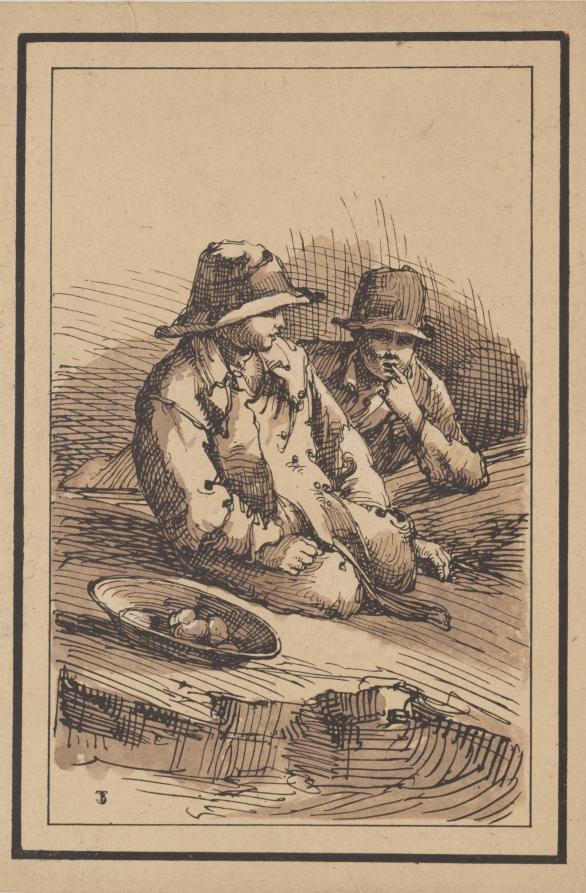
Thomas Barker · The Cleveland Museum of Art · Gift of Marsha and Tom French in memory of Fred Schmidt · CC0
- Name
- Thomas Barker
- Born
- 1769
- Birthplace
- Trosnant (near Pontypool), Wales
- Died
- 1847
- Place of death
- Bath, England
- Nationality
- Wales, Kingdom of Great Britain and United Kingdom of Great Britain and Ireland.
- Occupation
- painter and artist.
- Languages
- English.
VALÉORINE Encyclopedia
VALÉORINE documentary reading
Documentary summary
Thomas Barker or Barker of Bath (1769 – 11 December 1847), was a British painter of landscape and rural life.
Admitted source layer · organised and presented by VALÉORINE
Reference Check
Propose documentary evidence for Thomas Barker. A contribution is never written directly as fact: identity, source, rights and evidence gates still decide.
Sign in to contribute
World of VALÉORINE
Documentary connections
Only confirmed graph relationships appear here. Images are shown only when their identity and reuse rights both pass the documentary gate.
Documentary evidence
Documentary basis
Authority files
gnd · 105549751X · wikidata · Q321465
In this article
Biography
Biography
The recorded working language is English. Places of work recorded in the authority are Bath and Italy. Work by Thomas Barker is recorded in the collections of Auckland Art Gallery, Tate, National Gallery of Canada, Fine Arts Museums of San Francisco and Smithsonian American Art Museum.
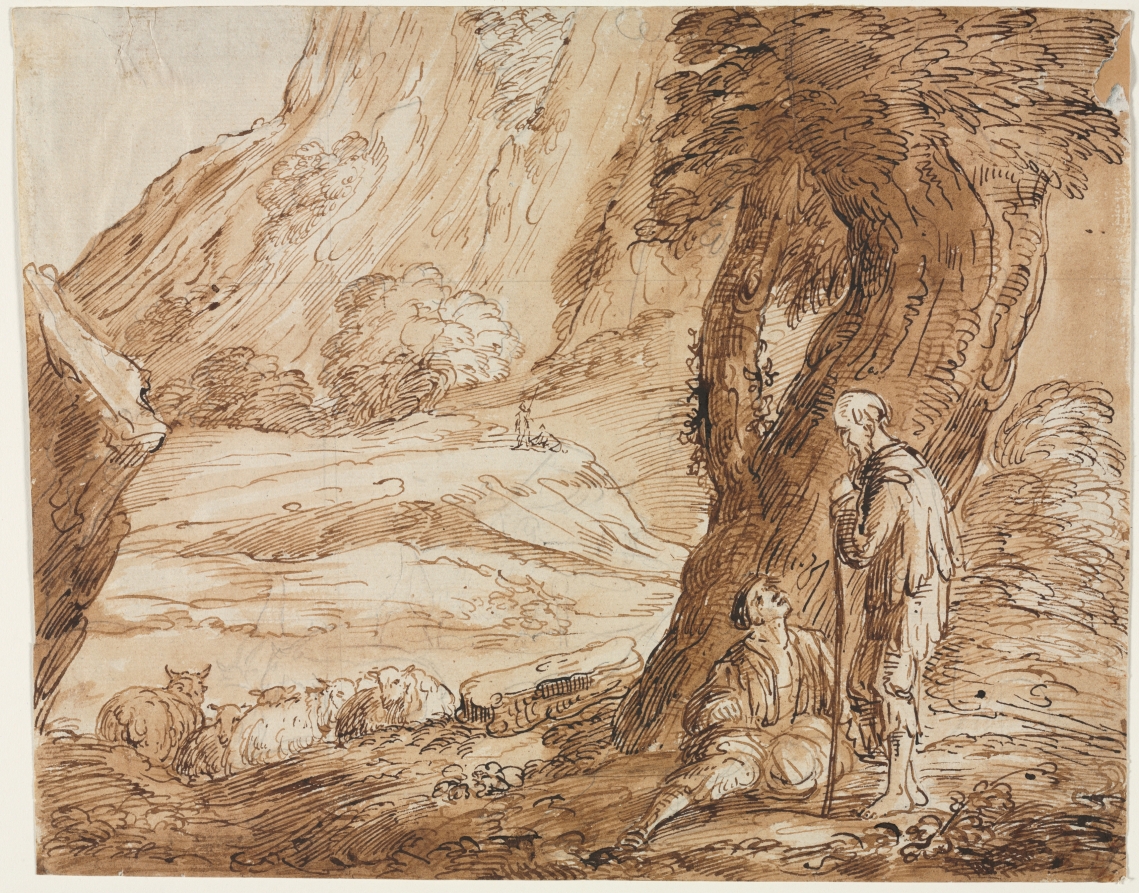
Landscape with Sheep and Two Shepherds, first half 19th century?, by Thomas Barker
Thomas Barker · The Cleveland Museum of Art · The Norweb Collection
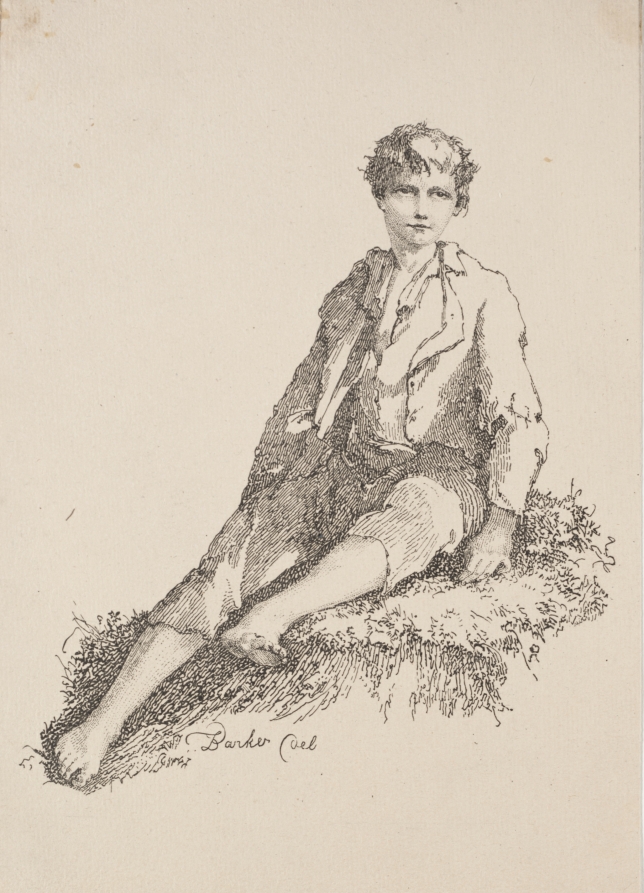
Specimens of
Thomas Barker · The Cleveland Museum of Art · Mr. and Mrs. Lewis B. Williams Collection
Key facts
Key facts
• Name — Thomas Barker • Born — 1769 • Birthplace — Trosnant (near Pontypool), Wales • Died — 1847 • Place of death — Bath, England
Early life
Early life
Barker was born in 1769, at Trosnant near the village of Pontypool, in Monmouthshire. His father, Benjamin Barker, was the son of a barrister, and practiced as an artist, but never attempted more than the portraits of horses. He eventually took up employment as a Japanware decorator. From an early age Barker showed a remarkable talent for drawing figures and designing landscapes, although he never took a lesson in either drawing or painting and was entirely self-taught. When he was sixteen his family moved to Bath where the patronage of an opulent coach-builder named Charles Spackman allowed him to follow his talent as an artist. During the first four years he employed himself in copying the works of the old Dutch and Flemish masters. At the age of twenty-one he was sent to Rome with ample funds to maintain his position there as a gentleman. While there he painted very little, contenting himself with society life.
Life as an artist
Life as an artist
• Illustration — Hampton Rocks, Morning, now at the Victoria Art Gallery, Bath. • Illustration — Macbeth and the Witches, now at the Folger Shakespeare Library, Washington, D.C. Barker was an occasional exhibitor at the Royal Academy and the British Institution for almost fifty years, during which period he exhibited nearly one hundred pictures. He was a prolific artist, and painted a wide range of subjects. Few pictures of the English school are more generally known and appreciated than The Woodman, of which it appears two were painted, both of them from nature, and of life size: the first was sold to Mr. Macklin for 500 guineas; the second, for the same amount, became the property of Lord W. Paulett. In 1821 he painted the Trial of Queen Caroline, which included portraits of many celebrated men; but perhaps the best effort of Barker's pencil skill was the fresco, 30 feet in length, and 12 feet in height, representing The Inroad of the Turks upon Scio, in April, 1822, painted on the wall of his residence, Sion Hill, Bath. When Barker's talents were in full vigour, no artist of his time had a greater hold on popular favour; his pictures of The Woodman, Old Tom (painted before he was seventeen years of age), and gipsy groups and rustic figures, were copied onto almost every possible material: Staffordshire pottery, Worcester china, Manchester cottons, and Glasgow linens. At one time he amassed considerable property by the sale of his works, and spent a large sum in building a mansion for his residence, enriching it with sculpture and other works of art. He died at Bath in 1847. Barker was one of the first British artists, along with Benjamin West and Richard Westhall, to use Lithography as a print medium and contributed two prints Young Boy Seated, and Tilemakers to Specimens of Polyautography, the first British publication of a collection of Lithographic plates, originally published by Philipp André in 1803, and then reissued in an enlarged edition by Von Weiler in 1806-07. Barker's series of Rustic figures after nature published in Bath in 1813 in a small edition, is the first series of lithographs by a British single artist. Some of Barker's stones survive.
Works
Works
There are six paintings by Barker in the Tate Gallery, including A Woodman and his Dog in a Storm (originally presented to the National Gallery in 1868) and several landscapes. The British Museum holds a number of Barker's drawings and prints. Three of Barker's paintings, Italian Landscape 1808, Landscape with a Waterfall and Landscape with Cattle are in Wolverhampton Art Gallery. A painting of Wooded landscape with gipsies round a camp fire turned out to be probably the work of Barker painted over an earlier work by Michael Dahl, was featured on the BBC television series Fake or Fortune? in 2019. Barker's work on this subject was heavily inspired by Gainsborough's, and he painted several copies of The Gipsies, as well as many gypsy works of his own. He used the grouping from Gainsborough's The Gipsies as the background to one of his 1789 self-portraits. In an episode of BBC's Britain's Lost Masterpieces broadcast in November 2019, a forest scene thought to be a copy of a famous painting by Gainsborough, was located at Birmingham Art Gallery. Following a full restoration by Simon Gillespie, the work was attributed to Barker. In 1825, Thomas Barker painted a fresco depicting the Chios Massacre on the walls of Doric House, Bath, Somerset. Two T. Barker of Bath landscape pictures appeared in the Walker's Galleries, 118 New Bond Street, Exhibition of Sketches & Water-colour Drawings by the Early English Water-Colour Artists and a few Foreign Artists, June 22 - September 30, 1920, both priced at fifteen guineas.
Family
Family
As well as Thomas Barker, the Barker family produced several artists of note. As well as his father's ability, Thomas' younger brother Benjamin Barker II (1776–1838) was also a talented artist known for his landscape work. Benjamin II exhibited at the Royal Academy and many of his works were engraved by Thales Fielding in aquatint. Barker's son, Thomas Jones Barker (1815–1882), followed his father and uncle into painting, studying at the studio of Horace Vernet in Paris. Many of Jones Barker's works were of a military nature, including Lord Clive's relief of Lucknow and The Allied generals before Sebastopol.
Identity and origins
Identity and origins
His recorded language was English. He was the child of Benjamin Barker I. 2 children are recorded: Thomas Jones Barker and John Joseph Barker.
Identity
Identity
Thomas Barker is recorded as painter and artist.
Life and career
Dated record
Life and career
Explore 1769–1847
The full dated record · 3 entries
1769
Thomas Barker born at Pontypool.
1813
Forty Lithographic Impressions from Drawings of Landscape Scenery by Thomas Barker, Selected from His Studies of Rustic Figures after Nature: Seated Man with Baskets Holding Hat and Walking Stick (1813) is digitised and catalogued by Internet Archive.
1847
Thomas Barker died at Bath.
Places
Named by the record
Places
Only places the record itself states, plotted where the house gazetteer settles their coordinates. Nothing is inferred from a name or a nationality.
Thomas Barker was born at Pontypool.
Birthplace
Thomas Barker died at Bath.
Deathplace
Pontypool.
Birth place
Bath.
Death place
Primary material
Documents and archives
scholarly publication
- Barker, Thomas Edward, Benezit Dictionary of Artists, 2011
Scholarly · Crossref registry · 2011
- Barker, Thomas Jones, Benezit Dictionary of Artists, 2011
Scholarly · Crossref registry · 2011
- Barker, Thomas, Benezit Dictionary of Artists, 2011
Scholarly · Crossref registry · 2011
Institutional database
- Wikidata, structured authority record Q321465: Thomas Barker
Scholarly · Wikimedia Foundation
authority file
- Gemeinsame Normdatei 105549751X, Ferguson, Thomas Barker.
General reference · Deutsche Nationalbibliothek
References
Citations
References
Each reference names the institution holding it, so a reader may go to the document itself.
scholarly publication
Barker, Thomas Edward, Benezit Dictionary of Artists, 2011Crossref registry
Institutional witnessscholarly publication
Barker, Thomas Jones, Benezit Dictionary of Artists, 2011Crossref registry
Institutional witnessscholarly publication
Barker, Thomas, Benezit Dictionary of Artists, 2011Crossref registry
Institutional witnessInstitutional database
Wikidata, structured authority record Q321465: Thomas BarkerWikimedia Foundation
Institutional witnessauthority file
Gemeinsame Normdatei 105549751X, Ferguson, Thomas Barker.Deutsche Nationalbibliothek
Secondary witness
People, houses and institutions
Knowledge graph
People, houses and institutions
Teachers, collaborators, publishers and institutions recorded against this person, each on a stated basis.
Born at
1- PontypoolPlace
Established from a fact already recorded on a verified source.
The Encyclopedia exists whether or not anything is for sale. Corrections are recorded rather than overwritten, and every version of this record is kept. Published 17 August 2026.
Elsewhere in Paintings
19,183 published records in this field, each with its sources named.
- Thomas BadgerArtist
- Thomas BainesArtist
- Thomas BakerArtist
- Thomas BardwellArtist
- Thomas Bigelow CraigArtist
- Thomas BirchArtist
- Thomas BlackshearArtist
- Thomas Bond WalkerArtist
Best supported in this field
For owners
Own a work by Thomas Barker?
A specialist will read what you send and tell you what the house can establish, what it cannot, and whether the object is suited to sale. There is no charge and no obligation. The object stays with you throughout; nothing is shipped to us unless it is arranged in writing beforehand.