
Taser
Taser (stylized in all caps) is a line of handheld conducted energy devices (CED) sold by Axon Enterprise (formerly Taser International). The device fires two small barbed darts intended to puncture the skin and remain attached to the target until removed by the user of the device. The darts are connected to the main unit by thin wires that achieve a high dielectric strength and durability given the extremely high-voltage electric current they conduct (typically 50,000 volts, or 2,000 volts under load), which can be delivered in short-duration pulses from a core of copper wire in the main unit.
Also recorded as Tazer
Taser
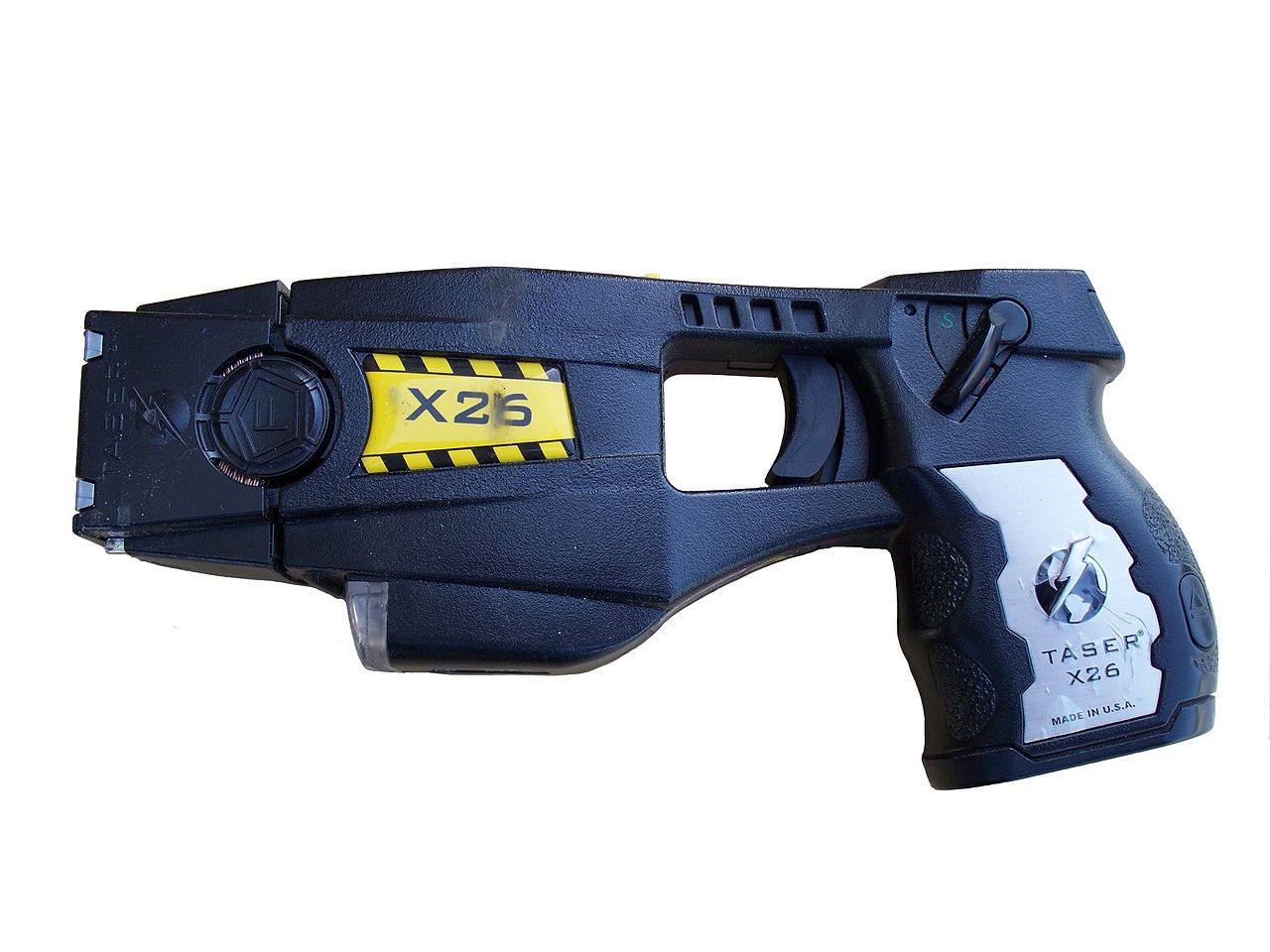
Junglecat · CC BY-SA 3.0
- Field
- electroshock weapon.
- Region
- United States.
VALÉORINE Encyclopedia
VALÉORINE documentary reading
Documentary summary
Taser (stylized in all caps) is a line of handheld conducted energy devices (CED) sold by Axon Enterprise (formerly Taser International). The device fires two small barbed darts intended to puncture the skin and remain attached to the target until removed by the user of the device. The darts are connected to the main unit by thin wires that achieve a high dielectric strength and durability given the extremely high-voltage electric current they conduct (typically 50,000 volts, or 2,000 volts under load), which can be delivered in short-duration pulses from a core of copper wire in the main unit.
Admitted source layer · organised and presented by VALÉORINE
Note VALÉORINE
No house-authored Note is published until its assertions and sources pass the VALÉORINE evidence contract. The documentary article remains available in full while that enrichment is being consolidated.
Documentary enrichment in progress · no unsupported statement published
Reference Check
Propose documentary evidence for Taser. A contribution is never written directly as fact: identity, source, rights and evidence gates still decide.
Sign in to contribute
World of VALÉORINE
Documentary connections
Only confirmed graph relationships appear here. Images are shown only when their identity and reuse rights both pass the documentary gate.

Documentary evidence
Evidence Panel
not yet certified
- Identity
- resolved
- Independent source families
- 0
- Admitted assertions
- 0
- Open conflicts
- 0
Authority files
gnd · 7627988-1 · wikidata · Q9137247 · wikipedia · Taser
In this article
History
History
This enormous rush of voltage into the body produces effects ranging from localized pain to strong involuntary long muscle contractions, causing "neuromuscular incapacitation" (NMI), based on the mode of use (tasing frequency and environmental factors) and connectivity of the darts. When successfully used, the target is said to have been "tased". The first Taser conducted energy weapon was introduced in 1993 as a less-lethal option for police to use to subdue belligerent or fleeing suspects, who might otherwise need to be subdued with more lethal means such as firearms. In the United States, Tasers are marketed as less-lethal (as opposed to non-lethal), since the possibility of serious injury or death still exists whenever the weapon is deployed. Personal-use Tasers are marketed in the US but prohibited in Canada, where there is a categorical ban on all conducted energy weapons such as stun guns and Tasers, except for use by law enforcement. A 2009 report by the Police Executive Research Forum in the United States found that police officer injuries dropped by 76% in large law enforcement agencies that deployed Taser devices in the first decade of the 21st century compared with those that did not use them at all. Axon and its CEO Rick Smith have claimed that unspecified "police surveys" show that the device has "saved 75,000 lives through 2011".
A United States patent by Kunio Shimizu titled "Arrest device" filed in 1966 describes an electrical discharge gun with a projectile connected to a wire with a pair of electrode needles for skin attachment. Jack Cover, a NASA researcher, began developing the first Taser in 1969. By 1974, Cover had completed the device, which he named Taser, using a loose acronym inspired by the title of the 1911 novel Tom Swift and His Electric Rifle, a book written by the Stratemeyer Syndicate under the pseudonym Victor Appleton and featuring Cover's childhood hero, Tom Swift. This was also done on the pattern of laser, as both a Taser and a laser fire a "beam" of energy at an object. The first Taser model that was offered for sale, called the Taser Public Defender, used gunpowder as its propellant, which led the Bureau of Alcohol, Tobacco and Firearms to classify it as a firearm in 1976. Former Taser International CEO Patrick Smith testified in a Taser-related lawsuit that the catalyst for the development of the device was the "shooting death of two of his high school acquaintances" by a "guy with a legally licensed gun who lost his temper". In 1993, Rick Smith and his brother Thomas founded the original company, Taser, and began to investigate what they called "safer use of force option[s] for citizens and law enforcement". At their Scottsdale, Arizona facilities, the brothers worked with Cover to develop a "non-firearm Taser electronic control device". The 1994 Air Taser Model 34000 conducted energy device had an "anti-felon identification (AFID) system" to prevent the likelihood that the device would be used by criminals; upon use, it released many small pieces of paper containing the serial number of the Taser device. The U.S. Bureau of Alcohol, Tobacco, Firearms and Explosives (ATF) stated that the Air Taser conducted energy device was not a firearm. In 1999, Taser International developed an "ergonomically handgun-shaped device called the Advanced Taser M-series systems", which used a "patented neuromuscular incapacitation (NMI) technology". In May 2003, Taser International released the Taser X26 conducted energy device, which used "shaped pulse technology". On July 27, 2009, Taser International released a new type of Taser device called the X3, which can fire three shots before reloading. It holds three new type cartridges, which are much thinner than the previous model. On April 5, 2017, Taser announced that it was rebranding itself as Axon to reflect its expanded business into body cameras and software. In 2018, Taser 7 conducted energy device was released, the seventh generation of Taser devices from Axon. The latest Taser device, the Taser 10 conducted energy device, was released in 2023.
Function
Function
A Taser device fires two small dart-like electrodes, which stay connected to the main unit by thin insulated copper wire as they are propelled by small compressed nitrogen charges. The cartridge contains a pair of electrodes and propellant for a single shot and is replaced after each use. Once fired the probes travel at 180 feet (55 m) per second, spread 12 inches (300 mm) apart for every 7 feet (2.1 m) they travel, and must land at least 4 inches (100 mm) apart from each other to complete the circuit and channel an electric pulse into the target's body. They deliver a modulated electric current designed to disrupt voluntary control of muscles, causing "neuromuscular incapacitation". The effects of a Taser device may only be localized pain or strong involuntary long muscle contractions, based on the mode of use, connectivity and location of the darts on the body. The Taser device is marketed as "less-lethal", since the possibility of serious injury or death exists whenever the weapon is deployed. There are a number of cartridges designated by range, with the maximum at 35 feet (11 m). Cartridges available to non-law enforcement consumers are limited to 15 feet (4.6 m). Practically speaking, police officers must generally be within 15 to 25 feet (4.6 to 7.6 m) to use a Taser, though the X26's probes can travel as far as 35 feet. The electrodes are pointed to penetrate clothing and barbed to prevent removal once in place. The original Taser device probes unspool the wire from the cartridge, causing a yaw effect before the dart stabilizes, which made it difficult to penetrate thick clothing. Newer versions (X26, C2) use a "shaped pulse" that increases effectiveness in the presence of barriers. The Taser 7 conducted energy device is a two-shot device with increased reliability over legacy products. The conductive wires spool from the dart when the Taser 7 conducted energy device is fired, instead of spooling from the Taser cartridge which increases stability while in flight and therefore increases accuracy. The spiral darts fly straighter and faster with nearly twice the kinetic energy for better connection to the target and penetration through thicker clothing. The body of the dart breaks away to allow for containment at tough angles. Taser 7 has a 93% increased probe spread at close range, where 85% of deployments occur, according to agency reports. Rapid arc technology with adaptive cross-connection helps enable full incapacitation even at close range. Taser 7 wirelessly connects to the Axon network, allowing for easier updates and inventory management. A Taser device may provide a safety benefit to police officers. The use of a Taser device has a greater deployment range than batons, pepper spray, or empty hand techniques. This allows police to maintain a greater distance. A 2008 study of use-of-force incidents by the Calgary Police Service conducted by the Canadian Police Research Centre found that the use of the Taser device resulted in fewer injuries than the use of batons or empty hand techniques. The study found that only pepper spray was a safer intervention option. A typical Taser device can operate with a peak voltage of 50 kilovolts (1200 volts to the body) and an average electric current of 1.9 milliamps, delivered as 100-microsecond pulses at a rate of 19 per second. A supplier quotes a current of 3-4 milliamps.
Models
Models
As of September 30, 2024, Axon has three main models of Taser conducted electrical weapons (CEWs) available for law enforcement and civilians where it is legal. Axons also lists the Taser Pulse as a civilian weapon, which runs at a 30 second cycle once fired; this is intended to allow the user to drop the CEW after firing and the escape from the target while they are incapacitated. The Taser X26P is a single-shot CEW. This was the main Taser model during the 2000s and 2010s, today it is intended as a compact model. The Taser X2 adds dual lasers and a button-activated warning arc function. When the warning arc is engaged, the Taser CEW will display an arc of electricity at the front of the device without firing the cartridge, which is intended to intimidate an aggressor with the goal of having them voluntarily comply without the officer needing to use force. The Taser 7 is a two-shot device with spiral darts that spool from the dart allowing the probes to fly straighter. It also adds the ability to load cartridges intended for different ranges. The Taser 10 device was officially announced by Axon on January 24, 2023. In addition to the functions of the Taser 7, the Taser 10 features an increased probe distance of up to 45 feet, waterproof capabilities, increased probe velocity (205 feet per second), and ability to deploy the probes individually allowing the officer to create their own "spread" unlike previous models, which relied heavily on precise aiming of the prongs at a fixed angle with the assistance of two lasers. The warning arc function was replaced with a high-pitched warning noise upon activating the weapon.
Lethality
Lethality
As with all less-lethal weapons, use of the Taser system is never risk-free. Sharp metal projectiles and electricity are in use, so misuse or abuse of the weapon increases the likelihood that serious injury or death may occur. In addition, the manufacturer has identified other risk factors that may increase the risks of use. Persons and animals that are small, pregnant, elderly, or very thin are considered at higher risk. Persons and animals with known medical problems, such as heart disease, history of seizure, or have a pacemaker are also at greater risk. Axon also warns that repeated, extended, or continuous exposure to the weapon is not safe. Because of this, the Police Executive Research Forum says that total exposure should not exceed 15 seconds. A doctor or veterinarian must check the subject's welfare and deliver all necessary treatment to relieve pain and distress immediately after the incident. Subjects may appear uninjured immediately after the TASER has stopped discharging, but it is important that any subject which has been tasered should be assessed by a doctor or veterinarian and receive appropriate medical treatment as soon as possible after the incident. There are other circumstances that pose higher secondary risks of serious injury or death, including: Uncontrolled falls or subjects falling from elevated positions Subjects running on hard or rough surfaces, like asphalt Persons operating machinery or conveyances (cars, motorcycles, bikes, skateboards) Deployment into sensitive areas of the body such as the eyes, throat, or genitals Places where explosive or flammable substances are present Tasers can ignite gasoline and hand sanitizer Fulton County, Georgia District Attorney Paul Howard Jr. said in 2020 that "under Georgia law, a Taser is considered as a deadly weapon." A 2012 study published in the American Heart Association's journal Circulation found that Tasers can cause "ventricular arrhythmias, sudden cardiac arrest and even death". In 2014, NAACP State Conference President Scot X. Esdaile and the Connecticut NAACP argued that Tasers cause lethal results. Reuters reported that more than 1,000 people shocked with a Taser by police died through the end of 2018, nearly all of them since the early 2000s. At least 49 people died in the US in 2018 after being shocked by police with a Taser.
Drive Stun capability
Drive Stun capability
Some Taser device models, particularly those used by police departments, also have a "Drive Stun" capability, where the Taser device is held against the target without firing the projectiles, and is intended to cause pain without incapacitating the target. "Drive Stun" is "the process of using the EMD (Electro Muscular Disruption) weapon as a pain compliance technique. This is done by activating the Taser [device] and placing it against an individual's body. This can be done without an air cartridge in place or after an air cartridge has been deployed." Guidelines released in 2011 by the U.S. Department of Justice recommend that use of Drive Stun as a pain compliance technique be avoided. The guidelines were issued by a joint committee of the Police Executive Research Forum and the U.S. Department of Justice Office of Community Oriented Policing Services. The guidelines state "Using the CEW to achieve pain compliance may have limited effectiveness and, when used repeatedly, may even exacerbate the situation by inducing rage in the subject." A study of U.S. police and sheriff departments found that 29.6% of the jurisdictions allowed the use of Drive Stun for gaining compliance in a passive resistance arrest scenario, with no physical contact between the officer and the subject. For a scenario that also includes non-violent physical contact, this number is 65.2%. A Las Vegas police document says "The Drive Stun causes significant localized pain in the area touched by the Taser [CEW], but does not have a significant effect on the central nervous system. The Drive Stun does not incapacitate a subject but may assist in taking a subject into custody." The UCLA Taser incident and the University of Florida Taser incident involved university police officers using their Taser device's "Drive Stun" capability (referred to as a "contact tase" in the University of Florida Offense Report). Amnesty International has expressed particular concern about Drive Stun, noting that "the potential to use Tasers in drive-stun mode—where they are used as 'pain compliance' tools when individuals are already effectively in custody—and the capacity to inflict multiple and prolonged shocks, renders the weapons inherently open to abuse."
Users
Users
According to Axon Enterprise, as of 2025, Taser's brand models were used by over 18,000 law enforcement agencies in more than 80 countries. Just as the number of agencies deploying Taser conducted energy weapons has continued to increase each year, so too the number of Taser device related "incidents" between law enforcement officers and suspects has been on the rise.
Excited delirium syndrome
Excited delirium syndrome
Some of the deaths associated with Taser devices have been blamed on excited delirium, a controversial pseudoscientific diagnosis that supposedly involves extreme agitation and aggressiveness. It has typically been diagnosed postmortem in young adult black males who were physically restrained by law enforcement at the time of death. The diagnosis was supported only by the American College of Emergency Physicians from 2009 to 2023 and the National Association of Medical Examiners until 2023. Excited delirium is thought to involve delirium, psychomotor agitation, anxiety, hallucinations, speech disturbances, disorientation, violent and bizarre behavior, insensitivity to pain, elevated body temperature, and increased strength. Excited delirium is associated with sudden death (usually via cardiac or respiratory arrest), particularly following the use of physical control measures, including police restraint and Taser devices. Excited delirium is most commonly diagnosed in male subjects with a history of serious mental illness or acute or chronic drug abuse, particularly stimulant drugs such as cocaine. Alcohol withdrawal or head trauma may also contribute to the condition. The diagnosis of excited delirium has been controversial. Excited delirium has been listed as a cause of death by some medical examiners for several years, mainly as a diagnosis of exclusion established on autopsy. Additionally, academic discussion of excited delirium has been largely confined to forensic science literature, providing limited documentation about patients that survive the condition. These circumstances have led some civil liberties groups to question the cause of death diagnosis, claiming that excited delirium has been used to "excuse and exonerate" law enforcement authorities following the death of detained subjects, a possible "conspiracy or cover-up for brutality" when restraining agitated individuals. Also contributing to the controversy is the role of Taser device use in excited delirium deaths. Excited delirium is not found in the current version of the Diagnostic and Statistical Manual of Mental Disorders. The term excited delirium was accepted by the National Association of Medical Examiners and the American College of Emergency Physicians, who argued in a 2009 white paper that excited delirium may be described by several codes within the ICD-9. In 2017, investigative reporters from Reuters reported that three of the 19 members of the 2009 task force were paid consultants for Axon, the manufacturer of Tasers.
Australia
Australia
Tasers are prohibited for civilian ownership in Australia in every state and territory.
Canada
Canada
Conducted energy weapons are classed as "prohibited weapons", making them illegal for civilian ownership. In police services CEWs are very common, with most front-line officers having a Taser as a standard issue weapon.
China
China
Under the Law of the People's Republic of China on the Control of Firearms and Public Security Punishment Law, Tasers are prohibited for civilian ownership in China without an application for a state licence. A weapons permit is required to purchase and own a Taser.
Germany
Germany
Since April 2008, Tasers can be legally purchased by persons 18 and older, but can only be carried by persons with a firearm carry permit (Waffenschein), which is only issued under very restricted conditions. In 2001, Germany approved a pilot project allowing individual states to issue Tasers to their SEK teams (police tactical units); by 2018, 13 out of 16 states had done so. A number of states have also provided a limited number of Tasers to their general police forces. Some states, such as Berlin, have use of force guidelines that only permit Taser use where firearm use would also be justified. The Bundeswehr (German armed forces) does not issue Tasers nor are they used in training.
Ireland
Ireland
Under the Firearms Act of 1925, Tasers, pepper spray and stun guns are illegal to possess or purchase in Ireland, even with a valid firearms certificate.
Italy
Italy
In Italy, Tasers are subject to strict regulation because they are legally classified as weapons. Under Law No. 110 of 18 April 1975 (Supplementary provisions on the control of weapons, ammunition and explosives), Article 4 lists the Taser among weapons and objects capable of causing injury that may not be carried outside one's residence without official authorization.
Jamaica
Jamaica
Tasers are legal for civilians to own, provided they possess a valid permit under the Customs Act. Currently, police in Jamaica do not have access to Tasers, but in February 2021, Corporal James Rohan, Chairman of the Police Federation, requested access to non-lethal weaponry in order to deal more effectively with encounters with mentally ill individuals.
Japan
Japan
Under the Firearm and Sword Possession Control Law, import, carrying, purchase of conducted energy weapons is prohibited in Japan. Stun guns are legal to own, although carrying without "justifiable grounds" is illegal and can be prosecuted under the Minor Offenses Act.
Poland
Poland
Any electroshock weapon, including stun guns and Tasers, with amperage under 10 mA can be purchased by anyone over the age of 18 without permit or background checks. As most Tasers fulfil those criteria, they are widely available in self-defence stores.
Russia
Russia
Stun guns and Tasers made in Russia can be purchased for self-defense without special permission, however, under the Federal Law No. 150 "On Weapons" of the Russian Federation it's illegal to import and subsequent sale of any foreign stun devices or Tasers into the country. The ban has been in place since the first version of the law was approved in 1996.
United Arab Emirates
United Arab Emirates
Tasers are classified as weapons under Federal Law No. 3 of 2009, and therefore require a valid license to own or import.
United Kingdom
United Kingdom
Tasers have been in use by UK police forces since 2001, and they require 18 hours of initial training, followed by six hours of annual top-up training, in order for a police officer to be allowed to carry and use one. Members of the general public are not allowed to own Tasers, with possession or sale of a Taser punishable by up to 10 years in prison. As of September 2019, 30,548 (19%) of police officers were trained to use Tasers. Tasers were deployed 23,000 times from March 2018 to March 2019, compared to only 10,000 times in 2013; however the UK police definition of "deployed" means that the weapon has been drawn; in the majority of cases it will not have been fired. In March 2020, extra funding was provided to purchase devices to allow more than 8,000 extra British police officers to carry a Taser.
Use on children and the elderly
Use on children and the elderly
There has been considerable controversy over the use of Taser devices on children and in schools.
Criminal use
Criminal use
The earliest known case of a Taser being used on a child was on June 10, 1991, when one was used to incapacitate an 11-year-old girl in order to kidnap her. According to Jaycee Dugard, whenever she tried to escape, her kidnapper threatened to use the Taser again.
Police use
Police use
In 2004, the parents of a 6-year-old boy in Miami sued the Miami-Dade County Police department for firing a Taser device at their child. The police said the boy was threatening to injure his own leg with a shard of glass, and said that using the device was the safest option to prevent the boy from injuring himself. The boy's mother told CNN that the three officers involved probably found it easier not to reason with her child. In the same county two weeks later, a 12-year-old girl skipping school and drinking alcohol was tased while she was running from police. The Miami-Dade County Police reported that the girl had started to run into traffic and that the Taser device was deployed to stop her from being hit by cars or causing an automobile accident. In March 2008, an 11-year-old girl was subdued with a Taser device. Police claim that the use of Taser conducted energy weapons on smaller subjects and elderly subjects is safer than alternative methods of subduing suspects, alleging that striking them or falling on them will cause much more injury than a Taser device, because the device is designed to only cause the contraction of muscles. Critics counter that Taser devices may interact with pre-existing medical complications such as medications, and may even contribute to someone's death as a result. Critics also suggest that using a Taser conducted electrical weapon on a minor, particularly a young child, is effectively cruel and abusive punishment, or unnecessary. In May 2023, in Cooma, NSW, Australia, police tasered a 95-yr old dementia patient from less than 2 m (6.6 ft) away after apparently giving up on negotiations with her to drop the knife she was holding. At the time, she was standing upright & holding onto her 4-wheel walker. She survived the incident, but succumbed to head injuries sustained in the subsequent fall and died a week later. Her Estate sued the NSW Government, and, in April 2024, the accused & suspended police officer plead not guilty to manslaughter & remained free on bail awaiting trial. On 27 November 2024, the officer, Senior Constable Kristian White, was found guilty of manslaughter.
Excessive use by law enforcement
Excessive use by law enforcement
In 2019, two Oklahoma police officers used Tasers over 50 times on an unarmed man resulting in death. Both officers were later convicted of second-degree murder. In January 2023, Los Angeles Police Department officers tasered a teacher at least 6 times resulting in the man's death. In 2014, Catasauqua, PA police officers inflicted serious injuries on a man, during a DUI arrest, when they tasered him eleven times while he was handcuffed and restrained in the back of a police vehicle. A New York Times study published in 2025 collected Taser log documents from 36 police departments in Mississippi from 2020 through 2024. Data collection was incomplete, since several departments submitted no data or only partial data. The study identified 44,000 incidents in which one or more Tasers were triggered for at least one second each over the course of an hour. Reporters manually reviewed the nearly 1,000 cases that lasted at least 15 seconds. Once training operations were eliminated, the review found 611 incidents that lasted at least 15 seconds (the maximum shock duration per encounter recommended under national standards). In addition to 44 allegations of "Taser abuse over the past decade from lawsuits and department records", the Times reporters found hundreds more "incidents that raise red flags by examining Taser logs across the state". Cases described in the article include 11 people who were shocked while they were pinned down or handcuffed, such as Vivian Burks, an unarmed 65-year-old great-grandmother accused of marijuana use who was shocked 4 times in under one minute, and Keith Murriel, who died after being shocked at least 40 times for refusal to leave a hotel parking lot.
Domestic animals
Domestic animals
Tasers may be deployed against an animal as part of a plan to deal with a potentially dangerous animal, such as a large dog, if the animal reasonably appears to pose an imminent threat to human safety, and alternative methods are not viable.
Wildlife
Wildlife
Tasers are used to immobilize wildlife for research, relocation, or treatment. Since they are classified as a form of torture, it is more common to use tranquilizer darts.
Use in torture
Use in torture
A report from a meeting of the United Nations Committee Against Torture states that "The Committee was worried that the use of Taser X26 weapons, provoking extreme pain, constituted a form of torture, and that in certain cases it could also cause death, as shown by several reliable studies and by certain cases that had happened after practical use." Amnesty International has also raised extensive concerns about the use of other electro-shock devices by American police and in American prisons, as they can be (and according to Amnesty International, sometimes are) used to inflict cruel pain on individuals. In response to the claims that the pain inflicted by the use of the Taser device could potentially constitute torture, Tom Smith, the Chairman of the Taser Board, stated that the U.N. is "out of touch" with the needs of modern policing and asserted that "Pepper spray goes on for hours and hours, hitting someone with a baton breaks limbs, shooting someone with a firearm causes permanent damage, even punching and kicking—the intent of those tools is to inflict pain,... with the Taser device, the intent is not to inflict pain; it's to end the confrontation. When it's over, it's over."
Places
Named by the record
Places
Only places the record itself states, plotted where the house gazetteer settles their coordinates. Nothing is inferred from a name or a nationality.
United States.
Country
Taser is associated with United States.
Country
Primary material
Documents and archives
reference work
- “Taser”, English Wikipedia, consulted as further reading
Reputable secondary · Wikipedia
- Wikidata, structured authority record Q9137247: Taser
Reputable secondary · Wikidata
authority file
- Gemeinsame Normdatei 7627988-1, Taser.
Unverified · Deutsche Nationalbibliothek
Notes from the source article
Cited by Wikipedia
Notes from the source article
These works are cited by the source article, in its own numbering. They are recorded as its citations, not as sources VALÉORINE has verified.
- 1.TASER Brand.
- 2."Neuromuscular Incapacitation (NMI)", TASER International, published March 12, 2007. Retrieved May 19, 2007
- 3.U.S. Department of Justice, Office of Justice Programs, National Institute of Justice. Police Use of Force, Tasers and Other Less-Lethal Weapons. May 2011.
- 4.Taylor, Bruce. Comparing safety outcomes in police use-of-force cases for law enforcement agencies that have deployed Conducted Energy Devices and a matched comparison group that have not: A quasi-experimental evaluation. National Institute of Justice. September 2009.
- 5.Roberts, Daniel. A new life for Taser, this time with less controversy. Fortune.
- 6.Taser.org.
- 7.Shimizu, Kunio. Arrest device. Google Patents. 11 August 1970.
- 8.Langton, Jerry. The dark lure of 'pain compliance'. Toronto Star. December 1, 2007.
- 9.Cornwell, Rupert. Jack Cover: Inventor of the Taser stun gun. The Independent. March 2, 2009.
- 10.Lartey, Jamiles. Where did the word 'Taser' come from? A century-old racist science fiction novel. The Guardian. November 30, 2015.
- 11.Talvi, Silja J. A. Stunning Revelations. In These Times. November 13, 2006.
- 12.U.S. Consumer Product Safety Commission. Jurisdiction over the Taser Public Defender (#236). March 22, 1976.
- 13.CourtTV.com. Taser chief gives jurors demonstration of stun-gun blast in court.
- 14.CEO of Taser company accused of exaggerating shooting origin story. The Independent. 2023-12-27.
- 15.Taser maker Axon has a moving backstory. It's mostly a myth. Reuters. December 27, 2023.
- 16.Axon Leadership Axon. www.axon.com.
- 17.Taser.com. Corporate History. February 5, 2007.
- 18.TASER International. TASER International Launches Revolutionary New Multi-Shot TASER Device With Precision Shaped Pulse Technology. July 27, 2009.
- 19.Taser 7 OG TItle Axon. www.axon.com.
- 20.Axon Unveils TASER 10. Axon IR.
- 21.Personal Defense Products: TASER® X26c™ , TASER site. Retrieved July 16, 2013.
- 22.Greenemeier, Larry. TASER Seeks to Zap Safety Concerns. Scientific American.
- 23."Neuromuscular Incapacitation (NMI)", Taser International, published March 12, 2007. Retrieved May 19, 2007
- 24.International Association of Chiefs of Police, Electro Muscular Disruption Technology: A Nine-Step Strategy for Effective Deployment , 2005
- 25.Axon. TASER CEW Use Guidelines. April 5, 2017.
- 26.TASER® Cartridges: Replacement Cartridge for X26, M26, X2 & X3 , TASER site. Retrieved July 16, 2013.
- 27.TASER Cartridges (Consumers) , TASER site. Retrieved December 15, 2007.
- 28.Why police choose deadly force despite non-lethal options. NBC News. September 29, 2016.
- 29.Axon's TASER 7 could be a game changer for LE. PoliceOne. October 11, 2018.
- 30.Taser International. Shaped Pulse Technology. April 27, 2007.
- 31.Enforce Tac: Axon's New TASER 7 Makes Debut. www.monch.com.
- 32.History of Taser. sun-sentinel.com. June 19, 2005.
- 33.Hans Wimberly. Safety Benefits of Tasers for Police Officers. GearsAdviser.com. July 2019.
- 34.Police batons more dangerous than Tasers: Study.
- 35.Kroll, Mark W. How a TASER works. The stun gun shocks without killing—but how safe is it? Two experts take a look. Crafting The Perfect Shock. IEEE. 30 November 2007.
- 36.Oaks Industries LLC. How Many AMPs Are In A Taser?. taserguide.com. 2023.
- 37.TASER X26P Axon. www.axon.com.
- 38.TASER X2 Axon. www.axon.com.
- 39.MyAxon.
- 40.Axon. Axon Unveils TASER 10. www.prnewswire.com.
- 41.TASER 10 - Axon. www.axon.com.
- 42.Lee, Timothy. Family of man who dies after Taser incident gets $5.5 million verdict. November 14, 2017.
- 43.SPCA. Tasering Animals.
- 44.Opinion | The Atlanta Shooting. Wall Street Journal. June 19, 2020.
- 45.Peebles, Jorge Ortiz and Will. Rayshard Brooks died after he was shot by Atlanta police officer Garrett Rolfe. What happens now?. USA TODAY.
- 46.Under Georgia law a taser is considere a deadly weapon - Fulton County District Attorney Paul Howard.
- 47.Douglas P. Zipes. TASER Electronic Control Devices Can Cause Cardiac Arrest in Humans. Circulation. 129. 1. 101–111. 7 Jan 2014. 10.1161/CIRCULATIONAHA.113.005504.
- 48.Another Death Prompts Another Call for Taser Regulation. ACLU of Connecticut. June 21, 2017.
- 49.NAACP Investigating New London Taser Death. New London, CT Patch. October 8, 2014.
- 50.Black Americans disproportionately die in police Taser confrontations. June 15, 2020.
- 51.As death toll keeps rising, U.S. communities start rethinking Taser use. Reuters. February 4, 2019.
- 52.Law Enforcement Advisory Committee. Less Lethal Weapons: Model Policy and Procedure for Public Safety Officers. Michigan Municipal Risk Management Authority. Summer 2005.
- 53.A Joint Project of PERF and COPS. 2011 Electronic Control Weapon Guidelines. United States Department of Justice. April 2011.
- 54.Michael R. Smith, J.D., Robert J. Kaminski, Geoffrey P. Alpert, Lorie A. Fridell, John MacDonald, Bruce Kubu. A Multi-Method Evaluation of Police Use of Force Outcomes. National Institute of Justice. July 2010.
- 55.Use of the Taser, Las Vegas Metropolitan Police Department
- 56.Police Assessment Resource Center. A Bad Night at Powell Library: The Events of November 14, 2006. August 2007.
- 57.CNN. University of Florida Police Department offense report. October 18, 2007.
- 58.Amnesty.ca. Amnesty International's concerns about Tasers.
- 59.Global: Electric shock equipment widely abused by law enforcement agencies due to alarming lack of regulation. Amnesty International. 2025-03-06.
- 60.Obasogie, Osagie K. Excited Delirium and Police Use of Force. Virginia Law Review. 107. 8. 1545–1620. 2021. 27135603.
- 61.Ives, Mike. California bans 'excited delirium' as cause of death. New York Times. October 11, 2023.
- 62."White Paper Report on Excited Delirium Syndrome" , ACEP Excited Delirium Task Force, American College of Emergency Physicians, September 10, 2009
- 63.ACEP Task Force Report on Hyperactive Delirium with Severe Agitation in Emergency Settings. American College of Emergency Physicians. June 23, 2021.
- 64.ACEP's Position on Hyperactive Delirium. American College of Emergency Physicians. April 14, 2023.
- 65.NAME. NAME Excited Delirium Statement 3/2023.
- 66.Excited delirium deaths in custody: past and present. Am J Forensic Med Pathol. 30. 1. 1–5. March 2009. 10.1097/PAF.0b013e31818738a0.
- 67.Ruth SoRelle. ExDS Protocol Puts Clout in EMS Hands. Emergency Medicine News. 32. 10. 1, 32. October 2010. 10.1097/01.EEM.0000389817.48608.e4.
- 68.Excited delirium: Consideration of selected medical and psychiatric issues. Neuropsychiatr Dis Treat. 5. 61–6. 2009. 10.2147/ndt.s2883.
- 69.Suspects' deaths blamed on 'excited delirium', critics dispute rare syndrome usually diagnosed when police are involved. NBC News.
- 70.Excited delirium, not Taser, behind death of N.S. man: medical examiner. The Canadian Press. January 2020.
- 71.Death by Excited Delirium: Diagnosis or Coverup?. NPR. February 26, 2007.
- 72.ABC News. Excited Delirium: Police Brutality vs. Sheer Insanity. March 2, 2007.
- 73.NPR. Tasers Implicated in Excited Delirium Deaths. NPR.org. February 27, 2007.
- 74.Shock Tactics: Taser inserts itself in probes involving its stun guns.
- 75.The three members of the task force that were consultants for the Taser manufacturer were Deborah Mash, Charles Wetli and Jeffrey Ho.
- 76.View - Tasmanian Legislation Online. www.legislation.tas.gov.au.
- 77.View - NSW legislation. legislation.nsw.gov.au.
- 78.Control of Weapons Act 1990. www.legislation.vic.gov.au.
- 79.Prohibited Weapons Act 1996 PDF. www.legislation.act.gov.au.
- 80.Weapons Act 1999 01-d0-06 Xml. www.legislation.wa.gov.au.
- 81.Legislation Database. legislation.nt.gov.au.
- 82.View - Queensland Legislation - Queensland Government. www.legislation.qld.gov.au.
- 83.Cite canlaw type=reg regtitle=Regulations Prescribing Certain Firearms and Other Weapons, Components and Parts of Weapons, Accessories, Cartridge Magazines, Ammunition and Projectiles as Prohibited or Restricted regnumber=SOR/98-462 link=https://laws-lois.justice.gc.ca/eng/regulations/sor-98-462/page-2.html
- 84.Facts about stun guns and their use in Canada. CBC News. 2011-04-21.
- 85.中华人民共和国枪支管理法. Apr 24, 2015.
- 86.DistanzElektroImpulsGerät. polizeipraxis.de.
- 87.Antwort der Bundesregierung auf die Kleine Anfrage der Abgeordneten Ulla Jelpke, Wolfgang Neskovic, Heike Hänsel, weiterer Abgeordneter und der Fraktion DIE LINKE. – Drucksache 16/11806. bundestag.de. 13 February 2019.
- 88.Frequently Asked Questions. The Department of Justice. January 25, 2019.
- 89.Aodha, Gráinne Ní. No plans to legalise pepper spray or Tasers in Ireland. TheJournal.ie. March 11, 2018.
- 90.Normattiva. Legge 18 aprile 1975, n. 110 – Norme integrative della disciplina vigente per il controllo delle armi, delle munizioni e degli esplosivi.
- 91.Stun gun shocker - Tasers pour through Customs, sold openly, as women arm themselves against attackers. jamaica-gleaner.com. 2019-04-28.
- 92.Cops demand Tasers for clashes with mentally ill. jamaica-gleaner.com. 2021-02-09.
- 93.銃砲刀剣類所持等取締法. No. 6 of 1958.
- 94.軽犯罪法. No. 39 of 1948. art. 1, para. 2.
- 95.Supreme Court of Japan. 63. Keishū.
- 96.Art. 11. Ustawy z dnia 21 maja 1999 r. o broni i amunicji - Odstępstwa od obowiązku posiadania pozwolenia na broń. OpenLEX.
- 97.Czy posiadanie paralizatora jest legalne? Wszystko, co należy wiedzieć o paralizatorach. www.bron.pl.
- 98.Официальный интернет-портал правовой информации.
- 99.OBERON-ALPHA: DEVELOPMENT AND PRODUCTION OF POLICE WEAPONS AND SPECIAL EQUIPMENT.
- 100.The legal possession of weapons in the UAE. www.tamimi.com.
- 101.McGuinness, Terry. Taser use in England and Wales. House of Commons Library.
- 102.Conducted energy devices (Taser). www.npcc.police.uk.
- 103.Taser use by police in England and Wales reaches record high. BBC News. 20 December 2019.
- 104.Forces awarded extra funding for Taser. GOV.UK. March 2, 2020.
- 105.Reno Gazette Journal. Jaycee Dugard: The Garridos stole my life. April 2014.
- 106.CNN, Susan Candiotti, contributor. Police review policy after Tasers used on kids November 15, 2004
- 107.Local6.com. Officials: Deputy Shocks Girl, 11, With Taser At Elementary School. March 27, 2008.
- 108.Kansas Students Speak Out Against Tasers In Schools April 6, 2006
- 109.Teen dies after being shot by stun gun November 1, 2006
- 110."Tasers Implicated in Excited Delirium Deaths". NPR, February 27, 2007
- 111.More UK police to get stun guns. BBC News. May 16, 2007.
- 112.'Grossly disproportionate': Prosecutors slam use of Taser on Cooma great-grandmother. July 19, 2023.
- 113.NSW Police officer pleads not guilty over nursing home taser death. ABC News. April 5, 2024.
- 114.Police officer Kristian White found guilty of manslaughter after tasering 95yo Clare Nowland. ABC News (Australia). 27 November 2024.
- 115.2 Oklahoma Officers Who Used Tasers More Than 50 Times on Unarmed Man Are Convicted of Murder. People.com.
- 116.LAPD's repeated tasing of teacher who died appears excessive, experts say. Los Angeles Times. 2023-01-14.
- 117.Taser Case. Steven Ameche. December 14, 2024.
- 118.Rosenfield, Nate. Mississippi Police Use Tasers Freely, and Injuries Follow. The New York Times. 2025-01-14. 0362-4331.
- 119.Office of Community Oriented Policing Services, U.S. Department of Justice. 2011 ELECTRONIC CONTROL WEAPON GUIDELINES. ELECTRONIC CONTROL WEAPON GUIDELINES. March 2011.
- 120.Rosenfield, Nate. Mississippi Police Use Tasers Freely, and Injuries Follow. The New York Times. 2025-01-14. 0362-4331.
- 121.Lexipol. FPD Use of Force Policy 304. Fargond.gov.
- 122.Cairns, Dan. Company in America launches Taser 'bear stun gun'. BBC News. January 21, 2011.
- 123.Manning, Elizabeth. Tasers for Moose and Bears Alaska Explores Law Enforcement Tool for Wildlife. Alaska Department of Fish and Game.
- 124.Committee against Torture Concludes Thirty-Ninth Session, press release, United Nations Office at Geneva, November 23, 2007. Retrieved November 26, 2007.
- 125.Tasers a form of torture, says UN. The Daily Telegraph (Sydney). AFP. November 24, 2007.
- 126.Australian Broadcasting Corporation. UN 'out of touch' on torture: Taser boss. November 28, 2007.
References
Citations
References
Each reference names the institution holding it, so a reader may go to the document itself.
authority file
Gemeinsame Normdatei 7627988-1, Taser.Deutsche Nationalbibliothek
Partially resolvedreference work
Partially resolvedreference work
Partially resolved
The Encyclopedia exists whether or not anything is for sale. Corrections are recorded rather than overwritten, and every version of this record is kept. Published 14 August 2026.
Elsewhere in Militaria
6,095 published records in this field, each with its sources named.
- tantōTerminology
- targeTerminology
- TarlanTerminology
- Tarpley carbineTerminology
- Taurus JudgeTerminology
- Taurus KEPD 350Terminology
- Taurus Millennium seriesTerminology
- Taurus Model 605Terminology
Best supported in this field
For owners
Own an object connected with Taser?
A specialist will read what you send and tell you what the house can establish, what it cannot, and whether the object is suited to sale. There is no charge and no obligation. The object stays with you throughout; nothing is shipped to us unless it is arranged in writing beforehand.