
Soissons
Soissons is a commune in the northern French department of Aisne, in the region of Hauts-de-France. Located on the river Aisne, about 100 km northeast of Paris, it is one of the most ancient towns of France, and is probably the ancient capital of the Suessiones. Also the see of an ancient Roman Catholic diocese, whose establishment dates from about 300, and it was the location of a number of church synods called "Council of Soissons".
Soissons
- Name
- Soissons
VALÉORINE Encyclopedia
VALÉORINE documentary reading
Documentary summary
Soissons is a commune in the northern French department of Aisne, in the region of Hauts-de-France. Located on the river Aisne, about 100 km northeast of Paris, it is one of the most ancient towns of France, and is probably the ancient capital of the Suessiones. Also the see of an ancient Roman Catholic diocese, whose establishment dates from about 300, and it was the location of a number of church synods called "Council of Soissons".
Admitted source layer · organised and presented by VALÉORINE
Note VALÉORINE
No house-authored Note is published until its assertions and sources pass the VALÉORINE evidence contract. The documentary article remains available in full while that enrichment is being consolidated.
Documentary enrichment in progress · no unsupported statement published
Reference Check
Propose documentary evidence for Soissons. A contribution is never written directly as fact: identity, source, rights and evidence gates still decide.
Sign in to contribute
World of VALÉORINE
Documentary connections
Only confirmed graph relationships appear here. Images are shown only when their identity and reuse rights both pass the documentary gate.
Born In · incoming
Bernard de Soissons
Designer

Born In · incoming
Charles-Philippe Ronsin
Author
[1]

Born In · incoming
Edmond Brion
Designer
Own work
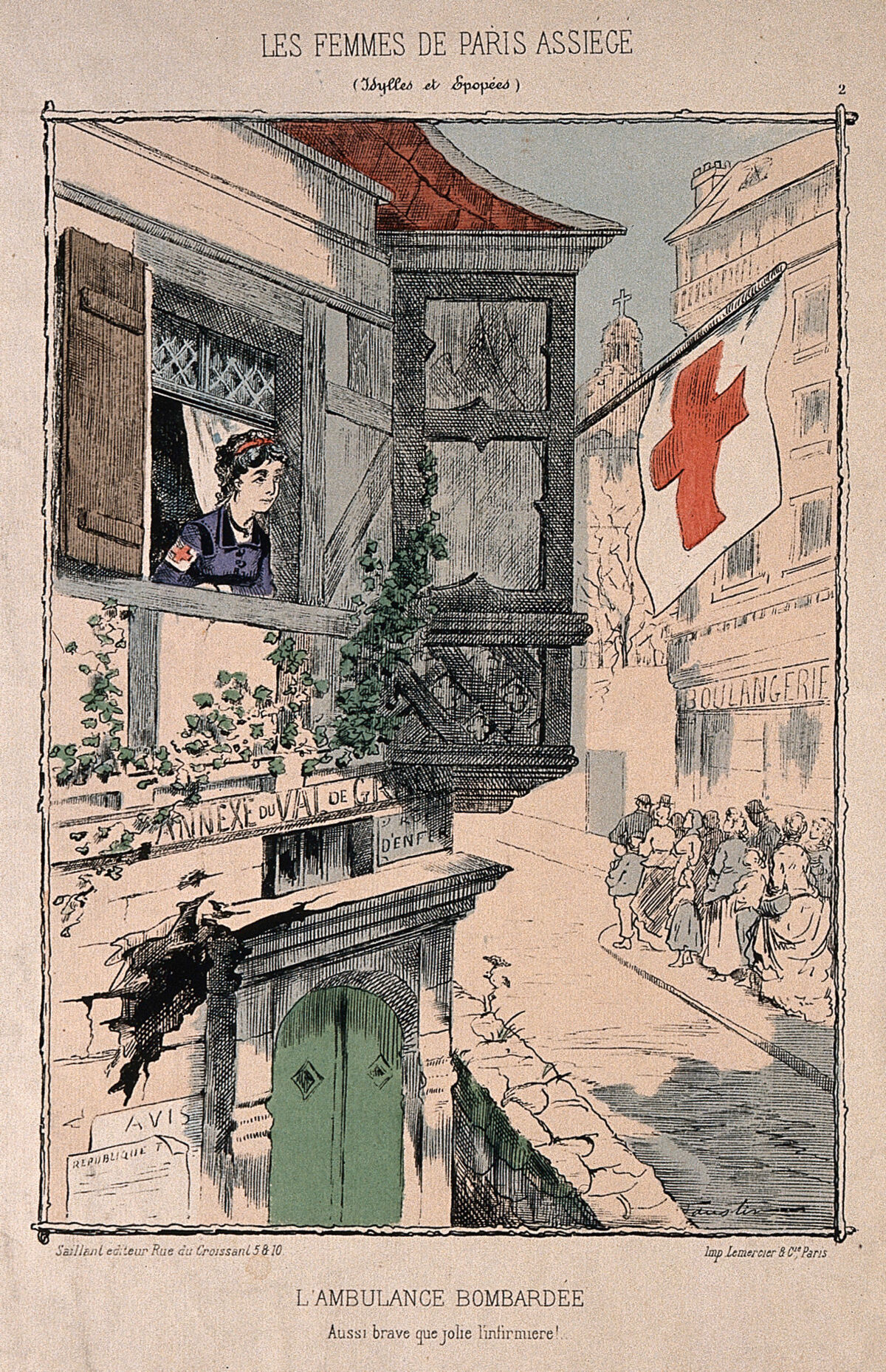
Born In · incoming
Faustin Betbeder
Photographer
Wellcome Collection
Born In · incoming
Jean Renart
Person
Born In · incoming
Michel Auder
Photographer
Born In · incoming
Roland Ansieau
Engraver
Born In · incoming
Sébastien Mamerot
Author
Documentary evidence
Evidence Panel
not yet certified
- Identity
- unresolved
- Independent source families
- 0
- Admitted assertions
- 0
- Open conflicts
- 0
In this article
Key facts
Key facts
• Name — Soissons • Commune Status — Subprefecture • Image Coat Of Arms — Blason ville fr Soissons (Aisne).svg • Arrondissement — Soissons • Canton — Soissons-1 and 2 • Insee — 02722 • Postal Code — 02200 • Mayor — Alain Crémont • Term — 2020–2026 • Intercommunality — GrandSoissons Agglomération • Elevation M — 55 • Elevation Min M — 38 • Elevation Max M — 130 • Area Km2 — 12.32 • Population — population_total • Population Date — population_as_of • Population Footnotes — population_footnotes Soissons is a commune in the northern French department of Aisne, in the region of Hauts-de-France. Located on the river Aisne, about 100 km northeast of Paris, it is one of the most ancient towns of France, and is probably the ancient capital of the Suessiones. Soissons is also the see of an ancient Roman Catholic diocese, whose establishment dates from about 300, and it was the location of a number of church synods called "Council of Soissons".
History
History
Soissons enters written history under its Celtic name, later borrowed into Latin, Noviodunum, meaning "new hillfort", which was the capital of the Suessiones. At Roman contact, it was a town of the Suessiones, mentioned by Julius Caesar (B. G. ii. 12). Caesar (B.C. 57), after leaving the Axona (modern Aisne), entered the territory of the Suessiones, and making one day's long march, reached Noviodunum, which was surrounded by a high wall and a broad ditch. The place surrendered to Caesar. From 457 to 486, under Aegidius and his son Syagrius, Noviodunum was the capital of the Kingdom of Soissons, until it fell to the Frankish king Clovis I in 486 after the Battle of Soissons. Part of the Frankish territory of Neustria, the Soissons region, and the Abbey of Saint-Médard, founded in the sixth century, played an important political part during the rule of the Merovingian dynasty (447–751). After the death of Clovis I in 511, Soissons was made the capital of one of the four kingdoms into which his states were divided. Eventually, the kingdom of Soissons disappeared in 613 when the Frankish lands were amalgamated under Chlothar II. The 744 Council of Soissons met at the instigation of Pepin the Short and Saint Boniface, the Pope's missionary to pagan Germany, secured the condemnation of the Frankish bishop Adalbert and the missionary Clement of Ireland. During the Hundred Years' War, French forces committed a notorious massacre of English archers stationed at the town's garrison, in which many of the French townsfolk were themselves raped and killed. The massacre of French citizens by French soldiers shocked Europe; Henry V of England, noting that the town of Soissons was dedicated to the saints Crispin and Crispinian, claimed to avenge the honour of the saints when he met the French forces at the Battle of Agincourt on Saint Crispin's Day 1415. The town was liberated by French troops under the command of Joan of Arc on 23 July 1429. Between June 1728 and July 1729 it hosted the Congress of Soissons an attempt to resolve a long-standing series of disputes between the Kingdom of Great Britain and Spain which had spilled over into the Anglo-Spanish War of 1727–1729. The Congress was largely successful and led to the signing of the Treaty of Seville between them. In the Franco-Prussian War, the town was sieged by the Prussians for over a month and culminated in French surrender in October 1870. During World War I, the city came under heavy bombardment. There was mutiny after the disastrous Chemin des Dames offensive at the Second Battle of the Aisne. A statue erected with images of French soldiers killed in action in 1917 is behind the St Peter's Church, next to the Soissons Courthouse. • Illustration — Panorama of Soissons in ruins in 1919
Sights
Sights
Today, Soissons is a commercial and manufacturing centre with the 12th-century Soissons Cathedral, the ruins of the Abbey of Saint-Jean-des-Vignes and the crypt of the former Abbey of Saint-Médard as three of its most important historical sites. The nearby Espace Pierres Folles contains a museum, geological trail, and botanical garden.
Landmarks
Landmarks
• Illustration — Panoramic view of the Cathedral • Illustration — The ruins of the Abbey of Saint-Jean-des-Vignes • Soissons Cathedral (Cathédrale Saint-Gervais-et-Saint-Protais de Soissons) is constructed in the style of Gothic architecture. The building of the south transept was begun about 1177, and the lowest courses of the choir in 1182. The choir with its original three-storey elevation and extremely tall clerestory was completed in 1211. This was earlier than Chartres Cathedral, on which the design was supposed to have been based. Work then continued into the nave until the late 13th century. • Abbey of Notre-Dame – The former abbey of Notre Dame, former royal abbey, founded in the Merovingian era, known for its rich treasure of relics, including the "shoe of the Virgin." The abbey had prestigious abbesses, among them Gisèle, sister of Charlemagne, and Catherine de Bourbon, aunt of Henry IV. • Abbey of Saint-Médard – The Abbey of Saint-Médard was a Benedictine monastery of Soissons whose foundation went back to the sixth century. Today, only the crypt remains. • The Hôtel de Ville – Since 1833 the Hôtel de Ville has been accommodated in a building designed by architect Jean-François Advyné and built between 1772 and 1775 at the request of the Intendant Pelletier Mortefontaine on the site of a château belonging to the counts of Soissons. • Arsenal – Exhibition space in the arsenal of the former Abbey of St. Jean des Vignes • Passerelle des Anglais – The "Passerelle des Anglais" (literally: "Footbridge of the English") is a concrete footbridge over the Aisne in the center of the city. The original bridge was destroyed in 1914. It was rebuilt by British soldiers of 9th Field Company Royal Engineers, after which it was known as the "Pont des Anglais" ("Bridge of the English"). Destroyed again during World War II, it was rebuilt in 1950 as a pedestrian bridge. • The covered market – Built in 1908 by architect Albert-Désiré Guilbert (1866–1949)
Personalities
Personalities
• The actress Aurore Clément was born in Soissons in 1945. • The artist Emmanuel Fillion was born in Soissons in 1966. • The rabbinic writer Shemaiah of Sossoines (11th century), one of the prime disciples of Rashi. • The saints Crispin and Crispinian were martyred c. 286 at Soissons for preaching Christianity to the local Gauls. • The 6th century Burgundian king Guntram was born in Soissons around 532. • Jeanne Macherez (1852–1930), heroine during World War I; Mayor of Soissons
Knowledge graph
Makers, houses and production
The people, houses and objects recorded in connection with this place.
Born at
1- Charles-Philippe RonsinAuthor
Established from a fact already recorded on a verified source.
The Encyclopedia exists whether or not anything is for sale. Corrections are recorded rather than overwritten, and every version of this record is kept. Published 26 September 2026.
Elsewhere in General
15,024 published records in this field, each with its sources named.
- Soft-paste porcelainTerminology
- Sogang UniversityOrganisation
- SOGEMOrganisation
- SogndalsfjøraPlace
- Sōka-shiPlace
- SokchoPlace
- SokhumiPlace
- SokilnykyPlace
Best supported in this field
For owners
Own an object connected with Soissons?
A specialist will read what you send and tell you what the house can establish, what it cannot, and whether the object is suited to sale. There is no charge and no obligation. The object stays with you throughout; nothing is shipped to us unless it is arranged in writing beforehand.