
sistrum
Illustration — A egy-Latn-style sistrum A sistrum (plural: sistra; from Latin la, from Greek σεῖστρον grc-Latn of the same meaning; literally "that which is being shaken", from σείειν seiein, "to shake") is a musical instrument of the percussion family, a form of rattle, used most notably by the ancient Egyptians. It consists of a handle and a U-shaped metal frame, made of brass or bronze and ranging from 30 to(-) in width. The frame supports sliding metal cross-bars, which may hold metal rings.
sistrum
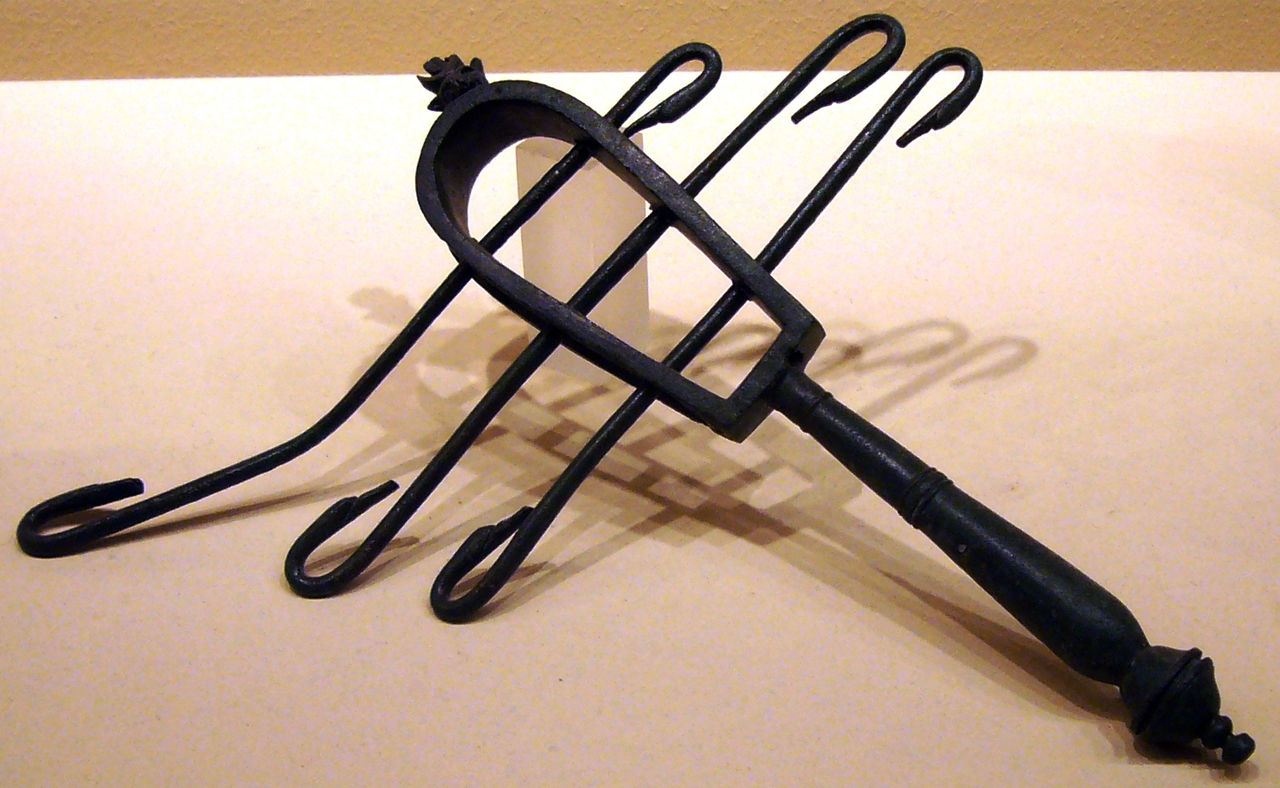
Lalupa · CC BY-SA 3.0
- Field
- stick rattle
- Region
- Ancient Egypt
VALÉORINE Encyclopedia
VALÉORINE documentary reading
Documentary summary
Illustration — A egy-Latn-style sistrum A sistrum (plural: sistra; from Latin la, from Greek σεῖστρον grc-Latn of the same meaning; literally "that which is being shaken", from σείειν seiein, "to shake") is a musical instrument of the percussion family, a form of rattle, used most notably by the ancient Egyptians. It consists of a handle and a U-shaped metal frame, made of brass or bronze and ranging from 30 to(-) in width. The frame supports sliding metal cross-bars, which may hold metal rings.
Admitted source layer · organised and presented by VALÉORINE
Reference Check
Propose documentary evidence for sistrum. A contribution is never written directly as fact: identity, source, rights and evidence gates still decide.
Sign in to contribute
World of VALÉORINE
Documentary connections
Only confirmed graph relationships appear here. Images are shown only when their identity and reuse rights both pass the documentary gate.
Documentary evidence
Documentary basis
Authority files
gnd · 7852082-4 · wikidata · Q426948 · wikipedia · Sistrum
In this article
Egyptian sistrum
Egyptian sistrum
When shaken, the small rings or loops of thin metal on its movable crossbars produce a sound that can vary from a soft clank to a loud jangling. Its name in the ancient Egyptian language was egy-Latn (egy-Latn) or sesheshet (egy-Latn) because of the sound it made when it rattled. The ancient Egyptian sistrum had important associations with religious and ritualistic practices concerning various musical and joyful deities. A egy-Latn is the simpler, hoop-like sistrum, while a sesheshet (an onomatopoeic word) is the naos-shaped one. The English language has adopted the name sistrum to refer to modern-day West African disc-rattle instruments.
• Illustration — A sesheshet-type sistrum, shaped like a naos, Twenty-sixth Dynasty (ca. 580–525 BCE) The sistrum was a sacred instrument in ancient Egypt. Perhaps originating in the worship of the goddess Bat, it was used in dances and religious ceremonies, particularly in the worship of the goddess Hathor, with the U-shape of the sistrum's handle and frame seen as resembling the face and horns of the cow goddess. Another type of sistrum used during the worship of Hathor is naos-shaped: a small temple with an elaboratly adorned handle with the head of Hathor on top of it. The sistrum was exclusively carried by women or musical priestesses for ritualistic practices, except for festivals when the king would use the sistrum in order to present something to Hathor. The sounds made by the percussive instrument along with the rhythm of the music was largely important for calling upon deities, the repetitive sound thought to aid in ritual healing and alter reality. The sistrum was also used outside of religious contexts for other types of music, dancing, and merrymaking until the 18th dynasty, when the use of the sistrum became increasingly more restricted, until it was only used for religious purposes. It also was shaken to avert the flooding of the Nile and to frighten away Set. • Illustration — Ancient Relief of Woman Holding a Sistrum Isis in her role as mother and creator was depicted holding a pail, symbolizing the flooding of the Nile, in one hand and a sistrum in the other. The goddess Bast often is depicted holding a sistrum also, with it symbolizing her role as a goddess of dance, joy, and festivity. Sistra are still used in the Alexandrian Rite and Ethiopic Rite. Besides the depiction in Egyptian art with dancing and expressions of joy, the sistrum was also mentioned in Egyptian literature. The hieroglyph for the sistrum is shown.
Minoan sistrum
Minoan sistrum
• Illustration — Minoan clay sistrum found in Archanes, Crete The ancient Minoans also used the sistrum, and a number of examples made of local clay have been found on the island of Crete. Five of these are displayed at the Archaeological Museum of Agios Nikolaos. A sistrum is also depicted on the Harvester Vase, an artifact found at the site of Hagia Triada. Minoans use of the sistrum perhaps also centered around Hathor in rituals involving fertility, entertainment aspects like music and dancing, as well as indulgence. Sistrums used by ancient Minoans show overlaps with ancient Egyptian usage through their similar use during funerary contexts. Evidence of two bronze Minoan sistra suggests that they were created by separately molding the arch and handle, joining the two together with rivets later in the process. Researchers are not sure yet whether the clay sistra were actual instruments that were used to provide music or instead were models with only symbolic significance. But experiments with a ceramic replica show that a satisfactory clacking sound is produced by such a design in clay, so a use in rituals is probably to be preferred.
Later use
Later use
The senasel (sistrum) and later crotalus remained a liturgical instrument in the Ethiopian Orthodox Church throughout the centuries and is played today during the dance performed by the debtera (cantors) on important church festivals. It is also occasionally found in Neopagan worship and ritual. The sistrum was occasionally revived in 19th century Western orchestral music, appearing most prominently in Act 1 of the opera Les Troyens (1856–1858) by the French composer Hector Berlioz. Nowadays, however, it is replaced by its close modern equivalent, the tambourine. The effect produced by the sistrum in music – when shaken in short, sharp, rhythmic pulses – is to arouse movement and activity. The rhythmical shaking of the sistrum, like the tambourine, is associated with religious or ecstatic events, whether shaken as a sacred rattle in the worship of Hathor of ancient Egypt, or in the strident jangling of the tambourine in modern-day Evangelicalism, in Romani song and dance, on stage at a rock concert, or to heighten a large-scale orchestral tutti. Classical composer Hans Werner Henze (1926–2012) calls for the flautist to play two sistra in his 1988 work Sonate für sechs Spieler (Sonata for six players).
West Africa
West Africa
Various modern West African and Gabon rattle instruments are also called sistra (plural of sistrum): the calabash sistrum, the West Africa sistrum or disc rattle (n'goso m'bara) also called Wasamba or Wassahouba rattle. It typically consists of a V-shaped branch with some or many concave calabash discs attached, which can be decorated.
Gallery
Gallery
• Illustration — Broken Egyptian Sistrum • Illustration — Nefertari, wife of Ramesses II, holding a sekhem-type sistrum • Illustration — Egyptian Sistrum • Illustration — Collection of sistrums at the Louvre • Illustration — Walters Art Museum, ca. 380–250 BCE • Illustration — Seated woman with sistrum on a coin issued under Hadrian • Illustration — Romanized Isis holding a sistrum, also from the time of Hadrian • Illustration — School band player holding two disc rattles (sistra), Ziguinchor, Senegal, 1973 • Illustration — 2300–2000 BC, Anatolia (Turkey), made in copper alloy.
Primary material
Documents and archives
authority file
- Gemeinsame Normdatei 7852082-4, Sistrum.
General reference · Deutsche Nationalbibliothek
reference work
- “Sistrum”, English Wikipedia, consulted as further reading
Reputable secondary · Wikipedia
authority record
- Wikidata, structured authority record Q426948: sistrum
General reference · Wikidata
Cited literature
* * * * *

Sistrum, Tapenu
This file was donated to Wikimedia Commons as part of a project by the Metropolitan Museum of Art. See the Image and Data Resources Open Access Policy
Notes from the source article
Cited by Wikipedia
Notes from the source article
These works are cited by the source article, in its own numbering. They are recorded as its citations, not as sources VALÉORINE has verified.
- 1.Online Latin Dictionary, accessed 6 August 2025
- 2.sistrum. Latinitium.
- 3.L&S sistrum ref
- 4.LSJ sei = stron σεῖστρον , LSJ sei/w σείω ref .
- 5.cite OED2 sistrum
- 6.Tahya. Rediscovering the Sistrum. tahya.com. July 2018.
- 7.Ayad, Mariam F. God's Wife, God's Servant: The God's Wife of Amun (ca.740–525 BC). Routledge. 37. 2 June 2009. 9781134127931.
- 8.Smithsonian National Museum of African Art.
- 9.Byghan, Yowann. Sacred and Mythological Animals: A Worldwide Taxonomy. McFarland. 64. 12 March 2020. 9781476638874.
- 10.harvp Hart 2005 p=65 .
- 11.Duchesne-Guillemin, Marcelle. Music in Ancient Mesopotamia and Egypt. World Archaeology. 12. 3. 289. February 1981. 10.1080/00438243.1981.9979803.
- 12.de Garis Davies, N. An Alabaster Sistrum Dedicated by King Teta. The Journal of Egyptian Archaeology. 6. 2. 70–72. April 1920. 10.2307/3853608.
- 13.harvp Plutarch 1936 loc=cap. 63 .
- 14.harvp Merchant 1992 p=115 .
- 15.harvp Hart 2005 p=47 .
- 16.harvp Borroff 1971 p=9 .
- 17.The Instruction of Amenemope in .
- 18.Borowka, Dawid. The Sistrum and its Mistress. Some thoughts about the usage of sistrum on Crete and its Hathoric associations. Fontes Archaeological Posnanienses. 56. 37–53. 2020.
- 19.Philip P. Betancourt, Costis Davaras, and Eleni Stravopodi, "Excavations in the Hagios Charlambos Cave: A Preliminary Report", Hesperia 77 (2008): 539–605.
- 20.Curl, James Stevens. A Marian Odyssey. Anglicanism.org. 7 March 2023.
- 21.Musée virtuel Canada museevirtuel.ca/edu Calabash Sistra, Gabon
References
Citations
References
Each reference names the institution holding it, so a reader may go to the document itself.
authority file
Gemeinsame Normdatei 7852082-4, Sistrum.Deutsche Nationalbibliothek
Secondary witnessreference work
Secondary witnessauthority record
General reference
The Encyclopedia exists whether or not anything is for sale. Corrections are recorded rather than overwritten, and every version of this record is kept. Published 16 August 2026.
Elsewhere in Collectables
20,755 published records in this field, each with its sources named.
- siren diskTerminology
- Sissy's Magical Ponycorn AdventureWork
- Sister Other ParanoiaWork
- Sister SonicWork
- Sisu AutoOrganisation
- Sit 'n SpinTerminology
- sitarTerminology
- sitarlaTerminology
Best supported in this field
For owners
Own an object connected with sistrum?
A specialist will read what you send and tell you what the house can establish, what it cannot, and whether the object is suited to sale. There is no charge and no obligation. The object stays with you throughout; nothing is shipped to us unless it is arranged in writing beforehand.