
Sigalit Landau
Sigalit Landau (Hebrew: סיגלית לנדאו; born 1969) is an Israeli multidisciplinary artist, whose work include sculptor, video, installation art and photography. Widely regarded as one of Israel's leading contemporary artists, her multidisciplinary practice explores themes of memory, identity, borders, migration, conflict, the human body, gender, ecology, and cultural history. Throughout her career Landau has represented Israel at major international exhibitions, Such as the 54th Venice Biennale (2011), Documenta X (1998) and has participated in major biennials, triennials, and museum exhibitions.
Also recorded as Sigalit Ethel Landau
Sigalit Landau

Photographer: Eldad Karin · Sigalit Landau. Information Center for Israeli Art. Israel Museum. Retrieved on September 1, 2011. · CC BY-SA 3.0
- Born
- 1969.
- Nationality
- Israel.
- Occupation
- sculptor, video artist, performance artist, installation artist, photographer, plastic artist and artist.
- Fields
- social-artistic project.
- Movements
- contemporary art.
- Known for
- DeadSee.
VALÉORINE Encyclopedia
VALÉORINE documentary reading
Documentary summary
Sigalit Landau (Hebrew: סיגלית לנדאו; born 1969) is an Israeli multidisciplinary artist, whose work include sculptor, video, installation art and photography. Widely regarded as one of Israel's leading contemporary artists, her multidisciplinary practice explores themes of memory, identity, borders, migration, conflict, the human body, gender, ecology, and cultural history. Throughout her career Landau has represented Israel at major international exhibitions, Such as the 54th Venice Biennale (2011), Documenta X (1998) and has participated in major biennials, triennials, and museum exhibitions.
Admitted source layer · organised and presented by VALÉORINE
Reference Check
Propose documentary evidence for Sigalit Landau. A contribution is never written directly as fact: identity, source, rights and evidence gates still decide.
Sign in to contribute
Documentary evidence
Documentary basis
Authority files
wikidata · Q2914856 · wikipedia · Sigalit Landau
In this article
Early life and education
Early life and education
Her work has been exhibited at institutions including the Centre Pompidou in Paris, the Museum of Modern Art (MoMA) in New York, the Tel Aviv Museum of Art, the Israel Museum, the Brooklyn Museum, the Jewish Museum in New York, Magasin III in Stockholm, the Martin-Gropius-Bau in Berlin, and MACBA (Barcelona). Landau is known for her long-term artistic engagement with the Dead Sea. Beginning in the early 2000s, she developed a body of work in which everyday objects—including garments, musical instruments, and barbed wire—are submerged in the hypersaline waters of the Dead Sea, where naturally occurring salt crystals gradually transform them into sculptural forms.
Landau was born in Jerusalem in 1969 and spent her childhood in a family that combined scientific, cultural, and artistic interests. Growing up in Israel during periods of political tension and rapid social change profoundly influenced her artistic practice. Many of her works examine borders, displacement, collective memory. The physical and psychological consequences of Vulnerability are themes that have remained central to her art. As a child, Landau spent considerable time around the Dead Sea, whose unique landscape, geological formations, and extreme environmental conditions would later become one of the subjects of her artistic practice. The region's mixture of natural beauty, historical symbolism, ecological fragility, and geopolitical complexity has intrigued her as a recurring source of inspiration. Landau studied at the Bezalel Academy of Arts and Design in Jerusalem between 1990 and 1995, where she specialized in fine art and sculpture. During her studies she began developing an interdisciplinary approach that combined installation, performance, video, and sculpture while exploring the relationship between the human body and political space. While still an emerging artist she received several competitive scholarships, including the Jewish National Fund Sculpture Award (1993), the America–Israel Cultural Foundation Scholarship, and the Mary Fisher Award from the Bezalel Academy (1994), recognizing the originality of her early sculptural practice.
Early career (1993–2000)
Early career (1993–2000)
Landau emerged during the 1990s as one of a new generation of Israeli artists who shifted away from formalistic sculpture toward installation, performance, and multimedia practice. Her early works addressed the relationship between individual experience and broader political realities, frequently employing ordinary found objects transformed through unexpected materials and performative actions. Rather than producing autonomous sculptures, Landau increasingly conceived works as environments in which the body, architecture, landscape, and viewer became interconnected. These installations often examined vulnerability, exile, violence, migration, and cultural identity while drawing upon personal biography, Jewish history, and the social landscape of the Middle East. Her early exhibitions quickly established her reputation within Israel. She participated in major exhibitions including Export Surplus (1994), Transit (1994), Resident Alien (1996), Political Art of the Nineties (1998), Hebrew Work (1998), Tales of the Sand at the Fruitmarket Gallery in Edinburgh (1999), and Angel of History at the Herzliya Museum of Art (2000). During this formative period Landau also began exhibiting internationally, participating in museum exhibitions across Europe and North America. Her installations attracted attention for combining autobiographical narratives with broader questions concerning nomadity, homelessness, and identity. Critics noted her ability to transform familiar objects into psychologically charged symbols while employing performance and video to expand sculpture beyond conventional forms. Recognition came rapidly. In 1998 she received the prestigious Ingeborg Bachmann Scholarship established by Anselm Kiefer through the Wolf Foundation. The following year she was selected as Artist-in-Residence at the Hoffmann Collection in Berlin, exposing her work to influential European curators and collectors. In 2000 she won the highly competitive Artangel/Times Commission in London, a landmark achievement that marked her emergence on the international contemporary art scene.
International recognition (2000–2012)
International recognition (2000–2012)
The first decade of the twenty-first century marked Landau's emergence as one of the most internationally recognized Israeli artists of her generation. During this period she expanded her practice from gallery-based installations to ambitious site-specific projects, large-scale video works, and performances addressing the political, environmental, and cultural realities of the Middle East. Her work was increasingly exhibited in major museums and biennials throughout Europe, North America, and Asia, positioning her within the broader discourse of contemporary international art. Between 2001 and 2005, Landau participated in a succession of international exhibitions, including Installation at the Thread Waxing Space, New York City., Messages to the New Millennium at the Museum of Modern Art in Saitama, Japan, ArtFocus 4 in Jerusalem, Attack! Art and War in the Media Age at the Kunsthalle Wien, Dreaming Art / Dreaming Reality at the Tel Aviv Museum of Art, Wonder Women at FRAC Lorraine in France and Designing Truth at the Lehmbruck Museum in Germany. During the late 2000s Landau's work was featured in several landmark international exhibitions, including Into Me / Out of Me at P.S.1 Contemporary Art Center (now MoMA PS1) in New York and later at the KW Institute for Contemporary Art in Berlin; Global Feminisms at the Brooklyn Museum; Real Time: Art in Israel 1998–2008 at the Israel Museum; elles@centrepompidou at the Centre Pompidou in Paris; Signs of Life at the Kunstmuseum Luzern; and Thrice Upon a Time at Magasin III in Stockholm. These exhibitions established her as one of the leading voices in contemporary installation and video art, particularly in discussions surrounding feminism, conflict, and the politics of the body.
The Dead Sea and the "Salt Works
The Dead Sea and the "Salt Works
Among Landau's most significant artistic achievements is her long-term exploration of the Dead Sea, a project that has occupied a central place in her practice since the early 2000s. Rather than using salt merely as a sculptural material, Landau employs the Dead Sea itself as an active solution in the creative process. The Dead Sea, situated at the lowest terrestrial point on Earth and shared by Israel, Jordan, and the Palestinian territories, functions simultaneously as a natural landscape, historical site, ecological system, and geopolitical border. For Landau it represents both a deeply personal landscape associated with childhood memories and a symbolic space embodying cultural division, environmental fragility, and transformation. Her process involves submerging carefully selected objects including shoes, fishing nets and everyday domestic items in the hypersaline waters of the Dead Sea. Over periods ranging from several weeks to several months, naturally forming salt crystals gradually envelop the objects, transforming them into luminous white sculptural forms. Because each crystallization process depends upon changing environmental conditions, no two works develop identically. Landau has described these works as collaborations with nature rather than acts of artistic execution. The resulting sculptures preserve traces of their former function while becoming geological objects that evoke archaeology, memory, ritual, preservation, and loss. Art historians have frequently interpreted the Salt Works as meditations on transformation, resilience, and the capacity of nature to simultaneously preserve and erase human history. The Salt Works have become among the most widely recognized bodies of work produced by any contemporary Israeli artist and have been exhibited internationally in museums and galleries throughout Europe, North America, and Asia. Publications such as Sigalit Landau (Hatje Cantz, 2008), One Man's Floor is Another Man's Feelings (2011) and Salt Years (2019) have documented the project's artistic and conceptual development.
Performance, video and the body
Performance, video and the body
Alongside her sculptural practice, Landau has consistently employed performance and video as primary artistic media. Her works frequently place the artist's own body within physically demanding or psychologically charged environments, using repetitive actions to explore vulnerability, endurance, political violence, borders, and the relationship between the individual and collective history. Among her best-known video works is DeadSee (2005), in which hundreds of watermelons joined together in a spiral float across the surface of the Dead Sea while the artist slowly moves within the formation. The work has become one of the most widely disseminated works of contemporary Israeli video art and has been interpreted as an allegory of fragmentation, survival, ecological precarity, and coexistence. Another well-known video work, Barbed Hula (1999), also centers on the artist's naked body, depicting her swiveling a hula hoop made of barbed wire on the Tel Aviv-Yafo coastline. With each rotation around her waist, the wire repeatedly threatens to cut into her skin.
The 54th Venice Biennale
The 54th Venice Biennale
In 2011 Landau represented Israel at the 54th Venice Biennale, one of the highest distinctions accorded to an Israeli contemporary artist. Her exhibition, One Man's Floor is Another Man's Feelings, presented an installation integrating sculpture, video, sound, and architectural intervention. The exhibition explored themes that had occupied Landau throughout her career: borders, salt, memory, labour, conflict, and the fragile relationship between individuals and landscapes shaped by political history. Rather than presenting discrete artworks, the Israeli Pavilion functioned as a unified experiential environment in which visitors encountered interconnected installations examining the emotional and physical consequences of territorial division. The exhibition received substantial international critical attention and significantly enhanced Landau's global reputation. It confirmed her position among the leading figures of contemporary installation art while reinforcing the Dead Sea as one of the defining conceptual landscapes of her artistic practice. During the same period Landau participated in major international exhibitions including the Yokohama Triennale, the Busan Biennale, the Incheon Women Artists Biennale, the Martin-Gropius-Bau in Berlin, MOCAK in Kraków, the Bass Museum of Art in Miami and the Musée d'Art Contemporain de Rochechouart.
Permanent collections
Landau's works are held in numerous public and private collections internationally, reflecting her prominence within contemporary art. Her installations, sculptures, photographs and video works have been acquired by leading museums in Europe, North America and Israel. Among the institutions holding works by Landau are the Museum of Modern Art, Centre Pompidou, Hirshhorn Museum and Sculpture Garden, Barcelona Museum of Contemporary Art (MACBA), Jewish Museum, Magasin III Museum for Contemporary Art, Israel Museum, and the Tel Aviv Museum of Art. Her work is also represented in the collections of the German Bundestag Art Collection and the Museum of Contemporary Art in Kraków (MOCAK). In addition to public museums, Landau's work has entered several private collections, including the Pomeranz Collection and the Julia Stoschek collection and The Rubell Family Collection as well as other internationally recognized collections of contemporary art. The broad institutional representation of her work reflects her sustained international reputation and the critical significance of her multidisciplinary practice.
Awards and recognition
1993 Jewish National Fund Sculpture Award 1994 America-Israel Cultural Fund 1994 Mary Fisher Prize, Bezalel Academy of Arts and Design, Jerusalem 1996 Ineborg Bachman Scholarship 1998 Artist in Residence at the Hoffmann Collection, Berlin, Germany 1999 First Prize in the British Competition by ArtAngel and London newspaper "The Times" 2001 Acquisition Prize, Tel Aviv Museum of Art, Tel Aviv 2001 Prize for a Young Artist, Israeli Ministry of Science, Culture and Sport 2003 America-Israel Cultural Foundation Janet and George Jaffin Scholarship Prize 2003 Residency, IASPIS – The International Artists Studio Program, Stockholm 2004 Nathan Gottesdiener Foundation, The Israeli Art Prize, Tel Aviv Museum of Art, Tel Aviv 2004 Beatrice S. Kolliner Award for Young Israeli Artist, Israel Museum, Jerusalem 2007 The Dan Sandel and the Sandel Family Foundation Sculpture Award, Tel Aviv Museum of Art 2012 'Artis' Grant Recipient 2016 The Sandberg Prize for Israeli Art, Israel Museum, Jerusalem 2017 Honorary Doctoral Degree, Ben-Gurion University of the Negev, Beersheba 2022 – Honorary Doctorate, The Hebrew University of Jerusalem 2023 – Honorary Doctorate, Bar-Ilan University 2025 – Richard & Ellen Sandor Israeli Arts & Culture Prize
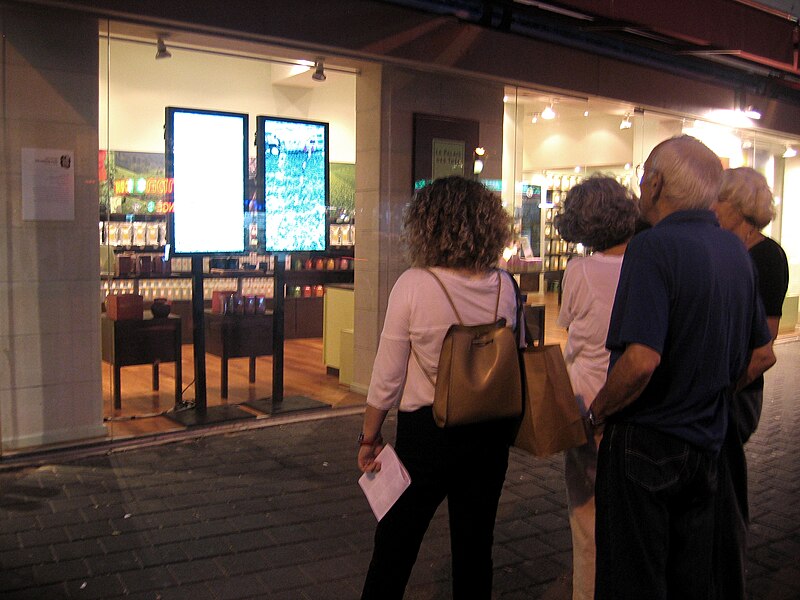
אוהבים אמנות עושים אמנות: Working Title WM I+II uhstu nt, וידאו מאת סיגלית לנדאו בחנות ברחוב גורדון פינת דיזינגוף.
Talmoryair

Sigalit Landau at The Lola Beer Ebner Sculpture Garden
Talmoryair
Notes from the source article
Cited by Wikipedia
Notes from the source article
These works are cited by the source article, in its own numbering. They are recorded as its citations, not as sources VALÉORINE has verified.
- 1.designboom, juliana neira I. salt years by sigalit landau at the museum der moderne salzburg. designboom architecture & design magazine. 8 July 2019.
- 2.Not much lives in the Dead Sea -- but this artist's work comes out of it. PBS NewsHour. 28 December 2018.
- 3.Nations, United. Responsibility for Memory: The Role of Art in Holocaust Remembrance الأمم المتحدة. United Nations.
- 4.Jungerius, Mechteld. Sigalit Landau: Crossing Borders. TLmagazine. 2020-07-29.
- 5.Christie's. Behind 'Barbed Hula': An Interview with Sigalit Landau. Artsy. 2013-09-30.
- 6.Between Israel and Palestine: Archives of Exiles and Localities of Decay. Arts Help. 2022-05-08.
- 7.Sadeh, Nava Sevilla. The Arena of Thanatos: Psuché , Soma , and Sigalit Landau's body representation—a comparative study. Journal of Aesthetics & Culture. 7. 1. 2015-01-01. 2000-4214.
- 8.Sigalit Landau — À propos. Slash Paris.
- 9.A dialogue with the Dead Sea. Arterritory.com.
- 10.Sierzputowski, Kate. 'Salt Years,' Explores Sigalit Landau's Lifetime Relationship With the Dead Sea. Colossal. 2017-12-14.
- 11.on, Enrico. Sigalit Landau, Pavilion of Israel, Venice Art Biennale 2011 VernissageTV Art TV.
- 12.Sigalit Landau: Salt Years - Announcements. e-flux.
- 13.'O My Friends, There Are No Friends'. Sculpture in the City.
- 14.Projects 87: Sigalit Landau MoMA. The Museum of Modern Art.
- 15.Sigalit Landau. museum.imj.org.il.
- 16.Sigalit Landau: The Burning Sea The Israel Museum, Jerusalem. www.imj.org.il.
- 17.Sigalit Landau: Salt Years - Announcements. e-flux.
- 18.Reinventing Ritual: Contemporary Art and Design for Jewish Life. The Jewish Museum.
- 19.Sigalit Landau. Magasin III.
- 20.Crystallising Memories: Poverty Jewels of the Dead Sea Sigalit Landau – Planted.
- 21.Biography.
- 22.Sigalit Landau bio
- 23.Sigalit Landau. Aicf.
- 24.Sigalit Landau: An Artist with Elemental Fixations. THE DESERT and the CITIES SING. 13 June 2016.
- 25.Sierzputowski, Kate. 'Salt Years,' Explores Sigalit Landau's Lifetime Relationship With the Dead Sea. Colossal. 14 December 2017.
- 26.Levine, Angela. Sigalit Landau: Surviving in a Hostile Environment. Sculpture. 1 January 2009.
- 27.Levine, Angela. Sigalit Landau: Surviving in a Hostile Environment. Sculpture. 1 January 2009.
- 28.Sigalit Landau Resident Alien (detail). museum.imj.org.il.
- 29.Tales of the Sands: Contemporary Israeli Art. Fruitmarket.
- 30.Ariella Aïsha Azoulay. cargocollective.com.
- 31.Sigalit Landau. Wolf Foundation. 18 December 2019.
- 32.Cabri prints .com - Landau Sigalit. www.cabriprints.com.
- 33.Sigalit Landau. Alon Segev.
- 34.This is what happens when you leave a dress in the Dead Sea - The Express Tribune. The Express Tribune. 27 August 2016.
- 35.Sierzputowski, Kate. 'Salt Years,' Explores Sigalit Landau's Lifetime Relationship With the Dead Sea. Colossal. 14 December 2017.
- 36.Smith, Roberta. ART IN REVIEW; Sigalit Landau. The New York Times. 1 June 2001.
- 37.Israeli art-today: messages to the new millennium. telavivmuseum-primo.hosted.exlibrisgroup.com.
- 38.Sigalit Landau: Caryatid. The Negev Museum of Art.
- 39.Challenging our vision through art The Jerusalem Post. The Jerusalem Post JPost.com. 1 September 2012.
- 40.Sigalit Landau — Soil Nursing — Mennour Gallery — Exhibition. Slash Paris.
- 41.Sigalit Landau Stilrichtungen. Kunstmarkt.
- 42.Sigalit Landau: 'When I Go,' an Installation Born in the Waters of the Dead Sea, Premieres in Osaka Ministry of Foreign Affairs. embassies.gov.il.
- 43.Into Me / Out Of Me - Exhibitions - KW Institute for Contemporary Art. www.kw-berlin.de.
- 44.May 2007, WM issue #3: Global Feminisms at the Brooklyn Museum. Whitehot Magazine of Contemporary Art.
- 45.Bronner, Ethan. Art in real time, a synthesis into modernity in Israel. The New York Times. 20 May 2008.
- 46.Tariq, Syma. Stealing the show. The Guardian. 9 July 2009.
- 47.photo-eye Bookstore Signs of Life by Kunstmuseum Luzern photobook. aws.photoeye.com.
- 48.Thrice upon a time. Magasin III.
- 49.Sierzputowski, Kate. 'Salt Years,' Explores Sigalit Landau's Lifetime Relationship With the Dead Sea. Colossal. 2017-12-14.
- 50.Sigalit Landau, Yudith Levin 'Second part' Dvir Gallery Galleries Frieze. www.frieze.com.
- 51.Horn, Gabriele. Sigalit Landau. Hatje Cantz Verlag. 2008. 978-3-7757-2104-2.
- 52.One Man's Floor Is Another Man's Feelings SCAD Museum of Art. www.scadmoa.org.
- 53.Israeli Artist Breathes Life Into the Dead Sea by Sculpting With Its Salt. Haaretz. 5 September 2018.
- 54.Israelische Künstlerin in Salzburg - Salt Years. Deutschlandfunk. 11 July 2019.
- 55.Judah, Hettie. An Artist's Salt Crystal Gown, Created Deep Under the Dead Sea. The New York Times. 27 July 2016.
- 56.Steinberg, Jessica. Salt-encrusted art from the Dead Sea lands at the Israel Museum. The Times of Israel. 2022-10-28. 0040-7909.
- 57.Sigalit Landau: DeadSee. Wellesley College.
- 58.A Show of Over 100 Women Artists Offers Redress but No Resolution. Hyperallergic. 2016-01-18.
- 59.Sigalit Landau, "One Man's Floor is Another Man's Feelings" – Israeli Pavilion @ The 54th International Art Exhibition of the Venice Biennale Modernism. Modernism.
- 60.Cumming, Laura. The 54th Venice biennale – review. The Guardian. 4 June 2011.
- 61.Sigalit Landau to Show Her Work at the Israeli Pavilion at the 54th Venice Biennale. artdaily.com.
- 62.Sigalit Landau. Day Done. 2007 MoMA. The Museum of Modern Art.
- 63.Joseph, Anne. Exhibit in London explores hybrid Israeli culture. The Times of Israel. 23 October 2014.
- 64.Sigalit Landau, "DeadSee," 2005 - Hirshhorn Museum and Sculpture Garden Smithsonian. Hirshhorn Museum and Sculpture Garden Smithsonian.
- 65.Nir 2014. MACBA Museu d'Art Contemporani de Barcelona.
- 66.Reinventing Ritual: Contemporary Art and Design for Jewish Life. The Jewish Museum.
- 67.The Salt Route Bridge – a discussion between Claudia Roth and Sigalit Landau - MOCAK. en.mocak.pl.
- 68.SIGALIT LANDAU POMERANZ COLLECTION. pomeranz-collection.com.
- 69.Sigalit Landau at Dvir Gallery. Art Viewer. 2022-04-07.
- 70.Sigalit Landau. www.rubellmuseum.org.
- 71.Sigalit Landau. Salzkammergut 2024.
- 72.Something went wrong. en.huji.ac.il.
- 73.Honorary Doctorate Conferment Ceremony, 2023 Bar Ilan University. www.biu.ac.il.
- 74.The Inaugural Richard and Ellen Sandor Israeli Arts . Scene Sarasota.
References
Citations
References
Each reference names the institution holding it, so a reader may go to the document itself.
reference work
Secondary witnessreference work
Secondary witness
The Encyclopedia exists whether or not anything is for sale. Corrections are recorded rather than overwritten, and every version of this record is kept. Published 14 August 2026.
Elsewhere in Photography
11,392 published records in this field, each with its sources named.
- Siegfried EnkelmannPhotographer
- Siegfried HansenPhotographer
- Siegfried LauterwasserPhotographer
- Siegmund LabischPhotographer
- Sigfrid Persson-MoenPhotographer
- Sigfús EymundssonPhotographer
- Sigmar BergPhotographer
- Signe BranderPhotographer
Best supported in this field
For owners
Own a work by Sigalit Landau?
A specialist will read what you send and tell you what the house can establish, what it cannot, and whether the object is suited to sale. There is no charge and no obligation. The object stays with you throughout; nothing is shipped to us unless it is arranged in writing beforehand.