
Sarı Süleyman Pasha
Sarı Süleyman Pasha (Sarı Süleyman Paşa; Sari Sulejman-paša; died 14 October 1687) was the grand vizier of the Ottoman Empire from 18 November 1685 to 18 September 1687. He was executed after the defeat of the Ottoman forces in the Second Battle of Mohács. In Turkish, his epithet sarı means "blond (haired)", literally "yellow".
Also recorded as Sari Sulejman-paša · Sarı Süleyman Paşa
Sarı Süleyman Pasha
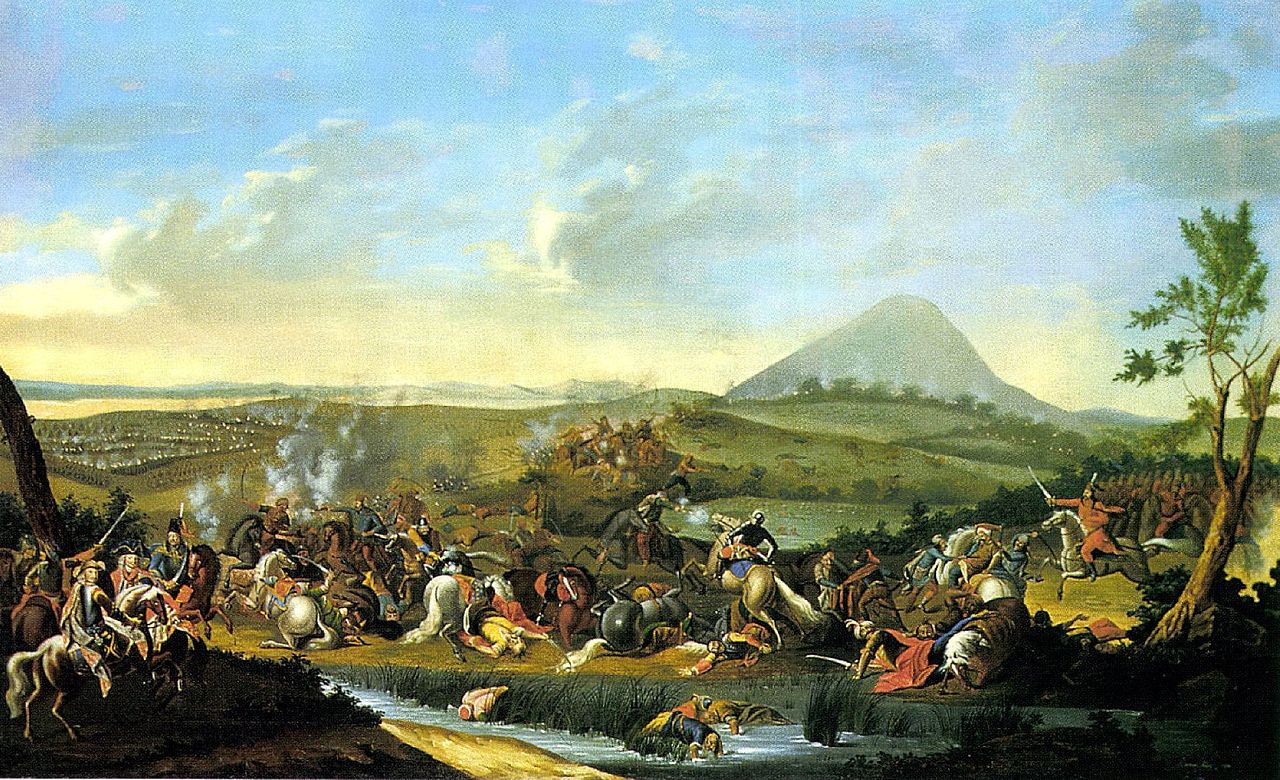
József Borsos · Mikó Árpád – Sinkó Katalin (szerk): Történelem-Kép, Szemelvények múlt és művészet kapcsolatáról Magyarországon, A Magyar Nemzeti Galéria kiadványai 2000/3, cat. no.: IX-9. (Magyar Digitális Múzeumi K · Public domain
- Name
- Süleyman
- Born
- 1627
- Birthplace
- Taşlıca, Bosnia Eyalet, Ottoman Empire
- Died
- 14 October 1687
- Place of death
- Constantinople, Ottoman Empire
- Nationality
- Ottoman Empire
- Occupation
- politician · writer
- Languages
- Ottoman Turkish · Turkish · Arabic
VALÉORINE Encyclopedia
VALÉORINE documentary reading
Documentary summary
Sarı Süleyman Pasha (Sarı Süleyman Paşa; Sari Sulejman-paša; died 14 October 1687) was the grand vizier of the Ottoman Empire from 18 November 1685 to 18 September 1687. He was executed after the defeat of the Ottoman forces in the Second Battle of Mohács. In Turkish, his epithet sarı means "blond (haired)", literally "yellow".
Admitted source layer · organised and presented by VALÉORINE
Note VALÉORINE
Sarı Süleyman Pasha (1627–1687) was an Ottoman politician and writer. Born in Prijepolje, the politician died in Istanbul. Sarı Süleyman Pasha held the position of grand vizier of the Ottoman Empire. Languages used include Arabic, Ottoman Turkish and Turkish.
Composed from admitted, traceable facts · 26 September 2026
VALÉORINE
Reference Check
Propose documentary evidence for Sarı Süleyman Pasha. A contribution is never written directly as fact: identity, source, rights and evidence gates still decide.
Sign in to contribute
World of VALÉORINE
Documentary connections
Only confirmed graph relationships appear here. Images are shown only when their identity and reuse rights both pass the documentary gate.
Documentary evidence
Documentary basis
Authority files
wikidata · Q2062010 · wikipedia · Sarı Süleyman Pasha
In this article
Key facts
Key facts
• Honorific Prefix — Sarı • Name — Süleyman • Honorific Suffix — Pasha • Office1 — Grand Vizier of the Ottoman Empire • Monarch1 — Mehmed IV • Term Start1 — 18 November 1685 • Term End1 — 18 September 1687 • Predecessor1 — Bayburtlu Kara Ibrahim Pasha • Successor1 — Abaza Siyavuş Pasha • Born — 1627 • Birthplace — Taşlıca, Bosnia Eyalet, Ottoman Empire • Died — 14 October 1687 • Place of death — Constantinople, Ottoman Empire • Allegiance — Ottoman Empire • Branch — Ottoman Army • Rank — Commander-in-Chief • Battles — Great Turkish War • Battle of Buda (1686) • Battle of Mohács (1687) • Illustration — The Ottoman Army after suffering a devastating defeat during the Second Battle of Mohács.
Early life
Early life
He was of Bosnian descent. Sarı Süleyman Pasha was born in Taşlıca (Pljevlja, now Montenegro), in the Bosnia Eyalet. He was the kdhya of Grand Vizier Ahmed Köprülü (s. 1661–1676), and later the Sultan's master of the horse.
Grand Vizier of the Ottoman Empire
Grand Vizier of the Ottoman Empire
After Sarı Süleyman Pasha was appointed grand vizier, he immediately began to write desperate letters to the Great Khan of the Crimean Khanate and the pashas of Timișoara, Székesfehérvár and Osijek in order to reorganize and reinforce the battered Ottoman Army in Hungary, struggling during the Battle of Buda (1686). Although Sarı Süleyman Pasha made several attempts to break the blockade around Buda, the city was ultimately captured by Charles V, Duke of Lorraine. Soon afterwards the Ottomans had even lost Székesfehérvár. Süleyman Pasha thereafter commanded his forces to hold what remained of the Ottoman north against their opponents and even sent Mehmet Agha to negotiate peace with Donat John Heissler at Guttentag. After the defeat at Mohács, the Ottoman army started a rebellion against the grand vizier. Suleyman Pasha, fearful that the rebellion would result in his death, escaped from the commanding position, first to Belgrade and then, rather foolishly, to Constantinople, where he took refuge at the house of an old friend, a Jew named Salomon. At the beginning of September 1687, news about his defeat and escape came to Constantinople. After Mehmed IV received this news, he proclaimed Abaza Siyavuş Pasha as the new commander of the armed forces, and, eventually, as the new grand vizier. Soon after this, Süleyman Pasha was apprehended and executed. Two months later, the sultan himself was also removed from power as the result of the defeat in the Battle of Mohács, and was replaced by sultan Süleyman II.
Life and career
Dated record
Life and career
The full dated record · 2 entries
1627
Sarı Süleyman Pasha born at Prijepolje.
1687
Sarı Süleyman Pasha died at Istanbul.
Places
Named by the record
Places
Only places the record itself states, plotted where the house gazetteer settles their coordinates. Nothing is inferred from a name or a nationality.
Prijepolje.
Birth place
Istanbul.
Death place
Notes from the source article
Cited by Wikipedia
Notes from the source article
These works are cited by the source article, in its own numbering. They are recorded as its citations, not as sources VALÉORINE has verified.
- 1.İsmail Hâmi Danişmend, Osmanlı Devlet Erkânı, Türkiye Yayınevi, İstanbul, 1971 (Turkish)
- 2.Uzunçarşılı, İsmail Hakkı, (1954) Osmanlı Tarihi III. Cilt, 2. Kısım, XVI. Yüzyıl Ortalarından XVII. Yüzyıl Sonuna kadar), Ankara: Türk Tarih Kurumu (Altıncı Baskı 2011 ) say.425-426
- 3.* Aslan, Adnan "Süleyman Paşa (Sarı)", (1999), Yaşamları ve Yapıtlarıyla Osmanlılar Ansiklopedisi, İstanbul:Yapı Kredi Kültür Sanat Yayıncılık A.Ş. C.2 s.568 ISBN 975-08-0072-9
- 4.Mehmed Süreyya (haz. Nuri Akbayar) (1996), Sicill-i Osmani, İstanbul:Tarih Vakfı Yurt Yayınları ISBN 975-333-0383 C.III s.69 https://archive.org/details/sicılliosmani01sruoft
- 5.Opštinska zajednica obrazovanja. Simpozijum seoski dani Sretena Vukosavljevića. 156. 1978.
- 6.Uzunçarşılı 1954, p. 424
- 7.Państwowe Wydawn. Naukowe. Studia Austro-Polonica. 319. 1983. 978-83-01-04887-7.
Bibliography printed in the source article · 1
References
Citations
References
Each reference names the institution holding it, so a reader may go to the document itself.
reference work
Secondary witnessreference work
Secondary witness
Further particulars
Held on the record
Further particulars
Open the remaining particulars
The authorities additionally record the headings Sari Sulejman-paša and Sarı Süleyman Paşa. His recorded languages were Ottoman Turkish, Turkish, Arabic and Serbo-Croatian. His recorded confession was Islam.
Identity and origins
The Encyclopedia exists whether or not anything is for sale. Corrections are recorded rather than overwritten, and every version of this record is kept. Published 15 August 2026.
Elsewhere in Books
39,529 published records in this field, each with its sources named.
- Sardana OyunskayaAuthor
- Sardar AnjumAuthor
- Sardar PanchhiAuthor
- Sargon BoulusAuthor
- Sarmad KashaniAuthor
- Sarmad SehbaiAuthor
- SarmenAuthor
- Saroj Kumari GauriharAuthor
Best supported in this field
For owners
Own a work by Sarı Süleyman Pasha?
A specialist will read what you send and tell you what the house can establish, what it cannot, and whether the object is suited to sale. There is no charge and no obligation. The object stays with you throughout; nothing is shipped to us unless it is arranged in writing beforehand.