
Robert William Sievier
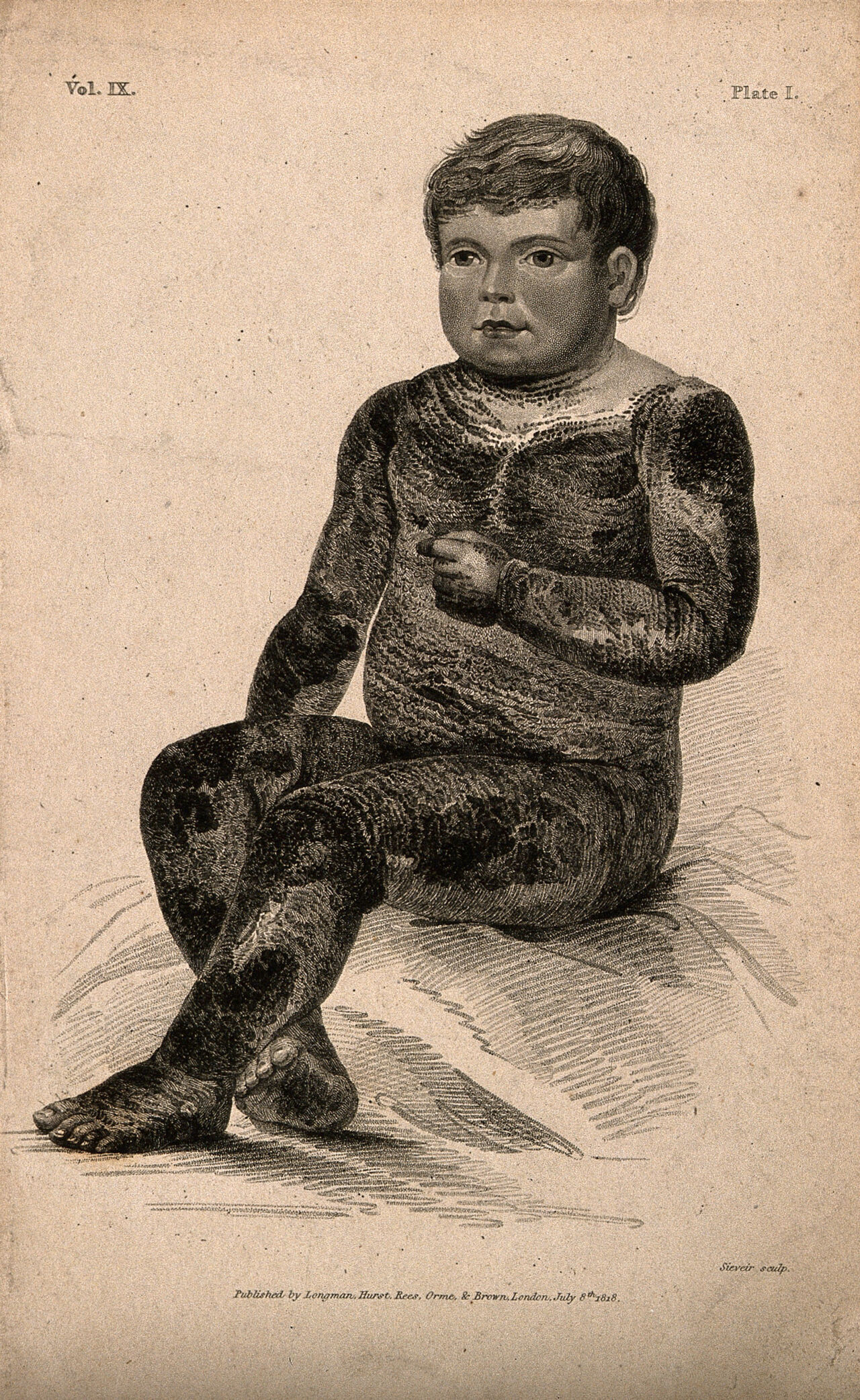
Robert William Sievier FRS (24 July 1794 – 28 April 1865) was a British engraver, sculptor and later inventor of the 19th century.
Also recorded as Robert Sievier
Robert William Sievier
Robert William Sievier · Wellcome Collection, London · Wellcome Collection · Public Domain Mark
- Born
- 1794 · London.
- Nationality
- Kingdom of Great Britain
- Occupation
- sculptor · printmaker · inventor
- Honours
- Fellow of the Royal Society
- Languages
- English
VALÉORINE Encyclopedia
VALÉORINE documentary reading
Documentary summary
Robert William Sievier FRS (24 July 1794 – 28 April 1865) was a British engraver, sculptor and later inventor of the 19th century.
Admitted source layer · organised and presented by VALÉORINE
Note VALÉORINE
Robert William Sievier (1794–1865) was a British inventor, printmaker and sculptor. The inventor was born and died in London. Robert William Sievier was a member of Royal Society.
Languages used include English. Works by the inventor are held at National Gallery and National Library of Wales. Robert William Sievier received Fellow of the Royal Society.
Composed from admitted, traceable facts · 26 September 2026
VALÉORINE
Reference Check
Propose documentary evidence for Robert William Sievier. A contribution is never written directly as fact: identity, source, rights and evidence gates still decide.
Sign in to contribute
World of VALÉORINE
Documentary connections
Only confirmed graph relationships appear here. Images are shown only when their identity and reuse rights both pass the documentary gate.
Documentary evidence
Documentary basis
Authority files
wikidata · Q15462164 · wikipedia · Robert William Sievier
In this article
Engraver and sculptor
Engraver and sculptor
Sievier showed an early talent for drawing, and studied under John Young and Edward Scriven, before attending the Royal Academy Schools from 1818. His speciality was portrait engravings, though he also did other works, including subjects from William Etty (whose portrait he also engraved). By 1823, however, he had abandoned engraving for sculpture. His sculpture portrait subjects included Prince Albert of Saxe-Coburg and Gotha and Sir Thomas Lawrence (the latter work now in the Sir John Soane's Museum). His students included William F Woodington and Musgrave Watson. Sievier exhibited at the Royal Academy from 1822 until 1844, and his output there included several busts, figure subjects, gravestones and monuments. His first studio was in London's Southampton Row; in 1837, he relocated to Henrietta Street, near Cavendish Square, and he had a separate residence in Upper Holloway. His neighbour James Paget, a surgeon with a practice near Cavendish Square, wrote derisively of physician J. R. Hancorn's son: "Idle, dissipated, drinking,—associate of Sievier. Had to resign the House Surgeoncy; practised a few months with his father in Shoreditch; & died in 1860." • Illustration — Sievier's plaster model for his statue of William Harcourt, 3rd Earl Harcourt
Other works
Other works
• statue of Charles Dibdin, at Greenwich • statue of Field Marshal William Harcourt, 3rd Earl Harcourt (St Andrew's, Clewer, and St George's Chapel at Windsor Castle) • a bust of Sir John Silvester in the Old Bailey • a bust/monument to Sir George Paul (1746–1820), prison reformer and county administrator – in the south aisle of Gloucester Cathedral • Portrait bust of Judge Robert Dallas (1756–1824) – produced in 1822 • a pediment decorated with urns and a sculpture of Flora in Coade stone, along the Central Avenue of Covent Garden Market Hall • Statuette of Captain Thomas Coram, Foundling Hospital, London • figure of Edward Jenner (d. 1823), discoverer of smallpox vaccination, set on a pedestal beside the west door of Gloucester Cathedral. • chimney pieces at Chatsworth House, Derbyshire (executed with Richard Westmacott (the younger), c.1840) • a monument to himself in Kensal Green Cemetery (Sievier had been a member of the Cemetery's board). • monument to the memory of the late Mrs. Palmer of Ham Common at West Molesey. In 1837 he came third in the competition to design a monument to Nelson in Trafalgar Square, with a proposal devised jointly with the architect Charles Fowler.
Inventor
Inventor
In 1836, Sievier patented a process for rubberising fabrics and formed a 'patent' company (the London Caoutchouc Company – caoutchouc being the original name for India rubber). The company became large-scale manufacturers of elastic driving bands for machinery, rope for mines, waterproof cloths and garments, and waterproof canvas, as well the first rubber-insulated wire. His interests in manufacturing took over from the early 1840s onwards. Sievier's factory was situated close to his home, the Old Manor House, in Upper Holloway, at the south corner of Red Cap Lane (later Elthorne Road). Sievier also carried out experiments in electrical telegraphy there. The house was demolished in 1897. In Mar 1841 he was elected a Fellow of the Royal Society. He died in Kentish Town, London and is buried in London's Kensal Green Cemetery.
Notes from the source article
Cited by Wikipedia
Notes from the source article
These works are cited by the source article, in its own numbering. They are recorded as its citations, not as sources VALÉORINE has verified.
- 1.O'Donoghue, Freeman Marius. 52. 244.
- 2.Sievier, Robert William (1794-1865).
- 3.Bust of Sir Thomas Lawrence
- 4.Paget, James. The entry-book. The Lancet. 366. 9484. 510. August 2005.
- 5.A History of Clewer
- 6.Courtauld Institute. Bust of John Silvester.
- 7.Oxford University Press for the Institute of Historical Research. A History of the County of Gloucester. 4: The City of Gloucester. 275–88. 1988.
- 8.cgareatrust.
- 9.A&A |Search Results
- 10.http://www.conserve-europe.org/artlibrary_uz.html
- 11.Suffolk-Street Gallery. La Belle Assemblée. 3-4. 10 May 1834.
- 12.Mace, Rodney. Trafalgar Square:Emblem of Empire. Lawrence & Wishart. 62. 1975.
- 13.History of the Atlantic Cable & Submarine Telegraphy – Distant Writing by Steven Roberts
- 14.Oxford University Press for the Institute of Historical Research. A History of the County of Middlesex. 8: Islington and Stoke Newington parishes. 29–37. 1985.
- 15.Sievier's Record. Royal Society.
- 16.Friends of Kensal Green Cemetery. Paths of Glory. 89. 1997.
References
Citations
References
Each reference names the institution holding it, so a reader may go to the document itself.
reference work
Secondary witnessreference work
Secondary witness
The Encyclopedia exists whether or not anything is for sale. Corrections are recorded rather than overwritten, and every version of this record is kept. Published 17 August 2026.
Elsewhere in Prints
4,138 published records in this field, each with its sources named.
- Robert van VoerstEngraver
- Robert VaughanEngraver
- Robert WestEngraver
- Robert WhiteEngraver
- Robert William WallisEngraver
- Roberto MattaEngraver
- Robin WhiteEngraver
- Robyn DennyEngraver
Best supported in this field
For owners
Own a work by Robert William Sievier?
A specialist will read what you send and tell you what the house can establish, what it cannot, and whether the object is suited to sale. There is no charge and no obligation. The object stays with you throughout; nothing is shipped to us unless it is arranged in writing beforehand.