
Robert Walser
Robert Walser (15 April 1878 – 25 December 1956) was a German language Swiss writer noted for writing four novels (one published posthumously) and a large number of feuilletons, short stories, and causeries. His unconventional, sometimes enigmatic works were appreciated by contemporaries such as Walter Benjamin, Hermann Hesse, Franz Kafka, Robert Musil and Kurt Tucholsky. He additionally worked as a copyist, an inventor's assistant, a butler, and in various other low-paying trades.
Also recorded as Robert Otto Walser
Robert Walser

Blogspot Losarciniegas · Public domain
- Name
- Robert Walser
- Born
- 15 April 1878
- Birthplace
- Biel/Bienne, Switzerland
- Died
- 25 December 1956
- Place of death
- near Herisau, Switzerland
- Occupation
- Writer
- Movement
- Modernism
- Nationality
- Switzerland
- Known for
- Der Räuber · Geschwister Tanner · The Assistant (Walser novel) · Jakob von Gunten · La passeggiata (Walser)
- Languages
- Swiss Standard German · Swiss German · German
VALÉORINE Encyclopedia
VALÉORINE documentary reading
Documentary summary
Robert Walser (15 April 1878 – 25 December 1956) was a German language Swiss writer noted for writing four novels (one published posthumously) and a large number of feuilletons, short stories, and causeries. His unconventional, sometimes enigmatic works were appreciated by contemporaries such as Walter Benjamin, Hermann Hesse, Franz Kafka, Robert Musil and Kurt Tucholsky. He additionally worked as a copyist, an inventor's assistant, a butler, and in various other low-paying trades.
Admitted source layer · organised and presented by VALÉORINE
Note VALÉORINE
No house-authored Note is published until its assertions and sources pass the VALÉORINE evidence contract. The documentary article remains available in full while that enrichment is being consolidated.
Documentary enrichment in progress · no unsupported statement published
Reference Check
Propose documentary evidence for Robert Walser. A contribution is never written directly as fact: identity, source, rights and evidence gates still decide.
Sign in to contribute
Documentary evidence
Evidence Panel
not yet certified
- Identity
- resolved
- Independent source families
- 0
- Admitted assertions
- 0
- Open conflicts
- 0
Authority files
wikidata · Q123075 · wikipedia · Robert Walser
In this article
Biography
Biography
After marginal early success in his literary career, the popularity of his work gradually diminished through the 1920's, making it increasingly difficult for him to support himself through writing. He eventually had a nervous breakdown and spent the remainder of his life in sanatoriums. His work underwent a rediscovery in the 1970's with the deciphering of the microscripts (see below), and a large portion of his work was first translated into and published in English in the 2000's and onward. Walser is now considered one of the important German-language authors of the 20th century and a significant figure in modernism.
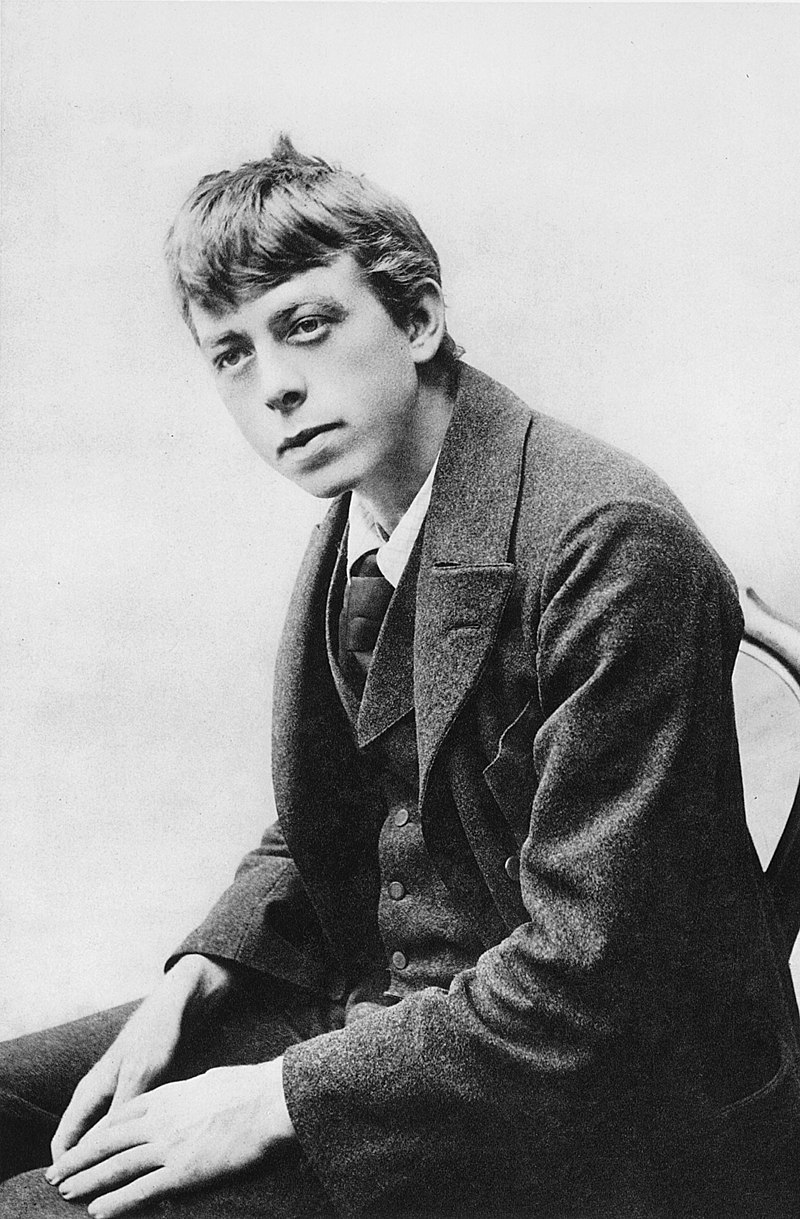
Robert Walser, in Zürich, around 1900.
Blogspot Losarciniegas
Key facts
Key facts
• Name — Robert Walser • Born — 15 April 1878 • Birthplace — Biel/Bienne, Switzerland • Died — 25 December 1956 • Place of death — near Herisau, Switzerland • Occupation — Writer • Movement — Modernism
1878–1897
1878–1897
Born Robert Otto Walser, he was the second-youngest of eight children of Adolf Walser (1833–1914), a trained bookbinder who owned a workshop producing stationery goods and picture frames, and his wife Elisabeth (Elisa) Walser (1839–1894). His brother Karl Walser became a well-known stage designer and painter; his elder sister Lisa worked as a teacher and was the family's principal caregiver, while his younger sister Fanny (Fani) Hegi-Walser would later, in 1967, transfer Walser's literary estate to the Carl Seelig Foundation. Walser grew up in Biel, Switzerland, on the language border between the German- and French-speaking regions of Switzerland, and grew up speaking both languages. He attended primary school and progymnasium, which he had to leave before the final exam when his family could no longer bear the cost. From his early years on, he was an enthusiastic theatre-goer; his favourite play was The Robbers by Friedrich Schiller. There is a watercolor painting that shows Walser as Karl Moor, the protagonist of that play. From 1892 to 1895, Walser served an apprenticeship at the Bernischer Kantonalbank in Biel. Afterwards he worked for a short time in Basel. Walser's mother Elisabeth (1839–1894), described in contemporary terms as gemütskrank — a designation roughly corresponding to what would later be classified as an affective psychosis — died in 1894 after a prolonged illness during which she had been cared for by her elder daughter, Lisa Walser. The Swiss Germanist Peter von Matt has argued that Walser's symbiotic relationship with his mother was constitutive for his literary work. In 1895, Walser went to Stuttgart where his brother Karl lived. He worked as a clerk in the advertising department of the Union Deutsche Verlagsgesellschaft; he also tried, without success, to become an actor, auditioning for an actress at the Stuttgart Hoftheater. On foot, he returned to Switzerland where he registered in 1896 as a Zürich resident. In the following years, he often worked as a "Kommis", an office clerk, but irregularly and in many different places. As a result, he was one of the first Swiss writers to introduce into literature a description of the life of a salaried employee.
1898–1912
1898–1912
In 1898, the influential critic Joseph Victor Widmann published a series of poems by Walser in the Bernese newspaper Der Bund. This came to the attention of Franz Blei, and he introduced Walser to the circle of Art Nouveau figures centered on the magazine Die Insel, including Frank Wedekind, Max Dauthendey and Otto Julius Bierbaum. Numerous short stories and poems by Walser appeared in Die Insel. Until 1905, Walser lived mainly in Zürich, though he often changed lodgings and also lived for a time in Thun, Solothurn, Winterthur and Munich. In 1903, he fulfilled his military service obligation and, beginning that summer, was the "aide" of an engineer and inventor in Wädenswil near Zürich. This episode became the basis of his 1908 novel Der Gehülfe (The Assistant). In 1904, his first book, Fritz Kochers Aufsätze (Fritz Kocher's Essays), appeared in the Insel Verlag, with eleven illustrations by his brother Karl. At the end of 1905 he attended a course in order to become a servant at the castle of Dambrau in Upper Silesia. The theme of serving would characterize his work in the following years, especially in the novel Jakob von Gunten (1909). In 1905, he went to live in Berlin, where his brother Karl Walser, who was working as a theater painter, introduced him to other figures in literature, publishing, and the theater. Occasionally, Walser worked as secretary for the artists' corporation Berliner Secession. In Berlin, Walser wrote the novels The Tanners (Geschwister Tanner), The Assistant (Der Gehülfe) and Jakob von Gunten. They were issued by the publishing house of Bruno Cassirer, where Christian Morgenstern worked as editor. Apart from the novels, he wrote many short stories, sketching popular bars from the point of view of a poor "flaneur" in a very playful and subjective language. There was a very positive echo to his writings. Robert Musil and Kurt Tucholsky, among others, stated their admiration for Walser's prose, and authors like Hermann Hesse and Franz Kafka counted him among their favorite writers. Walser published numerous short stories in newspapers and magazines, many for instance in the Schaubühne. They became his trademark. The larger part of his work is composed of short stories – literary sketches that elude a ready categorization. Selections of these short stories were published in the volumes Aufsätze (1913) and Geschichten (1914).
1913–1929
1913–1929
In 1913, Walser returned to Switzerland. He lived for a short time with his sister Lisa in the mental home in Bellelay, where she worked as a teacher. There, he got to know Frieda Mermet, a washer-woman with whom he developed a close friendship. After a short stay with his father in Biel, he went to live in a mansard in the Biel hotel Blaues Kreuz. In 1914, his father died. In Biel, Walser wrote a number of shorter stories that appeared in newspapers and magazines in Germany and Switzerland and selections of which were published in Der Spaziergang (1917), Prosastücke (1917), Poetenleben (1918), Seeland (1919) and Die Rose (1925). Walser, who had always been an enthusiastic wanderer, began to take extended walks, often by night. In his stories from that period, texts written from the point of view of a wanderer walking through unfamiliar neighborhoods alternate with playful essays on writers and artists. During World War I, Walser repeatedly had to go into military service. At the end of 1916, his brother Ernst died after a time of mental illness in the Waldau mental home. In 1919, Walser's brother Hermann, geography professor in Bern, committed suicide. Walser himself became isolated in that time, when there was almost no communication with Germany because of the war. Even though he worked hard, he could barely support himself as a freelance writer. At the beginning of 1921, he moved to Bern in order to work at the public record office. He often changed lodgings and lived a very solitary life. During his time in Bern, Walser's style became more radical. In a more and more condensed form, he wrote "micrograms" ("Mikrogramme"), called thus because of his minuscule pencil hand that is very difficult to decipher. He wrote poems, prose, dramolettes and novels, including The Robber (Der Räuber). In these texts, his playful, subjective style moved toward a higher abstraction. Many texts of that time work on multiple levels – they can be read as naive-playful feuilletons or as highly complex montages full of allusions. Walser absorbed influences from serious literature as well as from formula fiction and retold, for example, the plot of a pulp novel in a way that the original (the title of which he never revealed) was unrecognizable. Much of his work was written during these very productive years in Bern.
1929–1956
1929–1956
In the beginning of 1929, Walser, who had had anxieties and hallucinations for quite some time, went to the Bernese mental home Waldau, after a mental breakdown, at his sister Lisa's urging. In his medical records it says: "The patient confessed hearing voices." Therefore, this can hardly be called a voluntary commitment. He was eventually diagnosed with catatonic schizophrenia. While he was in the mental home, his state of mind quickly returned to normal, and he went on writing and publishing. Walser made increasing use of what he called his "pencil method" (Bleistiftmethode), a two-stage compositional process he had reportedly developed as early as 1917. Working drafts of poems, prose pieces, dramatic scenes and even an entire novel (The Robber) were first written in pencil in a minuscule Kurrent hand — the so-called "microscripts" (Mikrogramme) — whose letters measured barely more than a millimetre in height by the end of this phase. In a second working stage, Walser selected from these drafts and copied them out in ink as fair copies, often editing in the process, before submitting them to editors for publication. Only a portion of the microscript drafts were ever transferred into fair copies; comparatively few drafts survive from the Waldau years, with more fair copies and published texts extant from that period. The microscripts were long thought to be written in a private code. (See Rediscovery below.) In 1933, Walser was transferred against his will to the sanatorium of Herisau in his home canton of Appenzell Ausserrhoden. He stopped writing thereafter — a silence likely shaped not only by the move itself but also by the Nazi seizure of power in Germany, which eliminated a substantial portion of the German-language newspaper and journal market in which Walser's short prose had appeared throughout the 1920s. The director of the Herisau institution, Dr. Otto Hinrichsen — himself a writer — reportedly offered Walser a room set aside for literary work, but Walser did not take it up. Like the other patients, he was occupied with making paper bags and with cleaning duties, and in his free time read popular fiction. In 1934, again against his will, he was placed under legal guardianship. He later told Carl Seelig, "I am not here to write, but to be mad." In 1936, his admirer Carl Seelig began to visit him. He later wrote a book, Wanderungen mit Robert Walser, about their talks. Seelig tried to revive interest in Walser's work by re-issuing some of his writings. After the death of Walser's brother Karl in 1943 and of his sister Lisa in 1944, Seelig became Walser's legal guardian. Though free of outward signs of mental illness for a long time, Walser was crotchety and repeatedly refused to leave the sanatorium. In 1955, Walser's novella The Walk (Der Spaziergang) had begun to be translated into English by Christopher Middleton; it was the first English translation of his writing and the only one that would appear during his lifetime. Upon learning of Middleton's translation from Seelig, Walser, who had fallen out of the public eye, responded with a German equivalent of "My, my" or "Well, look at that." Walser enjoyed long walks alone. On 25 December 1956 he was found, dead of a heart attack, in a field of snow near the asylum. The photographs of the dead Walser in the snow are reminiscent of a similar image of a dead man in the snow in his first novel, Geschwister Tanner.
Contemporary
Contemporary
In his own time, Walser was admired by writers including Franz Kafka, Hermann Hesse, who said during the height of World War I that "If [Walser] had a hundred thousand readers, the world would be a better place", Stefan Zweig, Walter Benjamin, Christian Morgenstern, and Robert Musil. Walser was better known during his lifetime than Kafka or Walter Benjamin were known in theirs. He never belonged to a literary school or group, perhaps with the exception of the circle around the magazine Die Insel in his youth, but was a notable and often published writer before World War I and into the 1920s.
Rediscovery
Rediscovery
After around 1925, Walser was rapidly forgotten, in spite of Carl Seelig's editions, which appeared almost exclusively in Switzerland but received little attention. A revival of interest in his work arose in the 1970's and 1980's when his writings from "the Pencil Zone" (sometimes known as the "pencil area"), also known as Bleistiftgebiet or "the Microscripts" began to be deciphered and published in German. These were manuscripts written in an abbreviation-coded, microscopically tiny hand using a form of Kurrent script on scraps of paper collected while in a Waldau sanatorium. In 1972, Jochen Greven and Martin Jürgens had deciphered and published The Robber, an entire novel that Walser had written in microscript, and the Felix scenes from the same body of drafts. The rest of the microscripts were eventually deciphered between 1985 and 2000 by Werner Morlang and Bernhard Echte. They published the texts in the six-volume edition Aus dem Bleistiftgebiet ("From the Pencil Zone"). Since then, almost all his writings have become accessible through an extensive republication of his entire body of work.
In the English-speaking world
In the English-speaking world
The 1957 English-language publication of Christopher Middleton's translation of The Walk and Other Stories is considered a key event in recognition of Walser as a significant figure of literary modernism, not only in English-language awareness but also in Swiss and German-language scholarship as Walser had been largely forgotten in the World War II era. It was the first translation of Walser. The first English-language dissertation on Walser was defended in 1959, by George Avery, which was before the first German-language dissertation by Walser expert Jochen Greven. In the 1960's, several journals published English-language translations of Walser's work in the 1960's including Barataria, Chowder Review, Lowlands Review, The Paris Review, Writ, Delos, and Texas Quarterly, and 0 to 9 magazine which published Kleist in Thun in 1967. Many of these examples were translated by Tom Whalen and collaborators, and one by Harriet Watts. Middleton's translation of Jakob von Gunten was published in 1969. In 1982, the English-language publication of Selected Stories created a "new phase" of interest about Walser in the English-speaking world and placed him within broader international attention. The reasons were that Farrar, Straus, and Giroux was a much larger publisher than Walser's previous English-language publisher Calder Publishing, and the foreword was written by the renowned public intellectual Susan Sontag. Sontag's introduction contains influential phrasings and analysis about Walser that is often quoted in media coverage of Walser. Mark Harman's review in 1983 mentions recent coverage about Walser in Vogue, Time Magazine, and Newsweek. The bulk of translations and publication of Walser in English occurred in the early 2000's and 2010's, including the three remaining novels that hadn't yet appeared in English (The Tanners, The Assistant, and The Robber), six volumes of prose pieces, and multiple volumes of poetry. (See list of English translations below.) Simon Wortham asserts that although Walser's revival has rested on a "critical canon" of commonly repeated famous names (Kafka, Benjamin, Sontag, Coetzee, etc), the "reassessment of his importance is due to rigorous and patient scholarship [of] a number of academics and translators" over a few decades, especially Susan Bernofsky. Noted translators have written essays about the unique issues in translating Walser, including Christopher Middleton's "Translation as a Species of Mime" and Susan Bernofsky's "Elements of Style in Walser's Late Prose."
Format and genre
Format and genre
Aside from his novels and poems, Walser himself called most of his short works "prose pieces." These include a mixture of fiction, historical fiction, non-fictional explorations of specific real subjects, memoir-like musings, "literary snapshots" of urban, social, and natural spaces, and "hybrids of story and essay." In the words of Susan Bernofsky, Walser's short works are a mixture of fictional story, non-fictional essay, personal musings, sketches, reports, and "walks through landscapes and dreamscapes." J.M. Coetzee named Walser as fundamentally an essayist. Walser has also been described as an observer and perceiver of tiny details of everyday life. Scholar George C. Avery wrote that Walser's style is a "characteristically modern combination of essayism and lyricism." Walser has also been called a "causeur" and a flaneur.
Feuilletons
Feuilletons
Many of Walser's short pieces were published in his lifetime as feuilletons, which refers to the physical type of publication in a newspaper and also refers to the far-ranging sketch-like style that is otherwise uncategorizable. In the words of Christopher Middleton, feuilletons are "miniature impressions, gossipings, entertainments, anecdotes, parables, often with a lyrical twist." Scholar S. Frederick described the feuilleton form as "circular poetics of the periphery" combined with "orality as a driving force." Mark Harman writes that Walser's feuilletons are more like parodies of feuilletons. Translator Tom Whalen argues that Walser's feuilletons are usually not parodies but an idiosyncratic use of style and subject matter unique to him. Translator Whalen notes that Walser's feuilletons differed from common feuilletons based on two facts aside from the idiosyncratic style: Kafka specifically searched out Walser's feuilletons, and a newspaper editor at Neue Zürcher Zeitung received disgruntled reader complaints about Walser's specifically. Walser described watercolor painters as feuilletonists of the visual arts, and spoke admiringly of them.
Microscripts
Microscripts
Also known as the "pencil area", "pencil zone", "B texts", pencil territory, and the micrograms. The term "pencil zone", known as the "Bleistiftgebiet" in German, refer to Walser's microscript manuscripts written in tiny handwriting with a pencil in the 1920's and 1930's. Walser wrote in a 1927 letter that he was experiencing cramps when using a pen, and he was able to get around the problem by using pencil. 526 manuscripts of this kind were found after Walser's death, which were eventually deciphered (see Rediscovery) and compiled in a 6-volume set in German titled Aus dem Bleistiftgebiet 1-6 (i.e. From the Pencil Region) in 1985–2000.
Style and Themes
Style and Themes
Susan Sontag has written that Walser's work is "charged with compassion: awareness of the creatureliness of life, of the fellowship of sadness" and that the "moral core of Walser's art is the refusal of power; of domination." Sontag has also described it as "portraits of consciousness walking about in the world, enjoying its 'morsel of life,' radiant with despair." She also called Walser a "Paul Klee in prose." W.G. Sebald wrote, "Walser accrues insights into his [...] state of mind and the nature of mental disturbance [in a way that is] found nowhere else in literature. With seismographic precision he registers the slightest tremors at the edges of his consciousness, records rejections and ripples in his thoughts and emotions." In his writing, he made use of elements of Swiss German in a charming and original manner, while very personal observations are interwoven with texts about texts; that is, with contemplations and variations of other literary works, in which Walser often mixes pulp fiction with high literature. Walser has been described as having a gift for comedy mingling with darker currents and is noted for digressions, abrupt shifts of apparent intention, and shifts of dramatic register. J.M. Coetzee has written that Walser's "charm lies in [...] surprising twists and turns of direction, delicately ironic handling of the formulas of amatory play, and supple and inventive exploitation of the resources of German." Josef Schmidt in the International Fiction Review called Walser a "causeur par excellence" and noted that he treats readers to unique word usages, creations, and hapax legomenon. William H. Gass has written that many of Walser's pieces are short, reflective, and "deceptively ordinary in their observations." Gass described: "his transitions are abrupt as table edges; non sequiturs flock his pages like [birds]; the pieces turn, often savagely, against themselves, or they dwindle away in apparent weariness and cease for wants of a reason for going on." Noting Walser's "stroller's psychology", Gass wrote, "to his heart, everything is fresh and astonishing." Benjamin Kunkel has stated that Walser "fulfills the modern criterion: he sounds like nobody else." He described Walser's tone as "hovering between beatific quietism and a burlesque of conventionality". Kunkel stated that Walser's combines "perfect assurance and perfect ambiguity." He observed that Walser seems to never express a non-appreciative opinion about a certain set of things including food, drink, weather, clothing, architecture, and cigars.
Ulrich Braker
Ulrich Braker
Walser has been said to share a literary and stylistic commonality with the Swiss writer Ulrich Braker (1735-1798). Walser gave a copy of Braker's book The Poor Man of Toggenburg (1789) to Frieda Mermet and said it was full of Lebensweisheit (i.e. or pearls of everyday wisdom).
Kleist, Walser, and Kafka connection
Kleist, Walser, and Kafka connection
Christopher Benfey has identified the Kleist - Walser - Kafka connection as an "outlaw tradition running alongside, and frequently in resistance to, the 'official' German progression from Goethe and Schiller to Rilke and Mann." Critic Robert Rubsam argues that Kleist's work in the book Anecdotes has the humor and ironic wit that was later extended by "acolytes" Kafka and Walser into "an entire style." Susan Sontag argued that Walser is the missing link between Kleist and Kafka. In Sontag's words, "at the time [of Walser's active literary career], it was more likely to be Kafka [who was understood] through the prism of Walser." Robert Musil in 1914 referred to Kafka's new book at the time as "a peculiar case of the Walser type." Kafka was known to admire Walser's work. For example, he owned Jakob von Gunten and called it good, told his co-worker Director Eisner to buy Walser's The Tanners, and Max Brod reported that Walser's short piece "Mountain Halls" was one of Franz Kafka's favorites and that Kafka would laugh hysterically when reading it aloud. Walser wrote a famous short story, "Kleist in Thun", in which he relates with aspects of a fictionalized imagining of Kleist. Kafka considered Kleist one of his "true blood-relations" in art. An arguable sequential connection between Kleist, Walser, and Kafka has been called an "uncommonly neat pattern of influence" by Chris Power.
Robert Walser Center
Robert Walser Center
The Robert Walser Center, which was officially established in Bern, Switzerland, in 2009, is dedicated to Robert Walser and the first patron of Walser's work and legacy, Carl Seelig. Its purpose is to promulgate Walser's life and work as well as to facilitate scholarly research. The center is open to both experts and the general public and includes an extensive archive, a research library, temporary exhibition space, and two rooms with several workstations are also available. The Center furthermore develops and organizes exhibitions, events, conferences, workshops, publications, and special editions. The translation of Robert Walser's works, which the Center both encourages and supports, also represents a key focus. In order to fully meet its objectives and responsibilities as a center of excellence, it often collaborates on certain projects with local, national, and international partners as well as universities, schools, theaters, museums, archives, translators, editors, and publishers.
German
German
• Der Teich, 1902, verse drama • Schneewittchen, 1901, verse drama • Fritz Kochers Aufsätze, 1904 • Geschwister Tanner, 1907 • Der Gehülfe, 1908 • Poetenleben, 1908 • Jakob von Gunten, 1909 • Gedichte, 1909 • Aufsätze, 1913 • Geschichten, 1914 • Kleine Dichtungen, 1915 • Prosastücke, 1917 • Der Spaziergang, 1917 • Kleine Prosa, 1917 • Poetenleben, 1917 • Tobold-Roman, 1918 • Komödie, 1919 • Seeland, 1920 • Theodor-Roman, 1921 • Die Rose, 1925 • Der Räuber, 1925 (published 1978) • Felix-Szenen, 1925 • Große Welt, kleine Welt, 1937 • Dichterbildnisse, 1947 • Dichtungen in Prosa, 1953 • Robert Walser – Briefe, 1979 • Sämtliche Werke in Einzelausgaben. 20 Bde. Hg. v. Jochen Greven. Zürich, Frankfurt am Main: Suhrkamp Verlag 1985-1986 • Geschichten, 1985 • Der Spaziergang. Prosastücke und Kleine Prosa., 1985 • Aufsätze, 1985 • Bedenkliche Geschichten. Prosa aus der Berliner Zeit 1906–1912, 1985 • Träumen. Prosa aus der Bieler Zeit 1913–1920, 1985 • Die Gedichte, 1986 • Komödie. Märchenspiele und szenische Dichtung, 1986 • Wenn Schwache sich für stark halten. Prosa aus der Berner Zeit 1921–1925, 1986 • Prose from the Berne period in three volumes: • Zarte Zeilen. Prosa aus der Berner Zeit 1926, 1986 • Es war einmal. Prosa aus der Berner Zeit 1927–1928, 1986 • Für die Katz. Prosa aus der Berner Zeit 1928–1933, 1986 • The microscripts or micrograms, also known as the "pencil zone" or "pencil area" ("Bleistiftgebiet"), also known as the "B texts", in 6 volumes: • Aus dem Bleistiftgebiet Band 1. Mikrogramme 1924/25. Hg. v. Bernhard Echte u. Werner Morlang i. A. des Robert Walser-Archivs der Carl Seelig-Stiftung, Zürich. Frankfurt am Main: Suhrkamp Verlag 1985–2000 • Aus dem Bleistiftgebiet Band 2. Mikrogramme 1924/25. Hg. v. Bernhard Echte u. Werner Morlang i. A. des Robert Walser-Archivs der Carl Seelig-Stiftung, Zürich. Frankfurt am Main: Suhrkamp Verlag 1985–2000 • Aus dem Bleistiftgebiet Band 3. Räuber-Roman, Felix-Szenen. Hg. v. Bernhard Echte u. Werner Morlang i. A. des Robert Walser-Archivs der Carl Seelig-Stiftung, Zürich. Frankfurt am Main: Suhrkamp Verlag 1985–2000 • Aus dem Bleistiftgebiet Band 4. Mikrogramme 1926/27. Hg. v. Bernhard Echte u. Werner Morlang i. A. des Robert Walser-Archivs der Carl Seelig-Stiftung, Zürich. Frankfurt am Main: Suhrkamp Verlag 1985–2000 • Aus dem Bleistiftgebiet Band 5. Mikrogramme 1925/33. Hg. v. Bernhard Echte u. Werner Morlang i. A. des Robert Walser-Archivs der Carl Seelig-Stiftung, Zürich. Frankfurt am Main: Suhrkamp Verlag 1985–2000 • Aus dem Bleistiftgebiet Band 6. Mikrogramme 1925/33. Hg. v. Bernhard Echte u. Werner Morlang i. A. des Robert Walser-Archivs der Carl Seelig-Stiftung, Zürich. Frankfurt am Main: Suhrkamp Verlag 1985–2000 • Unsere Stadt. Texte über Biel. 2002 • Feuer. Unbekannte Prosa und Gedichte. 2003 • Tiefer Winter. Geschichten von der Weihnacht und vom Schneien. Hg. v. Margit Gigerl, Livia Knüsel u. Reto Sorg. Frankfurt: Insel Taschenbuch Verlag 2007 (it; 3326), • Kritische Robert Walser-Ausgabe. Kritische Ausgabe sämtlicher Drucke und Manuskripte. Hg. v. Wolfram Groddeck, Barbara von Reibnitz u.a. Basel, Frankfurt am Main: Stroemfeld, Schwabe 2008 • Briefe. Berner Ausgabe. Hg. v. Lucas Marco Gisi, Reto Sorg, Peter Stocker u. Peter Utz. Berlin: Suhrkamp Verlag 2018
English translations
English translations
• The Walk and Other Stories (Calder Publishing, 1957), translated by Christopher Middleton • Jakob von Gunten (University of Texas Press, 1970; New York Review Books Classics, 1999), translated by Christopher Middleton, • Selected Stories (Farrar, Straus, Giroux, 1982; New York Review Books Classics, 2002), translated by Christopher Middleton, • Robert Walser Rediscovered: Stories, Fairy-Tale Plays, & Critical Response Including the Anti-Fairy Tales, Cinderella & Snow White (University Press of New England, 1985), edited by Mark Harman • Masquerade and Other Stories (The Johns Hopkins University Press, 1990), translated by Susan Bernofsky, foreword by William H. Gass • The Robber (University of Nebraska Press, 2000), translated by Susan Bernofsky, • Speaking to the Rose: Writings, 1912–1932 (University of Nebraska Press, 2005), translated by Christopher Middleton, • The Assistant (New Directions, 2007), translated by Susan Bernofsky, • The Tanners (New Directions, 2009), translated by Susan Bernofsky, • Microscripts (New Directions, 2010), translated by Susan Bernofsky, • Answer to an Inquiry (Ugly Duckling Presse, 2010), translated by Paul North, with drawings by Friese Undine, • Berlin Stories (New York Review Books Classics, 2012), translated by Susan Bernofsky, • The Walk (New Directions, 2012), translated by Christopher Middleton with Susan Bernofsky, • Thirty Poems (New Directions, 2012), translated by Christopher Middleton, • Oppressive Light: Selected Poems by Robert Walser (Black Lawrence Press/Dzanc Books, New York, 2012), edited and translated by Daniele Pantano, • A Little Ramble: In the Spirit of Robert Walser (New Directions, 2012), translated by Susan Bernofsky with Christopher Middleton and Tom Whalen • A Schoolboy's Diary (New York Review Books Classics, 2013), translated by Damion Searls, introduction by Ben Lerner, • Looking at Pictures (Christine Burgin / New Directions, 2015), translated by Susan Bernofsky with Lydia Davis and Christopher Middleton, • Girlfriends, Ghosts, and Other Stories (New York Review Books Classics, 2016), translated by Tom Whalen, with Nicole Kongeter and Annette Wiesner, afterword by Tom Whalen, • Little Snow Landscape (New York Review Books, 2021), trans. Tom Whalen • Robert Walser: The Poems (Seagull Books, 2022), translated by Daniele Pantano • My Heart Has So Many Flaws: Early Poems (Sublunary Editions, 2024), translated by Kristofor Minta
Plays
Plays
• Robert Walser – mikrogramme – das kleine welttheater, director: Christian Bertram, stage: Max Dudler, music: Hans Peter Kuhn, début performance 14 April 2005 Berlin; readings, films and podium discussion with corollary program www.mikrogramme.de • Institute Benjamenta, director: Gökçen Ergene • Fairy Tales: Dramolettes (New Directions, 2015), translated by James Reidel and Daniele Pantano, with a preface by Reto Sorg, • Comedies (Seagull Books, 2018), translated by Daniele Pantano and James Reidel, with a preface by Reto Sorg,
Movies
Movies
• Jakob von Gunten, director: Peter Lilienthal, script: Ror Wolf and Peter Lilienthal, 1971 • Der Gehülfe, director: Thomas Koerfer, 1975 • Der Vormund und sein Dichter, direction and script: Percy Adlon, 1978 (free picturization of Seelig's Wanderungen mit Robert Walser) • Robert Walser (1974–1978), direction and script: HHK Schoenherr • Waldi, direction and script: Reinhard Kahn, Michael Leiner (after the story Der Wald), 1980 • The Comb, directors: Stephen Quay, Timothy Quay (i.e. Brothers Quay), 1990 • Brentano, director: Romeo Castellucci, with Paolo Tonti as Brentano, 1995 • Institute Benjamenta, or This Dream People Call Human Life, directors: Stephen Quay, Timothy Quay (i.e. Brothers Quay) with Mark Rylance as Jakob von Gunten, 1995 • Blanche Neige, directed by Rudolph Straub, music by Giovanna Marini, 1999 • de Neve, director: João César Monteiro, 2000 • All This Can Happen, directors: Siobhan Davies, David Hinton, 2012
Opera
Opera
• Schneewittchen, 1998, by Heinz Holliger
In English
In English
* * * * * * * * * * * * * * * * *
In German
In German
* * * * * * * * * * * *
In English
In English
• Robert Walser Center (official site of the Robert Walser archive and society in Bern, with information, documentation, and resources about the writer's life and work) * * * • "A Celebration of the Work of Swiss Writer Robert Walser on KCRW's Bookworm • Swiss Literary Archive • "The Lightest Touch" review of A Schoolboy's Diary at The Millions • "A Prose Piece for Your Gaps" Review of A Schoolboy's Diary at Open Letters Monthly
In German
In German
• Robert Walser Center • Robert Walser-Pfad, Herisau • Kritische Walser Ausgabe • Robert Walser Preis
Identity
Identity
Robert Walser is recorded as poet and writer.
Life and career
Dated record
Life and career
The full dated record · 2 entries
1878
Robert Walser born at Biel/Bienne.
1956
Robert Walser died at Herisau.
Places
Named by the record
Places
Only places the record itself states, plotted where the house gazetteer settles their coordinates. Nothing is inferred from a name or a nationality.
Biel/Bienne.
Birth place
Herisau.
Death place
Reception
Reception
Today, Walser's texts, completely re-edited since the 1970s, are regarded as among the most important writings of literary modernism and German-language literature. Susan Sontag has said that "Walser's virtues are those of the most mature, most civilized art. He is truly a wonderful, heartbreaking writer." Scholar Michael Andre Bernstein has written:
Legacy and Influence
Legacy and Influence
Aside from Kafka, Hesse, Walter Benjamin, Robert Musil, and Christian Morgenstern in his own time, a number of later artists and writers have expressed admiration for Walser and his work including Christopher Middleton, Thomas Bernhard, Werner Herzog, William H. Gass, Susan Sontag, Martin Walser (no relation), Max Frisch, Giorgio Agamben, Ben Lerner, Rivka Galchen, Benjamin Kunkel, Claudia Hernandez, and Holly Tavel. He has exerted a considerable influence on various contemporary German writers, including Ror Wolf, Peter Handke, W. G. Sebald, who has expressed a kinship that connects him to Walser, and Max Goldt. In 2004, Spanish writer Enrique Vila-Matas published a novel entitled Doctor Pasavento about Walser, his stay on Herisau and the wish to disappear. In 2007, Serbian writer Vojislav V. Jovanović published a book of prose named Story for Robert Walser inspired by the life and work of Robert Walser. In 2012, A Little Ramble: In the Spirit of Robert Walser, a series of artistic responses to Walser's work was published, including work by Moyra Davey, Thomas Schütte, Tacita Dean and Mark Wallinger.
Primary material
Documents and archives
reference work
- “Robert Walser”, English Wikipedia, consulted as further reading
Reputable secondary · Wikipedia
- Wikidata, structured authority record Q123075: Robert Walser
Reputable secondary · Wikimedia Foundation
scholarly publication
- Robert Walser as Lyric Poet, Robert Walser
Scholarly · Crossref registry
References
Citations
References
Each reference names the institution holding it, so a reader may go to the document itself.
scholarly publication
Robert Walser as Lyric Poet, Robert WalserCrossref registry
Verifiedreference work
Partially resolvedreference work
Wikidata, structured authority record Q123075: Robert WalserWikimedia Foundation
Partially resolved
Further particulars
Held on the record
Further particulars
Open the remaining particulars
The authorities additionally record the heading Robert Otto Walser. His recorded languages were Swiss Standard German, Swiss German and German. His recorded confession was reformed.
Identity and origins
The Encyclopedia exists whether or not anything is for sale. Corrections are recorded rather than overwritten, and every version of this record is kept. Published 14 August 2026.
Elsewhere in Books
38,960 published records in this field, each with its sources named.
- Robert VigneauAuthor
- Robert VivierAuthor
- Robert von DassanowskyAuthor
- Robert W. ServiceAuthor
- Robert WebbAuthor
- Robert William St. JohnAuthor
- Robert Williams BuchananAuthor
- Robert Wilson LyndAuthor
Best supported in this field
For owners
Own a work by Robert Walser?
A specialist will read what you send and tell you what the house can establish, what it cannot, and whether the object is suited to sale. There is no charge and no obligation. The object stays with you throughout; nothing is shipped to us unless it is arranged in writing beforehand.