
Robert Jefferson Bingham
Robert Jefferson Bingham (bapt. 7 March 1824 – 21 February 1870) was an English pioneer photographer, mainly active in France, making portraits and reproductions of paintings. He is one of the first photographers to use and write about the collodion process, which he claimed to have invented.
Also recorded as Robert Bingham · Robert J. Bingham
Robert Jefferson Bingham
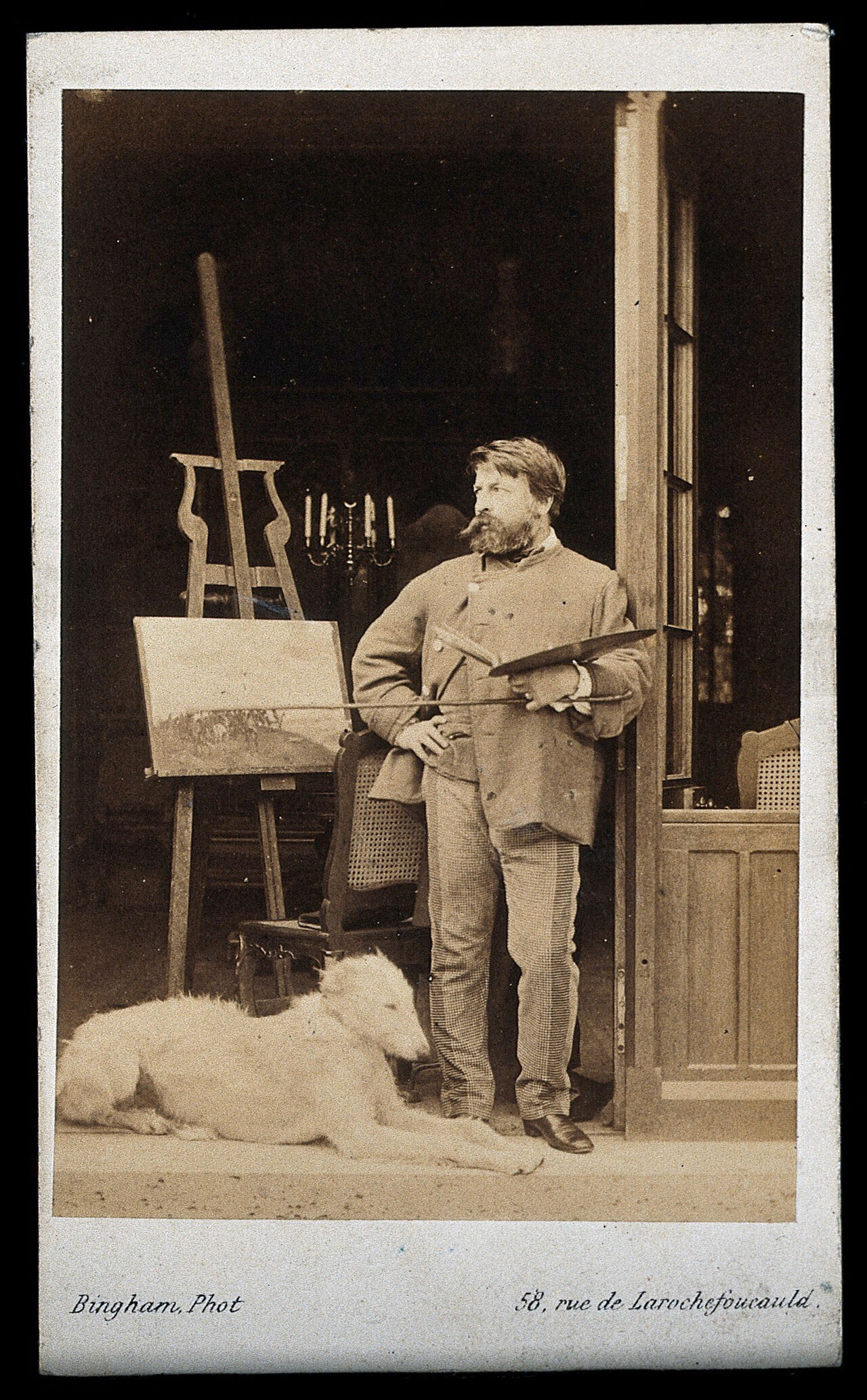
Robert Jefferson Bingham · Wellcome Collection, London · Wellcome Collection · Public Domain Mark
- Name
- Robert Jefferson Bingham
- Birthplace
- Billesdon, Leicestershire, England
- Died
- 21 February 1870
- Place of death
- Brussels, Belgium
- Known for
- Pioneer photographer, portraits, and reproductions of paintings.
- Spouse
- Emma Reeve (m. 1853; d. 1868)
- Born
- 1824 · Leicester.
- Nationality
- United Kingdom of Great Britain and Ireland
- Occupation
- photographer
VALÉORINE Encyclopedia
VALÉORINE documentary reading
Documentary summary
Robert Jefferson Bingham (bapt. 7 March 1824 – 21 February 1870) was an English pioneer photographer, mainly active in France, making portraits and reproductions of paintings. He is one of the first photographers to use and write about the collodion process, which he claimed to have invented.
Admitted source layer · organised and presented by VALÉORINE
Reference Check
Propose documentary evidence for Robert Jefferson Bingham. A contribution is never written directly as fact: identity, source, rights and evidence gates still decide.
Sign in to contribute
World of VALÉORINE
Documentary connections
Only confirmed graph relationships appear here. Images are shown only when their identity and reuse rights both pass the documentary gate.
Documentary evidence
Documentary basis
Authority files
wikidata · Q16214312 · wikipedia · Robert Jefferson Bingham
In this article
Key facts
Key facts
• Name — Robert Jefferson Bingham • Baptised — 7 March 1824 • Birthplace — Billesdon, Leicestershire, England • Died — 21 February 1870 • Place of death — Brussels, Belgium • Known for — Pioneer photographer, portraits, and reproductions of paintings. Early user and proponent of the collodion process. • Notable Works — Photographic illustrations for The Great Exhibition Report (1851), Photographic Catalogue raisonné of Paul Delaroche's works (1858), reproductions of works by Gustave Courbet and Gustave Moreau. • Spouse — Emma Reeve (m. 1853; d. 1868) • Illustration — Photograph of archbishop Georges Darboy, ca. 1865
Early life and family
Early life and family
Bingham was born in Billesdon, Leicestershire, England, where he was baptised in March 1824. His parents were John Cowener Bingham and his wife, Martha. In 1853, at the British Embassy in Paris, he married Emma Reeve, daughter of surgeon John Reed of Kinver, Staffordshire. She died 15 years later at their home on rue de La Rochefoucauld in Paris.
Career
Career
Bingham first started working as a chemist at the London Institution. In 1847, he published a new edition of "Photogenic manipulation, containing the theory and plain instructions in the art of photography", a work that would be expanded and reprinted at least four times over the next few years. He showed 19 photographs at The Great Exhibition of 1851, and was commissioned, as a result of the influence of Henry Cole, a member of the Executive Committee, to print the glass plate negatives by Claude-Marie Ferrier of prize winning exhibits as illustrations for the photographically-illustrated presentation copies of the Report by the Juries. Bingham set up a photographic printing establishment in Versailles in order to undertake this contract. Some of the photographs and others by Bingham were shown in 1852 at the exhibition Recent Specimens of Photography held at the Society of Arts, London, the first exhibition to focus solely on photography. Bingham also made photographs of the Exposition Universelle of 1855 in Paris. His ability to take some 2500 photographs at relatively high speeds on this occasion encouraged other photographers to use the collodion process for their work as well, helping it become the most popular method from 1855 until about 1880. Henry Cole sent him at the same time to the Louvre to photograph the masterpieces of the museum collection. At some point in 1851 1855, or 1859, Bingham moved to Paris to work there as a photographer, at first together with the American Warren T. Thompson until Thompson returned to England in 1856. Bingham not only worked at the 1855 Exposition, but also displayed his own life-size portraits, for which he won a Medal First Class. Due to a lack of commercial success, however, he soon stopped producing these huge photographs and stuck to more standard formats. His work at the Louvre inspired him to make photographic portraiture a commercial enterprise, and in 1857 he opened his new atelier in the Nouvelle Athènes quarter of Paris, one of the hotspots of artistic activity at the time. He became friends with many artists, photographing them and their works, and started on a new project, a photographic collection of the works of the recently deceased painter Paul Delaroche. Published in 1858, it was the first photographic catalogue raisonné. It was followed over the next few years by similar works about other artists, including one in 1860 on Ary Scheffer and another one with photographs of the major works of the 1860 Salon. Smaller works with only a handful of photographs were produced for particular collections and for the Napoleon Museum in Amiens. His reproductions of paintings were famed for their suggestion of the original colours in the black-and-white photographs, and were lauded as being far superior to all other similar efforts until then. Gustave Moreau used to send photographs of his paintings, made by Bingham, to people to inform them of his latest creations, without the need to wait for a Salon or other exhibition. Similarly, Gustave Courbet showed his paintings, which were rejected for the Salon, through photographs made by Bingham. His 1863 work "Retour de conférence", which was even rejected at the Salon des Refusés, was destroyed by a fundamentalist Christian, making the photographs by Bingham the only remaining trace of it. But the public outrage about the painting was so great that the government had the negatives destroyed in 1867 as well. Courbet's 1864 "Vénus et Psyché" has disappeared as well and is also only known through Bingham's photographs. Bingham continued to exhibit in Great Britain and France, winning another medal at the 1862 International Exhibition in London. He was one of the leading members of the Société française de photographie, contributing a lot of works to their exhibitions. Early in 1870, he suddenly left Paris for Brussels, where he died in February of that year. His atelier remained open until 1875, publishing more reproductions of his negatives.
Gallery
Gallery
• Illustration — Alexandre Bida, ca. 1855 • Illustration — Auguste Gendron • Illustration — James Tissot • Illustration — Alexine Tinne, Henriëtte Tinne-van Capellen and Jetty Hora Siccama, 1860
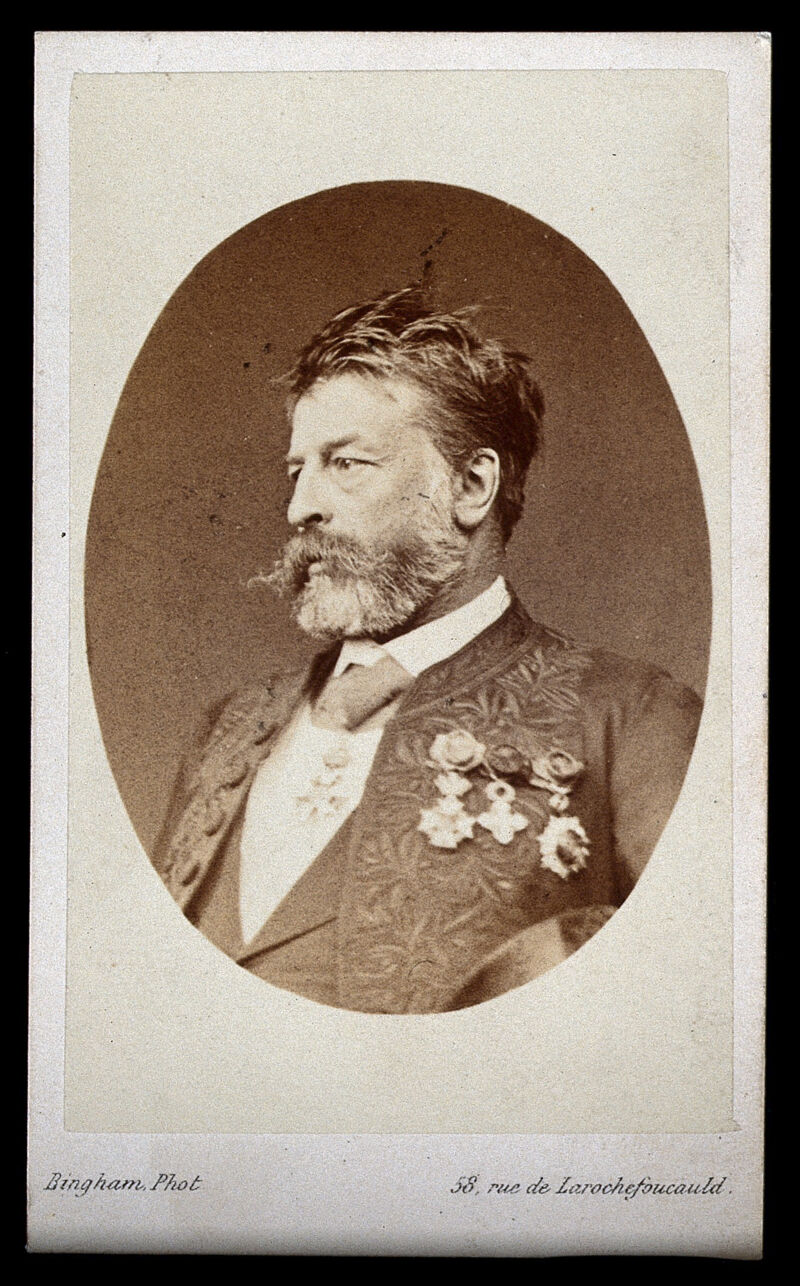
Jean-Louis Ernest Meissonier. Photograph by R.J. Bingham., by Robert Jefferson Bingham
Robert Jefferson Bingham · Wellcome Collection, London · Wellcome Collection
Life and career
Dated record
Life and career
The full dated record · 2 entries
1824
Robert Jefferson Bingham born at Leicester.
1870
Robert Jefferson Bingham died at Brussels metropolitan area.
Places
Named by the record
Places
Only places the record itself states, plotted where the house gazetteer settles their coordinates. Nothing is inferred from a name or a nationality.
Leicester.
Birth place
Brussels metropolitan area.
Death place
Collodion process controversy
The invention of the collodion process, the most common process for photography between 1855 and 1881, is usually given to Frederick Scott Archer, who published the method to achieve this in 1851, and said to have invented it as early as 1848. Another candidate was Gustave Le Gray, who published another, less practical collodion process in 1850. But until the end of his life, Bingham proudly proclaimed that he was the first to have written about the collodion process, either in his 1848 book or in the January 1850 edition, making him the inventor of the process. While he is generally acknowledged as one of the first inventors to independently suggest collodion as an alternative for paper, the invention is usually still given to Archer because he published the first practically usable description of the process.
Catalogued output
Works and catalogued output
Gladiators salute the emperor Vitellius in the Colosseum before a bout.
References
Citations
References
Each reference names the institution holding it, so a reader may go to the document itself.
reference work
Secondary witnessreference work
Secondary witness
Further particulars
Held on the record
Further particulars
Open the remaining particulars
Robert Jefferson Bingham is recorded as photographer.
Recognition and collections
Work by Robert Jefferson Bingham is
Museo del Prado, Photography Collection and J. Paul Getty Museum
The Encyclopedia exists whether or not anything is for sale. Corrections are recorded rather than overwritten, and every version of this record is kept. Published 16 August 2026.
Elsewhere in Photography
11,392 published records in this field, each with its sources named.
- Robert Hutchison of CarlowriePhotographer
- Robert J HirschPhotographer
- Robert James WallerPhotographer
- Robert JanásPhotographer
- Robert JohnPhotographer
- Robert K. SharpePhotographer
- Robert KochPhotographer
- Robert KuśmirowskiPhotographer
Best supported in this field
For owners
Own a work by Robert Jefferson Bingham?
A specialist will read what you send and tell you what the house can establish, what it cannot, and whether the object is suited to sale. There is no charge and no obligation. The object stays with you throughout; nothing is shipped to us unless it is arranged in writing beforehand.