
Richard Beard
Illustration — 1841 Daguerreotype of Wendell Phillips by Richard Beard Erebus officers:Top row left to right:Lt. Edward Couch (mate); James Walter Fairholme; Charles Hamilton Osmer (Purser); Charles Frederick Des Voeux [2nd Mate]. 2nd row from top Left to right: Francis Crozier (HMS Terror); Sir John Franklin; James FitzJames.
Also recorded as Richard Beard Sr
Richard Beard
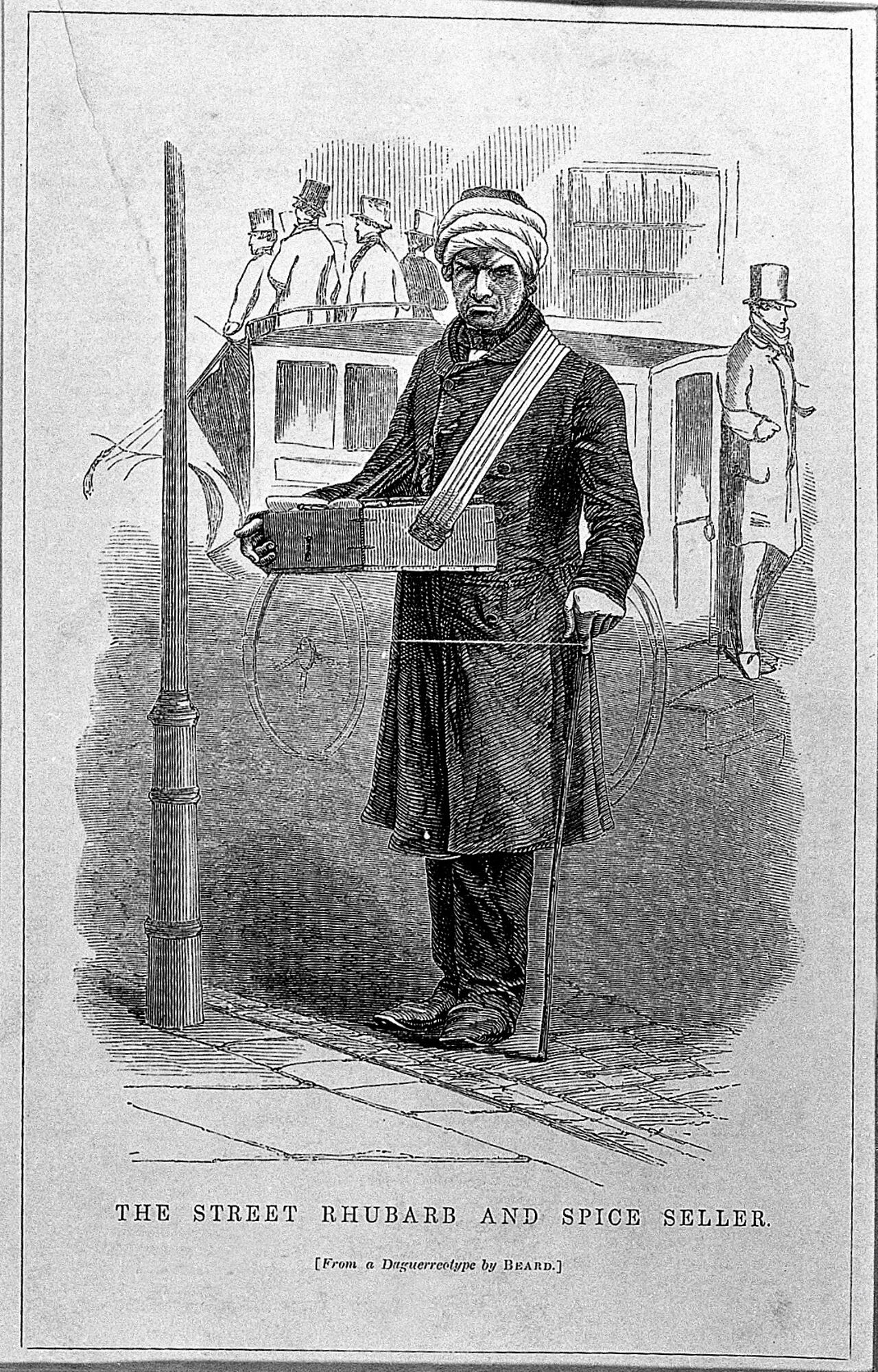
Richard Beard · Wellcome Collection, London · Wellcome Collection · Public Domain Mark
- Born
- 1801 · Stonehouse.
- Died
- 1885 · Hampstead.
- Nationality
- United Kingdom of Great Britain and Ireland · United Kingdom
- Occupation
- photographer · businessperson · manufacturer · artist
- Fields
- daguerreotype process
- Known for
- Mrs. Ralph Waldo Emerson · Ralph Waldo Emerson
- Languages
- English
VALÉORINE Encyclopedia
VALÉORINE documentary reading
Documentary summary
Illustration — 1841 Daguerreotype of Wendell Phillips by Richard Beard Erebus officers:Top row left to right:Lt. Edward Couch (mate); James Walter Fairholme; Charles Hamilton Osmer (Purser); Charles Frederick Des Voeux [2nd Mate]. 2nd row from top Left to right: Francis Crozier (HMS Terror); Sir John Franklin; James FitzJames.
Admitted source layer · organised and presented by VALÉORINE
Note VALÉORINE
Richard Beard (1801–1885) was an artist, businessperson and manufacturer, among other activities, of British and British nationality. The artist was born in Stonehouse and died in Hampstead.
Richard Beard worked in Camden Town, Islington and London, among others. Activity centred on daguerreotype process.
Among the works is Ralph Waldo Emerson. The work spans portrait. Languages used include English. Works are held at George Eastman Museum, International Center of Photography and Metropolitan Museum of Art, among others.
Composed from admitted, traceable facts · 26 September 2026
VALÉORINE
Reference Check
Propose documentary evidence for Richard Beard. A contribution is never written directly as fact: identity, source, rights and evidence gates still decide.
Sign in to contribute
World of VALÉORINE
Documentary connections
Only confirmed graph relationships appear here. Images are shown only when their identity and reuse rights both pass the documentary gate.
Documentary evidence
Documentary basis
Authority files
wikidata · Q7324041
In this article
Early life
Early life
3rd row from top left to right: Graham Gore (Commander); Stephen Samuel Stanley (Surgeon); 2nd Lt. Henry Thomas Dundas Le Vesconte. Bottom row left to right: Robert Orme Sergeant [1st mate]; James Reid [MAster]; Harry Duncan Goodsir (Assistant Surgeon); Henry Foster Collins (2nd Master), sketches from daguerreotypes by Richard Beard – The Illustrated London News (1845)]] Richard Beard (22 December 1801 – 7 June 1885) was an English entrepreneur and photographer who vigorously protected his photographic business by litigation over his photographic patents and helped to establish professional photography in the UK.
The recorded working language is English. The field of work recorded is daguerreotype process. Subjects and genres recorded for the work are portrait. Places of work recorded in the authority are Islington, Camden Town and London. Works named in the authority record are Mrs. Work by Richard Beard is recorded in the collections of Metropolitan Museum of Art, International Center of Photography, George Eastman Museum, National Portrait Gallery and J. Paul Getty Museum.
Beard was born at East Stonehouse, Devon, the second son of Richard Bowden Beard (1773–1840) and his wife, Elizabeth (1775–1818). Beard's father was a grocer and Beard joined the family business, marrying Elizabeth Branscombe (born 1798) on 12 March 1825. After Beard became manager of the business it thrived, acquiring other local concerns. Beard moved to London in the early 1830s and, in 1833, invested in a coal merchants, again expanding it with his entrepreneurial skill and vigour. Beard's business interests were broad. In 1839, he filed a patent for colour printing of fabric.
Litigation and disillusion
Litigation and disillusion
Beard was a robust defender of his commercial interests, engaging in many legal actions, including against Antoine Claudet (which he lost) and most famously Beard v. Egerton. This long and complicated case seems ultimately to have exhausted his appetite for litigation. Though he was declared bankrupt in 1849, this seems likely to have been a mere commercial device and there is no evidence that he was impoverished, his son Richard having gradually acquired the running of the business.
Later life
Later life
Beard's interest in photography declined and by 1861 he was describing himself as a "coal merchant". In the 1860s, Beard briefly established himself as a "medical galvanist". Beard died in Hampstead and was buried at Hampstead Cemetery.
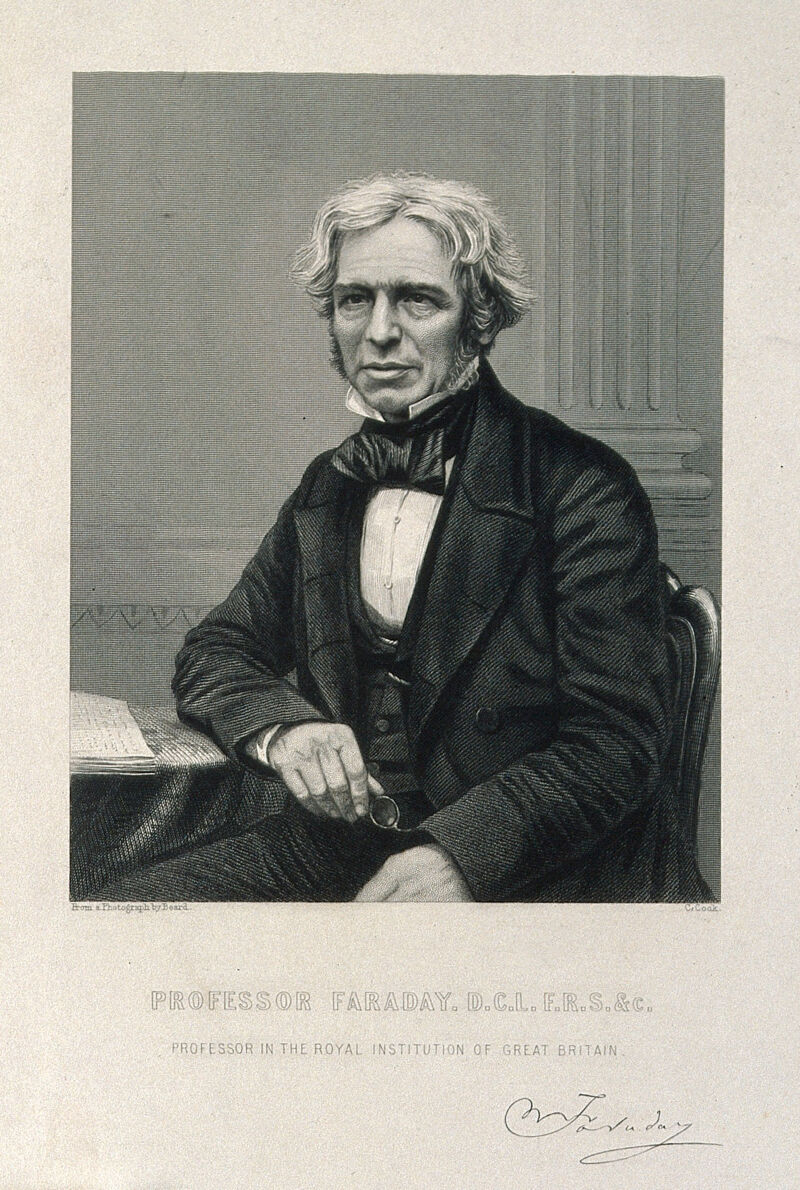
Michael Faraday. Engraving by C. Cook after R. Beard., by Richard Beard
Richard Beard · Wellcome Collection, London · Wellcome Collection
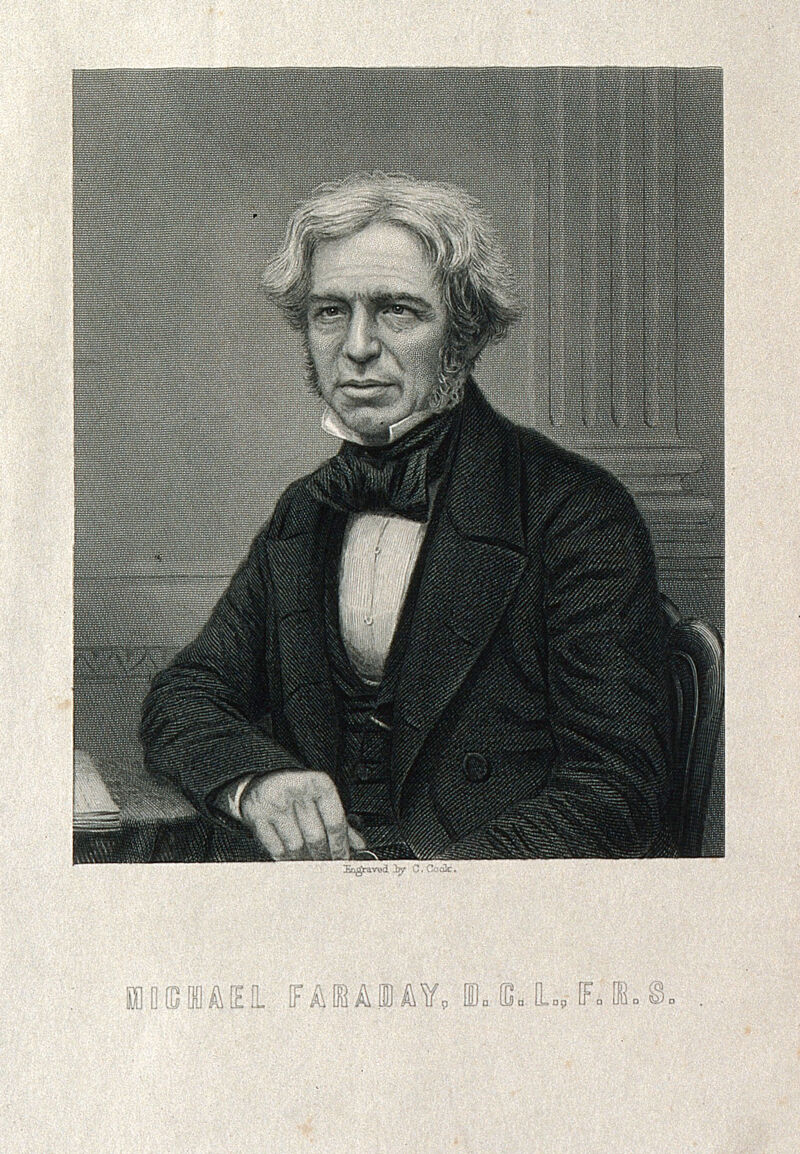
Michael Faraday. Engraving by C. Cook after R. Beard., by Richard Beard
Richard Beard · Wellcome Collection, London · Wellcome Collection
Places
Named by the record
Places
Only places the record itself states, plotted where the house gazetteer settles their coordinates. Nothing is inferred from a name or a nationality.
Stonehouse.
Birth place
Hampstead.
Death place
Photography
In 1839, Beard took an interest in the frenzy of public excitement over the first announcements of practical photographic processes by Louis Daguerre and William Fox Talbot. In early 1840, Beard was contacted by patent agent William Carpmael (1804–1867, who was also Talbot's agent). Carpmael brokered a meeting between Beard and an American, William S. Johnson who was marketing a photographic camera on behalf of his son, John, and Alexander S. Wolcott, an instrument maker. The camera performed poorly but Beard grasped the business potential of photography so entered into a commercial agreement with Johnson and Wolcott, secured a patent on the camera and used John Frederick Goddard's publication of the fact that fuming the silver plate with bromine as well as iodine improved sensitivity to light, thereby reducing exposure times. By September 1841, it was reported that on a bright day Beard's studio could make portraits in four to seven seconds. In 1841, with the assistance of William S. Johnson through instructions of his son (camera inventor), Beard opened England's first professional photography studio at The Polytechnic, Regent Street. He purchased a monopoly on the patent of the Daguerreotype process in England and Wales and spent £20,000 in establishing a chain of photographic studios in London and selling licenses for studios in the provinces, Goddard acting as technical adviser. He explored the possibility of licensing Fox Talbot's calotype process but the two could not agree terms. Though Beard was describing himself in 1851 as a "photographic artist" and exhibited at The Great Exhibition, there is little evidence that he was himself an extensive practitioner. The surviving Daguerreotypes attributed to him are largely the works of others.
Notes from the source article
Cited by Wikipedia
Notes from the source article
These works are cited by the source article, in its own numbering. They are recorded as its citations, not as sources VALÉORINE has verified.
- 1.Ward (2006)
- 2.Wood, R. D. The Calotype Patent Lawsuit of Talbot v. Laroche 1854. privately published. 1975. 0-9504377-0-0.
- 3.Jabez Hughes “The Discoverer of the Use of Bromine in Photography: a few facts and an Appeal,” 15 December 1863 British Journal of Photography (London) (15 December 1863): 487–8.
- 4.John F. Goddard, “Valuable Improvement in Daguerréotype,” 12 December 1840 Literary Gazette; and Journal of the Belles Lettres, Arts, Sciences, &c. (London) No. 1247 (12 December 1840): 803.
- 5.John Johnson
- 6.HENI Talks. What is Daguerreotype? HENI Talks. 2024-06-24.
- 7.John Hannavy, Encyclopedia of nineteenth-century photography, Volume 1 (Routledge Publishers, 2005) p126
- 8.Wood (1979)
- 9.(1849) 8 CB 165, 19 LJCP 36, 13 Jur 1004, 13 LTOS 426
Bibliography printed in the source article · 7
- Thames & Hudson. The History of Photography, 1685 – 1914. 1969. 0-500-01060-9.
- Richard Beard: an ingenious and enterprising patentee. History of Photography. 3. 4. 313–329. 1979. 10.1080/03087298.1979.10441125.
- Hughes, J. The bromine question and Mr J. F. Goddard. Photographic News. 8. 232–233. 1864.
- Ward, J. (2006) "Beard, Richard (1801–1885)", Oxford Dictionary of National Biography, online edn, Oxford University Press. Retrieved 6 August 2007 (subscription required)
- Werge, J. The Evolution of Photography. Ayer Co. 1890. 0-405-04949-8.
- Wood, R. D. The daguerreotype in England: some primary material relating to Beard's lawsuits. History of Photography. 3. 4. 305–309. 1979. 10.1080/03087298.1979.10441123.
- Court of Queen's Bench before Lord Chief Justice Denman. June 25, 1842. BERRY v. CLAUDET
References
Citations
References
Each reference names the institution holding it, so a reader may go to the document itself.
reference work
Secondary witness
The Encyclopedia exists whether or not anything is for sale. Corrections are recorded rather than overwritten, and every version of this record is kept. Published 17 August 2026.
Elsewhere in Photography
11,392 published records in this field, each with its sources named.
- Richa MaheshwariPhotographer
- Richard AnsettPhotographer
- Richard B. MerrillPhotographer
- Richard BartholomewPhotographer
- Richard BensonPhotographer
- Richard BillinghamPhotographer
- Richard BramPhotographer
- Richard Bruce SnodgrassPhotographer
Best supported in this field
For owners
Own a work by Richard Beard?
A specialist will read what you send and tell you what the house can establish, what it cannot, and whether the object is suited to sale. There is no charge and no obligation. The object stays with you throughout; nothing is shipped to us unless it is arranged in writing beforehand.