
QF 6 inch Mark N5 gun
The QF 6-inch Gun Mark N5 (initially designated QF 6-inch Mk V) was a British naval gun, which was developed in the post-war period. It was the last large gun to be operational with the Royal Navy.
QF 6 inch Mark N5 gun
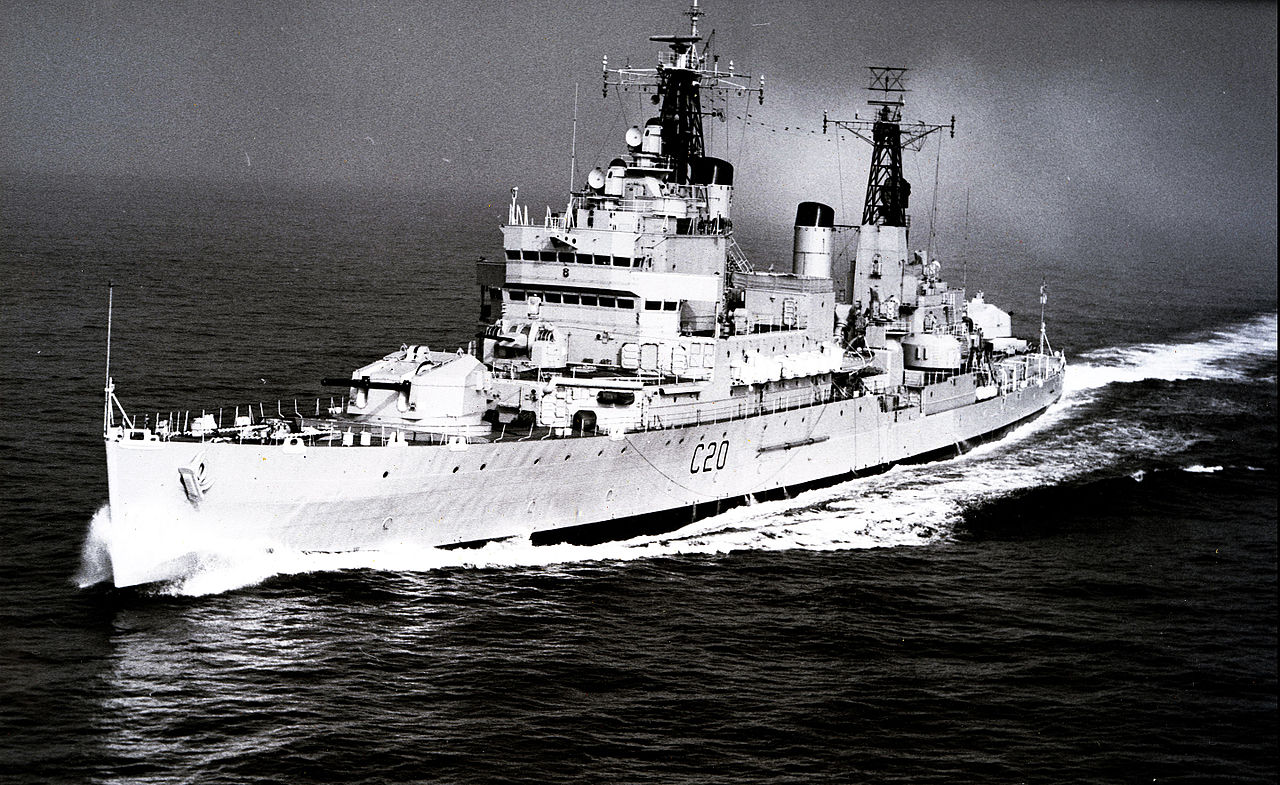
Municipal Archives of Trondheim from Trondheim, Norway · HMS Tiger (ca. 1965) · CC BY 2.0
- Name
- QF 6-inch Mark N5 gun
- Field
- artillery gun
- Period
- 1948
- Region
- United Kingdom
VALÉORINE Encyclopedia
VALÉORINE documentary reading
Documentary summary
The QF 6-inch Gun Mark N5 (initially designated QF 6-inch Mk V) was a British naval gun, which was developed in the post-war period. It was the last large gun to be operational with the Royal Navy.
Admitted source layer · organised and presented by VALÉORINE
Note VALÉORINE
No house-authored Note is published until its assertions and sources pass the VALÉORINE evidence contract. The documentary article remains available in full while that enrichment is being consolidated.
Documentary enrichment in progress · no unsupported statement published
Reference Check
Propose documentary evidence for QF 6 inch Mark N5 gun. A contribution is never written directly as fact: identity, source, rights and evidence gates still decide.
Sign in to contribute
Documentary evidence
Evidence Panel
not yet certified
- Identity
- resolved
- Independent source families
- 0
- Admitted assertions
- 0
- Open conflicts
- 0
Authority files
wikidata · Q23198451 · wikipedia · QF 6-inch Mark N5 gun
In this article
Key facts
Key facts
• Name — QF 6-inch Mark N5 gun • Origin — United Kingdom • Type — Naval gun • Is Ranged — YES • Is Artillery — YES • Is Uk — YES • Service — 1959–1979 • Used By — United Kingdom • Design Date — 1944 (suspended and resumed, 1948) • Weight — 15,344 lb • Length — 315 in • Part Length — 300 in (50 calibres) • Cartridge — AP: 129.75 lb HE: 132 lb • Caliber — 6 in • Rate — 15 to 20 rounds per minute • Velocity — 2,520 ft/s • Max Range — 25,000 yd at 45 degrees elevation (firing AP shot) • Breech — Horizontally sliding breech block (hydraulic operation) • Carriage — Modified Mark XXVI (Mark 26) • Elevation — -5 to +78.5 degrees
Development
Development
The development of the Mark V gun started during the Second World War and was intended for triple Mark 25 mountings on the projected Neptune-class cruisers. When the Neptune-class ships were cancelled in 1946, the gun was redesigned to be mounted in pairs on the new and complex Mark 26 dual purpose mounting and gun turret designed for rapid automatic fire on the projected Design Z (Minotaur-class) cruiser. These were to be the first British 6-inch guns in over sixty years to use brass cartridges instead of bagged charges. By the time the first two experimental weapons had been completed in 1949, the Minotaur-class had been cancelled, and after some time it was decided to use the N5 gun (as the Mark V had been redesignated) with the Mark 26 mounting on the Tiger-class cruisers, whose hulls had been built during the war and had since been totally redesigned. Initial trials were undertaken at the Shoeburyness ranges on the Essex coast. A prototype of the complete gun, mounting and turret system was mounted on the County-class cruiser HMS Cumberland which had been converted to a trials ship in 1949–1951. The turret was mounted in the "B" (forward, upper) position, while mounted on the "X" position (aft, upper) was a twin Vickers QF 3-inch Mark N1 gun which was also under development for the Tiger-class. In April 1957, Cumberland sailed for the Mediterranean for firing trials in the course of which she expended 645 6-inch rounds. The guns were operated in conjunction with the Gun Direction System (GDS1) and a Type 992 radar. The cruisers were to carry two twin 6-inch mounts (one fore and one aft). Together with the 3-inch guns they were intended to be able to fire a barrage of 800 shells per minute.
Service
Service
The guns entered service with the Royal Navy when HMS Tiger was commissioned in 1959. The weapon system gained a reputation for unreliability and difficult maintenance, however the main problem was the number of technicians required to keep the guns operational. This was especially true of the earlier hydraulically actuated mountings while later versions were electrically operated. Two of the ships, HMS Blake in 1969 and HMS Tiger in 1972, underwent a radical conversion which replaced the aft 6-inch turret with a helicopter flight deck and hangar. These two ships remained in service until December 1979 when Blake fired her guns for the last time in the English Channel; they were the last 6-inch guns ever to be fired from a British warship.
Identity
Identity
QF 6 inch Mark N5 gun is classified as an artillery gun. Associated with United Kingdom. Recorded from 1948.
Chronology
Dated record
Chronology
The full dated record · 2 entries
1948
QF 6 inch Mark N5 gun first recorded.
1948
QF 6 inch Mark N5 gun is recorded from 1948.
Places
Named by the record
Places
Only places the record itself states, plotted where the house gazetteer settles their coordinates. Nothing is inferred from a name or a nationality.
- United Kingdom
Citations
References
Each reference names the institution holding it, so a reader may go to the document itself.
reference work
Partially resolvedreference work
Partially resolved
The Encyclopedia exists whether or not anything is for sale. Corrections are recorded rather than overwritten, and every version of this record is kept. Published 14 August 2026.
Elsewhere in Militaria
6,095 published records in this field, each with its sources named.
- QF 4.5 inch Mk I – V gunTerminology
- QF 4.7 inch Mk I–IV gunTerminology
- QF 4.7 inch Mk XI gunTerminology
- QF 5.25 inch gunTerminology
- QF 6 inch/40 gunTerminology
- QF 6 pounder 10 cwt gunTerminology
- QF 6 pounder 6 cwt HotchkissTerminology
- QF 6 pounder Nordenfelt gunTerminology
Best supported in this field
For owners
Own an object connected with QF 6 inch Mark N5 gun?
A specialist will read what you send and tell you what the house can establish, what it cannot, and whether the object is suited to sale. There is no charge and no obligation. The object stays with you throughout; nothing is shipped to us unless it is arranged in writing beforehand.