
Philip van Dijk
Philip van Dijk (10 January 1683 – 2 February 1753) was an 18th-century painter from the Dutch Republic.
Also recorded as Philip Van Dijk · Philip Vandyke · Philip Vandycx · Philipp van Dyck
Philip van Dijk

Jacobus Houbraken · Rijksbureau voor Kunsthistorische Documentatie · Public domain
- Name
- Philip van Dijk
- Born
- 10 January 1683
- Birthplace
- Oud-Beijerland
- Place of death
- The Hague
- Field
- Painting
- Movement
- Baroque
- Died
- 1753 · The Hague.
- Nationality
- Dutch Republic
- Occupation
- painter · artist
- Fields
- portrait
- Known for
- Judith with the Head of Holofernes · Woman Playing a Lute · Lady attending to her toilet
- Languages
- Dutch
VALÉORINE Encyclopedia
VALÉORINE documentary reading
Documentary summary
Philip van Dijk (10 January 1683 – 2 February 1753) was an 18th-century painter from the Dutch Republic.
Admitted source layer · organised and presented by VALÉORINE
Reference Check
Propose documentary evidence for Philip van Dijk. A contribution is never written directly as fact: identity, source, rights and evidence gates still decide.
Sign in to contribute
Documentary evidence
Documentary basis
Authority files
wikidata · Q2086528 · wikipedia · Philip van Dijk
In this article
Biography
Biography
Jan George Freezen is recorded as having studied under Philip van Dijk. The recorded working language is Dutch. The field of work recorded is portrait. Subjects and genres recorded for the work are portrait. Places of work recorded in the authority are Amsterdam, Rotterdam and Middelburg. Works named in the authority record are Judith with the Head of Holofernes, Woman Playing a Lute and Lady attending to her toilet. Work by Philip van Dijk is recorded in the collections of Palais des Beaux-Arts de Lille, National Museum of World Cultures, Philadelphia Museum of Art, Centraal Museum and Museum Rotterdam.
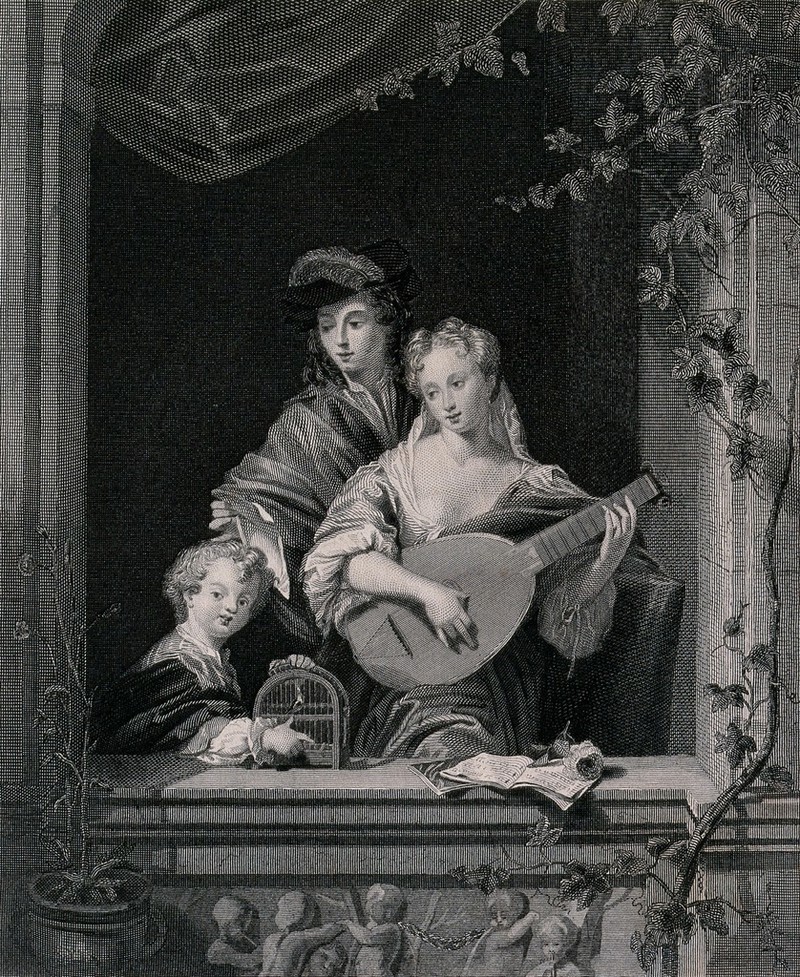
A family with a young child by an open window singing together with the woman playing an instrument. Engraving by W.H. Pyne after Philip Vandyke., by Philip van Dijk
Philip van Dijk · Wellcome Collection, London · Wellcome Collection
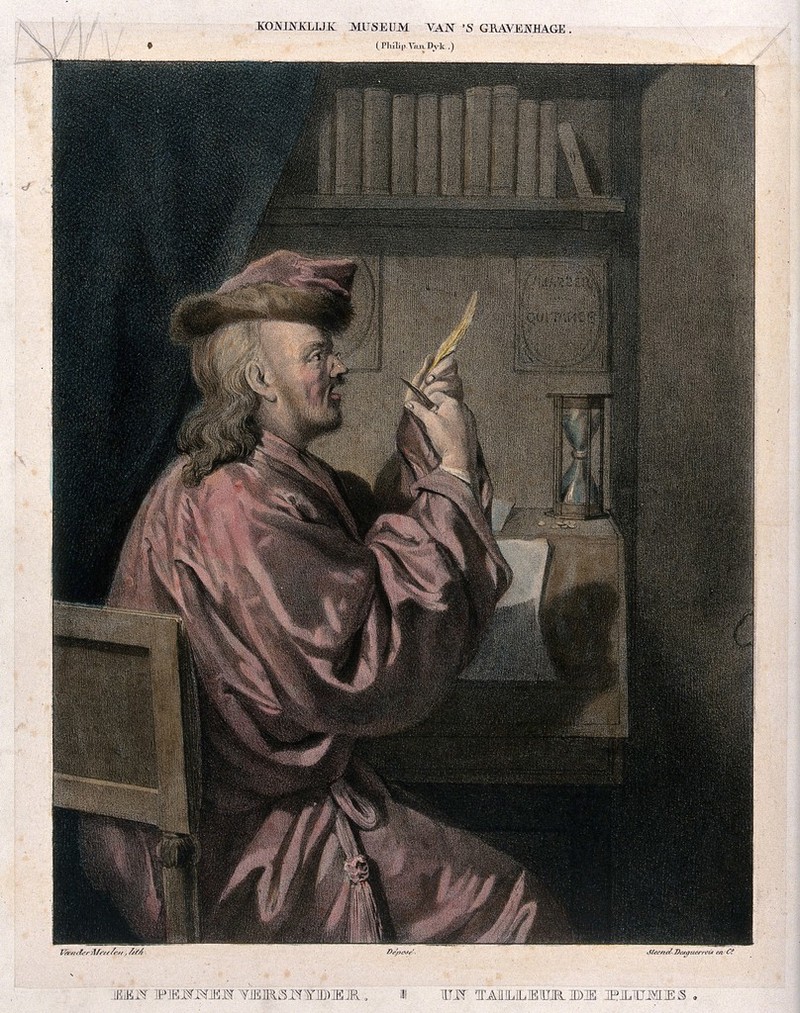
A man sits at a desk sharpening a quill pen with a knife. Coloured lithograph by P.H.L. Vander Meulen after Philip van Dyk., 1800-1899, by Philip van Dijk
Philip van Dijk · Wellcome Collection, London · Wellcome Collection
Key facts
Key facts
• Name — Philip van Dijk • Born — 10 January 1683 • Birthplace — Oud-Beijerland • Place of death — The Hague • Field — Painting • Movement — Baroque
Biography
Biography
• Illustration — Lute player, used on Dutch 100 guilder note. According to the RKD, he was a student of Arnold Boonen in Amsterdam, but became a student of Adriaen van der Werff in Rotterdam, where he married in 1708. Later the same year, he became a member of the Guild of St. Luke in Middelburg. In 1718 he became a member of the Confrerie Pictura, where he became a popular painter. Much later he returned to teach at the drawing academy and had various students, including Jan Augustini, Louis de Monie, and Hendrik Pothoven (1725–1807) from 1746. He left the Hague temporarily for 10 years in 1726, when he moved to Kassel to become court painter for William VIII, Landgrave of Hesse-Cassel. In this capacity, he painted Landgravine Marie Louise of Hesse-Kassel and her family. In 1737 he returned to Middelburg to pay back-dues for the Guild there, and in 1750 he is registered as back to the Hague where he became court painter to Marie Louise's son William IV, Prince of Orange.
Identity and origins
Identity and origins
The authorities additionally record the headings Philip Van Dijk, Philip Vandyke, Philip Vandycx, Philipp van Dyck and Philip van Dyke. His recorded language was Dutch.
Career and activity
Career and activity
Philip van Dijk worked in portrait. His work is associated with Baroque. He belonged to Confrerie Pictura. He worked at Amsterdam, Rotterdam, Middelburg and The Hague.
Work and production
Work and production
Works recorded as notable number 3: Judith with the Head of Holofernes, Woman Playing a Lute and Lady attending to her toilet. His recorded genre is portrait.
Life and career
Dated record
Life and career
The full dated record · 2 entries
1683
Philip van Dijk born at Oud-Beijerland.
1753
Philip van Dijk died at The Hague.
Places
Named by the record
Places
Only places the record itself states, plotted where the house gazetteer settles their coordinates. Nothing is inferred from a name or a nationality.
Oud-Beijerland.
Birth place
The Hague.
Death place
Legacy
His family portrait paintings hang in many museums located in former residences of the Hesse-Cassel and Orange-Nassau families. His painting of a lute player was used centuries later as a model for the Dutch 100 guilder note.
References
Citations
References
Each reference names the institution holding it, so a reader may go to the document itself.
reference work
Secondary witnessreference work
Secondary witness
Further particulars
Held on the record
Further particulars
Open the remaining particulars
Each of those relationships is stated by the authority record rather than inferred from style.
The Encyclopedia exists whether or not anything is for sale. Corrections are recorded rather than overwritten, and every version of this record is kept. Published 17 August 2026.
Elsewhere in Paintings
18,717 published records in this field, each with its sources named.
- Philip ReinagleArtist
- Philip Richard MorrisArtist
- Philip SadéeArtist
- Philip SansomArtist
- Philip van KouwenberghArtist
- Philip von SaltzaArtist
- Philip WhicheloArtist
- Philip Wilson SteerArtist
Best supported in this field
For owners
Own a work by Philip van Dijk?
A specialist will read what you send and tell you what the house can establish, what it cannot, and whether the object is suited to sale. There is no charge and no obligation. The object stays with you throughout; nothing is shipped to us unless it is arranged in writing beforehand.