
Philip Galle
Illustration — Portrait by his pupil Hendrick Goltzius, 1577 Philip (or Philips) Galle (1537 – March 1612) was a Dutch publisher, best known for publishing old master prints, which he also produced as designer and engraver. He is especially known for his reproductive engravings of paintings.
Also recorded as Philippe Galle · Philippum Gallum · Philippus Galle · Filips Galle
Philip Galle
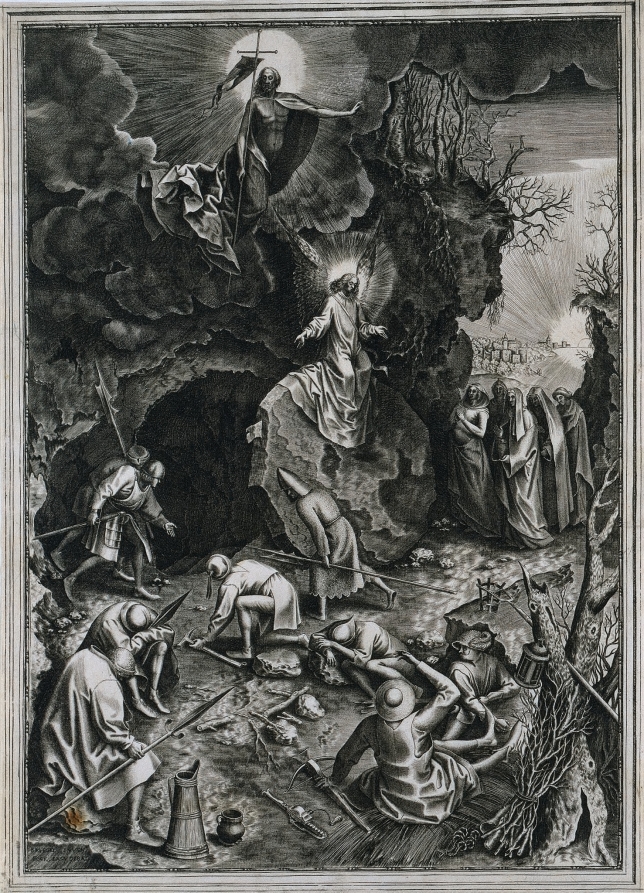
Philip Galle · The Cleveland Museum of Art · Leonard C. Hanna Jr. Fund · CC0
- Born
- 1537.
- Died
- 1612.
- Nationality
- Spanish Netherlands and Dutch Republic.
- Occupation
- printmaker, graphic artist, print publisher, draftsperson, publisher, printer, engraver, copper engraver and writer.
VALÉORINE Encyclopedia
VALÉORINE documentary reading
Documentary summary
Illustration — Portrait by his pupil Hendrick Goltzius, 1577 Philip (or Philips) Galle (1537 – March 1612) was a Dutch publisher, best known for publishing old master prints, which he also produced as designer and engraver. He is especially known for his reproductive engravings of paintings.
Admitted source layer · organised and presented by VALÉORINE
Note VALÉORINE
Philip Galle (1537–1612) was a copper engraver, draftsperson and engraver, among other activities and a national of the Dutch Republic and Spanish Netherlands. Born in Haarlem, the copper engraver died in Antwerp. Philip Galle worked in Antwerp and Haarlem. Languages used include Dutch, French and Latin.
Composed from admitted, traceable facts · 26 September 2026
VALÉORINE
Reference Check
Propose documentary evidence for Philip Galle. A contribution is never written directly as fact: identity, source, rights and evidence gates still decide.
Sign in to contribute
Documentary evidence
Evidence Panel
not yet certified
- Identity
- resolved
- Independent source families
- 0
- Admitted assertions
- 0
- Open conflicts
- 0
Authority files
wikidata · Q1379395 · wikipedia · Philip Galle
In this article
Life
Life
• Illustration — "Garden of Holland", allegorical engraving by Galle of a woman dressed in the manner of Kenau Simonsdochter Hasselaer Galle was born in Haarlem in the Netherlands, where he was a pupil of the humanist and engraver Dirck Volkertsz. Coornhert. According to the RKD, he married Catharina van Rollant on 9 June 1569. They had five children who later became active as artists: Theodoor, Cornelis, Philips II, Justa (who married the engraver Adriaen Collaert) and Catharina (who married the engraver Karel de Mallery). In Haarlem he engraved several works of the Haarlem painter Maarten van Heemskerck. Even while he worked from 1557 for the Antwerp publisher Hieronymus Cock, he established himself as an independent printer in Haarlem in 1563, where he made prints after Johannes Stradanus and Maerten de Vos. In 1569 the series of Counts of Holland and Zeeland was published, a series of six engravings which he made in Haarlem with Willem Thibaut, just before moving to Antwerp somewhere near the end of 1569 or the start of 1570, probably to avoid the Siege of Haarlem. His first house in Antwerp was most probably a house called Het Gulden Hert (The Golden Deer), opposite the house of the mapmaker Ortels (also known as Ortelius). He managed Cock's press and succeeded Cock in 1570 and was received as a citizen of Antwerp the following year. The work contains an approbatio, or permission from the ecclesiastical (Roman Catholic) authorities to publish. Galle had a difficult relationship with religion and political power during his entire life. He was a friend of the Antwerp printer Christopher Plantin and perhaps part of the secretive humanist circle of the Familia Caritatis (Family of Love), which makes it difficult to place him as Catholic or Protestant during the Dutch Revolt. Some of his numerous prints made in Antwerp were after Anthonie van Blocklandt, Hans Bol, Marcus Gheeraerts, Gerard Groening, and Hans Vredeman de Vries. Galle had many pupils who became popular engravers. The map engraver Cornelis de Hooghe (or Hogius), who later died a gruesome death when he was beheaded and quartered in the Hague because of a conspiracy against the state, received his education when Galle still lived in Haarlem, while De Hooghe already worked for himself at the moment Galle moved to Antwerp. Galle's son Cornelis followed him as an engraver. Early works by Cornelis shows a striking similarity to the work of his father. Philip Galle's press and publishing house was a success. His pupils included his children, de Hooghe, Hendrick Goltzius, Jan Baptist Barbé, Pieter Nagel, the sons of his colleague Hans Collaert Adriaen and Jan, and Karel van Mallery. His sons and sons-in-law carried on the business at Antwerp through the seventeenth century.
Death
Death
He died in Antwerp in March 1612.
Gallery
Gallery
Pictures from the Theatri Orbis Terrarum Enchiridion 1585 • Illustration — Titlepage • Illustration — Germania • Illustration — Zelandicarum • Illustration — Flandria + text Engravings attributed to Galle • Illustration — Macropedius • Illustration — Ortelius • Illustration — Death is the ultimate limit • Illustration — The Alchemist; after Breugel • Illustration — Triumph of Death • Illustration — Battle at Mons Regonis • Illustration — Sugarmill • Illustration — Northern Europe 1577 • Illustration — Discordia. The Seven Sacraments (1576) with Hans Bol • Illustration — Titlepage • Illustration — Baptism • Illustration — Confirmation • Illustration — Eucharist • Illustration — Penance • Illustration — Anointing of the Sick • Illustration — Holy Orders • Illustration — Matrimony
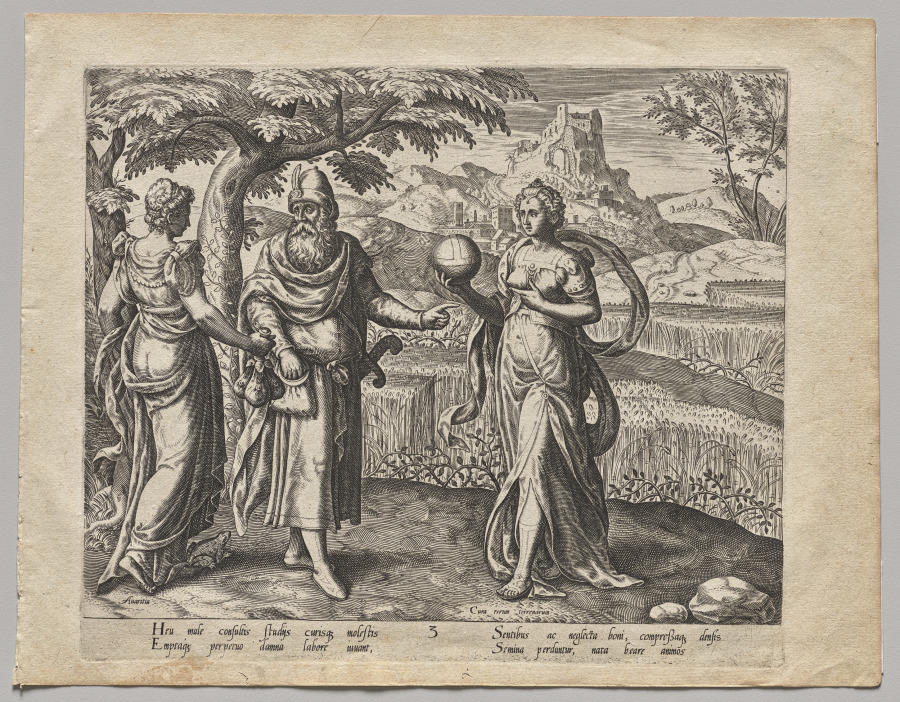
The Seed Received among the Thorns, 1574, by Philip Galle
Philip Galle · The Cleveland Museum of Art · L. E. Holden Fund
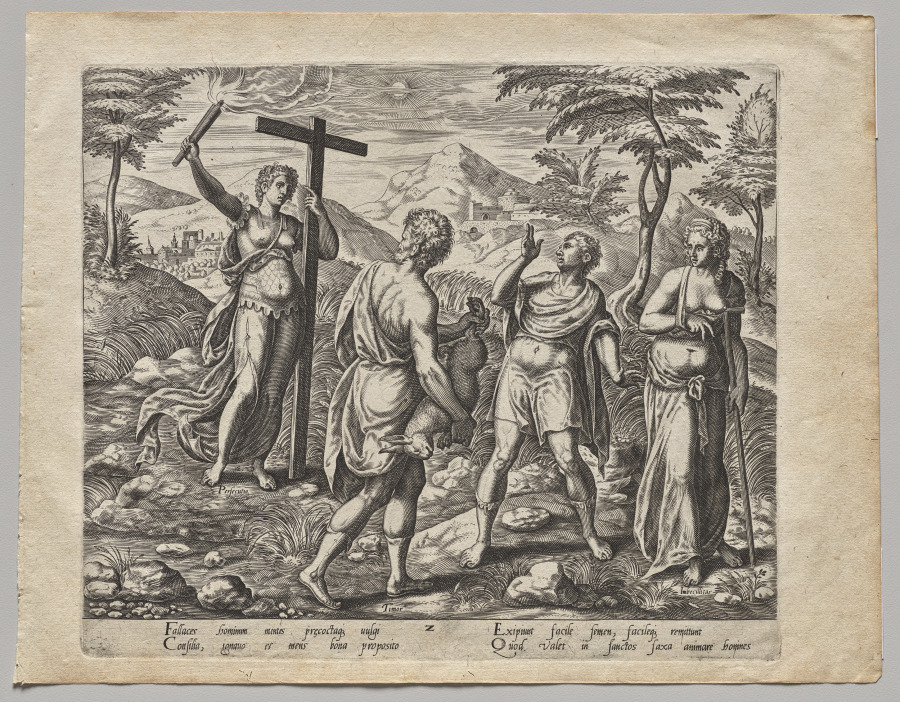
The Seed Falling among the Stones, 1574, by Philip Galle
Philip Galle · The Cleveland Museum of Art · L. E. Holden Fund
Life and career
Dated record
Life and career
The full dated record · 2 entries
1537
Philip Galle was born in 1537.
1612
Philip Galle died at Antwerp.
Writings
As a resident of Antwerp, Galle witnessed numerous events of the Eighty Years War, notably the siege and looting of the town in 1576 by the Spaniards, called "The Spanish Fury". Galle wrote a Cort Verhael, a short chronicle of these events, which was published around the end of 1578. This booklet, which included several maps, was dedicated to archduke Matthias of Austria, a relative of the legal king Philip II of Spain, but not recognised by him as a landvoogd or supervisor of the country. A later print was dedicated to Jean de Bourgogne, lord of Froidmont or Fromont. This rather personal book, which was translated in several languages soon after its first publication, shows Galle as a peace-loving person who intended to stay far away from the political and military turmoil of his era.
Primary material
Documents and archives
Institutional database
- Wikidata, structured authority record Q1379395: Philip Galle
Scholarly · Wikimedia Foundation
reference work
- “Philip Galle”, English Wikipedia, consulted as further reading
Reputable secondary · Wikipedia
Notes from the source article
Cited by Wikipedia
Notes from the source article
These works are cited by the source article, in its own numbering. They are recorded as its citations, not as sources VALÉORINE has verified.
References
Citations
References
Each reference names the institution holding it, so a reader may go to the document itself.
Institutional database
Wikidata, structured authority record Q1379395: Philip GalleWikimedia Foundation
Verifiedreference work
Partially resolved
The Encyclopedia exists whether or not anything is for sale. Corrections are recorded rather than overwritten, and every version of this record is kept. Published 14 August 2026.
Elsewhere in Prints
4,138 published records in this field, each with its sources named.
- Philibert BouttatsEngraver
- Philibert-Louis DebucourtEngraver
- Philip AudinetEngraver
- Philip FruytiersEngraver
- Philip GustonEngraver
- Philipp Heinrich DunkerEngraver
- Philipp KilianEngraver
- Philipp Peter RoosEngraver
Best supported in this field
For owners
Own a work by Philip Galle?
A specialist will read what you send and tell you what the house can establish, what it cannot, and whether the object is suited to sale. There is no charge and no obligation. The object stays with you throughout; nothing is shipped to us unless it is arranged in writing beforehand.