
Peter Frederick Robinson
Peter Robinson Peter Frederick Robinson (1776–24 June 1858) was an English architect.
Also recorded as P. F. Robinson
Peter Frederick Robinson
Peter Frederick Robinson · Wellcome Collection, London · Wellcome Collection · Public Domain Mark
- Born
- 1776
- Died
- Peter Frederick Robinson died on 24 June 1858.
- Nationality
- United Kingdom
- Occupation
- architect
- Languages
- English
VALÉORINE Encyclopedia
VALÉORINE documentary reading
Documentary summary
Peter Robinson Peter Frederick Robinson (1776–24 June 1858) was an English architect.
Admitted source layer · organised and presented by VALÉORINE
Note VALÉORINE
Peter Frederick Robinson was an architect; nationality: United Kingdom. Peter Frederick Robinson was born in 1776. The language is English.
Composed from admitted, traceable facts · 01 October 2026
VALÉORINE
Reference Check
Propose documentary evidence for Peter Frederick Robinson. A contribution is never written directly as fact: identity, source, rights and evidence gates still decide.
Sign in to contribute
World of VALÉORINE
Documentary connections
Only confirmed graph relationships appear here. Images are shown only when their identity and reuse rights both pass the documentary gate.
Documentary evidence
Documentary basis
Authority files
wikidata · Q7174082 · wikipedia · Peter Frederick Robinson
In this article
Career
Career
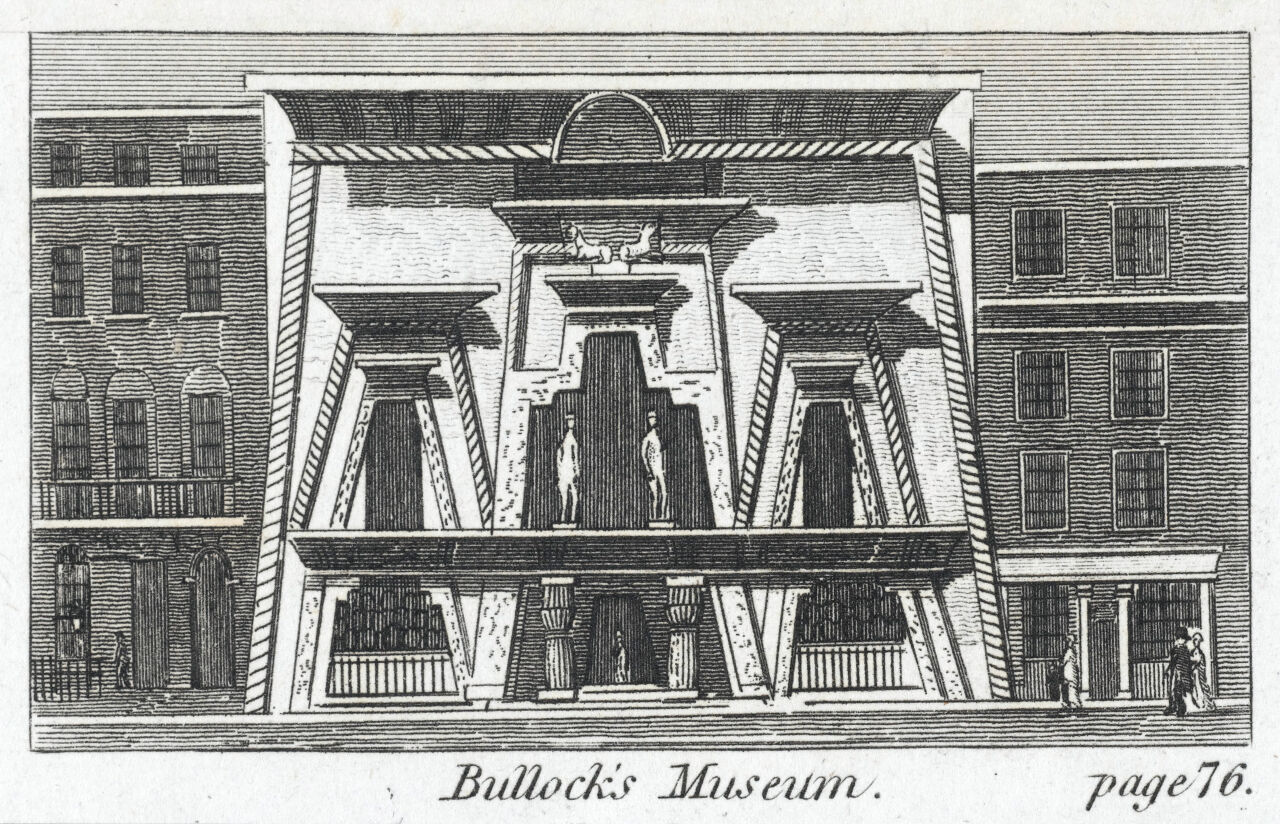
• Illustration — Stora Sundby Castle, Sweden, 1831-1848. • Illustration — The facade of the Egyptian Hall in 1815. • Illustration — Sketty Hall. Robinson began his career in Henry Holland's office and worked under William Porden at the Brighton Pavilion in 1801–02. In 1805 he designed Hans Town Assembly Rooms, Cadogan Place, and in 1811–12 the Egyptian Hall, Piccadilly, for William Bullock's museum. The details of the elevation were taken from Denon's work on the Egyptian monuments, and especially from the temple at Denderah; but the composition of the design was less authentic. In 1813 he designed the town-hall and market-place at Lampeter, Cardiganshire. He visited Rome 1816. In 1819 he made alterations at Bulstrode for the Duke of Somerset; in 1823 he restored the church at Mickleham, Surrey; in 1826–28 he made alterations to the prison at York Castle and in 1829–32 he built a Swiss Cottage at Decimus Burton's Colosseum in Regent's Park. He also designed various country houses. In 1820 he exhibited an architectural drawing at the Royal Academy's RA 52nd exhibition: Additions to be made to Norbury Park House, Surrey. In 1836 he submitted designs to the competition for the new Houses of Parliament. He published a number of books of designs, including Designs for Farm Buildings: with a view to prove that the simplest forms may be rendered pleasing and ornamental by a proper disposition of the rudest materials, Designs for Gate Cottages, Lodges, and Park Entrances, in various styles, from the humblest to the castellated, Designs for Ornamental Villas and Domestic Architecture in the Tudor Style. He also published five parts of a continuation of Vitruvius Britannicus (begun by Colin Campbell and continued by George Richardson), covering Woburn Abbey (1827), Hatfield House (1833), Hardwicke Hall (1835), Castle Ashby (1841) and Warwick Castle (1842). Robinson became a Fellow of the Society of Arts in 1826, and was a vice-president of the Institute of British Architects (now RIBA) in 1835–9. In about 1840 financial difficulties caused him to leave England for Boulogne, where he died on 24 June 1858.
Personal
Personal
Between at least 1821 and 1837, he lived at 29 Lower Brook Street, Grosvenor Square, London. He married Julia Ponsonby, daughter of Rev Mr Wall, at St George's Hanover Square on 5 May 1828. Sons were born in October 1830 and December 1831.
Works
Works
• Hans Town Assembly Rooms, Cadogan Place, London (1805) • Egyptian Hall, Piccadilly, London (1811–1812) • Sketty Hall • The Swiss cottage in Singleton Park, Swansea • Singleton Abbey • Swiss Cottage, at the Colosseum in Regent's Park (1829–1832) • Stora Sundby Castle, Sweden, (1831-1848) • De Grey House, York, England (1835) • Park Terrace, Nottingham
Life and career
Dated record
Life and career
The full dated record · 2 entries
1776
Peter Frederick Robinson born.
1858
Peter Frederick Robinson died.
Primary material
Documents and archives
reference work
- “Peter Frederick Robinson”, English Wikipedia, consulted as further reading
Reputable secondary · Wikipedia
authority record
- Wikidata, structured authority record Q7174082: Peter Frederick Robinson
General reference · Wikidata
Notes from the source article
Cited by Wikipedia
Notes from the source article
These works are cited by the source article, in its own numbering. They are recorded as its citations, not as sources VALÉORINE has verified.
- 1.Lloyd, Thomas. Carmarthenshire and Ceredigion. Yale University Press. 482. 2006. 9780300101799.
- 2.Nairn, Ian. The Buildings of England: Surrey. Penguin Books. 365. 1971. 0-300-09675-5.
- 3.COPAC Brief Record Display.
- 4.Dodgson, Campbell. 49.
- 5.Trade Directories, Poll Books
- 6.Morning Post, 6 May 1828; 21 October 1830; 4 January 1832
- 7.Historic England. De Grey House and Attached Front Railings, Gate and Lamp Standard. National Heritage List for England.
References
Citations
References
Each reference names the institution holding it, so a reader may go to the document itself.
reference work
Secondary witnessauthority record
General reference
The Encyclopedia exists whether or not anything is for sale. Corrections are recorded rather than overwritten, and every version of this record is kept. Published 18 August 2026.
Elsewhere in Design
11,558 published records in this field, each with its sources named.
- Peter DollarDesigner
- Peter E. BicknellDesigner
- Peter EllisDesigner
- Peter FoggoDesigner
- Peter G. RoweDesigner
- Peter GrainDesigner
- Peter HarrisonDesigner
- Peter HaymanDesigner
Best supported in this field
For owners
Own a work by Peter Frederick Robinson?
A specialist will read what you send and tell you what the house can establish, what it cannot, and whether the object is suited to sale. There is no charge and no obligation. The object stays with you throughout; nothing is shipped to us unless it is arranged in writing beforehand.