
Peter Flötner
Peter Flötner, also Flatner, Flettner, or Floetner (c. 1490 in Thurgau – 23 October 1546, in Nuremberg), was a German designer, sculptor, and printmaker. He was a leading figure in the introduction of Italianate Renaissance design to sculpture and the decorative arts in Germany, competing in this regard with the Vischer Family of Nuremberg.
Also recorded as Peter Flotner · Peter Fletner · Peter Flettner · Peter Flodner
Peter Flötner
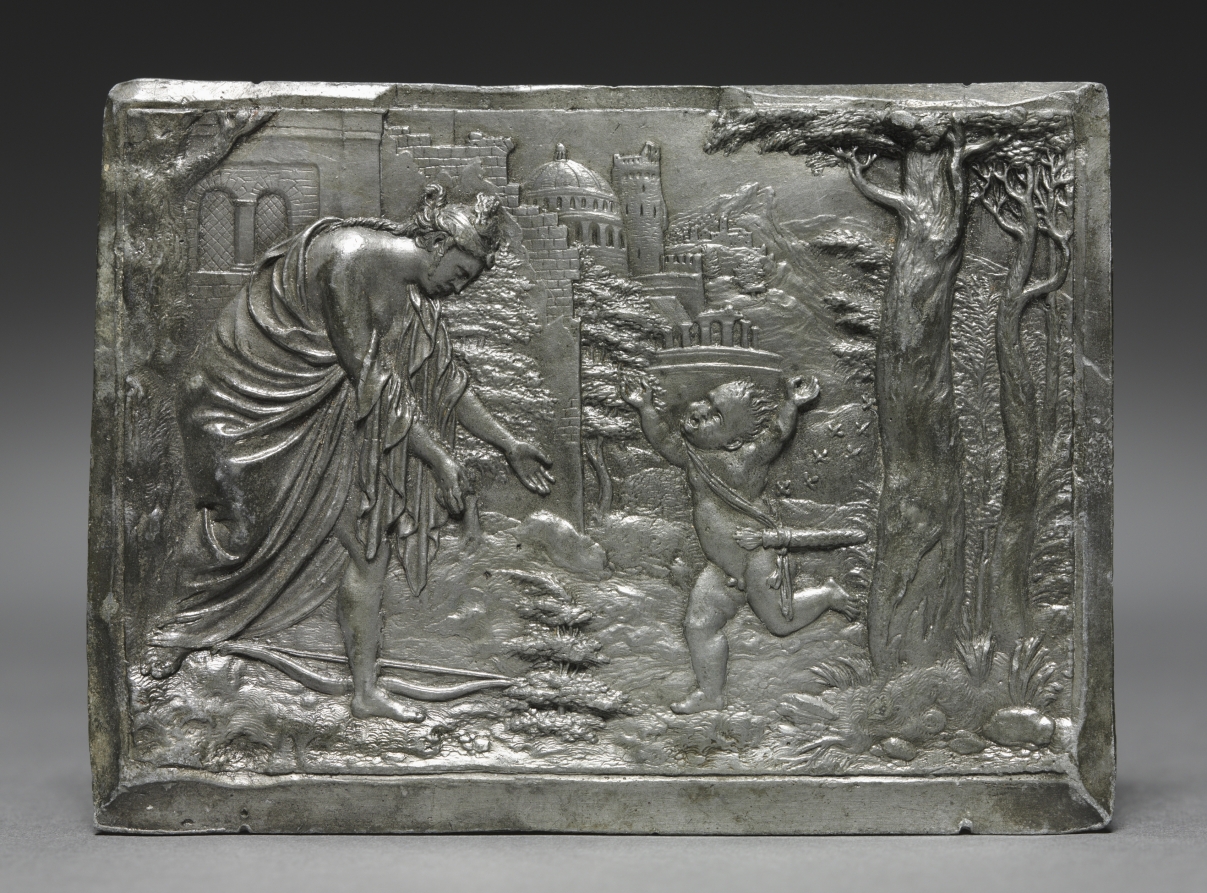
Peter Flötner · The Cleveland Museum of Art · Purchase from the J. H. Wade Fund · CC0
- Born
- 1485
- Died
- 1546
- Nationality
- Germany
- Occupation
- sculptor · architect · goldsmith · medalist · printmaker
VALÉORINE Encyclopedia
VALÉORINE documentary reading
Documentary summary
Peter Flötner, also Flatner, Flettner, or Floetner (c. 1490 in Thurgau – 23 October 1546, in Nuremberg), was a German designer, sculptor, and printmaker. He was a leading figure in the introduction of Italianate Renaissance design to sculpture and the decorative arts in Germany, competing in this regard with the Vischer Family of Nuremberg.
Admitted source layer · organised and presented by VALÉORINE
Reference Check
Propose documentary evidence for Peter Flötner. A contribution is never written directly as fact: identity, source, rights and evidence gates still decide.
Sign in to contribute
Documentary evidence
Documentary basis
Authority files
wikidata · Q73088 · wikipedia · Peter Flötner
In this article
Life and work
Life and work
He designed and produced work in a wide range of media, but "seems to have made only a modest living", unlike many of his contemporary artists. • Illustration — "Accidia" (Sloth), plaquette from a set of the Seven Deadly Sins, c. 1540 • Illustration — Peter Flötner: Vanitas, 1535–1540, gilt bronze plaquette, Bavarian National Museum, Munich
Flötner probably trained as a goldsmith in Augsburg with Adolf Daucher. Under his master's guidance he contributed to the goldwork in the Fugger Chapel. After an interlude in Italy, he became a master craftsman in Ansbach. He moved to Nuremberg in 1522 and took the Bürgereid ("Citizen oath"), described as a sculptor. Two of his most important free-standing sculptures are a 34.5 cm tall limewood figure of a nude man, possibly Adam, in the Kunsthistorisches Museum in Vienna, his only surviving signed sculpture, and the figure of Apollo firing a bow on the Apollo Fountain (1532). The fountain was made for the Herrenschiesshaus in Nuremberg, and cast in bronze by Pankraz Labenwolf. As a printmaker he produced prints for other artists or artisans to follow as patterns: designs for furniture, altarpiece surrounds, or goldwork, and panels of ornament, as well as book illustrations, playing cards, and a decorative alphabet. He became increasingly a designer of works that were actually made by others, even in media such as gold or bronze that he was trained in himself. Reliefs, medals and similar objects were modelled in carved wood or wax, with drawings for other types of object. Small easily portable metal relief plaques and statuettes were produced in editions and, like his prints, played a leading part in disseminating Italianate style across Northern Europe, following the pattern begun by the prints of Nuremberg's most famous artist, Albrecht Dürer. His plaques appear in a variety of metals, but most often brass, though lead, bronze and gilded ones (illustrated) are also found. At least 17 examples of one design are known. A collection of his prints and designs, the Kunstbuch, was published after his death in 1549. He designed the sculptural decoration, and possibly the architecture, of the Hirschvogelhaus (destroyed in 1945) and the Tucherschloss villa in Nuremberg. He also made the triumphal arch of Emperor Charles V (no longer standing) and may have contributed to parts of Heidelberg Castle. Flötner was also interested in Vitruvius's scientific work. Two years after Flötner's death, Petrejus of Nuremberg published the first German translation of Vitruvius, largely on the back of Peter Flötner's previous work. Like Dürer and other artists, he is buried in the Johannisfriedhof cemetery. Flötner received most attention around 1900. He was seen as one of the finest German architects of his time and a pioneer of Italianesque architecture in the north. Braun (see "sources") emphasized Flötner's importance for Renaissance art, and said "genius" was not too much praise for him. There was a 1945 exhibition of his work in the German National Museum.
Works designed
Works designed
• Choir stalls and organ in the chapel of Fugger in Augsburg, Germany - 1516-18 • Fountain in Mainz, 1526 • Apollo Fountain in Nuremberg, 1532 • Hirsvogelsaal (Hirschvogel Hall), composition, and interior • Triumphal arch of Emperor Charles V, Nuremberg - 1541 • Ottheinrichsbau (design of the facade) of the Heidelberg Castle (not certain) 1546–50
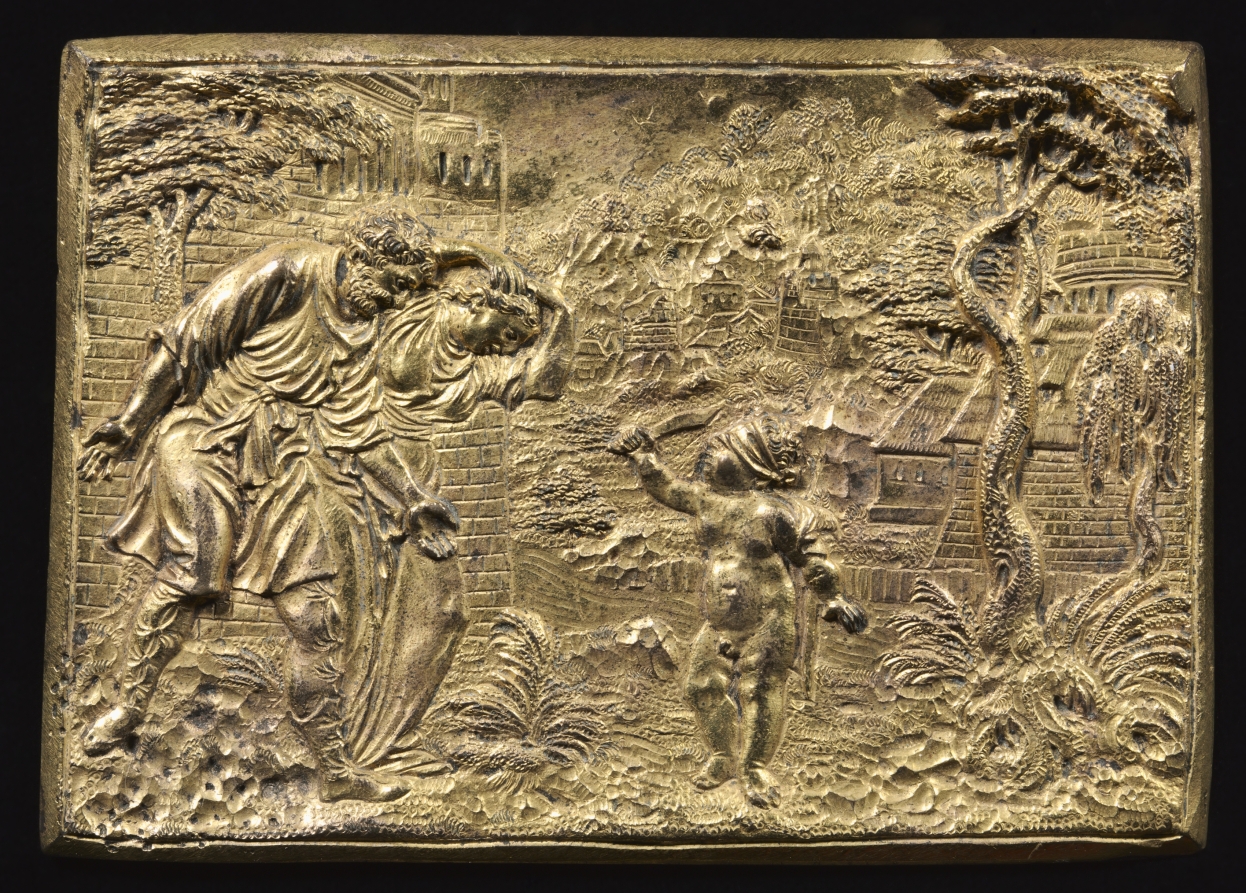
Allegory of Jealousy?, 1500s, by Peter Flötner
Peter Flötner · The Cleveland Museum of Art · John L. Severance Fund
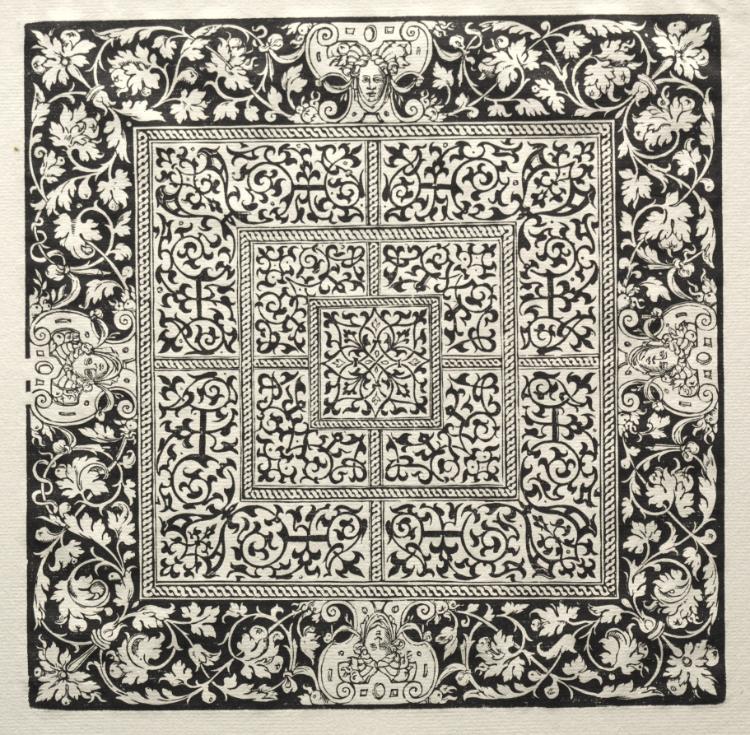
A gaming board, by Peter Flötner
Peter Flötner · The Cleveland Museum of Art · Charles W. Harkness Endowment Fund
Life and career
Dated record
Life and career
The full dated record · 2 entries
1485
Peter Flötner born at Canton of Thurgau.
1546
Peter Flötner died at Nuremberg.
Primary material
Documents and archives
Institutional database
- Wikidata, structured authority record Q73088: Peter Flötner
Scholarly · Wikimedia Foundation
reference work
- “Peter Flötner”, English Wikipedia, consulted as further reading
Reputable secondary · Wikipedia
Notes from the source article
Cited by Wikipedia
Notes from the source article
These works are cited by the source article, in its own numbering. They are recorded as its citations, not as sources VALÉORINE has verified.
- 1.Die kleine Enzyklopädie, Encyclios-Verlag, Zürich, 1950, Vol 1, p. 522
- 2.Shultz, 473
- 3.Decorative alphabet
- 4.Two plaques in the Metropolitan Museum of Art
- 5.Scultz, 445
- 6.Rowlands, John. The Age of Dürer and Holbein: German Drawings 1400-1550. British Museum Publications. 124–5. 1988. 0-7141-1639-4.
References
Citations
References
Each reference names the institution holding it, so a reader may go to the document itself.
Institutional database
Wikidata, structured authority record Q73088: Peter FlötnerWikimedia Foundation
Institutional witnessreference work
Secondary witness
The Encyclopedia exists whether or not anything is for sale. Corrections are recorded rather than overwritten, and every version of this record is kept. Published 14 August 2026.
Elsewhere in Sculpture
6,174 published records in this field, each with its sources named.
- Peter David EdstromArtist
- Peter Dell the ElderArtist
- Peter DruckerArtist
- Peter FishmanArtist
- Peter ForakisArtist
- Péter ForgácsArtist
- Peter FuchsArtist
- Peter HartmannArtist
Best supported in this field
For owners
Own a work by Peter Flötner?
A specialist will read what you send and tell you what the house can establish, what it cannot, and whether the object is suited to sale. There is no charge and no obligation. The object stays with you throughout; nothing is shipped to us unless it is arranged in writing beforehand.