
Pavol Dobšinský
Pavol Dobšinský (16 March 1828 – 22 October 1885) was a Slovak collector of folklore tales and a key figure in the Slovak national revival. An important figure of the Romantic literature in Slovakia and the 19th century Slovak literature, Dobšinský is notable for creating the largest and most complete collection of Slovak folktales, Prostonárodné slovenské povesti (Simple National Slovak Tales), self-published in a series of eight books from 1880 to 1883.
Also recorded as Pavol Dobsinsky
Pavol Dobšinský
Peter439 · CC BY-SA 3.0
- Born
- 1828 · Slavošovce.
- Died
- 1885 · Drienčany.
- Nationality
- Austria–Hungary
- Occupation
- writer · ethnologist · poet · folklorist · priest · linguist
- Education
- Ján Francisci-Rimavský Gymnasium
- Languages
- Slovak
VALÉORINE Encyclopedia
VALÉORINE documentary reading
Documentary summary
Pavol Dobšinský (16 March 1828 – 22 October 1885) was a Slovak collector of folklore tales and a key figure in the Slovak national revival. An important figure of the Romantic literature in Slovakia and the 19th century Slovak literature, Dobšinský is notable for creating the largest and most complete collection of Slovak folktales, Prostonárodné slovenské povesti (Simple National Slovak Tales), self-published in a series of eight books from 1880 to 1883.
Admitted source layer · organised and presented by VALÉORINE
Reference Check
Propose documentary evidence for Pavol Dobšinský. A contribution is never written directly as fact: identity, source, rights and evidence gates still decide.
Sign in to contribute
Documentary evidence
Documentary basis
Authority files
wikidata · Q897973 · wikipedia · Pavol Dobšinský
In this article
Biography
Biography
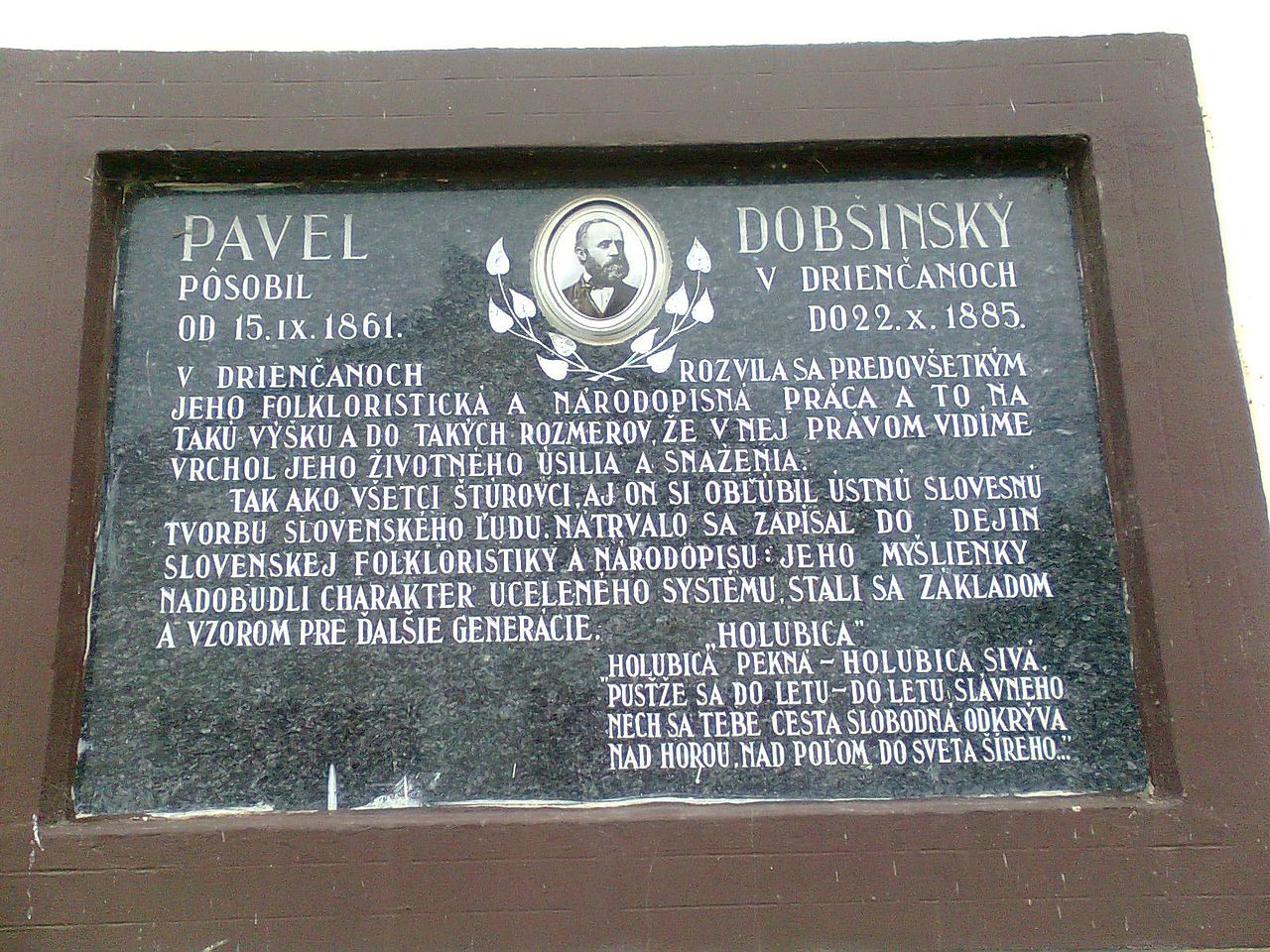
Pavol Dobšinský was born on 16 March 1828 in Slavošovce in Rožňava District. His father was a Lutheran minister. He was educated at the grammar schools in Rožňava and Miskolc and later studied at the evangelical lycée in Levoča. He fought with Honvéds and later Imperial Army in the Hungarian Revolution of 1848. After being discharged from the army, he became an assistant to Samuel Reuss, a Lutheran pastor in Revúca. Reuss was a passionate collector of folk tales and passed this interest to Dobšinský. After a stint teaching Slovak language in Banská Štiavnica, Dobšinský eventually settled in the village of Drienčany in Rimavská Sobota District, where he worked as a Lutheran minister.
Works
Works
The focus of most of his work was on folklore. He first published a collection of Slovak tales in Slovenské povesti (Slovak Tales) from 1858 to 1861 in 6 volumes, with a total of 64 stories. He followed this up with Prostonárodnie obyčaje, povery a hry slovenské (Simple National Slovak Customs, Superstitions, and Plays) in 1880, just five years before his death. In that same year, he also started publishing a series of volumes at his own expense of a more complete and larger collection of Slovak folktales, Prostonárodnie slovenské povesti (Simple National Slovak Tales). He would continue publishing more volumes of this work until 1883, bringing the total up to 90 stories in 8 volumes. As most of the folk and fairy tales were originally intended for an adult audience, Dobšinský opted to edit out much brutality, eroticism and juicy humor, thus making them suitable for children and simultaneously helping them to be more popular. In spite of the liberties Dobšinský took with the folk tales, his works are considered by academics to be an essential source of Slovak folklore. They have been rewritten a number of times, too, and they have also been published in more than twenty-one countries.
Death
Death
Dobšinský died on 22 October 1885 from pneumonia.
Works online
Works online
DOBŠINSKÝ, P., ŠKULTÉTY, A. H. Slovenské povesti Kniha 1. Povesti prastarých báječných časov. Rožňava: [s.n.], 1858. 401 p. – available at ULB's Digital Library

This image was uploaded as part of Wiki Loves Monuments 2016.
Ladislav Luppa

Busta Pavla Dobšinského z jeho pamätníka v Drienčanoch
Miroslav Ksandr (sculptor) - cc-by-3.0 Peter Zelizňák (photo)
Places
Named by the record
Places
Only places the record itself states, plotted where the house gazetteer settles their coordinates. Nothing is inferred from a name or a nationality.
Slavošovce.
Birth place
Drienčany.
Death place
Notes from the source article
Cited by Wikipedia
Notes from the source article
These works are cited by the source article, in its own numbering. They are recorded as its citations, not as sources VALÉORINE has verified.
- 1.Pavol Dobšinský. litcenrum.
- 2.Cooper, David L. Myth, Motif, and Motivation: Pavol Dobšinský’s Theory and Practice of the Wondertale. FOLKLORICA - Journal of the Slavic, East European, and Eurasian Folklore Association. 2004. 10.17161/folklorica.v9i2.3749.
- 3.Piroščáková, Jana. Slovak Tales and the Collections of Pavol Dobšinský. The Oxford Handbook of Slavic and East European Folklore. Oxford University Press. 0. 8 May 2025.
References
Citations
References
Each reference names the institution holding it, so a reader may go to the document itself.
reference work
Secondary witnessreference work
Secondary witness
The Encyclopedia exists whether or not anything is for sale. Corrections are recorded rather than overwritten, and every version of this record is kept. Published 14 August 2026.
Elsewhere in Books
39,529 published records in this field, each with its sources named.
- Pavlo RusynAuthor
- Pavlo TychynaAuthor
- Pavlo ZibrovAuthor
- Pavlos ValdaseridisAuthor
- Pavol HudákAuthor
- Pavol Országh HviezdoslavAuthor
- Pavol RankovAuthor
- Pavol StraussAuthor
Best supported in this field
For owners
Own a work by Pavol Dobšinský?
A specialist will read what you send and tell you what the house can establish, what it cannot, and whether the object is suited to sale. There is no charge and no obligation. The object stays with you throughout; nothing is shipped to us unless it is arranged in writing beforehand.