
Paula Modersohn-Becker
Paula Modersohn-Becker (8 February 1876 – 20 November 1907) was a German Expressionist painter and draftswoman of the late 19th and early 20th centuries. She is noted for the many self-portraits, including nudes. She is considered one of the most important representatives of early expressionism, producing more than 700 paintings and over 1000 drawings during her active painting life.
Also recorded as Paula Modersohn- Becker · Paula Becker · Paula Modersohn Becker · Paula Becker-Modersohn
Paula Modersohn-Becker
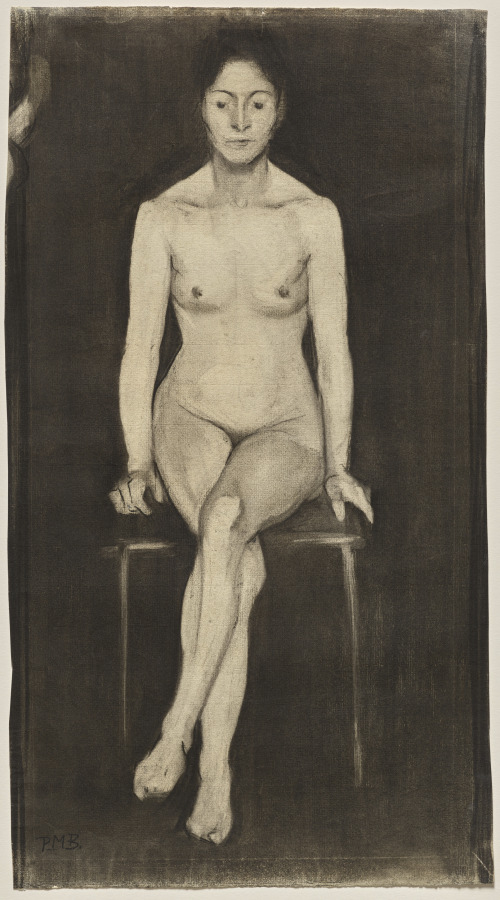
Paula Modersohn-Becker · The Cleveland Museum of Art · Purchase from the J. H. Wade Fund · CC0
- Name
- Paula Modersohn-Becker
- Birth Name
- Minna Hermine Paula Becker
- Born
- 8 February 1876
- Birthplace
- Friedrichstadt, German Empire
- Died
- 20 November 1907
- Place of death
- Worpswede, German Empire
- Occupation
- Artist, painter
- Known for
- Expressionism
- Nationality
- German Empire.
- Fields
- portrait.
- Movements
- Expressionism.
VALÉORINE Encyclopedia
VALÉORINE documentary reading
Documentary summary
Paula Modersohn-Becker (8 February 1876 – 20 November 1907) was a German Expressionist painter and draftswoman of the late 19th and early 20th centuries. She is noted for the many self-portraits, including nudes. She is considered one of the most important representatives of early expressionism, producing more than 700 paintings and over 1000 drawings during her active painting life.
Admitted source layer · organised and presented by VALÉORINE
Note VALÉORINE
No house-authored Note is published until its assertions and sources pass the VALÉORINE evidence contract. The documentary article remains available in full while that enrichment is being consolidated.
Documentary enrichment in progress · no unsupported statement published
Reference Check
Propose documentary evidence for Paula Modersohn-Becker. A contribution is never written directly as fact: identity, source, rights and evidence gates still decide.
Sign in to contribute
World of VALÉORINE
Documentary connections
Only confirmed graph relationships appear here. Images are shown only when their identity and reuse rights both pass the documentary gate.
Documentary evidence
Evidence Panel
not yet certified
- Identity
- resolved
- Independent source families
- 0
- Admitted assertions
- 0
- Open conflicts
- 0
Authority files
getty · 500305640 · gnd · 1136452052 · wikidata · Q234370 · wikipedia · Paula Modersohn-Becker
In this article
Biography
Biography
Modersohn-Becker worked between 1876 and 1907 across painter, printmaker, draftsperson and artist. The registers place that work in portrait. Every statement below returns to a source shown in the evidence panel; where the record is silent or divided, the article says so instead of resolving it.
Key facts
Key facts
• Name — Paula Modersohn-Becker • Birth Name — Minna Hermine Paula Becker • Born — 8 February 1876 • Birthplace — Friedrichstadt, German Empire • Died — 20 November 1907 • Place of death — Worpswede, German Empire • Occupation — Artist, painter • Years Active — 1895–1907 • Known for — Expressionism • Notable Works — Reclining Mother and Child Nude (1906) Self-Portrait at 6th Wedding Anniversary (1906) • Children — Mathilde Modersohn
Biography
Biography
• Illustration — Dresden-Friedrichstadt: After Paula's birth, the Becker family moved into a house in "Friedrichstraße 29" (today "Friedrichstraße 46").
Early life
Early life
• Illustration — Schwachhauser Heerstr. 23, Bremen. Becker family home and residence of Paula Becker (1888–1899) • Illustration — Paula Modersohn-Becker, Girl in a Garden Next to a Glass Sphere (1901–02) • Illustration — Paula Modersohn-Becker, Still life with Melon (1905) Museum Ludwig, Cologne, Germany • Illustration — Paula Modersohn-Becker, Child with Goldfish (1907) Becker was born and grew up in Dresden, in the Friedrichstadt area. She was the third of seven children in her family. Her father, Carl Woldemar Becker (1841–1901), the Odessa-born son of a Russian university professor of French, was employed as an engineer with the German railway. Her mother, Mathilde (1852–1926), was from the aristocratic von Bültzingslöwen family, and her parents provided their children a cultured and intellectual household environment. Despite these advantages of family, the Beckers found themselves in socially constrained circumstances. In 1861, Oskar Becker, Carl's brother, in an unsuccessful assassination attempt, had shot King Wilhelm of Prussia in the neck. The King was not severely injured, and Oskar was pardoned five years later for the crime (on condition that he permanently leave the country), but the constraints of opportunity for Carl Becker's family would linger. In 1888 the family moved from Dresden to Bremen, where Carl Becker had obtained a position on the building board of the Prussian Railway Administration. The family interacted with Bremen's local artistic and intellectual circles, and Paula began to learn to draw. In the summer of 1892, her parents sent her to relatives in England to learn English. While living with a maternal aunt in London, Becker received her first instruction in drawing at St John's Wood Art School. After returning to Bremen, she studied at a teachers' training school from 1893 to 1895, as her father wished (two sisters also attended this program). Concurrently she received private painting lessons from local German painter Bernhard Wiegandt. She worked as a painter from around 1893, at age 16, and was allowed to set up her first studio in the extension of her parents' house in Bremen (later Haus Paula Becker, with Becker's early studio intact). From this period comes a series of portraits of her siblings and also the first self-portrait (1893). She completed her teacher's course "with flying colors", but it was clear that she had little intention of pursuing a career in that profession. In the spring of 1896, Paula was able to travel to Berlin to take part in a six-week drawing and painting course organized by the Berlin Artists' Association (Verein der Berliner Künstlerinnen), staying with members of her mother's family while completing her course. After graduating, she stayed on in Berlin, and in February 1897 was admitted to the first class of painting at the Women's Academy. Paula additionally used her Berlin time to visit its art museums, studying the works of German and Italian artists. An encounter with an important proponent for German feminism, Natalie von Milde, made a deep impression, although swift intervention from her family cut that connection short. After these years of study, Becker returned to Bremen. She convinced her family to allow her to attend a further course at the nearby artists' colony in the northern German town of Worpswede.
Worpswede
Worpswede
Becker had become familiar with the Worpswede colony as early as 1895, when Fritz Mackensen, Otto Modersohn, Fritz Overbeck and Heinrich Vogeler presented their paintings in Bremen's art museum, the Kunsthalle Bremen. The colony had begun when Mackensen and Heinrich Vogeler had retreated to the countryside, partly as a protest against the domination of the art-academy style and life in the big city, and also to save on expenses. Becker joined the colony in 1898, initially as a student of Mackensen. At this time she began close friendships with the sculptor Clara Westhoff (1875–1954), the painter Ottilie Reylaender (1882–1965), and the poet Rainer Maria Rilke (1875–1926). It became quickly evident, however, that Worpswede was not suited to Becker's rapidly developing artistic style. In her journal, Becker wrote: "the way Mackensen portrays people is not broad enough, too genre-like for me." Two paintings she exhibited at the Bremen Kunsthalle in December 1899 were sharply criticized and had to be removed during the exhibition, having been subject to a "hysterical" attack by the art critic Arthur Fitger. He was later regarded as having been more outraged by the inclusion of female artists in the show than in anything particular portrayed by the actual artworks. While the community at Worpswede remained rooted in romanticized traditions of landscape, her own artistic interests were shifting noticeably toward Paris and leaving her feeling increasingly alienated.
Paris
Paris
Paris at the turn of the 20th century was the acknowledged epicenter of artistic exploration, and many artists of the time felt its pull. Westhoff, Becker's close friend, left Bremen in early 1899 to study in Paris with Auguste Rodin. Rilke also went with her, serving for a time as Rodin's secretary. By December of that year, Becker, having come into a small inheritance, followed her friend there, and in 1900 she began to study anatomy at the Académie Colarossi in the Latin Quarter. She also visited museums or exhibitions and galleries alone or with Westhoff to get to know modern French painters. She was particularly impressed by the paintings of Paul Cézanne, and Les Nabis, who emphasized the importance of colored areas in paintings following the example of Paul Gauguin. "In her painting, she followed the inspiration of the contemporary artists she had encountered in Paris, moving increasingly far from the conventional painting her colleagues at Worpswede were producing." These artists inspired her to use simplified forms and symbolic, rather than naturalistic colour. In April 1900, the great World's Fair Centennial Exhibition opened in Paris. Otto Modersohn, a Worpswede painter who had been an on-and-off resident of the colony since 1897, arrived in town with mutual friends to attend. His sick wife Helene had remained behind in Worpswede, and she died during Modersohn's short time in Paris. Modersohn hurried back to Germany. Shortly thereafter, Becker returned to Worpswede herself. It was clear to Becker's parents that the two had become romantically involved, but their disapproval was of little impact.
Marriage with Otto Modersohn
Marriage with Otto Modersohn
• Illustration — Paula Modersohn-Becker, Otto Modersohn Sleeping (1906) In May 1901, Becker and Modersohn married. Modersohn was 11 years older than Becker, with an infant daughter, Elsbeth. In the two years that followed, Becker tried to combine her responsibilities as wife, housewife and stepmother with her artistic ambitions. She set up a small studio on a nearby farm, where she went to paint for several hours a day. A series of paintings of children was created, among them Girl in the Garden Next to a Glass Sphere (1901–02), Portrait of a Girl (1901), Head of a Little Girl (1902). She functioned in this uneasy balance for two years, then returned again to Paris, accompanied by Otto, for two months in 1903. She spent most of her time drawing in the Louvre from ancient and Egyptian models. With Otto, she visited Auguste Rodin, also taking time to study the newly popular Japanese style and visit with painters Pierre Bonnard and Edouard Vuillard. In February 1905 Becker again returned to Paris. Otto briefly came to see her, and together they saw Paul Gauguin's paintings. After this visit, Becker "accepted the fact that modern artists such as Matisse, whose works fascinated her, had no appeal for Otto." She took drawing courses at the Julian Academy, but became increasingly aware that she had already developed her own painting style. After returning to Worpswede, her interest focused on still life. While before 1905 only ten still lifes can be traced in her work, from 1905 to 1907 there are almost 50. She and Modersohn lived mostly apart for the next two years, with 1906 marking an artistically productive year, spent mostly in Paris. During her stays in Paris in 1905 and 1906, she lived in her studio on Avenue du Maine, where she created, among other things, portraits of Clara (Rilke-)Westhoff and Clara's husband Rainer Maria Rilke. • Illustration — Paula with Mathilde (November 1907, days before Paula's death)
1906: "I am becoming somebody"
1906: "I am becoming somebody"
In a letter to Rilke written from Worpswede on 17 February 1906, Becker wrote: "And now, I don't even know how I should sign my name, I'm not Modersohn and I'm not Paula Becker anymore either." Less than a month later she wrote from Paris to her husband, "try to get used to the possibility of the thought that our lives can go separate ways". In 1906, Modersohn-Becker left Worpswede, as well as her husband, Otto, to pursue an artistic career in Paris. In a journal entry dated 24 February 1906, a sanguine Modersohn-Becker wrote, "Now I have left Otto Modersohn and am standing between my old life and my new life. I wonder what the new one will be like. And I wonder what will become of me in my new life? Now whatever must be, will be." Despite her sister's and mother's general disapproval of Paula's decision to leave Otto for Paris, her relocation there proved to be quite prosperous. It was during this period that she accomplished her most intensive, and later most highly regarded, work. From this body of work she produced a series of paintings about which she felt great excitement and satisfaction. During this period of painting, she produced her initial nude self-portraits (including Self-Portrait at 6th Wedding Anniversary), works that were unprecedented for female artists, as well as portraits of friends. During her final trip to Paris in May 1906, she wrote a letter to her elder sister, Milly Rohland-Becker, in which she stated, "I am becoming somebody – I'm living the most intensively happy period of my life."
Final year and death
Final year and death
In 1907, Becker returned to her husband in Worpswede, despite periodic correspondence that indicated her desire for independence. She had written in detail about her love for her husband but also of her need to delay motherhood in her pursuit of artistic freedom. She continued to express ambivalence regarding motherhood as she was concerned about her ability to paint while raising a child; her diary entries indicate that she had planned on achieving a painting career by age thirty, then having children. When her daughter Mathilde (Tillie) Modersohn was born on 2 November 1907, Paula and Otto were joyous. The historian Katja Haustein argues that Becker's works depicting motherhood were inspired by contemporary ideas of "natural motherhood", against increased German state intervention into the private lives of women and the maternal relationship with their children. She had complained of pain in her legs after the delivery, and was advised to remain in bed. When the physician returned on 20 November, he advised her to rise. She walked a few steps, then sat down, called for the infant to be placed in her arms, complained of leg pain, and died, saying only "What a pity". Paula's death was likely due to deep venous thrombosis (DVT), a complication of pregnancy that is relatively common when women are set to bed for a long time after delivery, as was customary practice at that time. Apparently, a thrombus had formed in her leg, and with her mobility, broke off and then caused her death within hours. She was buried in the Worpswede Cemetery.
Self-portraits
Self-portraits
• Illustration — Paula Modersohn-Becker. Self-Portrait at 6th Wedding Anniversary (1906) Until the years when Becker began the practice, women painters had not widely used nude females as subjects for their work. Notable exceptions are the works by Artemisia Gentileschi, three centuries earlier; however, art historians have asserted that Gentileschi made use of her own body as a reference for her work out of necessity and lack of access to any other models (in, for example, Gentileschi's 1610 Susanna and the Elders), as opposed to creating an intentional, purposeful, self-portrait (an assertion that continues to be debated). These arguments aside, Becker is generally accepted as the first known woman painter to paint nude self-portraits, and the first woman painter known to have painted herself pregnant and pregnant and nude. Becker's work on the female nude is unconventional and expresses an ambivalence to both her subject matter and the method of its representation.
Correspondence and journals
Correspondence and journals
On the tenth anniversary of her death, in 1917, the Kestnergesellschaft in Hanover organized a large exhibition of Becker's works and published a selection of her letters and diaries, which told her life, feelings and friendships, as well as the thoughts that shaped her art. Becker had maintained a voluminous correspondence with friends in her artistic circle, as well as a diary. Two-thirds of the correspondence occurred from age 16 to the early years of her marriage, and it is full of youthful optimism and energy. As with the Journal of Marie Bashkirtseff, published a generation before (and an important influence on Becker herself), this Collection proved highly popular, and was published abroad several times after World War. It was in a good part through her writings that her reputation was first maintained.
First woman to have a museum devoted exclusively to her art
First woman to have a museum devoted exclusively to her art
• Illustration — Paula Modersohn-Becker, Reclining Mother and Child (1906) In 1927 businessman Ludwig Roselius opened the Paula Modersohn-Becker Museum in Bremen. It was designed by Bernhard Hoetger, who had known Becker from Worpswede.
"Degenerate Art"
"Degenerate Art"
Local Nazis denounced the museum's art and architecture in 1935, but Roselius ignored this until Hitler denounced his entire Böttcherstraße in September 1936. After Roselius's secretary Barbara Goette intervened on his behalf with Hitler, the street's buildings were allowed to remain as a monument of "degenerate art". But despite the survival of the architectural fabric of her museum, Becker's work did not escape the Nazis attention undamaged. In 1937, "70 of her paintings were purged from German museums, either destroyed or exhibited as 'degenerate art. The Nazi critique derided the lack of "femininity" in Becker's paintings: "A revolting mixture of colours, of idiotic figures, of sick children, degenerates, the dregs of humanity."
The Paula Modersohn-Becker Foundation
The Paula Modersohn-Becker Foundation
Mathilde Modersohn (1907–1998) founded the Paula Modersohn-Becker Foundation (Paula Modersohn-Becker-Stiftung) in 1978. To form the core of the foundation, Mathilde Modersohn donated more than 50 paintings and 500 drawings from her personal collection, which she had inherited through her mother's estate. The purpose of the foundation is to "enhance the knowledge of the artist by researching and cataloguing her complete works," and to protect the integrity of her corpus.
Paula Becker House
Paula Becker House
• Illustration — Monument on the grave of Paula Modersohn-Becker in Worpswede cemetery, by sculptor Bernhard Hoetger (1907) Modersohn-Becker's house in Bremen, where she spent much of her life, opened in October 2007 as a private art museum and gallery. The Becker family had moved from Dresden to Bremen in 1888 and lived in this house. Becker lived in the house until 1899 when she was 23 years old and set up her first studio here. There was an active artist community in Bremen and via Becker's mother's friendships in the art world, Paula grew to be part of this community. In 2003, Heinz and Betty Thies bought the then-rundown house and had it restored in time for the 100th anniversary of the artist's death. At that time (November 2007), it was turned into a public museum.
Art market
Art market
The best selling painting by the artist in the art market was Self-Portrait Facing Left (1906), which sold in Berlin for €1,270,000 ($1,159,872) on 1 December 2025, well above the estimate of €250,000-350,000.
In popular culture
In popular culture
• In 1988 a stamp with the portrait of Paula Modersohn-Becker was issued in the series Women in German history by the German post-office authority Deutsche Bundespost. • On 8 February 2018, Becker's birthday was celebrated in a Google Doodle. • The life of Paula Modersohn-Becker is fictionalized in Sue Hubbard's 2012 novel, Girl in White. • She was the subject of a 2016 German bio-pic film, Paula. • In 2025, ARTE produced a documentary about her.
21st century exhibitions
21st century exhibitions
• Making Modernism: Paula Modersohn-Becker, Käthe Kollwitz, Gabriele Münter and Marianne Werefkin (12 November 2022 – 12 February 2023) Royal Academy of Arts, London • These are my modern women: Trading Monet for Modersohn-Becker (20 February 2022 – 4 September 2022) Arp Museum Bahnhof Rolandseck • Paula Modersohn-Becker (8 October 2021 – 6 February 2022) Schirn Kunsthalle, Frankfurt • Paula Modersohn-Becker: An Intensely Artistic Eye (8 April 2016 – 21 August 2016) Musée d'Art moderne, Paris • Paula Modersohn-Becker: Art and Life (February 2016 – 12 March 2016) Galerie St. Etienne, New York, New York • Rebels and Martyrs: the image of the artist in the 19th century (opened 28 June 2006) National Gallery, London (first UK exhibition of Self-Portrait at 6th Wedding Anniversary) • Paula Modersohn-Becker: Ich bin ich / I Am Me (6 June 2024 – 9 September 2024) Neue Galerie New York and (12 October 2024 – 12 January 2025) Art Institute of Chicago
Landscapes
Landscapes
• Illustration — Gray Landscape with Moor Channel (1899) • Illustration — Sand pit (1901) • Illustration — Three Boys Bathing in the canal (1900) • Illustration — Girl with geese by a pond (1901) • Illustration — Girl in a Birch Forest (1903) Royal Museum of Fine Arts, Ghent • Illustration — Evening Landscape (1904)
Self-portraits
Self-portraits
• Illustration — Self-portrait with chain (1903) • Illustration — Self-portrait with green background and blue irises (c. 1905) • Illustration — Self-Portrait: Nude with Amber Necklace Half-Length II (1906) • Illustration — Self-portrait: The Painter with Camilla Branch (1907) • Illustration — Self-portrait (1907) • Illustration — Self-Portrait with Hat and Veil (1907)
Still lifes
Still lifes
• Illustration — Vase with anemones (1904) • Illustration — Still life with a sugar bowl and hyacinth in a glass (c. 1905) • Illustration — Still life with oranges, bananas, lemon and tomato (1906) State Art Gallery in Karlsruhe • Illustration — Still Life with Oranges and Stoneware Dog (1906–07) • Illustration — Still life with clay jug (1907) • Illustration — Still life with marigolds in front of a landscape (1907)
Portraits
Portraits
• Illustration — Elsbeth Modersohn on a red pillow (c. 1904) • Illustration — Old Peasant Woman (c. 1905) • Illustration — Klara Rilke-Westhoff (1905) Hamburger Kunsthalle • Illustration — Elsbeth Modersohn with a rabbit (1905) • Illustration — Lee Hoetger with flower (1906) • Illustration — Lee Hoetger and her sister (1906–07)
Life and work
Life and work
Paula Modersohn-Becker was born on 8 February 1876 in Dresden. Modersohn-Becker held the nationality of German Empire. Modersohn-Becker was educated at Académie Julian. Married to: Otto Modersohn. Recorded father: Carl Woldemar Becker. Recorded mother: Mathilde Becker. Recorded child: Tille Modersohn. Modersohn-Becker worked as painter, printmaker, draftsperson and artist. The fields Modersohn-Becker worked in include portrait. Modersohn-Becker worked in German. Modersohn-Becker is placed by the collections within Expressionism. Modersohn-Becker died on 20 November 1907 in Worpswede. Modersohn-Becker is buried at Worpswede.
Painting technique
Becker was trained in the methods of realism and naturalism, along with a recognizable simplicity of form. She was able to achieve a distinct texture to her work by scratching into the wet paint. Modersohn-Becker employed the same technique throughout her short career as a painter. She worked in tempera and oil with a limited palette range of pigments such as zinc white, cadmium yellow, viridian, and synthetic ultramarine. She later abandoned those techniques to move into Fauvism. Fauvist influences appear in her works such as Poorhouse Woman with a Glass Bottle.
Catalogued output
Writings and published texts
These are catalogued publications carrying the name — editions and printings, distinct from the works they contain and from writing about the subject. The 1980s are the densest part of the run, with 8 titles, and that concentration is a fact about what the registers have catalogued rather than a judgement on the work itself.
36 editions carry dates between 1917 and 2019
The run opens with Eine Künstlerin, Briefe und Tagebuchblatter and closes with Ich bin Ich
The entries follow Open Library
Eine Künstlerin, Briefe und Tagebuchblatter
1917
Eine Künstlerin
1918
Eine Ku nstlerin
1919
Correspondence
1920
Briefe und Tagebuchblätter
1920
Briefe und Tagebuchblätter von Paula Modersohn-Becker
1921
Handzeichnungen
1949
Aus dem Skizzenbuch
1960
Mutter und Kind
1961
The complete catalogue · 37
36 editions carry dates between 1917 and 2019
The run opens with Eine Künstlerin, Briefe und Tagebuchblatter and closes with Ich bin Ich
The entries follow Open Library
Eine Künstlerin, Briefe und Tagebuchblatter
1917
Eine Künstlerin
1918
Eine Ku nstlerin
1919
Correspondence
1920
Briefe und Tagebuchblätter
1920
Briefe und Tagebuchblätter von Paula Modersohn-Becker
1921
Handzeichnungen
1949
Aus dem Skizzenbuch
1960
Mutter und Kind
1961
Paula Modersohn-Becker zum hundertsten Geburtstag
1976
Paula Modersohn-Becker Bilder aus der Sammlung Roselius
1978
Die Radierungen
1978
Paula Modersohn-Becker, 1876-1907
1980
The letters and journals of Paula Modersohn-Becker
1980
Paula Modersohn-Becker, die Landschaften
1982
Paula Modersohn-Becker in der Niedersächsischen Landesgalerie Hannover
1983
Paula Modersohn-Becker, the letters and journals
1983
Paula Modersohn-Becker, das Frühwerk
1985
Paula Modersohn-Becker, Worpswede, Paris
1985
Mensch und Landschaft
1987
Ehen in Worpswede
1994
Paula Modersohn-Becker in Bremen
1996
Göttertage
2003
Paura Mōdāzōn Bekkā ten =
2005
Paula Modersohn-Becker in Briefen und Tagebüchern
2007
Paula Modersohn-Becker heute
2007
Paula Modersohn-Becker und die ägyptischen Mumienportraits
2007
Paula Modersohn-Becker und die Kunst in Paris um 1900
2007
Nackt
2013
Paula Modersohn-Becker & Otto Modersohn
2014
M-B
2015
Emil Nolde trifft Paula Modersohn-Becker
2016
Paula Modersohn-Becker och konstnärskolonin i Worpswede
2018
Ich bin Ich
2019
Paintings, drawings and prints, 1898–1907
Catalogued output
Paintings, drawings and prints, 1898–1907
These are objects catalogued as visual works, each held or recorded by the institution named against it. 75 works carry dates between 1898 and 1907. The 1900s are the densest part of the run, with 69 titles, and that concentration is a fact about what the registers have catalogued rather than a judgement on the work itself. They belong to a run of 78 titles in all, from 1898 to 1907. A selection is set out below and the complete run may be opened beneath it.
The run opens with Portrait of a Woman and closes with Old poor woman with a glass ball and poppies
Portrait of a Woman
1898
Half-Nude Woman Holding Her Hair Apart, dated 1898.:Template:Self-portrgait
1898
Path with Birch Trees
1899
Chalet
1899
Birch Tree in a Landscape
1899
Old Factory
1900
Farmer's Shed
1900
Fruit Tree in Bloom
1900
Two Peasant Girls
1900
Seated Old Woman
1900
Self-portrait in front of a green background with a blue iris
1900
Church in Worpswede
1900
The complete catalogue · 60
The run opens with Portrait of a Woman and closes with Old poor woman with a glass ball and poppies
Portrait of a Woman
1898
Half-Nude Woman Holding Her Hair Apart, dated 1898.:Template:Self-portrgait
1898
Path with Birch Trees
1899
Chalet
1899
Birch Tree in a Landscape
1899
Old Factory
1900
Farmer's Shed
1900
Fruit Tree in Bloom
1900
Two Peasant Girls
1900
Seated Old Woman
1900
Self-portrait in front of a green background with a blue iris
1900
Church in Worpswede
1900
Child with a Clock Weight
1900
Untitled (Shepherd Girl)
1900
Reclining female nude
1900
Young Girl
1901
Girl with yellow wreath in hair
1901
Girl with flower wreath
1901
Children with Lanterns
1901
Three Bathing Boys by the Canal
1901
Girl with child
1902
Half figure of a girl with a yellow wreath in her hair
1902
Landscape with Trees
1902
Seven Trees
1902
Girl's head in front of a window
1902
Evening music (children playing music)
1902
Girl_in_a_Birch_Forest
1903
Still life with Apples
1903
Man lying beneath a Blossoming Tree
1903
Mother and Child
1903
Boy with Cat
1903
Girl with blue-white chain in her hair
1903
Half length portrait of an old farmer
1903
Head of a peasant woman in profile to the right
1903
Still life with bowl and milk jug
1903
Worpswede Landscape
1903
Self-portrait with landscape in front of trees
1903
Blind Little Sister
1903
Girl with Rabbit
1904
Cow in the meadow
1904
Birches
1904
Girl between the Birch Trees
1904
Girl sitting on a chair with child on lap in front of countryside
1904
Girl with Lamb
1904
Shooting festival with carousel II (Schützenfest mit Karussell II)
1904
Two sitting girls in the birch forest
1904
Seated girl with a green chain
1904
Fairytale picture Sleeping Beauty
1904
Girl in dusk with plaid blouse
1904
Birch Trees
1904
Girl with a Baby Among Birch Trees
1905
Still life with milk soup (breakfast table)
1905
Head of a Girl
1905
Two Girls in Front of Birch Trees
1905
Girl's head with a striped cap in profile to the left
1905
Still life with apples and bananas
1905
Still Life with Fried Eggs in a Pan
1905
Self-portrait with red Rose
1905
Worpswede Farmer's Child, sitting in a Chair
1905
A further 15 recorded entries stand behind this article and are held on the record.
Paintings, drawings and prints without a settled date
Catalogued output
Paintings, drawings and prints without a settled date
3 further works are catalogued under Modersohn-Becker's name without a date the collections agree on, which is why they are set apart from the dated run rather than placed in it.
Self-portret with lemon
Landscape with Windblown Trees
Influences
Influences
• Illustration — Paula Modersohn-Becker, Portrait of Rainer Maria Rilke (1906) There is evidence to suggest that a number of Paula Modersohn-Becker's self-portraits were influenced by the Pre-Raphaelite painter Dante Rossetti, including Self-portrait with a bowl and a glass (c. 1904; Sander Collection), Self-portrait nude with amber necklace (1906; Private collection), and Self-Portrait on 6th Wedding Anniversary (1906; Museen Böttcherstrasse, Paula Modersohn- Becker Museum, Bremen). She visited contemporary exhibitions often, and was particularly intrigued with the work of Paul Cézanne. Other post-impressionists were especially influential, including Vincent van Gogh and Paul Gauguin.
Influence
Influence
Becker may have influenced some of Picasso's paintings, as Diane Radycki posits in her 2013 monograph on the artist.
Legacy
Legacy
By 1899 Clara Westhoff had made a bust of Modersohn-Becker, saying that it was a symbol of their friendship and shared passion for art. In 1908, on the first anniversary of her death, Rainer Maria Rilke wrote the renowned poem "Requiem for a Friend" in Modersohn-Becker's memory. Becker was not widely known at her untimely death, and had sold few paintings during her lifetime. It was only thanks to exhibitions organized in the first years after her death that some collectors learned about her and began to acquire her paintings.
Primary material
Documents and archives
reference work
- “Paula Modersohn-Becker”, English Wikipedia, consulted as further reading
Reputable secondary · Wikipedia
authority file
- Gemeinsame Normdatei 1136452052, Paula Modersohn-Becker Museum.
Unverified · Deutsche Nationalbibliothek
authority record
- Wikidata, structured authority record Q234370: Paula Modersohn-Becker
Unverified · Wikidata
Literature
Further cited scholarship
6 scholarly and reference publications are cited here, each one identified by title and by the publication, publisher or institution that carried it, with its year where the register states one. The cited literature runs from 1960 to 2022, which is a measure of how long Modersohn-Becker has been a subject of scholarship rather than of how much has been written. The Encyclopedia cites this literature and does not summarise the arguments of works it has not read in full.
Female Genealogies of Creation: Marie Darrieussecq and Paula Modersohn-Becker, Tatiana de Rosnay and Tamara de Lempicka, Romance Studies, 2022
Paula Modersohn-Becker and the Fictions of Artistic Self-Representation, German Studies Review, 1991
Paula Modersohn-Becker: A Tribute Diane J. The Letters and Journals of Paula Modersohn-Becker
New Jersey, Scarecrow Press, 1980
Rainer Maria Rilke
Requiem for a Woman
Paula Modersohn-Becker: The Letters and Journals, Woman's Art Journal, 1984
Diane Radycki, Paula Modersohn-Becker, Signs: Journal of Women in Culture and Society, 1982
An Old Peasant Woman Praying by Paula Modersohn-Becker, Bulletin of the Detroit Institute of Arts, 1960
Authority records
Notes from the source article
Cited by Wikipedia
Notes from the source article
These works are cited by the source article, in its own numbering. They are recorded as its citations, not as sources VALÉORINE has verified.
- 1.Busch, Günter. Paula Modersohn-Becker The Letters and Journals. Taplinger Publishing. 1983. 0-8008-6264-3.
- 2.Paula Modersohn-Becker MoMA. The Museum of Modern Art.
- 3.Colapinto, John. Paula Modersohn-Becker: Modern Painting (Missing Piece). The New Yorker. 30 October 2013.
- 4.Piccoli, Giorgina B. Paula Modersohn-Becker, the challenges of pregnancy and the weight of tradition. Philosophy, Ethics, and Humanities in Medicine. 6. 11. 11 June 2011. 10.1186/1747-5341-6-11.
- 5.Laurence Madeline. Women Artists in Paris, 1850-1900. American Federation of Arts. 251. 2017. 9780300223934.
- 6.Assassination attempt on Wilhelm I (1861) - Stadtwiki Baden-Baden. en.stadtwiki-baden-baden.de.
- 7.Paula Modersohn-Beckerová. Wikipedie. 22 March 2022.
- 8.Modersohn-Becker, Paula (1876–1907) Encyclopedia.com. www.encyclopedia.com.
- 9.Paula Modersohn-Becker German painter Britannica. www.britannica.com.
- 10.Griffiths, Jennifer. Review of Paula Modersohn-Becker: The First Modern Woman Artist. Woman's Art Journal. 35. 1. 61–62. 2014. 0270-7993.
- 11.Oppler, Ellen C. Paula Modersohn-Becker: Some Facts and Legends. Art Journal. 35. 4. 364–369. 1976. 0004-3249.
- 12.Paula Modersohn-Becker.
- 13.Piccoli, Giorgina B. Paula Modersohn-Becker, the challenges of pregnancy and the weight of tradition. Philosophy, Ethics, and Humanities in Medicine. 6. 1. 11. 6 June 2011. 1747-5341.
- 14.Haustein, Katja. Parenting and the State in Britain and Europe, c. 1870-1950. Palgrave Macmillan. 62. 2017. 9783319340838.
- 15.Zarucchi, Jeanne Morgan. The Gentileschi "Danaë": A Narrative of Rape. Woman's Art Journal. 19. 2. 13–16. 1998. 0270-7993.
- 16.Burns, "Looking as Women: The Paintings of Suzanne Valadon, Paula Modersohn-Becker and Frida Kahlo".
- 17.English » Museen Böttcherstraße. www.museen-boettcherstrasse.de.
- 18.Hoffmeister-zur Nedden, Angelica, Zur Maltechnik von Paula Modersohn-Becker (On the painting technique of Paula Modersohn-Becker), Zeitschrift für Kunsttechnologie und Konservierung Jahrgang 11 (1997), Heft 2, pp. 286–300.
- 19.Paula Modersohn-Becker, Portrait of an Old Lady in the Garden, ColourLex.
- 20.Rebecca Jelbert: "Paula Modersohn-Becker’s self-portraits and the influence of Dante Gabriel Rossetti." The Burlington Magazine, vol.159, no.1373 (2017): 617-22.
- 21.Radiograph probings of Picasso's portrait of Gertrude Stein show that he reworked the head several times, finally posturing it exactly as Modersohn-Becker had done in her portrait of Lee Hoelger (see Radycki, Paula Modersohn-Becker: The First Modern Woman Artist).
- 22.Reid, Kerry. Dense storytelling in the eye of 'Beholder'. Chicago Tribune. 23 May 2008.
- 23.The collected letters were published by Kurt Wolff, who also published Franz Kafka.
- 24.Das Schwarze Korps; 24 October 1935; pages 11,34
- 25.Ludwig Roselius: Ein Nachruf von Barbara Götte, Bremisches Jahrbuch, 1951, www.brema.suub.uni-bremen.de/periodical/pageview/62875 viewed on 26 March 2016
- 26.Being Here: The Life of Paula Modersohn-Becker review – the story of women's art. the Guardian. 4 November 2017.
- 27.Paula Modersohn-Becker Stiftung. www.pmb-stiftung.de.
- 28.Haus-paula-becker.de. Kunstkabinett website.
- 29.Abendblatt.de. Where Paula spent her childhood (German). 9 October 2007.
- 30.World records, fierce bidding wars and remarkable sales: highlights from the Winter Auctions in Berlin, Grisebach, 1 December 2025
- 31.Google. www.google.com.au.
- 32.Taylor, Jonathan. Girl in White, By Sue Hubbard. Independent. 29 November 2012.
- 33.Paula Modersohn-Becker. Keine Kompromisse - Die ganze Doku, ARTE.
- 34.Making Modernism Exhibition Royal Academy of Arts. www.royalacademy.org.uk.
- 35.These are my modern women / Arp Museum Rolandseck. arpmuseum.org.
- 36.PAULA MODERSOHN-BECKER. SCHIRN KUNSTHALLE FRANKFURT. 8 October 2021.
- 37.agence, GAYA-La nouvelle. Paula Modersohn-Becker. www.mam.paris.fr. 8 April 2016.
- 38.Smith, Roberta. Paula Modersohn-Becker and Her Thwarted Ambitions. The New York Times. 25 February 2016. 0362-4331.
- 39.Brown, Mark. Gallery gathers 19th-century greats. The Guardian. 15 March 2006.
- 40.Paula Modersohn-Becker: Ich bin Ich / I Am Me. Neue Galerie New York.
- 41.Paula Modersohn-Becker: I Am Me. Art Institute of Chicago.
Bibliography printed in the source article · 26
- Marina Bohlmann-Modersohn: Paula Modersohn-Becker. Eine Biographie mit Briefen. 3. Auflage. Knaus, Berlin 1997,
- Janet M.C. Burns: "Looking as Women: The Paintings of Suzanne Valadon, Paula Modersohn-Becker and Frida Kahlo". Atlantis, vol. 18, no 1&2 (1993):25-46.
- Günther Busch, Liselotte von Reinken, Arthur S. Wensinger, Carole Clew Hoey: Paula Modersohn-Becker, The Letters and Journals. Northwestern University Press, 1990
- Jay A. Clark and Jill Lloyd, eds. Paula Modersohn-Becker: Ich Bin Ich / I Am Me. Munich, London, New York: Prestel Publishing, 2024 (Exhibition catalog)
- Marie Darrieussecq: Being Here: The Life of Paula Modersohn-Becker, translated from the French by Penny Hueston. The Text Publishing Company, Melbourne, Australia.
- Anne Higonnet: "Making Babies, Painting Bodies: Women, Art, and Paula Modersohn-Becker's Productivity." Woman's Art Journal, vol. 30, no. 2 (2009):15-21, illus.
- Averil King, Paula Modersohn-Becker. Antique Collectors Club, 2006
- Paula Modersohn-Becker: The Letters and Journals of Paula Modersohn-Becker. Translated & annotated by J. Diane Radycki. Introduction by Alessandra Comini
- Epilogue of poetry by Rainer Maria Rilke (Requiem, 1908, translated by Adrienne Rich & Lilly Engler) and by Adrienne Rich ("Paula Becker to Clara Westhoff", 1975–76). Metuchen, N.J. & London: The Scarecrow Press, Inc., 1980.
- Paula Modersohn-Becker, Sophie Dorothee Gallwitz: Eine Künstlerin: Paula Becker-Modersohn. Briefe und Tagebuchblätter. Kestner-Gesellschaft, Hanover, 1917
- Gillian Perry: Paula Modersohn-Becker: Her Life and Work. Harper & Row, 1979
- Diane Radycki: "American Women Artists in Munich, or Die Frauen ohne Schatten." In: American Artists in Munich: Artistic Migration and Cultural Exchange Processes, eds. Christian Fuhrmeister, Hubertus Kohle and Veerle Thielemans, pp. 109–24, illus. Modersohn-Becker & O'Keeffe. Berlin, München: Deutscher Kunstverlag, 2009.
- Diane Radycki: "Paula Modersohn-Becker: The Gendered Discourse in Modernism." Ph.D. dissertation, Harvard University, 1993 (readers: Konrad Oberhuber and Norman Bryson). UMI 93–31,015
- Diane Radycki: "Pictures of Flesh: Modersohn-Becker and the Nude". Woman's Art Journal, vol. 30, no. 2 (2009):3-14, illus. home.moravian.edu
- Diane Radycki: "Pretty/Ugly: Morphing Paula Modersohn-Becker and Marie Laurencin". Make, no. 72 (1996):19-21, illus.
- Diane Radycki: Paula Modersohn-Becker: The First Modern Woman Artist. Yale University Press, 2013
- Diane Radycki: Paula Modersohn-Becker: Self-Portrait. The Museum of Modern Art, 2018.
- Rainer Stamm: "Paula Modersohn-Becker and the Body in Art". Woman's Art Journal, vol. 30, no. 2 (2009):22-24, illus.
- Monica J. Strauss: "Helen Serger's Galerie La Boetie: Paula Modersohn-Becker on Madison Avenue." Woman's Art Journal, vol. 30, no. 2 (2009):32-35, illus.
- Eric Torgersen: Dear Friend: Rainer Maria Rilke and Paula Modersohn-Becker. Northwestern University Press, 1998
- Gustav Pauli, Paula Modersohn-Becker, Berlin: Wolff, 1919; 3rd ed., 1934
- Waldemar Augustiny, Paula Modersohn-Becker, Gutersloh: Mohn, 1960, Paula Modersohn-Becker, Hildesheim, 1971
- Ellen C. Oppler, "Paula Modersohn-Becker: Some facts and legends", Art Journal, xxxv, Summer 1976, pp. 364–369
- Christa Murken-Altrogge, Paula Modersohn-Becker: Leben und Werk, Cologne: Du Mont, 1980
- Gunter Busch, Paula Modersohn-Becker: Malerin, Zeichnerin, Frankfurt am Main: Fischer, 1981
- Frank Laukötter: Paula Modersohn-Becker. The Great Masters of Art, Hirmer Publishers, Munich 2020, .
References
Citations
References
Each reference names the institution holding it, so a reader may go to the document itself.
reference work
Partially resolvedauthority file
Gemeinsame Normdatei 1136452052, Paula Modersohn-Becker Museum.Deutsche Nationalbibliothek
Partially resolvedauthority record
Unverified
A further 2 witnesses are held back from this article because the person or object named in them is not yet resolved to this record. They are kept, not discarded, and return once the identity is established.
The Encyclopedia exists whether or not anything is for sale. Corrections are recorded rather than overwritten, and every version of this record is kept. Published 14 August 2026.
Elsewhere in Prints
4,138 published records in this field, each with its sources named.
- Paul-Marcel DammannEngraver
- Paula EliasophEngraver
- Paula GerardEngraver
- Paula KirkebyEngraver
- Paula RegoEngraver
- Paula ZimaEngraver
- Pauline Elfriede Leps-EstamEngraver
- Pauline LaurensEngraver
Best supported in this field
For owners
Own a work by Paula Modersohn-Becker?
A specialist will read what you send and tell you what the house can establish, what it cannot, and whether the object is suited to sale. There is no charge and no obligation. The object stays with you throughout; nothing is shipped to us unless it is arranged in writing beforehand.