
Pathé Records
Illustration — Former headquarters of Pathé Records in Xujiahui, Shanghai The Shanghai Pathé Record Company was one of the first major record companies in Shanghai, Republic of China, and later relocated to colonial British Hong Kong following the establishment of the People's Republic of China. The company was an Asia-Pacific subsidiary of the Pathé Records based in France, and later of EMI Group, which was broken up in 2012.
Also recorded as Pathe Records · Pathé 百代唱片
Pathé Records
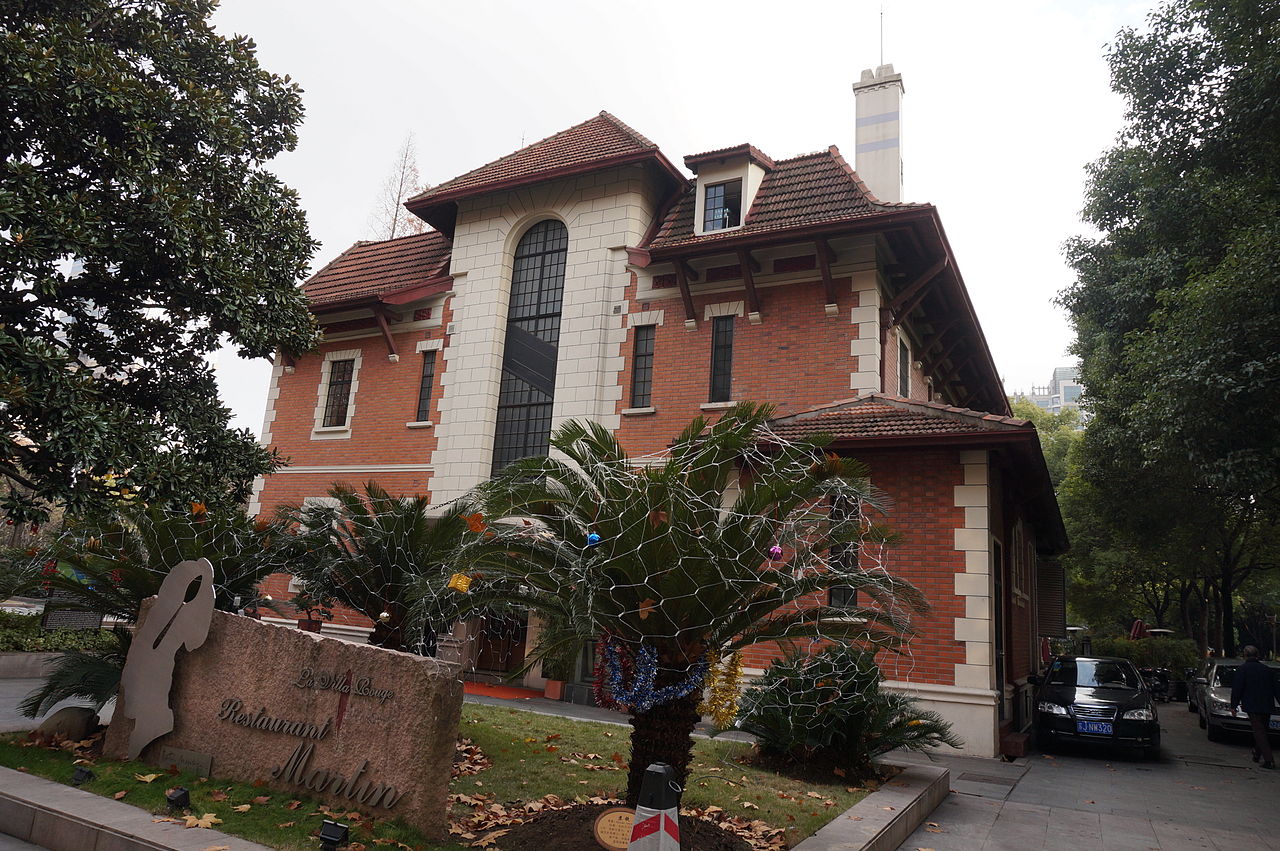
Livelikerw · CC BY-SA 3.0
- Founded
- 1908
VALÉORINE Encyclopedia
VALÉORINE documentary reading
Documentary summary
Illustration — Former headquarters of Pathé Records in Xujiahui, Shanghai The Shanghai Pathé Record Company was one of the first major record companies in Shanghai, Republic of China, and later relocated to colonial British Hong Kong following the establishment of the People's Republic of China. The company was an Asia-Pacific subsidiary of the Pathé Records based in France, and later of EMI Group, which was broken up in 2012.
Admitted source layer · organised and presented by VALÉORINE
Reference Check
Propose documentary evidence for Pathé Records. A contribution is never written directly as fact: identity, source, rights and evidence gates still decide.
Sign in to contribute
Documentary evidence
Documentary basis
Authority files
wikidata · Q3632350
In this article
History
History
• Illustration — March of the Volunteers, now China's national anthem, was released by Pathé Shanghai in the Republic of China in 1935 Around the beginning of the 20th century, a young Frenchman named Labansat set up an outdoor stall on Tibet Road in Shanghai and played gramophone records to Chinese citizens who were curious. The phonograph was purchased from Moutrie and Company, and he charged anyone 10 cents to listen to a novelty record called "Laughing Foreigners" (洋人大笑). Anyone capable of resisting any laughs or chuckles got their money back. Phonographs were becoming popular in the city in 1906. By 1908, he received help from a French engineer and an assistant from Ningbo and established "Pathé Orient" (東方百代), also known as "Pathé Asia," though other sources point to the renaming in 1921. Originally specialising only in Peking Opera, the company later expanded into Chinese pop music. Mandarin popular songs became hits, and they were sold at stores like Wing On in Shanghai. In 1930, Pathé's factory was taken over by Columbia Records in Shanghai and was used to press Odeon and Beka with the manufacturing portion named "China Record Co. Ltd," and the distributor continued as Pathé Orient. In the same decade, Pathé went under British EMI, which was originally seeking to make a profit on The Bund selling gramophone records. Ren Guang became Pathé-EMI’s new director and began getting involved with leftist music devoted to the proletarian cause. In 1937 Ren was fired from the company when the leftist music was cut off by the Japanese military officials. Any Japanese plants were also taken back to the Nipponophone Company (日本蓄音器株式会社). From the late 1930s to the 1940s, the company held the rights to 90% of the mandopop songs. On October 1, 1949, the People's Republic of China was established by the Chinese Communist Party (CCP). In 1952, the CCP accused Pathé's factory in Shanghai of promoting pornography. Under Chairman Mao Zedong, popular music produced and performed before 1952 was denounced as Yellow Music. As a result of the accusation, Pathé was immediately forced to stop cutting records, close down its factory and cease operations. Pathé subsequently moved its main office from communist Shanghai to colonial British Hong Kong and started to cut records in Hong Kong (which there were made in China before moving its production to India in 1950), thus restoring the glory of Shanghainese pop music in the British colony of the Far East of the Asia-Pacific region. In the same year, Pathé Records entered a public-private joint venture with the state-run China Record Corporation (formerly People's Records and the China Record Company from 1954) in Shanghai as one of its commercial wings to continue to sell all of Pathé Shanghai's records made in India into communist Mainland China under its Shanghai Pathé Record Company (上海百代公司唱片) name. After the communist victory in Mainland China, the Kuomintang government of the Republic of China retreated to Taiwan and Pathé Records also set up local operations in Taipei. Pathé Hong Kong faced fierce competition in the 1960s with the rise of Diamond Records and eventually ceased Shanghainese pop production and cut Cantopop instead, which gained popularity in the Chinese mainland the early 1970s. Pathé Hong Kong later changed its English name to EMI Hong Kong but retained its original Chinese name. In 2012 the entire EMI Group was broken up and sold to various companies. Pathé Hong Kong was absorbed into Universal Music Hong Kong, a division of Universal Music Asia-Pacific.
Institutional history
Dated record
Institutional history
The full dated record · 2 entries
1908
Pathé Records established.
1908
Pathé Records is recorded from 1908.
Citations
References
Each reference names the institution holding it, so a reader may go to the document itself.
reference work
Secondary witness
The Encyclopedia exists whether or not anything is for sale. Corrections are recorded rather than overwritten, and every version of this record is kept. Published 16 August 2026.
Elsewhere in Music memorabilia
42,866 published records in this field, each with its sources named.
- Pat TraversPerson
- PatachouPerson
- Pate MustajärviPerson
- PathéOrganisation
- Patnam Subramania IyerPerson
- Pato BantonPerson
- PatraPerson
- Patrice Bart-WilliamsPerson
Best supported in this field
For owners
Own an object connected with Pathé Records?
A specialist will read what you send and tell you what the house can establish, what it cannot, and whether the object is suited to sale. There is no charge and no obligation. The object stays with you throughout; nothing is shipped to us unless it is arranged in writing beforehand.