
pander
The pandero is a percussion instrument belonging to the group of frame drums within the membranophone family. It consists of a circular wooden or plastic frame, typically 20 to 40 centimeters in diameter, over which a single head of skin is stretched. It is played in the folk music of Latin America, Spain, and Portugal.
pander
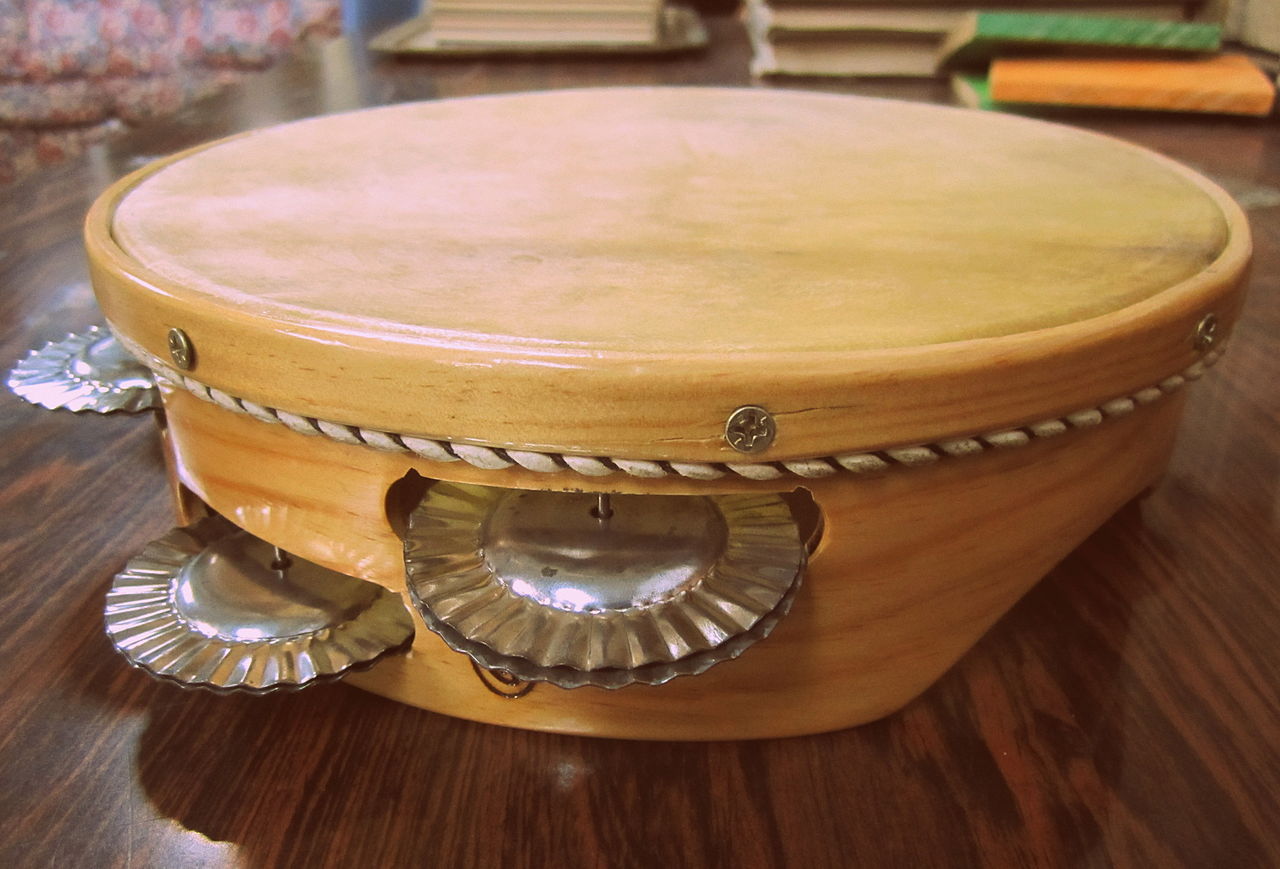
Andiemusik1986 · CC BY-SA 3.0
- Name
- Pandero
- Field
- percussion instrument
VALÉORINE Encyclopedia
VALÉORINE documentary reading
Documentary summary
The pandero is a percussion instrument belonging to the group of frame drums within the membranophone family. It consists of a circular wooden or plastic frame, typically 20 to 40 centimeters in diameter, over which a single head of skin is stretched. It is played in the folk music of Latin America, Spain, and Portugal.
Admitted source layer · organised and presented by VALÉORINE
Reference Check
Propose documentary evidence for pander. A contribution is never written directly as fact: identity, source, rights and evidence gates still decide.
Sign in to contribute
World of VALÉORINE
Documentary connections
Only confirmed graph relationships appear here. Images are shown only when their identity and reuse rights both pass the documentary gate.


Documentary evidence
Documentary basis
Authority files
getty · 500561776 · wikidata · Q4898607
In this article
Overview
Overview
In many of these countries, when the frame has pairs of small metal jingles, it is called pandereta; in some countries the terms pandero and pandereta are used interchangeably. The instrument is especially associated with the Basque Country, where it forms part of the traditional musical heritage of the region.
Key facts
Key facts
• Name — Pandero • Classification — Percussion Membranophone • Related — Pandereta, Pandeiro, Pandero jarocho
Structure
Structure
The pandero consists of one or two superimposed wooden hoops between 20 and 40 centimeters in diameter and between one and five centimeters wide. These hoops are usually fitted with one or two rows of about half a dozen pairs of txindak (small circular metal plates). Unlike the pandereta, the pandero does not have rattles or jingle bells and is generally larger in size. One side of the hoop is fitted with a stretched, smooth leather membrane.
History
History
The pandero has been used since ancient times, particularly in the Basque-speaking world, where dances accompanied by the instrument continue to this day. In some foreign regions, the instrument is known as tambour de basque. The earliest known records of the pandero's use in Spain date to the 16th century. According to Padre Donostia (1952), a 16th-century account describes how King Charles IX, during a visit to Saint-Jean-de-Luz, enjoyed watching young women dance, each carrying a sieve fitted with cowbells in imitation of small drums. A 17th-century account relates that upon the arrival of Madame d'Aulnoy at Pasaia, a boatwoman came to meet her with fifty companions, each carrying an oar on her shoulder, with three women at the head of the procession playing the pandereta with great skill. An article by Jesús Ramos (1990) notes that a list of musicians who participated in the festivities of Pamplona in the 18th century recorded nine pandero players, eight performing solo and one accompanying a guitar; six were from Pamplona, two from Aoiz, and one from Laguardia. In the 19th century, the book Viaje por España (1862) by Baron Charles Davillier noted that the Basques danced to the pandero alongside the gaita, the tabor, and the flute, much as the Asturians and Galicians did. Padre Donostia also recorded in 1916 that in the Erregiñetan (Feast of the Mayas), companions sang to the rhythm of a pandero.
Use in the Bible
Use in the Bible
The pandero is mentioned in several passages of both the Old and New Testaments, where its use is commonly associated with music, celebration, and worship. Notable passages include: • Exodus 15:20: Miriam the prophetess took a pandero in her hand, and all the women followed her with panderos and dancing, celebrating the crossing of the Red Sea. • Psalm 149:3: "Praise his name with dancing; sing to him with pandero and harp." • Psalm 150:4: "Praise him with pandero and dancing; praise him with strings and flute." • Jeremiah 31:4: The restoration of Israel is described in terms of joy and celebration, with the use of panderos and dancing.
Ensemble playing
Ensemble playing
The pandero may be played alongside singing and a variety of other instruments. Since the 19th century, it has traditionally been paired with the trikitixa, a small diatonic button accordion. The two instruments are so closely associated that it is rare to see a trikitixa player without a pandero partner to mark the rhythm. A late-19th-century image from Biscay depicts the pandero accompanying a txistulari (without a tabor) at a wedding, leading a procession of carts. The pandero is also played alongside string and wind instruments such as guitars, lutes, bandurrias, flutes, and clarinets, and occasionally accompanies the violin and the dulzaina.
Gallery
Gallery
• Illustration — Pandeireta from Galicia (Spain) • Illustration — Player of Chilean pandero cuequero
Playing technique
The pandero is held in one hand while the other strikes the membrane. The hand that does not hold the instrument does most of the movement. The membrane can be struck with an open hand, a closed fist, or with the fingers to produce a firm, short sound. One or two fingers can also be slid across the membrane while the fingertips bounce repeatedly against it, producing a vibration of both the membrane and the txindak. It is also possible to shake the instrument to produce the vibration of the txindak alone. In some traditional Basque songs, the pandero is struck with the head, elbow, or knees, though this is uncommon.
Primary material
Documents and archives
authority file
- Getty Union List of Artist Names 500561776, Pander, Gesa.
General reference · The Getty Research Institute
reference work
- Wikidata, structured authority record Q4898607: pander
Reputable secondary · Wikidata
Notes from the source article
Cited by Wikipedia
Notes from the source article
These works are cited by the source article, in its own numbering. They are recorded as its citations, not as sources VALÉORINE has verified.
Bibliography printed in the source article · 1
- The Concise Garland Encyclopedia of World Music, Volume 1. (2008). .
References
Citations
References
Each reference names the institution holding it, so a reader may go to the document itself.
authority file
Getty Union List of Artist Names 500561776, Pander, Gesa.The Getty Research Institute
Secondary witnessreference work
Secondary witness
Connections
Knowledge graph
Connections
Each connection was recorded deliberately, with the basis for it kept on the internal record.
Broader subject
1- AdufeTerminology
Established from a fact already recorded on a verified source.
The Encyclopedia exists whether or not anything is for sale. Corrections are recorded rather than overwritten, and every version of this record is kept. Published 16 August 2026.
Elsewhere in Collectables
20,755 published records in this field, each with its sources named.
- Pancai bajaTerminology
- Panchamukha vadyamTerminology
- pandeiroTerminology
- Pandemonium!Work
- Pandereta pleneraTerminology
- pandero jarochoTerminology
- PandoraTerminology
- Pandora's BoxWork
Best supported in this field
For owners
Own an object connected with pander?
A specialist will read what you send and tell you what the house can establish, what it cannot, and whether the object is suited to sale. There is no charge and no obligation. The object stays with you throughout; nothing is shipped to us unless it is arranged in writing beforehand.