
Oberlin Academy
- Name
- Oberlin Academy Preparatory School
Reference Check
Propose documentary evidence for Oberlin Academy. A contribution is never written directly as fact: identity, source, rights and evidence gates still decide.
Sign in to contribute
World of VALÉORINE
Documentary connections
Only confirmed graph relationships appear here. Images are shown only when their identity and reuse rights both pass the documentary gate.

Documentary evidence
Evidence Panel
not yet certified
- Identity
- unresolved
- Independent source families
- 0
- Admitted assertions
- 0
- Open conflicts
- 0
In this article
Key facts
Key facts
• Name — Oberlin Academy Preparatory School • City — Oberlin • State — Ohio • Country — United States • Other Names — Oberlin Institute, Preparatory Department of Oberlin College, Oberlin Academy • Schooltype — College preparatory • Established — 1833 • Closed — 1916 Oberlin Academy Preparatory School, originally the Preparatory Department of Oberlin College, was a private preparatory school in Oberlin, Ohio which operated from 1833 until 1916. The College opened the preparatory department in 1833 as a part of the Oberlin Collegiate Institute, which became Oberlin College in 1850. The secondary school serving local and boarding students continued as a department of the college. The school and college admitted African Americans and women. This was very unusual and controversial. It was located on the Oberlin College campus for much of its history and many of its students continued on to study at Oberlin College. Various alumni and staff went on to notable careers.
History
History
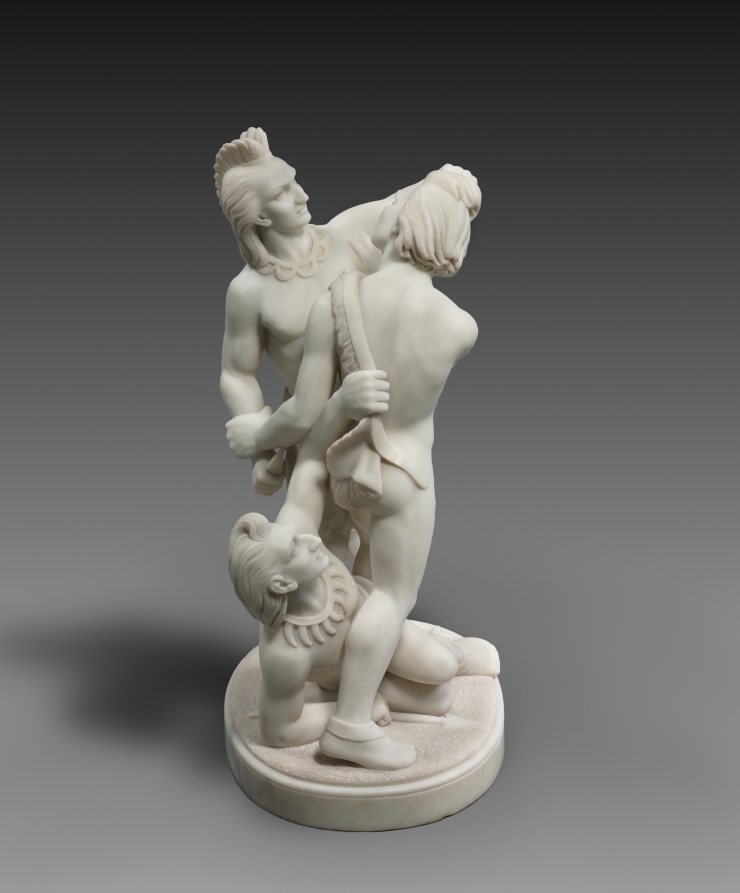
The Preparatory Department of Oberlin College, a private secondary school, was established in 1832 or 1833, 27 years before the city of Oberlin, Ohio, established their public high school. Public high schools were uncommon at the time; as a result, many colleges found that their incoming students were poorly prepared for academic studies. This led some colleges to establish their own high schools, organized as preparatory departments of the college. The Preparatory Department faced opposition from conservative Whites in Ohio who opposed its admittance of African Americans. The undergraduate education program continued afterwards as a preparatory school sometimes referred to as "prep". The Preparatory Department was the only primary education in Oberlin until the community organized a school district and eventually launched public schools. The Preparatory Department had an enrollment of 690 students in 1890. Sarah Watson, the first African American woman to attend Oberlin, enrolled in the Preparatory Department in 1842. Between 1833 and 1865, at least 140 black women studied at Oberlin, most of them in the Preparatory Department. In 1887, the school moved into French Hall and part of Society Hall. From 1892 the secondary school was called Oberlin Academy. The school's mission was to prepare students for college. • Illustration — Classified ad for Oberlin Academy from the Saturday Evening Post, July 29, 1911 Edward Henry Fairchild was the school's principal from 1853 until 1869. An abolitionist, he went on to become president of Berea College, a coeducational and integrated institution in Kentucky. John Fisher Peck also served as the school's principal. His daughter, Emily Peck, tutored Latin and Greek at the preparatory department and was an artist who depicted fellow Oberlin alums in sculpture. Booker T. Washington, who had close ties to Oberlin College and hired teachers from the school at Tuskegee Institute, sent his son Ernst to Oberlin Academy in 1904 and 1905. By 1905, the school's enrollment was declining. One of the factors for the decline was that public high schools were becoming widely available by that time. In January 1910, the Oberlin Alumni Magazine published an entry on the school, its significance, and the need for continued support of it. In 1912 a new building opened for the academy and the Oberlin Academy Alumni Association was organized. The school was removed from campus from 1912 to 1916 and occupied the Johnson mansion (now known as Johnson House) on South Professor Street in Oberlin. The Johnson House is now the Hebrew Heritage House, a college residence for Jewish students. In 1915, the college announced that it would close the Preparatory Academy. In that same year, the academy was listed in A Handbook of the Best Private Schools of the United States and Canada, which stated:
Alumni
Alumni
Alumni include: • Calvin Brainerd Cady, musician, educator, and writer • Jacob Dolson Cox, Union Army general, politician, and microbiologist • John Dube, founder of the South African Native National Congress • Richard Theodore Greener, Harvard College graduate and dean of Howard University School of Law • James Monroe Gregory • Luther Gulick (physician) • Charles Robert Hager • Forrest M. Hall • William W. Hannan • Ellen Hayes • Robert Maynard Hutchins • John Mercer Langston, first African American congressman from Virginia • Edmonia Lewis • Sinclair Lewis • George Herbert Mead • Byron R. Newton, journalist who attended from 1862 to 1864 • Benjamin F. Randolph • Josiah T. Settle • Henry H. Straight • Joshua McCarter Simpson, poet and lyricist who lived in Zanesville and wrote abolitionist songs • Eloise Bibb Thompson • Katharine Wright
Faculty
Teachers included: • Sarah Cowles Little • Edgar Fauver • Fanny Jackson Coppin, the "first black teacher in the preparatory department."
Knowledge graph
People and holdings
Those recorded as working within this institution, and the records it holds or is connected with.
Studied at
1- Edmonia LewisArtist
Established from a fact already recorded on a verified source.
The Encyclopedia exists whether or not anything is for sale. Corrections are recorded rather than overwritten, and every version of this record is kept. Published 26 September 2026.
Elsewhere in General
15,033 published records in this field, each with its sources named.
- Obafemi Awolowo UniversityOrganisation
- OberdollendorfPlace
- Oberhofen am ThunerseePlace
- OberlinPlace
- Oberlin Conservatory of MusicOrganisation
- Obernberg am InnPlace
- OberschneidingPlace
- ObersontheimPlace
Best supported in this field
For owners
Own an object connected with Oberlin Academy?
A specialist will read what you send and tell you what the house can establish, what it cannot, and whether the object is suited to sale. There is no charge and no obligation. The object stays with you throughout; nothing is shipped to us unless it is arranged in writing beforehand.