
Ner-A-Car
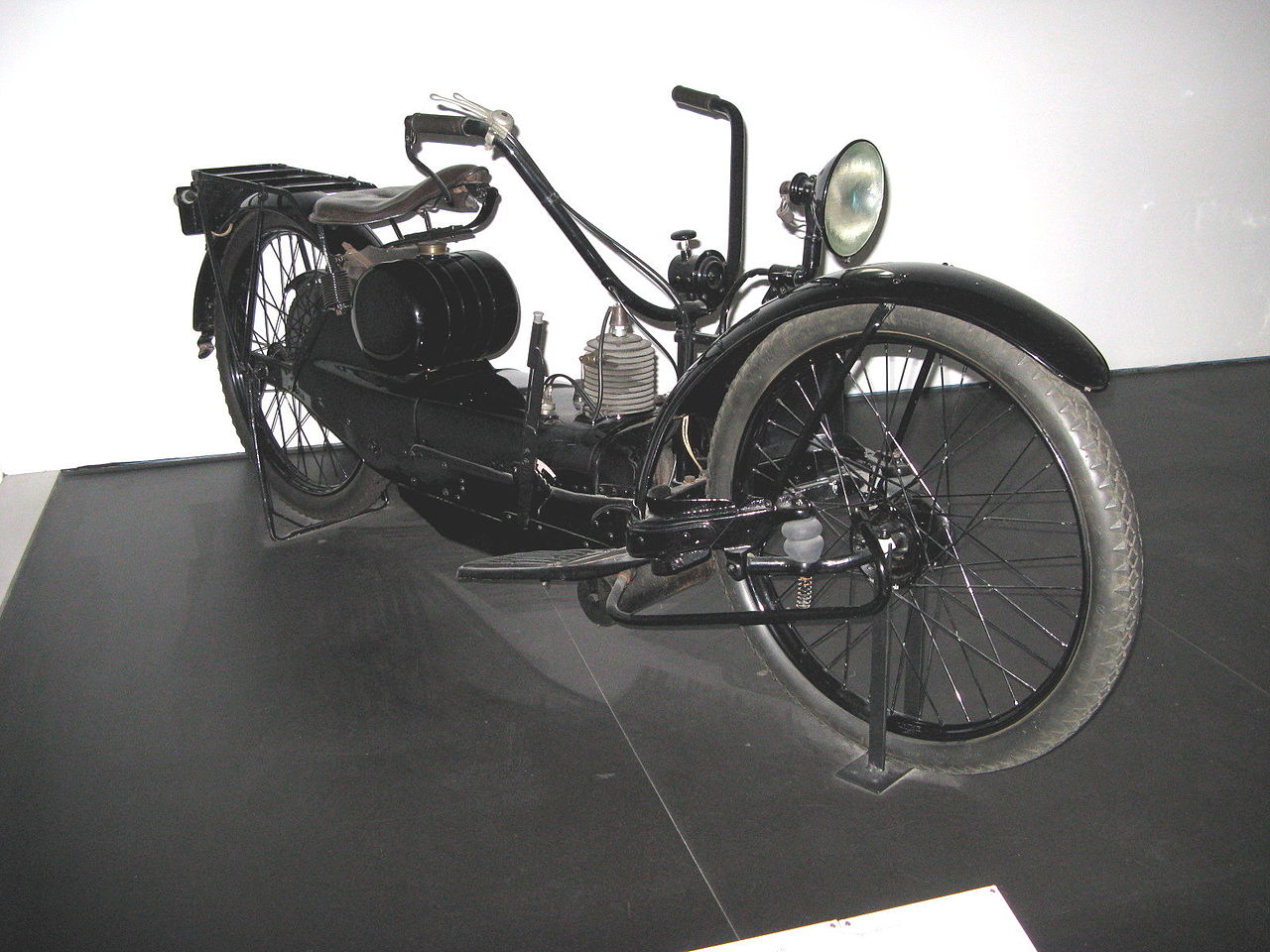
Museumsfotografierer · Public domain
- Name
- Ner-A-Car
- Founded
- 1921
- Headquarters
- Syracuse · Kingston upon Thames
VALÉORINE Encyclopedia
VALÉORINE documentary reading
Documentary summary
Illustration — U.S.
Admitted source layer · organised and presented by VALÉORINE
Reference Check
Propose documentary evidence for Ner-A-Car. A contribution is never written directly as fact: identity, source, rights and evidence gates still decide.
Sign in to contribute
World of VALÉORINE
Documentary connections
Only confirmed graph relationships appear here. Images are shown only when their identity and reuse rights both pass the documentary gate.
Documentary evidence
Documentary basis
Authority files
wikidata · Q2012607 · wikipedia · Ner-A-Car
In this article
Key facts
Key facts
• Name — Ner-A-Car • Aka — Neracar • Manufacturer — Ner-A-Car Corporation (United States) Sheffield-Simplex (United Kingdom) • Production — 1921–1927 • Assembly — Syracuse, New York, USA Kingston-on-Thames, UK • Class — Feet Forward • Top Speed — 35 mph • Power — 2.5 hp • Transmission — 5-position friction drive CVT, 3-speed manual • Frame — Pressed steel perimeter frame • Suspension — Front: Double leading arms with hub-center steering Rear: none, except for 1926 de-luxe model with swingarm and quarter-elliptic leaf springs • Brakes — Drum, operated by pedal located on left foot board. • Tires — 26 x 3-inch non-skid • Wheelbase — 59 in (standard) 68.5 in (with rear suspension) • Length — 84 in • Dry Weight — 175 pounds • Turning Radius — 19 ft turning circle The Ner-A-Car was a type of feet forwards motorcycle designed by Carl Neracher in 1918. It used an unusual steel-channel chassis, much like an automobile, and hub-center steering at the front wheel, making it 'nearly a car' in design. The Ner-A-Car was the most successful hub-center steering motorcycle ever produced, with sales far eclipsing earlier or later examples of this design, such as the Yamaha GTS1000 or Bimota Tesi. About 10,000 Neracars were manufactured in the United States by the Ner-A-Car Corporation (under the Neracar name), while around 6,500 are believed to have been produced in England under licence by the Sheffield-Simplex company between 1921 and 1926 under the Ner-A-Car name.
Design
Design
• Illustration — Front suspension of 1923 Ner-A-Car Carl Neracher's design had several unusual features, including a low-slung perimeter frame chassis, hub-center steering, all-enclosing bodywork, the feet-forward riding position, and a friction drive transmission, driven by the flywheel of the engine. The low-slung frame, front suspension, hub-center steering, and long wheelbase contributed to the cycle's exceptional stability. The friction drive transmission was similar in concept to a continuously variable transmission, but with five fixed indents on the shift lever corresponding to pre-set drive ratios. The driven friction wheel was moved between the center and outer rim of the flywheel to effect a change in drive ratio; nearer the center was a 'lower' speed, farther towards the rim of the flywheel was the 'higher' speed. The design was simple and ingenious, with a feeling nearly like an automatic transmission. Carl Neracher relied on a design from the 1911 Detroit Bi-Car Co. for the Neracar, and a license was granted by Bi-Car president John J. Chapin, as acknowledged on the Neracar chassis. The Neracar resembled the Bi-Car in outline, which was "an attempt to construct a two-wheel vehicle embracing many desirable features of the automobile". The Bi-Car used an automobile type chassis of thin sheet steel, with splayed forward chassis arms holding the front wheel, that was steered by a linkage to the handlebars. The Neracar also resembled the Militaire Autocycle of 1911, which also used a feet-forward riding position, pressed-steel chassis, and hub-center steering. The Detroit Bi-Car and Militaire were still not the first production hub-center steered motorcycle: that title appears to belong to the Zenith Bi-Car of 1905, which was a design licensed from Tooley's Patent Bi-Car of 1904.
Manufacture and promotion
Manufacture and promotion
• Illustration — Neracar advertisement published in July 1922 in Popular Mechanics. Neracher licensed his design to Sheffield-Simplex to manufacture Ner-A-Cars for the British and Commonwealth markets before he could find any investors to manufacture them in the United States. Eventually, a group of investors, including King C. Gillette and Crouse-Hinds Company founder Huntington B. Crouse, funded the Ner-A-Car Corporation, which began production of Neracars in October 1921. The Ner-A-Car was marketed as a low cost alternative to a motor car. The advertisers publicized the Ner-A-Car's step-through design and its protection from road grime and engine fluids, both of which allowed riders to wear ordinary clothes, including skirts, cassocks, and kilts, while riding the cycle. Erwin G. "Cannonball" Baker rode a Neracar from Staten Island, New York, to Los Angeles, California, in the autumn of 1922. The journey of 3,364.4 miles took 174 hours and one minute to complete, with operating costs totalling $15.70 at the time. Baker later started a Neracar dealership in Los Angeles. The Ner-A-Car won several medals for reliability in long-distance road trials, including the team prize in the 1925 ACU 1000 mile Stock Machine Trial.
Neracar (United States)
Neracar (United States)
The Ner-A-Car Corporation in Syracuse made three models of Neracar. The Type A had solo seating, the original 221 cc two-stroke engine, one headlight, and one taillight. The Type B had a larger engine, two seats, and two headlights. A commercial version, the Type CB, had a pair of headlights, a pair of drum brakes on the rear wheel, and a steel utility box rated to carry 150 pounds. In the US a 255 cc model was introduced in 1924. A five-speed Neracar was advertised as a "Christmas Special" for US$175 in November 1927. Production of the Neracar ended in 1927.
Ner-A-Car (United Kingdom)
Ner-A-Car (United Kingdom)
• Illustration — Ner-A-Cars in the Netherlands, 1923 British licensee Sheffield-Simplex began production of Ner-A-Cars in 1921 with the original American design with the 221 cc two-stroke engine and the friction drive transmission In 1923 the engine was enlarged to 285 cc, with a 70 mm bore and a 74 mm stroke. Sheffield-Simplex developed a newer version with a Blackburne four-stroke side-valve engine, displacing 348 cc with a 71 mm bore and an 88 mm stroke, driving through a three-speed Sturmey-Archer manual transmission. This version was introduced in 1925 as the Model C, with the earlier two-stroke friction-drive model continuing as the Model B. A Sports C, with an overhead-valve version of the Model C engine, was also offered. A de-luxe model was introduced in 1926 with swingarm rear suspension controlled by quarter-elliptic leaf springs, a bucket seat with air cushions, and a fairing with an adjustable Triplex windshield and an instrument panel. A countershaft concentric with the swingarm pivot was driven by a chain from the transmission and drove the rear wheel. The addition of rear suspension increased the wheelbase of the de-luxe model to 68.5 in Production of the Ner-A-Car at Sheffield-Simplex ended in the autumn of 1926.
Institutional history
Dated record
Institutional history
Explore 1921–1927
The full dated record · 4 entries
1921
Ner-A-Car established.
1921
Ner-A-Car is recorded from 1921.
1921
Ner-A-Car was established or created in 1921.
1927
Ner-A-Car ended in 1927.
Primary material
Documents and archives
reference work
- “Ner-A-Car”, English Wikipedia, consulted as further reading
Reputable secondary · Wikipedia
authority record
- Wikidata, structured authority record Q2012607: Ner-A-Car
General reference · Wikidata
Notes from the source article
Cited by Wikipedia
Notes from the source article
These works are cited by the source article, in its own numbering. They are recorded as its citations, not as sources VALÉORINE has verified.
- 1.The Motorcycle Industry in New York State, 2001, Geoffrey N. Stein. New York State Museum, Albany, NY
- 2.The Bicycling World, 1911
- 3.The Complete Illustrated Encyclopedia of American Motorcycles, 1999, Tod Rafferty, Courage Books, Philadelphia
- 4.The MotorCycle, Aug 28, 1905
- 5.C. F. Solomonson. Oakland Tribune. November 24, 1927 <!--.
References
Citations
References
Each reference names the institution holding it, so a reader may go to the document itself.
reference work
Secondary witnessauthority record
General reference
The Encyclopedia exists whether or not anything is for sale. Corrections are recorded rather than overwritten, and every version of this record is kept. Published 16 August 2026.
Elsewhere in Collectables
20,755 published records in this field, each with its sources named.
- NeopetsWork
- NeoplanOrganisation
- Nepalese sarangiTerminology
- NepentheWork
- NerdleWork
- Nerf ArenaBlastWork
- Nerf BlasterTerminology
- Nerf N-StrikeWork
Best supported in this field
For owners
Own an object connected with Ner-A-Car?
A specialist will read what you send and tell you what the house can establish, what it cannot, and whether the object is suited to sale. There is no charge and no obligation. The object stays with you throughout; nothing is shipped to us unless it is arranged in writing beforehand.