
Neil Tennant
Neil Francis Tennant (born 10 July 1954) is an English singer and songwriter. He is the lead singer and lyricist of the synth-pop duo Pet Shop Boys, which he formed with Chris Lowe in 1981. He is known for his distinctive vocal style with occasional speak-singing and for his eloquent lyrics set to dance music.
Also recorded as Neal Tennent · Neil Tennent
Neil Tennant

Jørgen Hans Maltesen from Denmark · Pet Shop Boys · CC BY 2.0
- Name
- Neil Tennant
- Birth Name
- Neil Francis Tennant
- Born
- 10 July 1954
- Birthplace
- North Shields, Northumberland, England
- Occupation
- * Singer
- Nationality
- United Kingdom
- Fields
- pop music · synth-pop · disco · dance music
- Education
- University of North London · St. Cuthbert's High School
- Languages
- English
VALÉORINE Encyclopedia
VALÉORINE documentary reading
Documentary summary
Neil Francis Tennant (born 10 July 1954) is an English singer and songwriter. He is the lead singer and lyricist of the synth-pop duo Pet Shop Boys, which he formed with Chris Lowe in 1981. He is known for his distinctive vocal style with occasional speak-singing and for his eloquent lyrics set to dance music.
Admitted source layer · organised and presented by VALÉORINE
Note VALÉORINE
No house-authored Note is published until its assertions and sources pass the VALÉORINE evidence contract. The documentary article remains available in full while that enrichment is being consolidated.
Documentary enrichment in progress · no unsupported statement published
Reference Check
Propose documentary evidence for Neil Tennant. A contribution is never written directly as fact: identity, source, rights and evidence gates still decide.
Sign in to contribute
World of VALÉORINE
Documentary connections
Only confirmed graph relationships appear here. Images are shown only when their identity and reuse rights both pass the documentary gate.
Documentary evidence
Evidence Panel
not yet certified
- Identity
- resolved
- Independent source families
- 0
- Admitted assertions
- 0
- Open conflicts
- 0
Authority files
wikidata · Q336278 · wikipedia · Neil Tennant
In this article
Biography
Biography
Tennant worked across songwriter, journalist, singer, singer-songwriter and composer and 6 further recorded occupations. The registers place that work in pop music, synth-pop, disco and dance music. This article rests on 102 catalogued compositions, 12 published texts, 42 issued recordings and 24 scholarly references drawn from named institutional registers. Every statement below returns to a source shown in the evidence panel; where the record is silent or divided, the article says so instead of resolving it.

Pet Shop Boys live in concert on October 13, 2006. Taken at The Opera House, Boston. Photo by Kevin Church.
The original uploader was Beaucoupkevin at English Wikipedia. · This image is a crop of the commons image: Pet shop boys boston concert.jpg from en.wikipedia
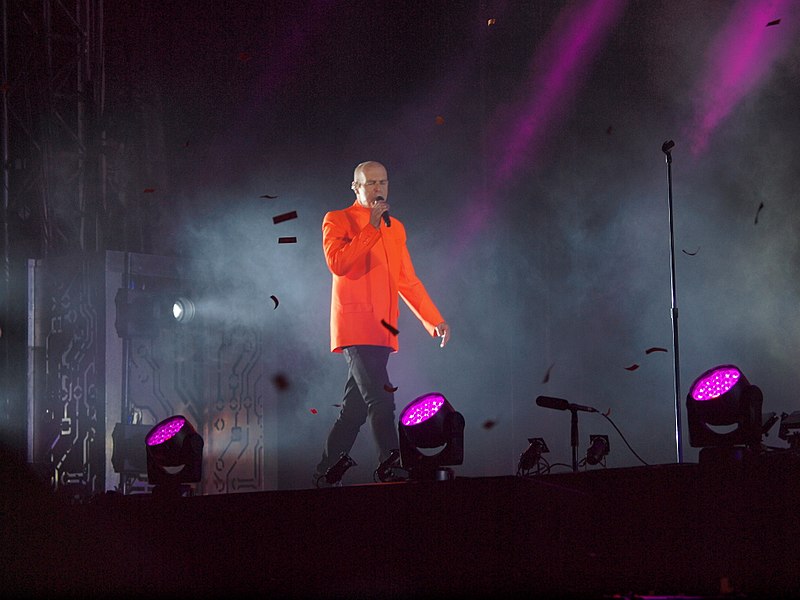
Neil Tennant from the Pet Shop Boys live at Pori Jazz 2014.
JIP
Key facts
Key facts
• Name — Neil Tennant • Birth Name — Neil Francis Tennant • Born — 10 July 1954 • Birthplace — North Shields, Northumberland, England • Origin — Newcastle upon Tyne, England • Instrument — * Vocals • keyboards • synthesizer • guitar • Genre — * Synth-pop • electropop • dance • disco • alternative dance • Occupation — * Singer • songwriter • music journalist • Years Active — 1970–present • Label — * Parlophone • Spaghetti • x2 • Current Member Of — Pet Shop Boys • Website — petshopboys.co.uk
Early life
Early life
Neil Francis Tennant was born in the town of North Shields, approximately 8 miles east of Newcastle upon Tyne, to William W. Tennant (1923–2009) and Sheila M. (Watson) Tennant (1923–2008). His mother was of Irish heritage, and his father's family had Scottish roots. He has an older sister, Susan, and two younger brothers, Simon and Philip. William Tennant was a sales manager for a rubber company. The family moved to Greenfield Road (opposite the corner of South Bend), Brunton Park, Gosforth shortly after Neil was born. Tennant was raised as a Roman Catholic, and he served as an altar boy. He attended St Oswald's Catholic Primary School, where he was happy, followed by St Cuthbert's Catholic Grammar School, where he did not fit in with the school's football culture and strict moralizing. His songs "This Must Be the Place I Waited Years to Leave" and "It's a Sin" refer to his time there. Tennant developed an aloof attitude towards his classmates as a "survival persona" and dreamed of leaving Newcastle behind and becoming a pop star. In 1965, Tennant joined the Young People's Theatre, where he learned about stage performance and became interested in writing music for theatre. When Women in Love (1969) was filmed in Newcastle, Tennant was an uncredited extra and used his earnings to buy the Beatles' White Album. As a teenager, he joined the Literary and Philosophical Society of Newcastle upon Tyne, which was both a library and a social gathering place. Tennant taught himself to play guitar at the age of 12, using the tutorials Play in a Day by Bert Weedon and Hold Down a Chord by John Pearse. He started writing his own songs based around the chords he learned. He used his guitar studies to learn how to play the piano in his family home, and he also played cello in school. In 1970, Tennant started a folk music group named Dust with Christopher Dowell, a friend from the Young People's Theatre. They were heavily influenced by The Incredible String Band. The group, which also featured two female friends, recorded a session of five songs that were broadcast on BBC Radio Newcastle in 1971. Tennant wrote several of their songs including "Can You Hear the Dawn Break?", which he regards as his first "proper" song. The folk group broke up due to creative differences as Tennant became more influenced by the music of David Bowie.
Early career
Early career
Tennant left Newcastle in 1972 to study history at North London Polytechnic (now part of London Metropolitan University). During the summers of 1973 and 1974, he worked as an assistant in the manuscripts department of the British Museum. He completed an honours degree in 1975 and then worked for two years as the production editor for Marvel UK, an imprint of Marvel Comics. His job entailed compiling American comics into a weekly publication, anglicising the dialogue to suit British readers, and ensuring that risqué characters like Red Sonja were redrawn with more modest clothing to make them suitable for the general audience of the weeklies. He also wrote occasional features for the comics, including interviews with pop stars Marc Bolan and Alex Harvey. In 1977, Tennant moved to Macdonald Educational publishing, where he edited The Dairy Book of Home Management (1980) and various illustrated books about cookery, playing the guitar and other home interests. He next worked at ITV Books, where he edited TV tie-in books, including one of Mary Berry's cookbooks. Tennant became acquainted with the staff of Smash Hits when he commissioned the magazine's designer, Steve Bush, to design a book about the 1981 Madness film Take It or Leave It. Smash Hits editor David Hepworth offered Tennant a job editing The Smash Hits Yearbook and also named him news editor of the magazine when he started work there in June 1982. Tennant wrote features and reviews for the teen pop magazine and also edited the yearbook from 1982 to 1985. He set up the American version, Star Hits, in New York in 1983, and he interviewed then up-and-coming singer Madonna. Tennant became assistant editor of Smash Hits, and was offered the position of editor before his departure in 1985. During this period, Tennant continued to write music in a singer-songwriter style. He auditioned for Rocket Records in 1973, and in 1981 he submitted a demo to other record companies without success. Some of his early songs were later released, including "Nothing Has Been Proved" (1989), performed by Dusty Springfield, and "Nervously" (1990) and "Hey, Headmaster" (1993) by Pet Shop Boys.
Pet Shop Boys
Pet Shop Boys
• Illustration — Tennant performing at Pori Jazz 2014 in Pori, Finland Tennant met Chris Lowe in August 1981 and they began their songwriting partnership shortly afterwards. Describing their early sessions, Tennant recalled: I'm playing acoustic guitar and he's playing these bass lines on a monophonic synthesizer. He's an experienced musician and can play the keyboard very fluently. Remember, at this point I'm 27, 28 years old...bass lines had never even occurred to me. We sort of released something in each other. There was immediately something there. Tennant was used to singing his own songs but initially had reservations about being a lead singer. He started singing lessons after turning professional in 1985. At Lowe's suggestion, he tried to make his lyrics more "sexy", writing about nightlife in the West End of London where they spent time. In 1983, an opportunity arose for Tennant to go to New York to interview The Police for Smash Hits. While there, he arranged to meet Bobby Orlando, a producer whom he and Lowe admired. Tennant mentioned he was writing songs in his spare time, and Orlando agreed to record some tracks with him and Lowe at a later date. Orlando produced the Pet Shop Boys' first single, an early version of "West End Girls", in 1984. Pet Shop Boys signed a deal with Parlophone Records in March 1985, and Tennant left Smash Hits the following month as he and Lowe, who was two-thirds of the way through an architecture degree, committed full time to a music career.
Vocals
Vocals
Tennant has a tenor voice with a natural sibilance. He had a tendency to sing through his nose, making his voice sound thin, and was taught by his vocal coach, Eve Cohen, to sing from the throat for a fuller sound. He cites David Bowie along with three women—Nina Simone, Billie Holiday, and Dusty Springfield—as his main influences as a singer. Lowe compares his partner's singing style to Julie Andrews. Richard Cromelin of the Los Angeles Times observed: "Tennant's deadpan tone can seem inexpressive, but when it's set in the rich-sounding, sweeping instrumental arrangements, it takes on the ironic stance that defines the Pet Shop Boys' music. His detachment has a plaintive quality, a kind of Every-lad wistfulness that brings a humanity to the microchip music". Tennant himself has said: "I think there's something in my voice that has a distancing quality, it doesn't throw itself into emotion, it seems to stand back a bit... to me it makes it sound more romantic, because there's this kind of small, high voice against this big background, and there's a massive musical contrast there, which is quite moving." Tennant uses a sprechgesang, or speak-singing, style on some songs, notably "Left to My Own Devices". He wrote "West End Girls" as a rap, influenced by Grandmaster Flash. More recently, "New London Boy" from the 2024 album Nonetheless included a rap passage; producer James Ford commented: "Neil's style is quite groundbreaking. He has such a distinctive style". Tennant prefers his vocals to be double tracked. Samples of his voice are also used. For the 2006 album Fundamental, producer Trevor Horn recorded Tennant singing every note and semitone across three octaves so they could be played on a keyboard in a process referred to as the "Neilotron". During the recording of Nonetheless, samples of Tennant's voice were used to recreate the Miserere.
Solo appearances
Solo appearances
In addition to his work with Chris Lowe as Pet Shop Boys, Tennant has worked on several side projects. • In 1989, Tennant worked with Electronic, singing backing vocals on their first single "Getting Away with It" and taking lead vocals on the 1992 single "Disappointed". Along with Lowe, he wrote and appeared on the Electronic album track "The Patience of a Saint", on which he shared lead vocals with Bernard Sumner. • In 1992, Tennant's backing vocals featured prominently on the Boy George single "The Crying Game" and on the Cicero single "Love Is Everywhere". Both reached the UK Top 40 singles chart. • In August 1997, Tennant's vocals were featured on two live recordings by the British group Suede that were released as b-sides to their single "Filmstar". One track was a cover of the Pet Shop Boys track "Rent", and the second was a duet with Suede singer Brett Anderson on the Suede song "Saturday Night". • In 1998, Tennant coordinated a charity album Twentieth-Century Blues: The Songs of Noël Coward raising money for Red Hot Organization. The album featured cover versions of songs composed by Noël Coward. In addition to the track "Sail Away" contributed by Pet Shop Boys, Tennant co-produced "There Are Bad Times Just Around the Corner" contributed by Robbie Williams and sang backing vocals on "Twentieth Century Blues" contributed by Elton John. • In 1998, along with Neil Hannon of The Divine Comedy, Tennant sang backing vocals on the Robbie Williams' single "No Regrets". • In 2005, Tennant provided lyrics and sang on the track "Tranquilizer" by DJ Tom Stephan (a.k.a. Superchumbo), who had previously remixed a number of Pet Shop Boys tracks. • In June 2006, Tennant provided backing vocals on "Throw" by DJ Fresh. • In 2007, Tennant co-produced Rufus Wainwright's album Release the Stars. • In 2008, Tennant's vocals featured in The Killers' Christmas song "Joseph, Better You Than Me". • In 2014, Tennant provided vocals on "Were You There" by Diamond Version. • In 2017, Tennant sang a duet with Chrissie Hynde on "Let's Get Lost", which originally appeared on the 2016 album Alone by The Pretenders. • In 2023, Tennant provided vocals on "Skydive" by UK rapper Casisdead. • In June 2024, Tennant appeared on the Michael Berkeley album Collaborations, singing "Zero Hour", a song about Ukraine for which Tennant also wrote the lyrics. • In August 2024, Tennant recited spoken-word lyrics of the song "Why?" by Bronski Beat on a remix by Superchumbo for the 40th anniversary edition of The Age of Consent. • In April 2025, a collaboration between Tennant and composer Mark Springer titled Sleep of Reason was released. Tennant wrote the lyrics for a quintet for voice and strings, which he sang with the Sacconi Quartet. • In July 2025, Tennant provided vocals on the track "Sunshine on Catford" on Kae Tempest's fifth studio album Self Titled.
Personal life
Personal life
Tennant came out as gay in a 1994 interview in Attitude magazine. Otherwise he remains quiet about his personal and romantic life, preferring to be a "man of mystery", as he states it. He maintains a house in London. He owned a house in Weardale, County Durham, but has since sold it. He and Lowe also have an apartment in Berlin. Tennant has been a patron of the Elton John AIDS Foundation. In 1998, Tennant was named in a list of the biggest private financial donors to the Labour Party. However, in the 2005 general election he voted for the Liberal Democrats, citing disillusionment with Labour's ID card scheme. The Pet Shop Boys agreed to personal appeals by then-Mayor of London Boris Johnson and then-Prime Minister David Cameron, both prominent Conservative Party politicians, for the group to play at the "winners' parade" taking place shortly after the 2012 Summer Olympics closing ceremony. Enjoying the event's atmosphere and how their stage presence turned into a well-received performance, Tennant subsequently texted Cameron's staff urging Cameron to use gay scientist Alan Turing's centenary year as impetus for the UK Government to formally pardon Turing. The formal pardon was issued on 24 December 2013, with the related official paperwork signed by Queen Elizabeth II. Tennant has criticised ageism in the music industry, stating in 2013 that radio professionals would tell him that they want to play Pet Shop Boys songs on air, but will not because the duo, then in their 50s, were considered to be "too old". Tennant is an art collector with interests ranging from Victorian art to queer art, including artists such as Walter Crane, Edwin Long, Simeon Solomon, Keith Vaughan, Paul P., Elijah Burgher, and Pablo Bronstein. He was on the jury for the Turner Prize in 1998. In 2022, Tennant received an honorary Doctor of Letters from Durham University.
Life and work
Life and work
Neil Tennant was born on 10 July 1954 in North Shields. Tennant held the nationality of United Kingdom. Tennant was educated at University of North London and St. Cuthbert's High School. Tennant worked as songwriter, journalist, singer and singer-songwriter, and the authority record catalogues a further 7 occupations under the same name, among them composer, manufacturer, vocalist, pop musician, poet and musician. Tennant was active from 1970. The fields Tennant worked in include pop music, synth-pop, disco and dance music. Tennant played the keyboard instrument, the voice and the guitar. Tennant worked in English.
Lyrics and composition
Lyrics and composition
Tennant writes the lyrics for the majority of Pet Shop Boys songs. Cultural critic Olivia Laing described the songs as "instantly recognizable for their knack of making oddly formal language flow seamlessly into pop music". In his oration for Tennant's honorary Doctor of Letters at Durham University, Professor Stephen Mumford called his lyrics "Full of literary, political and historical allusions... layered with multiple meanings that can be read lightly and superficially or deeply and philosophically". In his book One Hundred Lyrics and a Poem: 1979–2016, Tennant discussed his sources of inspiration. He often uses common expressions such as "Left to My Own Devices" and "I Wouldn't Normally Do This Kind of Thing", as well as literary references like "Can You Forgive Her?" from the work of the same name by Anthony Trollope. He has written songs using different personas, including a kept woman in "Rent", and he has drawn on his own formative experiences, as in "It's a Sin". He wrote a trio of songs about Christopher Dowell, his friend from Newcastle, who died from AIDS in 1989: "It Couldn't Happen Here" alludes to their early complacency about the disease, "Being Boring" is about their friendship, and "Your Funny Uncle" describes his funeral. Tennant has praised the group The Specials and singer-songwriter Elvis Costello, highlighting "Ghost Town" and "Shipbuilding" as protest songs successfully putting politics into pop music. In his own songs, Tennant says he conveys "political through personal"; for example: ""King's Cross" is a song about Thatcher. I think it's quite a strong song about Thatcher. You don't have to say, "Step down Margaret," though. I don't think many directly political songs work, actually. I think you infiltrate through pop music". The duo's songwriting process includes working together and separately on songs. Tennant comes up with words for music that Lowe has composed, and he also writes lyrics to be set to music. He composes music himself on piano or guitar. During the COVID-19 lockdowns, he learned to use GarageBand to collaborate on songs for the album Nonetheless.
Works documented in more than one form
Catalogued output
Works documented in more than one form
4 titles are catalogued under more than one form, which is to say the registers hold them both as a work and as a distinct object, score, recording or edition. Where a title is documented in several forms the evidence behind it is correspondingly wider, and the article treats those forms as separate records of the same work rather than as separate works.
Rent
1987 — catalogued as musical work/composition and single
Jealousy
1991 — catalogued as song and single
Liberation
1994 — catalogued as song and single
Together
2010 — catalogued as song and single
Compositions, 1984–2010
Catalogued output
Compositions, 1984–2010
The entries below are works composed by the subject, as the institutional registers catalogue them; later performances and commercial recordings of the same music are listed separately. The 1980s are the densest part of the run, with 11 titles, and that concentration is a fact about what the registers have catalogued rather than a judgement on the work itself. They belong to a run of 102 titles in all, from 1984 to 2010.
15 compositions carry dates between 1984 and 2010
The run opens with Opportunities (Let’s Make Lots of Money) and closes with Together
Opportunities (Let’s Make Lots of Money)
1984
Suburbia
1986
Paninaro
1986
Tonight is Forever
1986
It's a Sin
1987
I Can’t Say Goodnight
1989
I Want You Now
1989
So Sorry, I Said
1989
Don't Drop Bombs
1989
If There Was Love
1989
Compositions without a settled date
Catalogued output
Compositions without a settled date
87 further compositions are catalogued under Tennant's name without a date the collections agree on, which is why they are set apart from the dated run rather than placed in it. A selection is set out below and the complete run may be opened beneath it. Do I Have To? Happiness Is an Option.
After the Event
A New Bohemia
A Powerful Friend
A New Life
Casting a Shadow
God Willing. ‘Comrades!’
A Face Like That
A Cloud in a Box
After All (The Odessa Staircase)
Bet She’s Not Your Girlfriend
Blue on Blue
Bright Young Things
The complete catalogue · 43
After the Event
A New Bohemia
A Powerful Friend
A New Life
Casting a Shadow
God Willing. ‘Comrades!’
A Face Like That
A Cloud in a Box
After All (The Odessa Staircase)
Bet She’s Not Your Girlfriend
Blue on Blue
Bright Young Things
Full Steam Ahead
Answer the Phone (Ringtone)
Delusions of Grandeur
For Your Own Good
For All of Us
Gin and Jag
Everybody Will Dance
Building a Wall
All Over the World
Call Me Old‐Fashioned
Closer to Heaven
Bullet for Narcissus
Casanova in Hell
Between Two Islands
A Little Black Dress
Burning the Heather
Girls Don’t Cry
Give It a Go
A Man Could Get Arrested
Drama in the Harbour
Forever in Love
A Different Point of View
Clean Air Hybrid Electric Bus
A Man from the Future
Give Stupidity a Chance
Four Songs in A minor
A Certain “Je ne sais quoi”
Get It Online
Getting Away With It
Everything Means Something
An Open Mind
Books
Books
• One Hundred Lyrics and a Poem (2018) – a collection of Pet Shop Boys' lyrics and song-by-song commentaries.
Writings on music
Catalogued output
Writings on music
These are catalogued publications carrying the name — editions and printings, distinct from the works they contain and from writing about the subject. The 2010s are the densest part of the run, with 6 titles, and that concentration is a fact about what the registers have catalogued rather than a judgement on the work itself.
12 editions carry dates between 1978 and 2022
The run opens with Natural logic and closes with Logic of Number
The entries follow Open Library
Natural logic
1978
The best of Smash Hits
1984
Anti-realism and logic
1987
Autologic
1992
The taming of the true
1997
Changes of Mind
2012
Foundational Adventures
2014
Introducing Philosophy
2015
Introducting Philosophy
2015
Issued recordings
Primary material
Issued recordings
These are published sound issues catalogued under the name. Most postdate the works they carry, and an issue is never counted here as a work of composition. 37 issues carry dates between 1984 and 2013. The run opens with West End Girls and closes with Love Is a Bourgeois Construct. The 1990s are the densest part of the run, with 13 titles, and that concentration is a fact about what the registers have catalogued rather than a judgement on the work itself.
Recordings and discography
Primary material
Recordings and discography
The discography assembled here shows how Tennant's work has been published in sound, not what Tennant made. 5 sound issues are catalogued, carrying dates from 2005 to 2025. An issue is a published recording, distinct from the composition it carries, from a printed score of that composition and from any single performance of it; none of the entries below is counted in the catalogue of compositions above, and several of them carry the same work in different readings. The 2020s are the densest decade of publication, with 3 issues. The performers and issuing labels are as the discographic register states them; where it names no performer the article names none.
Battleship Potemkin
2005
Zero Hour
2024
Let’s Get Lost
2017
(Superchumbo mix)
2024
Sleep of Reason
2025
Primary material
Documents and archives
institutional register
- Wikidata, structured authority record Q336278: Neil Tennant
Unverified · Wikimedia Foundation
reference work
- “Neil Tennant”, English Wikipedia, consulted as further reading
Reputable secondary · Wikipedia
Authority records
References
Citations
References
Each reference names the institution holding it, so a reader may go to the document itself.
institutional register
Wikidata, structured authority record Q336278: Neil TennantWikimedia Foundation
Partially resolvedreference work
Partially resolved
The Encyclopedia exists whether or not anything is for sale. Corrections are recorded rather than overwritten, and every version of this record is kept. Published 14 August 2026.
Elsewhere in Music memorabilia
42,630 published records in this field, each with its sources named.
- Neil StubenhausPerson
- Neil SuttonPerson
- Neil SwainsonPerson
- Neil TaylorPerson
- Neil YoungPerson
- Neil ZazaPerson
- Neilson TaylorPerson
- Nejat AlpPerson
Best supported in this field
For owners
Own a work by Neil Tennant?
A specialist will read what you send and tell you what the house can establish, what it cannot, and whether the object is suited to sale. There is no charge and no obligation. The object stays with you throughout; nothing is shipped to us unless it is arranged in writing beforehand.