
Nasrollah Mardani
Nasrollah Mardani (1948 - 2004), was a prominent Iranian poet. He was one of the influential poets in the years after the iranian revolution and one of the Ever-lasting Names of Iran in the field of literature and culture. Mardani, under the influence of the new Ghazals of her fellow citizen poet, Mohsen Pezeshkian, turned to this style.
Nasrollah Mardani
Behnam9395 · CC BY-SA 4.0
- Name
- Nasrollah Mardani
- Born
- 14 January 1948
- Birthplace
- Kazerun, Iran
- Died
- 9 March 2004
- Place of death
- Karbala, Iraq
- Occupation
- Poet
VALÉORINE Encyclopedia
VALÉORINE documentary reading
Documentary summary
Nasrollah Mardani (1948 - 2004), was a prominent Iranian poet. He was one of the influential poets in the years after the iranian revolution and one of the Ever-lasting Names of Iran in the field of literature and culture. Mardani, under the influence of the new Ghazals of her fellow citizen poet, Mohsen Pezeshkian, turned to this style.
Admitted source layer · organised and presented by VALÉORINE
Reference Check
Propose documentary evidence for Nasrollah Mardani. A contribution is never written directly as fact: identity, source, rights and evidence gates still decide.
Sign in to contribute
Documentary evidence
Documentary basis
Authority files
wikidata · Q6967335 · wikipedia · Nasrollah Mardani
In this article
Biography
Biography
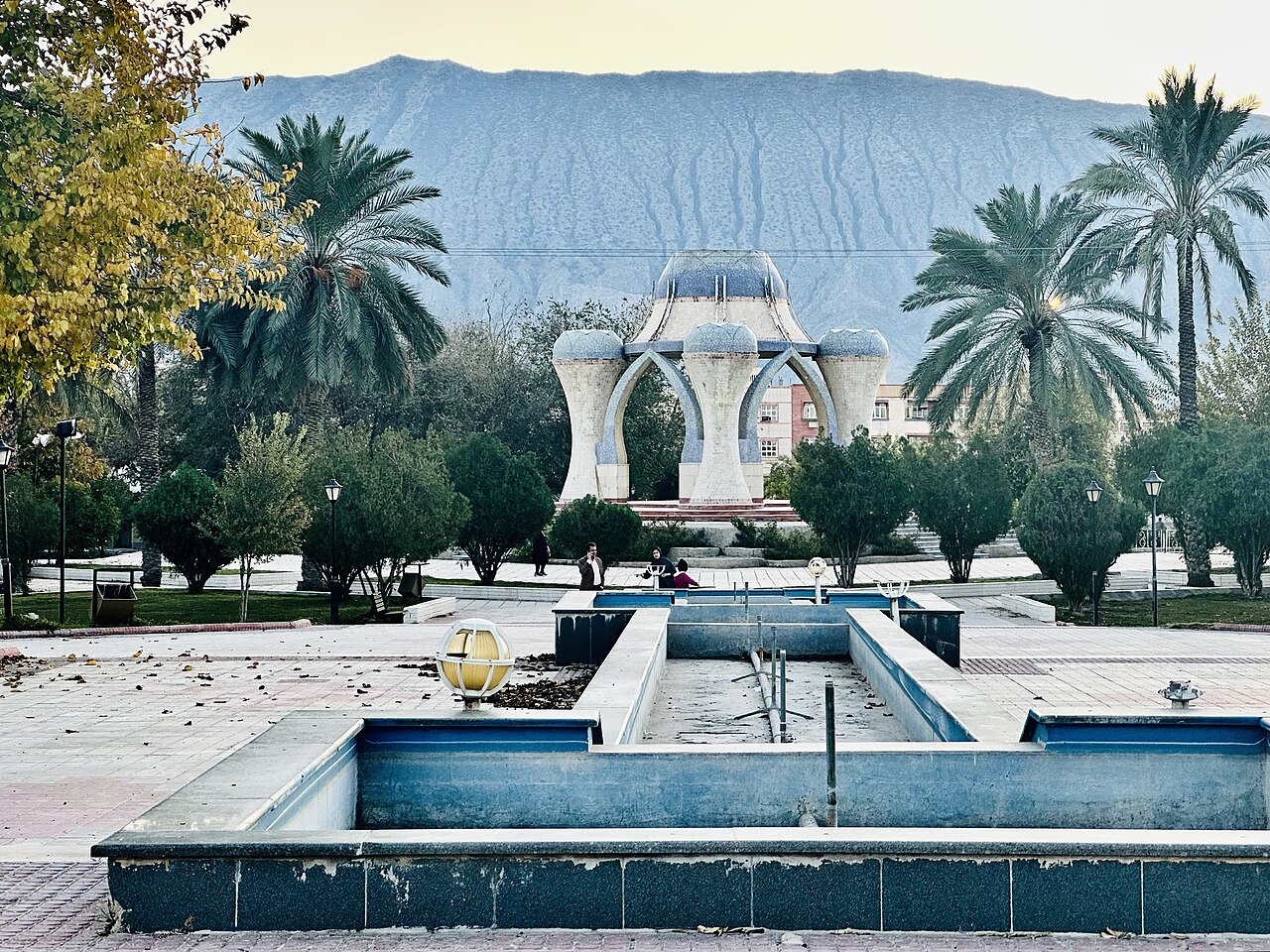
He is mentioned as the inventor of the epic lyric style. The book Khoonnameh Khak from Mardani's books was selected as the selected book of the year in Iran in 1985. Mardani can be considered one of the most prominent poets after the revolution in Iran. His tomb is located in Mardani Park complex in Kazerun city.
Key facts
Key facts
• Name — Nasrollah Mardani • Native Name — نصرالله مردانی • Born — 14 January 1948 • Birthplace — Kazerun, Iran • Died — 9 March 2004 • Place of death — Karbala, Iraq • Resting Place — Mardani Park, Kazerun • Occupation — Poet
Life
Life
Nasrollah Mardani was born on the 14th of January 1948 in Kazerun city in Iran and finished his education in the same city. Mardani was fascinated by the poems of Hafez and Ferdowsi. However, he was strongly influenced by the poems of his fellow citizen, Mohsen Pezeshkian, and for this reason, he turned to the lyrical style. Before the revolution, Mardani was an employee of the Bank Melli Iran and after the revolution he worked in the cultural departments of the Islamic Revolutionary Guard Corps and the Ministry of Culture and Islamic Guidance. His interest in Muhammad Husayn Tabataba'i led to the National Congress for 9 years under the title Commemorate Allameh Tabatabai in Kazerun.
Poetic style
Poetic style
Mardani's poems were more epic and revolutionary. His poetic style attracted many government poets, so that the footprints of his compositions and images can be traced in the Ghazals of other poets of the Islamic Revolution. Considering his past interest in Ferdowsi and Hafez, inspired by these two, he created a link between epic and ghazal. He was loyal to the classical and ancient forms of Persian poetry, in his poems dealt with themes related to the Iran-Iraq war. Mardani also wrote many poems in Kazeruni accent due to his love for his hometown.
Death
Death
Nasrollah Mardani died on March 9, 2002 during a trip to Iraq in the city of Karbala. His body was first moved to Tehran and was funeral in front of the Vahdat Hall in the presence of officials and then, according to his will, he was transferred to his hometown Kazerun and buried in this city. Ali Khamenei in a message called him a sweet-spoken and revolutionary poet. Some of the country's senior officials also expressed their condolences on his death.
Tomb
Tomb
After Mardani's death, Kazerun municipality decided to build a monument to Mardani's grave and build a garden in his name. This garden with an area of 12 hectares was established in the southwest of Kazerun and the tomb of Nasrollah Mardani is located in this garden. • Illustration — Mardani tomb in Kazerun
Mardani Art Cultural Institute
Mardani Art Cultural Institute
After the death of Nasrollah Mardani, a group of his relatives and family established an institution called the Mardani Art Cultural Institute to promote his thoughts and ideas. According to Mardani's will, his personal library was also donated to this cultural center. This institution is now located in Mardani Park and next to Nasrollah Mardani's tomb. Among the famous members of the board of trustees of this institution, we can mention Gholam-Ali Haddad-Adel. Assad-Allah Imani was also a member of this institution until his death. • Illustration — Gholam-Ali Haddad-Adel, Former chairman of the Parliament and President of Academy of Persian Language and Literature • Illustration — Assad-Allah Imani, Former member of assembly of experts, and the Former Imam of Prayer in Kazerun and Shiraz.
Resources
Resources
• Nasrollah Mardani (Persian Wikipedia) • IBNA • Mehr News Agency • Art Magazine • Journal of Sacred Defense Literature Bi-quarterly • Birjand University • Persian language and literature (former publication of Faculty of Literature, University of Tabriz) • Yazd University
Books
Mardani wrote 12 books during his life. Fire of Ney, Uprising of Light, Rule of Love, Fourteen Everlasting Lights, and Crest of Speech are among his published books. His book Khoonnameh Khak was selected Iran’s best book of 1985.
Notes from the source article
Cited by Wikipedia
Notes from the source article
These works are cited by the source article, in its own numbering. They are recorded as its citations, not as sources VALÉORINE has verified.
- 1.Research on the life of Nasrullah Mardani + poems. Danesh Chi.
- 2.A poem by the late Nasrullah Mardani on the occasion of the month of Muharram. Sayeh Online.
- 3.Member of the Supreme Council of the Cultural Revolution: Many innovations of poets of the revolution are owed to Nasrullah Mardani. Ministry of Culture and Islamic Guidance.
- 4.Analysis of Nasrullah Mardani's poetic style. Kayhan.
- 5.Poet Nasrollah Mardani. Mehr News Agency.
- 6.Spectacular pictures of the tomb of Nasrullah Mardani, the contemporary poet of the country. Aparat.
- 7.Nasrollah Mardani. Art Mag.
- 8.Nasrullah Mardani: New Ghazal can have a message and a lasting effect for the future. There will be a culture in the future that will be a vessel for the expression of future humans. ISNA.
- 9.Nasrullah Mardani; A poet who died in Imam Hossein's court. Fars News.
- 10.Nasrollah Mardani, Poet. Honors of Islamic Iran.
- 11.Nasrollah Mardani. Art Magazine.
- 12.Mardani under the guidance of God's spirit wrote the most epic poems. Basij Honarmandan.
- 13."Nasrullah Mardani"; A poet alongside the warriors of the holy defense. Defa Press.
- 14.Research on the life of Nasrullah Mardani + poems. Danesh Chi.
- 15.Research on the life of Nasrullah Mardani (books section). Danech Chi.
- 16.Poet Nasollah Mardani. Mehr News Agency.
- 17.Kazeroon calmed down with Nasrollah Mardani. Tebyan.
- 18.The body of Nasrullah Mardani was funeral. Mehr News Agency.
- 19.The burial ceremony of Nasrullah Mardani was held in Kazeroon. ISNA.
- 20.Condolence message after the death of Nasrullah Mardani. Khamenei.ir.
- 21.The representatives of Fars province in Parliament expressed their condolences on the death of Nasrullah Mardani. ISNA.
- 22.The construction project of Mardani Park and Cultural Center has started. Mehr News Agency.
- 23.Nasrollah Mardani. Kazeroon Municipality.
References
Citations
References
Each reference names the institution holding it, so a reader may go to the document itself.
reference work
Secondary witnessreference work
Secondary witness
The Encyclopedia exists whether or not anything is for sale. Corrections are recorded rather than overwritten, and every version of this record is kept. Published 19 August 2026.
Elsewhere in Books
39,529 published records in this field, each with its sources named.
- Nasr Abu ZaydAuthor
- Nasr ibn SayyarAuthor
- Nasra Al AdawiAuthor
- Nasreen Anjum BhattiAuthor
- NassarAuthor
- Nassar MansourAuthor
- Nasser FakouhiAuthor
- Nassira BelloulaAuthor
Best supported in this field
For owners
Own a work by Nasrollah Mardani?
A specialist will read what you send and tell you what the house can establish, what it cannot, and whether the object is suited to sale. There is no charge and no obligation. The object stays with you throughout; nothing is shipped to us unless it is arranged in writing beforehand.